Is This Not Mothering?

I may not be an actual mother, but sometimes I get weary of mothering anyway. I take my husband, who has Alzheimer’s Disease, to the doctor and find myself explaining where we’re going and why and assuring him that the doctor will not hurt him. He will not give him any shots. As we walk, I hold his hand, not out of affection the way it used to be, but to keep him from getting lost or falling down. In the doctor’s office, I speak for him because he’s not good with words anymore. The doctor speaks mostly to me because my husband does not understand what he’s saying. When it’s over, I wait while he goes to the bathroom, then treat him to a hamburger. Is this not mothering?

Likewise, when I come home from a trip, I need to pick up my dog at the kennel. First, I wash her blankets and straighten out her bed. I make sure I have enough food and make an appointment with the vet for her shots. Then I go get her. She runs out of her cage, gives me a big wet kiss and jumps into the car. All the way home, she’s trying to get my attention. Pet me, love me, entertain me. Is this not mothering?

***
I recently read about a new website for Jewish women who are childless. It’s called Yerusha.com. Take a look. Even if you’re not Jewish, you may find something helpful.


Ladies Without Babies

Today, I just want to share this poem I found in my files. I wrote it when I was really having a hard time with the whole childless thing. I admit that some of this does not apply to ladies with dogs.

Ladies without babies
have kittens and puppies
and goldfish with names.
They treat them like dolls,
they pretend to play house,
but it certainly isn’t the same.

Ladies without babies
have neat little houses
with reachable knick-knacks
and cream-colored carpets,
glass without noseprints,
low-hanging spice racks.

Ladies without babies
get nervous when mommies
bring fat drooling babies
to spread crumbs and dribble
on white satin sofas
and rip up their papers.

Ladies without babies
become doting aunties
to nephews and nieces
whose photos they flash
when ladies with babies
share latest releases.

Ladies without babies
have big empty laps,
breasts never needed to nurse.
Like girls in a play
with a family of dolls,
their wombs can only rehearse.

Copyright 2010 Sue Fagalde Lick

Mommy Training

The little blonde girl wandered around the auditorium at the monthly Fiddlers Jamboree clutching her little blonde doll. Now and then the girl talked to the doll and stroked its plastic hair. When the fiddle music got lively, she danced with her, looking back to make sure her mother was watching.

Across the room, a plain-looking woman with thick glasses and scraggly brown hair displayed a real baby as if it were a trophy. She showed that newborn to everyone. Look, see what I have. Suddenly this mousy woman had a claim to greatness: she had borne this baby. It was a very new baby, its navel still not healed, its head a soft formless bobble buried in blankets. She held it very carefully and proudly.

Meanwhile, I cradled my guitar and watched a tall blond in tight black jeans, a striped tank top and a cowboy hat serve cake to her fat daughter whose buck teeth matched her mom’s. The mother had the MC proclaim that it was Shannon’s eighth birthday. After feeding her a giant portion of chocolate-frosted birthday cake, she hauled the kid on stage with her violin to squeak out a horrendous rendition of “Twinkle, Twinkle, Little Star” and an even worse “Red River Valley.”

The mother stood by, smiling, sure that her fiddle-playing friends were impressed by her little prodigy. The woman overseeing the show held her hand over her mouth the whole time. I couldn’t tell whether she was laughing or horrified.

Just when I couldn’t stand much more of this mother-and-child adoration, I noticed the first little girl had dropped her doll on the ground and gone in search of other amusement. In fact, I almost stepped on the doll.

The toddler is a mommy in training—as I was once. I learned my lessons well, but I was trained to be something I didn’t become. I sat in that sweltering auditorium, nervously awaiting my turn on stage and felt like a girl who had gone to a party and forgotten to bring her dolly. What did I have to show off? Just a nicked-up guitar and a couple of country songs.

This is an excerpt from my Childless by Marriage Book. Have you had moments when you felt so totally left out because you didn’t have children?

Copyright 2010 Sue Fagalde Lick

What is the purpose of marriage?

I recently read a blog post that maintained that couples should divorce if they aren’t going to have children–because marriage is all about procreation. Is it? Another post noted that on the Maslow list of basic human needs, finding a mate and parenting are right at the top with food and shelter. However, one could meet the parenting needs with children other than their own. What do you think?

Certainly, many religions believe that married couples are supposed to have children. I’m Catholic, and the vows clearly state that couples will gladly accept children and raise them in the Catholic faith. In fact, I got my first marriage annulled through the church on the grounds that my husband refused to have children. There’s no question about what our church preaches. In fact, at a women’s potluck dinner last week, I was clearly reminded of that fact as I sat like a rock in a river listening to women all around me talk about their children and grandchildren.

But what is the purpose of marriage? When I married Fred, children weren’t foremost in our minds, especially after he told me he didn’t want any more kids. He had three from his first marriage. This marriage was for love, companionship, sex, taking care of each other. We simply wanted to be together. Isn’t that a good enough reason to be married? It occurs to me that Fred had already done the procreation part of life with his first wife. Now, it would seem I had missed my chance. I was supposed to make babies with Jim and I didn’t. But at least I wasn’t alone.

What do you think about all this? I welcome your comments.

In some ways, we’re all mothers

I stop at a grocery store in Yreka, California to buy something for breakfast. At the cash register, the young man ahead of me gasps in relief as he dumps an armload of cantaloupes onto the conveyor belt. The cashier quickly rings them up. $10.70. “Dang,” he says. He only has a wrinkled ten-dollar bill. In the pregnant pause, I whip a dollar bill out of my wallet. “Here,” I say. The checker takes it, gives me 30 cents change. The kid mumbles “thanks” and moves on. The checker also says, “Thanks.” I feel like a mom, quickly seeing the problem and jumping in to help. Who’s to know I’m not a mother, that my kids don’t go to school with this kid? I walk out feeling happy.
***
Speaking of kids with problems, I just finished reading Debra Gwartney’s Live Through This. It’s the painful story of how her two oldest daughters became more and more out of control. Drugs, suicide attempts and nights when they didn’t come home led to their running way and living on the streets for long periods of time while their mom went crazy trying to find them, hoping they weren’t dead. I would hope that any of us, mothers or not, would do what we can to help any kid in trouble. As women, I think we’re all mothers at large. When we can, we should help, whether it’s a runaway who needs something to eat or a teenager who’s short 70 cents at the grocery store.

Can you think of times you have acted as a mother for someone else’s child?

Book revisions done

I finished revising my Childless by Marriage book tonight. Whew. I think of it as a “memoir plus”. I tell my story but also include comments from a vast number of other people, including many childless women. There’s a good deal of motherly 🙂 advice thrown in, too. Now comes the hard work of getting it published. I will also offer excerpts to appropriate markets. All suggestions appreciated. I’ll keep you posted.

Sometimes dogs are better than kids

I took my dog Annie to my husband’s nursing home yesterday. It was her first trip there, and I feared she’d be too wild and crazy. But she was great. All those dog classes paid off. She didn’t knock anybody down or potty on the floor. Instead, she sat quietly letting people pet her, and she made Fred so happy.

Everyone wanted to meet her, including the staff, other visitors and other residents. People with dementia who never talk to anybody or don’t make sense if they do suddenly came alive with my dog, stroking her fur, telling her what a pretty girl she is. Miraculous. I started thinking about getting involved with therapy dogs. Check out the Therapy Dogs International web site for some great information on this.

As we drove home, Annie dozed beside me, her paw on my thigh. I was so proud and in love with that dog. It has to be something like parents feel about their kids when they do well.

I got to thinking that in some situations, like nursing home visits, a dog is actually more of an asset than a son or daughter. After all, babies cry, kids get bored and whine. What human two-year-old would sit still for two hours like Annie did? A dog doesn’t get grossed out or offended by anything the residents might say or do. Grown children are likely to question every decision you have made.

Dogs live in the moment. Annie was happy just to explore her new surroundings and soak up the love. I’m very proud of my dog child.

Do your stepchildren accept you?

Ah, stepchildren. I don’t dare write what I want to write today for fear it will make my stepchildren dislike me more than they already do. It’s not all their fault. Their father never reached out to them. Although I never missed sending a birthday or Christmas present, they seem to feel that we didn’t care about them when they were younger, so why should they care about us now?

The thing with adult stepchildren is that they no longer have to visit the non-custodial parent. They don’t have to share their children with you. They don’t have to remember your birthday. If you didn’t build a relationship when they were young, it’s over. Recent events have made it clear they don’t consider me family. So now I hug my dog, the only “child” I raised well.

Stepchildren are so tricky. They’ve got all that divorce baggage. How often do they love and respect both parents after the split? I suspect it’s rare. They’ll blame one or both for breaking up the family. Along comes the innocent new spouse, who is battling forces set in place long before she or he arrived. God bless those stepfamilies that blend together like flour and sugar in a cake batter. The rest of us separate like oil and vinegar. Heavy stirring may blend them for a while, but they inevitably separate again.

How is it with your stepchildren? Are you close? Do they include you in family events? Let’s talk about it.

When the dog-child runs away


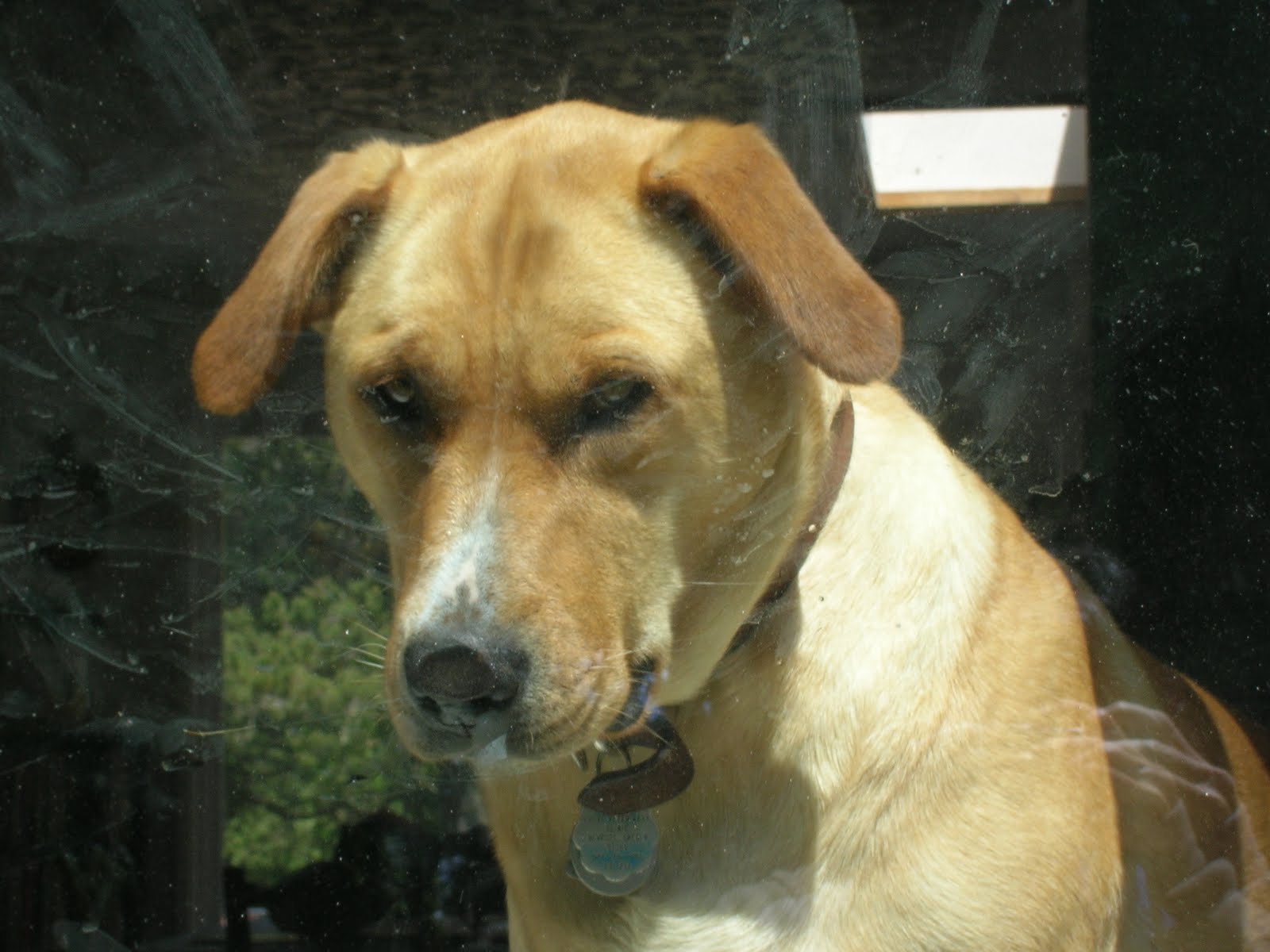
I sat under the tree in the backyard at midnight crying. My dog (the one in the picture, now full-grown) was gone. She ran out through a gate left ajar by the new gardener. For a while I heard her rustling through the forest that surrounds our house, but now I heard nothing but the ocean in the distance. it was a dark, cloudy night with no stars or moon showing. I had done everything I could to raise this puppy to adulthood and keep her safe, but now I didn’t know if I’d ever see her again. Oh, how I cursed that gardener in my mind. The gate had looked closed, but he didn’t hook the latch, so Annie must have pushed it open.

I wandered the neighborhood calling for Annie, swinging my flashlight around. The growth was too thick in most areas for a human to walk. When I didn’t find her nearby, I drove my car slowly down the streets where we take our walks. Everything looked different in the dark, the trees gray and spooky, the houses dark and silent.

I was exhausted, but I couldn’t go to bed without finding Annie. I feared she would be attacked by a coyote or fall into a ravine. If she got out onto the highway, she could be hit by a car as easily as the raccoons, squirrels and possums I see on the road every day.

No sign of Annie. No one to call at that hour. I was completely alone–except for God. I sent up a prayer and drove home. Once upon a time, when I had both Annie and her brother Chico, I used to be able to get them home by waiting in the open car. They’d think I was leaving and jump in. I parked my Honda Element in the garage and settled onto the tailgate with my flashlight, a box of Milkbones and the garage door remote control. In a few minutes, I heard twigs crackling. And then, praise God, Annie ran and jumped up beside me. Before she could think, I closed the garage door.

I gave her a big hug. “You’re grounded,” I informed her. My dog is my child. My only child. Thank God she’s back.

Georgia O’Keeffe: childless artist

Georgia O’Keeffe never had children. A famous artist of the 20th century, she started painting in her teens and continued into her 90s. She lived a fascinating life. Married to Alfred Steiglitz, an art patron and her mentor, she wanted to have children but agreed with him that motherhood was incompatible with her art. She needed to focus all of her attention on her painting, and that’s what she did.

O’Keeffe was a strange woman who dressed in black and shunned the company of other people. She spent most of her life living alone in an adobe house in the desert. She became known at first for painting huge vivid flowers that seemed to some to be loaded with sexual imagery. Later she fell in love with the American Southwest and painted many scenes of the desert and of the bones and rocks she found there. Steiglitz proclaimed that she was the first to present a woman’s view of things.

Did she wish she’d had children? Perhaps, but her art was everything.

I just finished reading a fascinating biography of O’Keeffe. Portrait of an Artist: A Biography of Georgia O’Keeffe by Laurie Lisle tells the story very well. One can find more information about the artist and her work at the Georgia O’Keeffe Museum website .

This raises the perpetual question: Can a woman be a mother and an artist (writer, dancer, CEO) at the same time?