Have you had the conversation about kids?

“We could have been parents: the conversation that changed our lives” is the title of an article in the UK’s Guardian that almost could have been written about my husband and me. The writer, Ruth Wishart, says she didn’t bring up the subject of having children until she and her husband Rod had been married for two years. She just assumed they would have kids. When she started talking about when to have them, she found out he didn’t want to have children at all. Happy with her life and career at the time, she let it go. Eventually she had her tubes tied. Then the unexpected happened: When she was in her 50s, her husband died suddenly, leaving her feeling very much alone.

I’ll let you read the article for the details, but so much of this story is familiar. As you can read in my Childless by Marriage book, Fred did tell me before the wedding that he didn’t want to have any more children, that the three he had from his first marriage were enough for him. He told me how he felt, but I really didn’t talk about how I felt; I assumed he would change his mind. We didn’t have the conversation we should have had. Instead, I let it go, too. And like Ruth’s husband, mine died. So here I am with my dog.

I’m not looking for sympathy at this point. My life is pretty good. What I’m saying is the same thing I have been saying here for years: For God’s sake, talk about it. Even if it causes a fight or sours the relationship, don’t hold it in. If you want children, say so. If you don’t want children, say so. If you’re not sure or might be willing to compromise, say so. Talk it out. Don’t let it fester, and don’t let yourself get caught in a situation that breaks your heart. Please.

Thank you to Beth at the Children or Not blog for letting us know about this article.

I welcome your comments.
Childless readers seek comfort in their grief

“Are You Grieving Over Your Lack of Children?” is the headline of the blog I posted here on Nov. 7, 2007. Since August 2007, I have published 366 other posts at this site, but that is the one that has drawn the most views–6873–and the most comments–152. Most people get to it by a Google search. I’m thinking they’re searching through tears because the key word is “grief.” It hurts to want children and not be able to have them, especially when it seems to be a normal part of life for everyone around you. You see other people cuddling babies and it hurts. You see your friends and sisters getting pregnant and it hurts. You see a child laboring over a Mother’s Day card for his mom, and it hurts. You see an older woman going out to lunch with her daughter and granddaughter, and it hurts. I know. I feel that pain, too.

The comments keep coming in for that post, as well as for many others. People, mostly women, write to me in crisis. In so many cases, they thought they would have children with their spouse or partner, but now he/she is saying no, they don’t want to do it. Maybe they already have children from a previous marriage and feel that’s enough. Maybe they’ve had a vasectomy. Maybe one or both people have fertility issues. Maybe they just didn’t get serious about it until they were in their 40s and now it’s too late. Often, the writer, again usually a woman, is having to make an impossible choice: the man she loves or the children she’s always wanted.

I’m not a psychologist or marriage counselor; I’m a writer. I know a lot about this subject because of my own experiences and a boatload of research. I include much of that research as well as my own story in my Childess by Marriage book. I continue to collect all the information I can about all aspects of life without children and will share as much as I can. I offer my love and prayers in the hope that we can all find peace with what feels like a hole in our lives. If we can help dry each other’s tears and ease each other’s grief, then this blog is worthwhile.

Thank you all for being here. Keep coming back.

Who can afford to have children these days?

Back about 23 years ago, I wrote articles for Bay Area Parent and Bay Area Baby. One of my assignments was a piece on the cost of childbirth and “Baby’s first year.” Knowing nothing, I called hospitals for quotes and drove around to the various baby supply stores taking notes on what they sold and how much it cost. As if I knew what I was doing, as if I knew what one really needed to take care of a baby. I’m the one who always showed up at baby showers with a stuffed animal or a ludicrously wrong-sized garment. I should have sat down with some actual parents who were willing to go through their receipts for the past year or at least make a list of the essentials. I mean, what did I know? Did I include breast pumps, vaccinations, itty bitty shoes? Do six-month-olds even wear shoes? I know more about what a dog needs than what an infant requires, but I did my best. I came up with $33,700 (in 1990 dollars). That’s a lot of lattes.
Jonathan V. Last, author of What to Expect When No One’s Expecting, has children. He knows what they cost. He estimates raising a child from birth through college costs way more than anyone thinks, more than the USDA estimate of $207,800. Add $66,452 to $145,060 for college, which takes it to over a million dollars. Fast says the median price of a home in the U.S. in 2008 was $180,000, so “having a baby is like buying six houses, all at once. Except you can’t sell your children, they never appreciate in value, and there’s a good chance that, somewhere around age 16, they’ll announce: ‘I hate you.'” In addition to the out-of-pocket expenses, couples need to factor in lost wages for whichever parent does most of the childcare, usually the mother. These numbers don’t include the ridiculous cost of fertility treatments for those who need them or caring for a child with special needs.
Now, I’m sure parents can cut back somewhere. Do kids need the most expensive version of everything? Do their parents have to send them to the most expensive colleges and pay for food and lodging? Do all kids have to go to summer camp? But if we had children, we’d want to do the best for them, right?
The high cost may explain why the birth rate has gone down in recent years. I can barely afford to take care of my dog, whose main problem is persistent ear infections. So, let’s talk about the cost of having babies. The young people I know worry a lot about having enough money. Some of them have delayed childbirth indefinitely for that very reason. Has this been a factor in your discussions with your partner about whether or not to have children? Should it be? How would you handle the costs if you got pregnant?

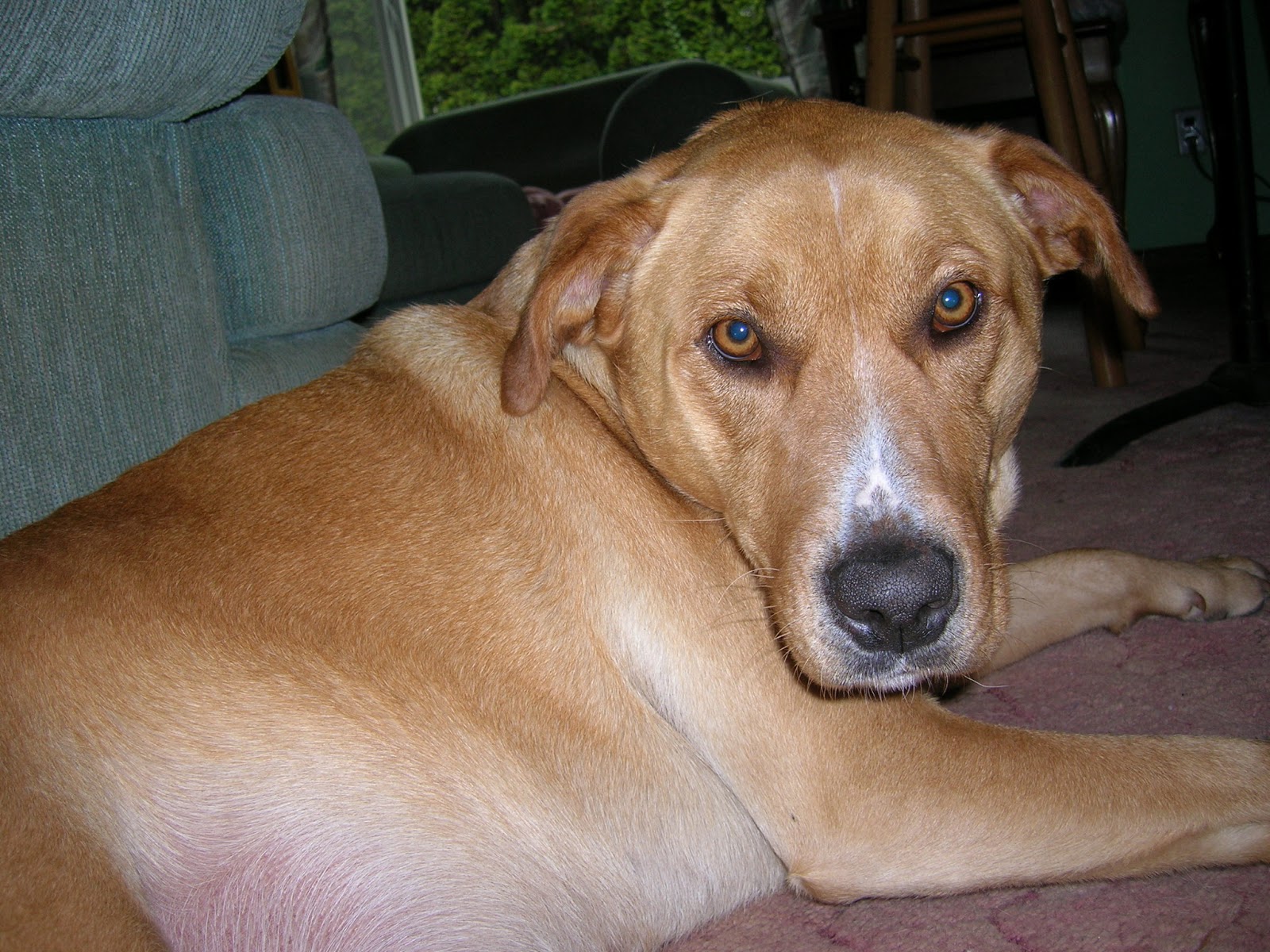
Taking care of Annie feels like mothering to me

I’ve been mothering my dog today. She has yet another ear infection, despite repeated home treatment. The doctor pointed to her floppy ears and said she’s a “poster child” for ear infections. Sunday, she started scratching her ears and shaking her head, sulking in misery in-between. I kept looking at her ears and couldn’t see the problem, but it was worse yesterday, so I called the vet first thing this morning. Out with the work schedule. Annie is more important. I have some things I should see my own doctor for, but not when my baby is hurting.

Annie is always happy to go for a ride, but as she began to realize where we were going, she started shaking. I drove with one hand and held her with the other. At the vet’s office, she ran up to the counter and greeted the receptionist. Then she leaped onto the padded seat to sit next to me, putting her paws in my lap and her head on my shoulder. She was trembling. I held her and tried to reassure her, especially when other dogs cried out from beyond the closed door.

Finally it was her turn. I told the lady vet about Annie’s symptoms and what I had been doing for them. I held my dog as an aide took her temperature and the doc swabbed gunk out of her ears to have it analyzed. I got instructions for medicine and ear wash, and we talked about Annie’s diet because my pup’s getting a little chunky. I’ve been giving her too much chow. Am I measuring her food, the vet asked. Uh, no. This diet is going to hurt me more than it does my dog.

Annie gobbled a few dog cookies, I paid the bill, and we walked out together, her tail wagging, my bank account bruised. I foresee a lot of difficult sessions getting medicine into Annie’s ears, but I will do it. I will let her shake goo all over my clothes, just as I let her lick my face and jump in my lap–all 81.5 pounds of her–because I love her, and it’s my job to take care of her.

If that isn’t mothering, what is?

May the happy moments outweigh the sad

In my last post, I talked about not letting Easter get to you with its emphasis on children. Well, Easter got to me, but not in the way I expected. There were children around, and they were as adorable as expected. Children with their choir-singing parents, children getting baptized, tots trying to sing in the back of the church, pictures all over Facebook of families with kids. That was fine. But there came a moment last night in the third of the four long services that I sang and played for when we were once again remembering our loved ones who had died. I fixed on my mother and felt a connection. I felt as I often do that I am a direct continuation of her too-short life. Not only do I look like her and carry on many of her beliefs and ways, but I’m taking her life force beyond what she was able to do, in my work as a writer and musician, in my life with my dog here in the woods, and in the adventures I go on.

That’s when the sledgehammer hit me. I have broken the chain. I am not carrying that piece of my mother and her mother and her mother into the next generation. It dies with me. And that sucks. I want to wail. I want a do-over. Give me another chance; I’ll have children. I’ll do whatever it takes. But it’s too late. I can tell myself all kinds of positive things about how God has given me other work to do in this life. I can love everybody else’s kids. But it’s not the same, and that pain will always be there waiting to catch me at a vulnerable moment.
I can still enjoy days like today, Easter, when after church I went out for a very adult brunch with friends (who have lots of kids and grandkids but none of them here). Afterward, I came home, telephoned my family in California, changed into my sweats and set to work cleaning up my back yard. Nobody to worry about. Totally free. Tonight I’ll watch a movie, share a bowl of popcorn with the dog, and maybe soak in the spa under the stars. My life is good. In the middle of Mass today, I felt so blessed I could barely stand it. I was surrounded by friends, playing the music that I love, and yes, Jesus has risen from the dead. The sun was shining in, we were all dressed up in our Easter finery, and I wanted to hug everyone.
Most of the time I can accept that I will never have children, but there will always be those moments when it just plain hurts. Know what I mean?
May we all have more happy moments than sad. Thank you for being here. Keep coming back.

Easter doesn’t have to be all about kids

It’s almost Easter. You know what that means. People with children are going a little crazy filling baskets with candy and toys, buying cute little Easter outfits, dyeing hard-boiled eggs, and organizing Easter egg hunts. They might be attending events in which somebody shows up dressed in a bunny costume. If the kids are in school this week, they’ll be making things like Easter cards and papier-mâché eggs. If they’re out of school on spring break, they’ll be throwing their parents’ schedules into a tizzy, making it difficult to work or do their usual activities.

All of this is a big deal to those who have children, and a lot of it is fun. When I was kid, I would wake up on Easter morning to find big baskets of goodies on my dresser. I believed the Easter Bunny had brought them, although of course they really came from my mother and grandmother. We got dressed up and went to church, but for us kids, Easter was about candy and presents. I guess it still is.
That might make people without children feel a little left out, but hey, Easter is not really about bunnies and baskets of goodies. It’s about the resurrection of Christ from the dead. And you know what? Jesus didn’t have any kids. It’s fascinating to think what might have happened if he did, but he didn’t. He devoted his life on earth to his ministry.
Not everyone reading this is Christian. Maybe you’re just celebrating the arrival of spring. We can all believe whatever we choose to believe. I not only believe the Jesus story, I work as a music minister for a Catholic church and will be immersed in church music for the next five days. In our nightly services, we will take the story from the Last Supper to the crucifixion and on to the resurrection. My only connection with children will be watching a couple of the kids I’ve been singing for all year be baptized into the Catholic church. I may pick up a chocolate bunny along the way, but it’s all about religion for me and not about kids. It’s about my faith and my ministry.
Easter isn’t half as bad as Mother’s Day, but it has its pitfalls for those who don’t have children and wish they did. You may be attending a family dinner in which everything seems to revolve around other people’s kids. You may meet up with people who keep insisting you need to get pregnant ASAP. You may just feel left out of the conversations. I hope you don’t. I think we all have our roles to play, and there’s no reason you can’t dive into the festivities along with everyone else. Just enjoy the fact that you won’t be bringing home a child who is wired on sugar and whining about not getting as many presents as his cousin. You can relax into your childless life and maybe enjoy a chocolate egg and a glass of cabernet in peace.
I wish you all a peaceful and blessed Easter.

Faking It in Momland at the mall

When we went shopping yesterday, I’m sure my friend had no idea she was taking me places I had never been before. I’m used to her chatting with everyone she meets and showing them all pictures of her grandchildren. I’m happy for her. At the clothing store where she talked me into a new Easter outfit, I smiled and nodded as she talked about childbirth with the store manager whose second child is due next month. It was hard not to stare at the woman’s “baby bump” in her snug knit ensemble and to wonder who would take care of the store when she left on maternity leave. But hey, whatever.

Then my friend took me someplace that hadn’t been on our agenda. Suddenly she had to buy her grandsons Easter outfits. We entered something called The Children’s Place. Oh my gosh. Miniature clothing everywhere. Tiny shirts, tiny argyle vests, tiny bow ties, onesies, twosies, threesies, I don’t know. If I had a child to shop for, this would be Disneyland. The sales prices were amazing. The merchandise was in disarray, as if a herd of rabid monkeys had come through, but my friend quickly hit it off with the clerk. Out came the baby pictures again as they compared babies and sizes and family situations while I wandered around feeling like a visitor from another planet. I have never seen so many children’s things in one place. For me, it was like a whole store full of doll clothes and I wasn’t allowed to play. Not only will I never have children or grandchildren, but nobody in my life is having babies these days. They’re either too old or they have put off marriage so long they may never get around to it. My friends’ grandchildren all live far away, so I’m not likely to ever see them except in photos on the smart phone or iPad.

I didn’t say much at that store. I let them talk while I looked at things and made color suggestions. As they continued to talk while my friend signed up for their rewards club, saying she would definitely be back, I rested on a chair near the cash register. I couldn’t say anything about my own children or grandchildren, and there seemed no point in telling them I didn’t have any kids. I just waited until they were through and we could go on to the Nike store.

I love my friend, and I’m grateful she includes me in her life, but when I mentioned that I had never been in a store like that before, it just didn’t register. Her mind was busy thinking about her babies. So I pretended I belonged, just like the other women.

Have you had an experience like this?

Mothering my husband instead of my kids

           Perhaps I was spared caretaking in my earlier years because I was destined to do it in the later years. I’m like the last runner in the relay race, the one who takes the baton home.
           All my adult life, other women gathered to talk about their children. Having no offspring, I could only offer a few memories from my own youth or a borrowed observation about my stepchildren and slink off to hang out with the men. But when I was 52, I discovered a whole new cluster of women with whom I shared a genuine sisterhood. We could talk for hours about our joys and frustrations, offering helpful hints, trading visits over coffee.
            I had never realized this group existed, and I would never have willingly joined. I’m talking about the sisterhood of Alzheimer’s wives, women who find themselves mothering the men they had hoped would take of them. Whatever their relationship before, now they must watch their husbands as constantly as they would a child. Turn away for a moment, and he might hurt himself or wander off.
            At first, it was a matter of filling in missing words and prompting him to get dressed, take his pills, and go to his appointments. His wife served as navigator on the road and interpreter at the movies. Later she would scold him when he turned on the stove. “No! Hot!” she said. And still later, she would feed him, diaper him, and clean him like a baby. Where once there were two potential parents in the house, now there was only one.
           I had been exchanging notes on the Alzheimer’s online message board, becoming friends with women nicknamed Emmie, Twiggy, Fortune Cookie and Sooze. We had talked about doctors, diapers, depression and more. But sending e-mail messages is different from meeting face to face, as I discovered one Sunday shortly after Fred’s diagnosis.
            We three authors were sitting in the library at the historical museum selling our books when Suzy, the take-charge 50-something beside me, asked Carol, fuzzy-haired with a wide mouth and deep dimples, if her husband’s “cognitive” powers were still working.

             Cognitive. Oh, I knew that word. They use it a lot in Alzheimer’s Disease books. A few more lines and I knew they were talking about AD. When they paused, I said, “My husband has Alzheimer’s, too.” It was strange to hear myself say it out loud. Mostly we weren’t telling people yet.

            Well. I was in. Not only did Carol’s husband have it, just a little farther along than Fred, but Suzy’s mom had it, too. We talked about lawyers and homecare and tips for getting our loved ones up and dressed and out the door. Suzy tsk-tsked over how young my husband was. He seemed handsome and loving and helpful that day–until he came in to report that he had locked his keys in the truck. 
            One in 10 people over the age of 65 had Alzheimer’s Disease. The numbers were growing as the baby boomers approached senior citizen age. In every gathering, someone’s mother, father, brother or husband had AD. At last I belonged.
            It didn’t matter how old I was or whether I had ever given birth. I was welcomed into the caregivers’ club. We all loved someone who was not what he or she used to be, and we were not giving up on them, despite their imperfections, their sometimes bratty behavior and their constant demands. Just like mothers with their children, we loved them, no matter what. 

Book Review: Baby or Not?

I just finished reading this short e-book which I think you would be interested in.

Baby or Not: Making the Biggest Decision of Your Life by Beth Follini, 2013. This 76-page Kindle e-book by the woman who writes the Baby or Not blog needs a little editing, but the content is helpful for anyone trying to decide whether or not to have a baby. Its chapters include: the effects of having children on career and finances, situations where one’s partner doesn’t want children, co-parenting and foster parenting, the decision to be childfree, and having a child as a single parent. Follini, who lives in the UK, is a life coach who specializes in helping people make the baby-or-not decision. This book offers solid information on the options and a step-by-step process for figuring out what you want to do.

 Follini includes a whole chapter on what to do if you want a child but your partner doesn’t. Often it isn’t that the partner has made a clear decision against children but that he keeps putting it off or won’t talk about it. It may also be that the relationship has other problems. Or perhaps the one who wants children has not been clear about what she wants and needs. Follini asks questions to help people sort this out. Is he firm in his decision not to have children? Will you stay with him anyway or will you leave in the hope of finding someone else who is willing to be a parent? The answers may be difficult to face, but in the end, it might be better to know than not so you can make a decision and move on. 

I have long maintained that couples need to talk about this issue in depth, not in quick asides and assumptions. I didn’t do that. Too insecure to stand up for myself, I let the men in my life make the decision by default. Don’t do what I did. Figure it out before you run out of eggs. 

Childless by vocation: a valid choice?

As I watched the naming of our new pope on the TV in the church office with our pastor and other members of our liturgy committee this morning, I got to thinking about people whose vocations require them to give up marriage and children. Whatever our new pope, Francis I, may be, he is not a biological father (although when he was a priest, people called him “Father.”) About 50 years ago, when he was a young man, he took vows that required him to remain single and celibate for the rest of his life. Catholic nuns and brothers take the same vows. The idea behind this is that they can’t devote themselves fully to both the church and the families they might have.

One might argue (I often do) that women should be allowed to be priests, and that priests should be allowed to be married. I don’t see that happening anytime soon, and I do see some logic in total devotion to the church. In fact, a female Episcopal priest I interviewed for my Childless by Marriage book is allowed to be married but says she decided she couldn’t be effective as a priest if she was torn between church and family.

We’re not all Catholic, of course, but let’s think about giving up family for vocation. When priests or nuns vow to be celibate, nobody calls them selfish or deluded as they do with us lay people who announce that we’re not having children. Nobody speculates about their fertility. Religion isn’t the only vocation where it’s hard to do one’s work and raise a family, too. I know of many people in the arts and sciences, for example, who have decided to devote themselves to work rather than having children. When I had other people to take care of in my own life, I always felt torn between their needs and my desire to focus on work.

Until modern times, a woman’s only acceptable role was to be a mother, but things have changed. The jobs of priest or pope may be not be open to us, but most other careers are and they might not mesh with motherhood. Is it valid to decide to give up family and focus completely on work? What do you think? Do know anyone who has done this?

There’s a great photo collection on Pinterest of childless/childfree women who have achieved great things. Click here to see it.