Childless at work: does it make a difference?

Remember before Mother’s Day when I wrote about Megan Krause’s book Meternity and the idea of childless workers deserving something like maternity leave? That discussion got a little derailed by Mother’s Day—and I’m so glad you all are commenting and encouraging each other, but now that the Mother’s Day madness is over for this year, let’s revisit childlessness in the workplace. Check out this follow-up article, “The Motherhood Divide in the Workplace—It’s Not as Big as You Think.”

Writer Georgene Huang, a new mom, suggests that parents and non-parents want the same things from work. Mostly they want flexible hours so they can attend to other things that are important in their lives besides work. Children are certainly a major concern, but we all have other responsibilities for which we need time, things that we can’t manage on the weekend or the few hours between work and sleep on weekdays.

For me, it was my writing and my music. Sometimes I brought my guitar to work and dashed out for an hour to perform. I know, everybody isn’t trying to do several careers at once like me, but when are we supposed to go to the dentist or the doctor or the DMV? What are we supposed to do if a plumber is coming to our house to fix our broken pipes? What if our parents, our spouses, our siblings or our friends need care during an illness or injury? What if the dog has to go to the vet?

Kids take a lot of time—and you know who was meeting with my stepson’s teachers when he was living with us? Right, me, the childless stepmom. What I’m saying is we all have stuff, and employers ought to give us time to deal with it. Obviously some occupations are more flexible than others. Somebody has to be there doing the job, but those jobs that expect you to work 80 hours a week or you’re not a team player, are not being fair to their employees, whether they have kids or not.

Tell us about your experiences. Have you felt discrimination at work as a person without kids? Have the parents dumped their work on you because they had to tend to their offspring? Do you resent your co-workers with kids? Are any of you employers with moms or dads on the staff who need extra time off? What’s a fair way to handle this?

If you still want to talk about Mother’s Day, backtrack to the Mother’s Day posts and comment there. We need to talk about it all. Thank you so much for being here and for the kind words many of you have offered me for my efforts. You all help me so much.


Did you survive the Mother’s Day mania?

Mother’s Day is over. Thank God. With no kids and no mom, I hate that day. This year, I had my meltdown on the two days before. I was too depressed to do anything. At church Saturday night, I played terribly and felt like the whole church was looking at me sitting up front at the piano when our new pastor asked all the moms to stand for a blessing. Afterward, I parked my car at a spot overlooking the ocean and cried. Then I went to dinner alone in a restaurant full of families. The young waiter kept calling me “ma’am.”

Making matters worse, my sister-in-law and niece were hosting a baby shower for my nephew’s wife, who is pregnant with her third daughter. I probably couldn’t have gone, but it would have been nice to be invited. Endless Facebook posts about that, topped off with a picture of my brother’s family—seven people with kids and grandkids—did me in. There’s only one person in my family photo.

I did better on the actual Mother’s Day. I got the day off from church and mostly avoided the media and other people. I played the piano, did online puzzles, read, watched videos and took the dog for a long walk. Later, I went out to jam with musician friends. Renae, our hostess, greeted me with “Happy Mother’s Day if it’s appropriate.” “It’s not,” I said. She grinned. “Me either.” We had a great jam. (You can read about it at my Unleashed in Oregon blog.)

Over the weekend, several people tried to wish me happy dog-mom day, but it’s not the same, as some of you have already commented. I adore my dog, but she’s not going to give me a family photo like my brother’s. And all those sympathetic posts addressed to those of us who are missing our mothers or feeling bad because we don’t have kids were posted with good intentions, but they made me cry.

On Monday, I thought it was over, but now everyone had to post photos from their happy Mother’s Day celebrations. Moms and kids all over the Internet. I’m happy for all of them, but they’ll have to forgive me if I had to stop looking.

How did you do? Did you spend the day weeping, cursing, calm, or stuffing down your feelings? Did you manage to escape the mother mania? Tell us about it. It helps to let it out.

Guys, your turn is next month. Father’s Day. Sigh.

Happy . . . Wednesday!

Do childless deserve ‘me-ternity’ leave?

Here’s an idea from author Meghann Foye that has been causing some uproar online. Weary of seeing her co-workers take a nice chunk of time off for maternity leave, she decided we childless folks deserve something she’s calling “meternity” leave. She wrote about it in the New York Post in this article titled “I want all the perks of maternity leave–without having any kids.”

Foye also wrote a novel titled Meternity. In that novel, the main character pretends to be pregnant, so she can have all the perks that the pregnant women around her are having, along with the freedom of not having kids.

All of this has irritated some people. Check the counterpoint piece by Kyle Smith in the New York Post, “Parents should be worshipped by their childless co-workers.” That’s just one of many angry responses.

Should we demand our own “meternity” leave or should we worship the mommies? Doesn’t that description of childbirth make you at least a tiny bit glad you’ve never had to do it? Be honest. It’s something to think about as we slog through another Mother’s Day this weekend.

Okay, so parents in the right work situations get paid leave for childbirth. I think we can all agree they need the time off to deal with everything that has happened to their bodies and their lives and to give the baby a good start.

Do we childless deserve a similar break to get away from work and reboot our lives? Why? I could use a reboot about every two weeks, but no. I have to earn my vacations. If I were in academia, I could earn a sabbatical every so many years, but that has nothing to do with having babies.

For all the time I have studied childlessness, I have heard accusations that moms and dads slack off at work, leaving their childless co-workers to pick up the slack. Has that been your experience? Do parents seem to get extra privileges? Do non-parents deserve the same privileges? Have you found yourself staying late and resenting your co-worker who had to run home to take care of her kids?

Most of my jobs were at newspapers, which are quite different from other workplaces. Everybody works ridiculous hours and deals with overwhelming stress. I never saw the parents get any more privileges than the rest of us. They just shut up and did the best they could. Kids? What kids? But I can see how it would happen. Who cares about a deadline when your 6-year-old is waiting to be picked up after soccer practice?

Personally, I think everyone should be able to work their 40 hours and go home, that there’s nothing wrong with taking a real lunch break and going home at 5 or 6 to have dinner with the family—or the dog, if that’s what you have. When my time was up, I was ready to punch out. Bosses and co-workers didn’t like that. That’s one of many reasons I prefer to be self-employed.

I freelanced during most of the years when we had a live-in adolescent. He seemed to be proud to bring his friends through the house and point to me—“That’s my mom (or step-mom; it varied). She’s a writer.” And yes, there I was, writing.

But not everybody can work from home. Not everybody has a working spouse to help pay the bills. Not everybody has a kid who can make his own mac and cheese.

I’m a writer and a musician. I never wanted a full-time job in the first place. I’ve had them, lots of them, but I always felt like my real career was elsewhere, outside the job. You might say my own writing was my baby, the child I needed to take care of, had to get home to tend. It still is.

But I have had regular jobs in retail stores, doing secretarial work in Silicon Valley offices, setting type in a print shop, teaching, and many newspaper jobs where I was an editor, reporter, and/or photographer. People depended on me to be there as scheduled and to get my work done. What Foye is talking about is an extended paid vacation because she wants to go do something else for a while. Don’t we all? But it’s not the same thing as maternity leave. Is it?

Foye’s novel does sound like fun though.

We haven’t talked much here about childlessness in the workplace. Let’s get a discussion going. I really want to know what it’s like for you.

***

Mother’s Day is this Sunday. I’m tickled because I just got myself this Sunday off from my church job. Instead of listening to the priest drone on about the glories of motherhood, I can stay home and pretend it’s just another day. If you need to duck and cover, do it. Stay away from situations that are going to make you crazy, and stay away from Facebook. It will only make you feel bad. Do something fun for yourself. Take a meternity day.

The childless go invisible again

I just finished reading an anthology of blogs by women over 45. Most of these women write about their kids and grandkids. They might as well have titled the book “Mommy blogs.” Why are there no childless writers represented? One out of five women over 45 does not have children. That is a significant number. But you wouldn’t know it from this book. Or from many others that I have read. The book I’m reading right now about working from home assumes the reader has children. It’s everywhere!

A year or so ago, I published an essay in another anthology by women—and I was the sole voice of childlessness. Why? Are women without children not writing? I know that isn’t true. Is this part of what we talked about a couple weeks ago, trying to blend in by not discussing our lack of offspring?

In my work as a writer, I study listings of publications looking for submissions. As I go down the list, some of them are so mommy oriented I would never fit in. Cross them off the list. The doors are closed to me. Parenting publications are a huge industry. There are plenty of parenting readers, but also, most publications are supported by advertising and there’s a lot of stuff advertisers can sell to parents and future parents. Even most of the so-called women’s magazines cater to moms. Whereas I’m reading “coastal living” and drooling over the decorating and cooking tips.

It’s not impossible for childless people to write for parenting publications. I did it for several years back in California when I freelanced for Bay Area Parent and Bay Area Baby. I researched, interviewed and wrote, not mentioning my non-mom state unless I had to. (“How long was your labor?” “Uh, I don’t actually have any children.”) I did have a live-in stepson at that time, so I could relate to a certain extent. Plus, a good writer can write about anything. Research is research. I also wrote about business for several years, and I hate business. I’m not handy at all, but I have written about fences, paint, wood stoves, and windows. But at this point in my life, I cross the mommy mags off my list of potential markets.

Whether it’s publishing or other aspects of life, we notice barriers, even when they’re invisible. For example, a church retreat for women is coming up. I’m not going. I can tell from the flyer that it’s going to be all about being a good wife and mother. Our church also hosts a monthly “family movie night.” Not going to that either. “Family” is code for parents and children.

How about you? Do you see the childless represented realistically in your reading? Does it bother you? Have you noticed parent-oriented situations where you don’t feel welcome, even if nobody openly says so? Please comment. Let’s make a list of places we feel left out. Maybe we can make another list of places we feel included. Chime in.

You Can Count On Your Friends

I’m writing this in a dentist’s waiting room while my friend Pat has dental surgery. The nurse has gone over a daunting list of post-op instructions. Medications, meals, bleeding, pain. She’ll be loopy for a while, so I can’t let her drive or make important decisions. I have her purse and her medications here next to me. Shades of taking care of my dad and my husband through their various medical procedures.

Before I left home this morning, Pat sent me a text: Emergency: bring TP. So I did. That’s what friends are for.

You might think Pat is childless and alone like me, but no. She has a wonderful husband who happens to be recovering from back surgery at a rehab facility right now. She has two grown children and a stepson, plus seven grandchildren who all love her very much, but none of them live nearby. When it comes to this sort of situation, I’m her person, and she is mine. She has seen me through colonoscopies, endoscopies and two cataract surgeries and will be there for whatever comes next. And frankly, I’d rather have Pat around than most of my family.

For those readers who are worrying about who will take care of you in your old age, the answer is: friends. If you wind up without spouse or children, if you don’t happen to live with or near other family members, you will look to your friends. The people you see most often will take care of you, and you will take care of them. They won’t mind you asking for help. They’ll be miffed if you DON’T ask.

I’m terrible at asking for help. I was raised to take care of things by myself, but there are some things you just can’t do alone—like driving home after surgery. If you have a good friend, she will be there. And it will have nothing to do with having children because they’ll be off living their lives and expecting their parents to live theirs.

If you don’t have any friends, you need to work on that. Strike up a conversation, ask someone to lunch, go for a walk together, friend them on Facebook. If I can do it, so can you.

I’m not saintly, for anyone thinking that. I am so grateful it’s not my mouth they’re working on right now. I’m feeling a little righteous about my healthy teeth. I hate the way this place smells of chemicals and disinfectant and the way the women at the desk keep whispering to each other. I am not fond of the sound of the drill and the suction hose. I’ll be glad to get out of here. But this is what you do. You help your friends.

Bottom line: Don’t worry. If you never have children, you won’t be alone.


If Not a Mother, What Will You Be?

Book Review

Life Without Baby: Surviving and Thriving When Motherhood Doesn’t Happen by Lisa Manterfield. Redondo Beach, CA: Steel Rose Press, 2016.

It looks like you’re never going to be a mother. So now what? That’s the main focus of this book by Lisa Manterfield, the founder of the Life Without Baby online community. Although it is addressed to women and leans toward those with fertility problems rather than partners who don’t want kids, most of the wonderful advice in this book applies to all of us.

Step by Step, Manterfield takes us through the process of learning to live with our childlessness. In the opening chapter, “Letting Go of the Dream of Motherhood,” she helps the reader figure out when it’s time to stop trying and move on. She offers rituals to help us mark the end of our quest to have children. She goes on with chapters on dealing with the loss and the grief.

Other chapters cover finding support, aging without children, and envisioning new possibilities for our lives. She also gives practical advice for dealing with those difficult situations we all face: the people who want to know how many kids we have, the ones who claim we’re lucky to be childfree, and the ones who offer unwanted advice or thoughtless jabs that hurt us to the core. She helps us get through the holidays, including the dreaded Mother’s Day, and other situations that put us in tears years after we think we’ve gotten over our pain.

One of the points that really stuck with me was her emphasis that not having children does not mean we are broken or failures. We don’t have to make ourselves crazy trying to compensate for our lack of children. I have done that. Have you?

In each chapter, Manterfield offers exercises for readers to help figure out what to do next, along with tales from her own life that prove that she has the same struggles as the rest of us. This is a very comforting and helpful book for women trying to move past the overwhelming panic and grief that comes with realizing you might never have children. I wish I had had a book like this when I was 40 and struggling with the reality of my situation. I highly recommend it. And do visit the Life Without Baby site. But keep coming back here, too.

Thanks to Lisa for guest-blogging here last month. Let’s keep in touch.

So, read the book. Chin up, we’ll all get through this. Keep up the comments. I’m encouraged by the community we’re building here.

People Assume Crazy Things About Childlessness

Is your home perfectly clean because you don’t have children? Do you dare to buy white sofas? Is your schedule wide open? Do you have lots of money to spend?

Somehow parent-type people seem to think those of us without children luxuriate in quiet, neatness, freedom and money. Ha. Not me. How about you?

I just spent a few minutes standing in front of the pellet stove looking around my living room. What a mess. Dog blankets. Laundry waiting to be carried to the laundry room. Grocery bags I didn’t put away last week. Books and sheet music everywhere. The carpet is stained, the old green furniture is coated with dog fur, and this pellet stove I depend on for heat needs cleaning and servicing. Ashes fall out when I open the door.

I do display pieces of my antique glass collection where a child might be able to reach it, but there are many things I don’t dare leave lying around because my dog will eat them: Eyeglasses, pencils, paper, food, paper clips, or anything small and plastic.

Lots of spare time? Nope. Why do you think my house is such a mess? Work takes priority over cleaning.

I’m rich, so I can afford a maid, right? Well, way back in San Jose when my husband was alive and working, we paid someone to clean, but we weren’t childless then. His son lived with us full-time. So what am I saying? I’m trying to say that people assume things about childless folks, most of which are not true.

Have you heard that people who decide not to have children are selfish, career driven, strange, or immature? That they’re no good with kids, so you wouldn’t dare let them babysit? That they don’t want to be around children? Otherwise they’d have them or they’d adopt some kids.

That if there’s a fertility problem, it’s always the woman whose parts don’t work.

Here’s a good one: If you really wanted children, you would have tried harder and made it happen, so you must not have wanted them that bad.

For more ideas about the annoying things people assume, check out these articles. You might find a few things you identify with.

Melanie Notkin: 4 Unfair Assumptions About Childless Women

Ruth Sunderland: Childless is Not a Synonym for Weird

What about you? What do people assume about you that makes you nuts? Please share in the comments.

A Safe Place for the Childless Not by Choice

Dear friends,

Lately in the comments, a few people have been sniping at each other. That’s not good. We get enough of that in the rest of the world. As childless people, we face questions, disapproval, accusations, and folks who can’t resist giving you unwanted advice. Right? Let’s not do that here.

Last week we talked about how some of us—maybe all of us—sometimes keep quiet about our childless status because we don’t want to deal with the reactions. We’d rather blend in and let the parent people think we’re just like them. We don’t want them coming at us with why, what’s wrong with you, etc. Most of us don’t know how  to explain or justify our situation because we’re not sure how it happened or what to do about it. We’re still trying to figure it out. There aren’t any easy answers.

Of course, I’m talking about those of us who have not chosen to be childless, who are hurting over their childless status. The childless-by-choice crowd sometimes gets pretty militant about their choice: Never wanted kids, happy about the situation, feel sorry for you breeders who want to waste your bodies, money and time adding to the world’s overpopulation. Get over it, and enjoy your childfree life. But how can you when you feel a gaping emptiness inside?

In an ideal world, we would all accept each other’s choices, but the world is not ideal. We feel left out, guilty, ashamed, angry, and hurt. We need a safe place. Let this be one. If someone asks for advice—and many readers do—chime in, but we need to support each other’s decisions once they’re made. Don’t add to the hurt. And if a certain gentleman wants to leave his childless older wife for a young, fertile woman who will give him a family, ease up on him. We women might resent some of his sexist comments, but we don’t know what it’s like for him. He’s aching for children just like we are. And sir, don’t be knocking older women. Some of us take that personally. 🙂

Let’s try to be kind here. I am grateful for every one of you. Hang in there.

P.S. Easter was brutal for me. All those kids in Easter outfits. All those happy families while I was alone. Luckily I spent so much time playing music at church that I was too tired to care by Sunday afternoon. How was it for you?

Childless and Keeping My Secret

So, we’re at this restaurant, sitting outside, a big happy group of writers attending a workshop at the University of Arizona. Each of us submitted a prize-winning essay to get here. All day, we have been discussing the craft of writing and the writing life. We feel like equals despite varying ages and the fact that we come from all over the U.S. But now, the workshop on break, cocktails in hand, I realize that everyone is talking about their children. They’re talking schools, toddlers vs. teens, funny and frustrating things their kids do. They’re showing pictures on their phones. Suddenly I don’t fit in.

Seated in the corner, I smile and nod as if I too left a house full of kids at home. I do not want to confess that I am different, so I eat my salmon and cornbread and pretend I’m not. I also don’t admit that I do not struggle to find time to write. I struggle to fill the bottomless well of time I have at home when it’s just me and the dog. They know my husband died because that’s what my essay is about. Bad enough that I’m a widow and I’m one of the oldest people here. I am not going to tell them I don’t have children.

After dinner, I volunteer to walk the two miles back to the campus with the young, fast-walking group. I struggle to keep up, but I’ll be damned if I say it. I can do this. I can fit in.

Are you ever embarrassed because you don’t have kids? Do you ever pretend you do? It’s easy when you’re among relative strangers. Everyone assumes people of a certain age are parents until you tell them otherwise.

I’m not proud of being childless. I feel like I messed up. Truly. I didn’t make motherhood happen. No matter how successful I might be otherwise, there’s this moment when a colleague asks, “How old are your kids (or grandkids) and I have to admit that I never had any. I’m not one of the childless-by-choice people who boast about not having children, who say, “I never wanted any, and I’m happy with my life.” With the implied if you don’t approve, that’s your problem.

To be honest, most people don’t react much when I tell them. They go back to their own conversations, and I go back to smiling and nodding. I can share a little bit in the conversation. I helped raise my stepchildren, I do have a niece and nephew, and hey, I was a kid once. But it’s not the same.

As I was getting on the plane to come home to Oregon, I overheard a conversation in which two strangers discovered they were both going to Portland to welcome new grandchildren. Sigh.

Do you ever feel like you need to hide the fact that you don’t have children? When does this happen? Have you ever pretended to be a mom or dad and gotten caught? Please share in the comments. Let me know I’m not alone.

*************

In spite of a few awkward moments, I had a wonderful trip to Tucson. The weather was perfect, the workshop was wonderful, and I got to spend time with my husband’s cousin Adrienne and her husband John, delightful people I look forward to seeing again soon. They gave me a room, a car, and food and let me bask in the sun after months of Oregon rain. For more about my Arizona adventure, visit my Unleashed in Oregon blog.

Thank you to Lisa Manterfield for enriching the blog last week with your great post about aging without children. Let’s all support Lisa by following her Life Without Baby blog and buying her book. I’ll be posting a review soon and adding it to our resource list.


Guest post: Aging Without Children

Dear readers,

While I’m goofing off in Tucson, I’m giving this week’s post to Lisa Manterfield, author of Life Without Baby: Surviving and Thriving When Motherhood Doesn’t Happen and the blog of the same name. Although she addresses her comments to women, men can benefit from her advice, too, sans the bit about menopause. Enjoy. I’ll see you next week. As always, your comments are welcome.

Sue

Aging Without Children

by Lisa Manterfield
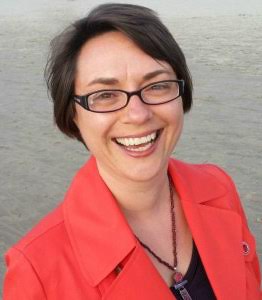
Lisa Manterfield picWith luck, we will all grow old eventually. However, aging without children holds a unique set of challenges that our parenting counterparts don’t have to face. Our experiences differ with the milestones we hit, such as menopause, as well as those we miss, such as grandparenthood. And while most parents assume they will be cared for by their children in their twilight years, for those of us without offspring, dying alone and being forgotten are perhaps two of our biggest fears. There’s no doubt that these fears are legitimate While we cannot control the future, we can control our awareness, preparation, and a shift in perspective that can help alleviate some of the concern and uncertainty.

Hitting the milestone of menopause can feel like the last cruel barb thrown up along this journey. Just when you think you’ve come to terms with not having children, your body pulls out its rubber stamp and seals the deal. This “official” end of the possibility of biological motherhood marks the final and ultimate loss of what might have been. You may find yourself grieving all over again, not only the loss of motherhood, but regrets about the paths not taken.

Our society isn’t good about helping people grieve intangible losses, so we have to give ourselves permission to reflect during this time and to mourn the losses we feel. Perhaps one of the most valuable lessons I learned on my own journey of coming to terms with the fact that I would never be a mother is the importance of creating an ending and allowing myself to grieve. For many of us, the possibility of motherhood often doesn’t go away until menopause hits, and we’re left hanging with that hope that it could still happen. Drawing a line in the sand and saying “this is where it ends” allows us to move forward into grief and to deal with our loss in a way that feels right to us (and not how society thinks we should handle it!)

But then what? What about that misty future without children? What about that unknown territory of growing old alone?

Perhaps one of the biggest fears many of us face when looking at a future without children is having no one to care for us as we age. We picture ourselves shunted into a low-cost care facility where decisions about our healthcare are made by strangers. We imagine we will die alone without a single familiar face beside us.

Unfortunately, in this messy old world, few of us have a say in how we’ll shuffle off this mortal coil. The reality is that fate, illness, dementia, and catastrophe seem to randomly select whom to bestow their gifts upon. We have little control in how we’ll exit or who—if anyone—will surround us when we go. So, with that happy thought, let’s talk about aging.

I suspect that those of us without children spend a lot more time than most people worrying about what will become of us later in life. Many parents assume their children will take care of them as they age. But if you’ve spent any time in hospitals and nursing homes, you know that parenthood is no guarantee of elder care, and many, many elderly people spend their final days without the company and care of the children they’d counted on. Ensuring care in your old age and having someone to carry out your last wishes is not a good reason to have children, but it’s another great reason to have friends.

As I’ve watched my own mother, a widow for many years, move into her 80s, I’ve come to see how important it is to nurture a circle of good friends. But, it’s not always easy to make new friends when you’re not moving in mommy circles and don’t have shared activities, such as PTA or kids’ sports, so how do you develop real connections, the kind you need when you’re asking someone to step in during your time of need?

Rather than trying to seek out other childless women and then looking for common interests, try starting with the common interest and seeking out the people you’re drawn to. That might mean joining a small group, such as a book club, exercise class, or adult education class, something that meets regularly so that you get to know each other better over time. At each meeting, challenge yourself to get to know one new person a little better. Start with the easy questions, like what do you do for work (and be sure to go in with some stock answers for the inevitable “Do you have kids?” question.) You’re looking for common ground, so over time, ease into conversations about hobbies and special interests. As the friendship develops, look for ways to make a more personal connection outside the group. Invite her to meet for coffee, a walk, or a drive, something where you can enjoy some quality one-on-one time and get to the deeper conversations that will strengthen your connection.

If this sounds like a lot of work, it is! But so is family, and these friends are the “family” we’re choosing. As with blood family, there’s no guarantee these friends will be there for you as you age, but I do see a future where seniors will help one another. Lately, I’ve been hearing about retirement villages where able-bodied residents help those who aren’t mobile, and local volunteers are assigned as advocates.

I’m also hearing more about older women living together to support one another, and networks of single, divorced, and widowed friends checking in on each other. A different kind of family is being created and a little effort now can help alleviate some of the worry about spending our later years alone. But it won’t happen by magic and it’s up to each of us to nurture the relationships with the people we’d like to have around as we age.

******************

Lisa Manterfield is the creator of LifeWithoutBaby.com, online community that provides resources, community, compassion, and support to women facing a life without children. She is the author of Life Without Baby: Surviving and Thriving When Motherhood Doesn’t Happen and the award-winning memoir I’m Taking My Eggs and Going Home: How One Woman Dared to Say No to Motherhood. She lives in Southern California, with her wonderful husband (“Mr. Fab”) and overindulged cat, where she is working on her latest novel.