In Conclusion: My Childless by Marriage Commencement Address

Well, my friends, this is the last post. As far as I know. If I get itchy to write something new, I will. For now, Childless by Marriage is changing focus, not going away.

This is still the only space that is all about being childless because your partner can’t or won’t have babies with you. You are not necessarily infertile. You could have sons and daughters if you were with someone else. Information about fostering, adopting or any other birth alternative is irrelevant if your partner doesn’t want kids in the first place.

In a world where most people become parents, you will be surrounded by people who don’t understand your situation. I hope this blog has helped you to deal with the clueless questions and suggestions.

You may grieve the loss of the children you’ll never have or feel relieved that it worked out this way. You may shed a tear when you watch others with their children or cheer when you’re free to do things parents can only dream of. These emotions won’t go away, but they will change as you age and focus on other things. The hardest part is when you’re still fertile and your friends are all having babies while you’re not. I remember that part all too well. Your body is screaming “Do something!” and you can’t.

We have things in common with both those who are physically unable to conceive or bear children and those who have chosen to be childfree. But this is our space. We are the ones who chose love over babies.

If you want to keep up the conversation, come to the Childless by Marriage Facebook page. We can even start a private group there if you’re worried about other people reading your comments. Just let me know. I’m also on Instagram–@suefagaldelick. Find all my connections at my website, https://www.suelick.com, or email me at sufalick@gmail.com.

These days, much of my attention is going to my “Can I Do It Alone” Substack and eventual book. Aging alone is a natural extension of being childless by marriage. When the marriage ends by death or divorce, you may find yourself with no family. Your parents and aunts and uncles will die. Your siblings and cousins may live far away or be too busy to hang out with you.

While others have their children and grandchildren for company, you will have yourself and maybe a dog or cat. People don’t talk enough about this result of not having children, so I’m doing my best to shine a light on all its glories and dark places.

I will continue to be active in the childless community. In fact, I will be part of the next Childless Elderwomen Fireside Chat, happening September 20 as part of World Childless Week. The theme is “We are Worthy.” Register here to attend live or receive the recording later.

Do consider getting involved in World Childless Week, Sept. 15-21, all online. It offers many workshops, panel discussions, and opportunities to share your own story. Some of the sessions will not apply to you if you are not dealing with infertility. Skip those and attend the ones that fit.

If you’re struggling with your childless-by-marriage situation, don’t keep it a secret. In my mother’s day, no one discussed why certain people never had children. But there is nothing to be ashamed of. It helps to talk about it. Share how you feel with your family and friends. They may be more understanding than you expect. If they say hurtful things—that you must hate children, or that you should leave your partner—set them straight. Stand by your choices. Stand by your man or woman.

Explain that there is more than one way to lead a good life. Children are terrific, but everyone doesn’t have to have them. It’s all right to explain you really wanted them, if you did. But your life is still full of wonderful things.

If they get it, they get it. If they don’t, let it go.

When you encounter other childless people, invite them to get together for coffee, a play date at the dog park, or whatever sounds like fun. 

Also talk to your partner, not just once but often, about how this situation affects you. Don’t hide your feelings or let them fester. You may not change their minds or change the circumstances that have led to being childless, but don’t treat it like a secret that should not be discussed. Listen to your partner, too. Their feelings count as much as yours.

If you play a parent-like role as a stepparent, aunt, uncle, foster parent, or teacher, try to love others’ children like your own, whether they love you back or not. Even if you never create your own family, you can play a mother or father role in the world. We all need older people to love us, guide us, and show us how to live well.

Thank you all for reading this blog over the years. Some of you have been commenting for over a decade. Others just read, sometimes hiding it from their partner. I know you’re out there. Here’s a big hug to one and all.

If you want to keep reading about the childless/childfree life, visit my resource list at https://www.childlessbymarriageblog.com/childless-by-marriage-home-page. I will keep updating it.

Jody Day recently published a long list of related blogs at https://gateway-women.com/resources/recommended-blogs. Do check that out.

More and more terrific writers are blogging or Substacking about life without children. For a start, see Ali Hall’s “Life Without Children,” the No Mo Book Club, Kate Kaufmann’s blog, and Andy Harrod’s https://invisiblechildlessness.substack.com.

Of course, I’d love for you to read my books, Childless by Marriage and Love or Children: When You Can’t Have Both.

I am still and always will be childless by marriage. It has affected every bit of my life, as I’m sure it has yours. If you want to talk, I’m here.

See you soon.

Love,

Sue

Your Childless by Marriage Survival Guide

Survival guide? I can hear the naysayers now. “What’s so hard about not having children? You’ve got nothing to worry about but yourself.”

Wrong! In a world where most people become parents, those of us who don’t procreate face a few special challenges, including feeling shut out by your friends with kids, getting dumped on at work because everyone assumes you have nothing else to do, and the mother-in-law who keeps buying stuffed animals for her unborn grandchildren.

In this second to last new post at the Childless by Marriage blog, I offer a few suggestions.

1) The question: Do you have children? For most people, it’s just a conversation starter, but answering “no” may start the conversation in a direction you’d rather not travel. So have a reply ready. I used to tell people I had three stepchildren, which usually satisfied folks, but since I no longer see the steps and I’m considerably older, I just say, “No, I never had any children.” My friend Jill replies, “I have dogs.” Another friend just looks them in the eye and asks, “Why?”

2) The next question: Why don’t you have children? Telling folks you hate kids will not win you many friends. If you wanted children but your partner was unwilling or unable, it’s not cool to put all the blame on them. This is a person you love, right? You’re in this together. (If you’re not on the same page, you need to figure out whether you should stay together). For a few years, you can say you’re not quite ready yet, but after that, you need a better excuse. You could say, “We decided children were not for us,” “Our lives were already so full,” or “We tried, but it didn’t work out, so we got a dog.” If you have fertility issues, talking about them may earn pity, but who needs that? I just say, “God had other plans for me.” Then I change the subject. You can always turn it around and ask, “Why do you have children?”

3) Baby showers: Men don’t have to worry as much about this, but it can be a nightmare for childless women. The longer your friends live with babies, the more you wonder if they have lost their minds. At baby showers, women who have given birth terrify the guest of honor by telling harrowing labor stories. They play obstetric word puzzles and hold timed doll-diapering contests before enjoying a long orgy of unwrapping gifts. You will be the only woman who puts the diaper on backwards, who has nothing to contribute to the conversation, and who buys a doll-sized lace dress the child will be too big for at birth. You have two choices: tell someone else’s birth stories and sip as much fortified punch as you can, or decline the invitation, pleading work, a funeral, or some other obligation you can’t get out of. Send a card with money tucked inside. Cash always works.

4) Baby lust: No matter how comfortable you may be most of the time with your status as a childless person, once in a while you are going to want to cuddle an infant and talk baby talk. Borrow a baby. A sibling, co-worker or friend will be delighted to pass her child to you for a while so she can take a break. Borrowing an infant is like renting that Lexus you could never afford to buy. In both cases, when they need servicing, you give them back.

5) Baby talk: In their reproductive years, your friends and co-workers will spend hours discussing their children’s schools, illnesses, and annoying or endearing habits. Later, they will talk about their grandchildren’s schools, illnesses, and annoying or endearing habits. When you mention your puppy’s new chew toy, they just stare at you. Find a child you can talk about. Stepchildren work well, also nieces and nephews, students or the neighbor’s kid down the street. Collect stories you can share when the talk is all about kids. Worst case, reminisce about your own childhood.

6) Acting like a child: Ever pass an arcade and want to drop in a few quarters but everyone there is either a child or a parent? Ever miss playing marbles, jacks or Barbies? Play them alone, and people think you’re nuts. Play them with a child and you are helping, teaching, interacting. So, borrow a kid—with his parents’ permission—and have fun. You’ll get a reputation for being great with children, and their parents will be grateful because they’re sick of playing video games and searching for Barbie’s itty-bitty high heels.

7) The empty nest syndrome: Everyone has an empty nest eventually. Kids grow up and move away, and parents suddenly wonder what happened to their lives. You’re way ahead of them because your nest was never full. If you need something to feed and clean up after, get a dog. The dog will never learn to drive, never get married, never tell you she’s embarrassed to be seen with you. Dogs never ask for money or bring home bags of dirty clothes for you to wash. Overall, dogs are more fun than kids. And I’ll bet most of your friends who are raising tiny humans would agree.

8) You are not alone: With more and more people opting not to have children (or get married), you are not the only person without offspring. When you find someone else who is childless, talk to them, invite them to a meal, do things together. Eventually, the parent-people will look up and see you again when their kids no longer need constant supervision. Meanwhile, you don’t have to be alone. If you look around, you’ll find that people without kids are part of the new normal.

Dear friends, what would you add to this list? What is your best advice for childless by marriage readers?


One more post to go before I stop posting regularly here at the Childless by Marriage blog. What would you like to read here? I will keep up the website, with its reference list and an index of the 900 posts I have published over the years. You can still comment. I will read your comments and respond.

The Childless by Marriage Facebook page will continue. If you haven’t visited there, give it a try.

If you want to know what I’m up to these days, visit my “Can I Do It Alone?” Substack at https://suelick.substack.com or friend me on Facebook at https://www.facebook.com/suelick

Thanks for reading Childless by Marriage!

The Birth at the End of The Novel Made Me Cry

. . . and not because I never had my own

The novel I just finished ended with the birth of a baby. 

Of course it did. In this type of feel-good fiction, even the people who think they can’t have children end up having them, and everyone is delighted. Just as people fall in love, overcome various obstacles, and end up happily ever after, surrounded by friends and family who adore them. 

To be honest, I want that. Don’t you?

Too bad it’s fiction. I won’t name this novel for fear of spoiling it for you.  

I will give credit to the author for bringing a childless woman into the picture. The new mom tells her childless sister-in-law, “My daughter needs a guardian angel, mentor, teacher, friend, a role model. Someone who is her strength. Someone she can always depend on and look up to. . . . Will you be Elizabeth’s godmother?”

Of course she will.

As I savored the ending through my tears, I cursed the author for making me cry. Baby-happy though she may be, at least she recognized the pain of those of us who don’t have children.

I suspect this “childless” godmother will marry her true love and miraculously become a mom in the sequel.

Moms and non-moms don’t always get along that well in real life. So often, they make wrong assumptions. A mother friend I’ll call Jo and I were talking about how misunderstandings arise between friends over having or not having children. One of her close friends assumed that when Jo became a mom, she would not have time for their friendship because moms’ lives are all about their kids.

“There was so much more to my life,” Jo protested. “I was still me.” 

At the same time, mothers make the mistake of assuming those of us without kids hate children and don’t want to be around them. That’s not true. I would love to be a godmother.

Kids are magical in the way they see everything with fresh eyes. Their excitement and their honesty are refreshing. Sure, they’re messy, noisy, tactless, and sometimes a pain, but so are we. Yes, seeing yours might remind me that I’ll never have my own, but does that mean I have to be kept apart from ALL children? Let me in.

It’s not only parents and non-parents who fail to communicate. People who are at different stages of life also misunderstand each other.   

That’s one of the reasons I’m planning to stop writing new posts for this blog after a couple more. My 900 posts will remain here for you to read whenever you want. I’m even going to create an index.

As a baby boomer who came of age in the late 1960s and early 1970s, I’m just not in the same place as young women struggling with the realities of childlessness now. I’m way past the possibility of having children. I’m not married or dating. My peers aren’t having babies; they’re welcoming grandchildren.

With menopause 20 years in the past, I feel as if I have already shared all I had to share about my childless journey. There are other, younger writers doing a better job of it now. 

That does not mean I don’t feel sad when I see families doing things together and know I’ll never have that. It does not mean I don’t feel grief and a bit of regret for how things turned out. It doesn’t mean I don’t see other women making the same choices I made and want to scream, “No! Don’t give up your chance to have children so easily.” 

It doesn’t mean I don’t feel like a slacker sometimes because I was physically able to reproduce, unlike women who are unable to conceive or carry a pregnancy to term. Unlike couples who go through hell trying to have a baby and still come out with empty arms. Compared to someone who bought a crib, chose a name and felt a baby kick, then lost that child, what have I got to complain about? 

I chose men who didn’t give me children, that’s all. I should have known better than to marry my first husband, but I was young and naive. My second husband, Fred, was too wonderful to give up. I believed his three children would give me all the motherhood I wanted. They didn’t.

Still, there is pain. There will always be pain.

When a friend brings her daughter to open mic to sing a duet and I know I will never do that, when a daughter rushes to the hospital to help her ailing mother or father and I don’t know who will come for me, or when couples post pictures of their kids and grandkids while I’m posting selfies, I grieve my situation. 

But do I think about it every day? 

Not anymore. Nor will you eventually. Age makes it easier to accept how life has gone. It really does.

As for the blog, you need someone who is dealing with it now in today’s world. So much has changed since I lost my virginity in 1972. I will offer you a list of other blogs and Substacks that will more than fill whatever vacancy is left by my lack of new posts. I will also beef up my resource page so you can find whatever you need in one place.  

Back to the novel: I wish I had played a bigger role in the lives of my stepchildren, nieces, nephews, and young cousins. I lived far away, and I was always working. Care for my in-laws, my parents and my husband in their final years took all of my energy. Now, these young family members barely know who I am. 

I regret that as much as I regret not having children. 

I appreciate the new mother in the novel making the childless aunt feel welcome and included.  

This is fiction, but I hope we can be more understanding of each other in real life. 

How do you feel when you read books where people are having babies?

Additional reading

Bridging the Gap Between Parents, the Childfree and the Childless

How Moms and Non-Moms Can Come Together | Psychology Today

To find books where people aren’t all having babies, visit the NoMo Book Club, https://www.instagram.com/thenomobookclub


If you want to know what I’m up to these days, visit my “Can I Do It Alone?” Substack at https://suelick.substack.com or friend me on Facebook at https://www.facebook.com/suelick

Thanks for reading Childless by Marriage!

These Books Offer Three Different Views of Childlessness

Nulligravida by Saralyn Caine, 2021

How do you feel when someone declares they never wanted children and puts down the people who do want them? Me, I’m very uncomfortable, as if I need to defend my desire to be a mother or explain why I haven’t adopted or gone through IVF.

I recently quit reading a book titled Nulligravida, which is the medical term for a woman who has never been pregnant. I couldn’t get past the mean-spiritedness of so many of the poems and essays by author Saralyn Caine.

  • “Children are noisy, selfish, and dependent. They can’t help it, but I can help having that in my life.”
  • “I refuse to be a host to a parasitic entity squirming around in my belly. I refuse to have persistent migraines from all the screaming. I refuse to sacrifice my sleep and health and body and sanity.”
  • “There is no soul waiting/for me to be its mother./If there were, I’d have the desire.”

Caine implies that women who become mothers sacrifice themselves to these “selfish parasites” called children. She also bashes Christians and anyone who promotes parenthood.

We are all entitled to make our own decisions in this area. Caine’s words are valid for those firmly against having children, but as someone who grieves the loss of the children I never had, I just couldn’t read any more of this book.

Childless: A Woman and a Girl in a Man’s World by Fabiana Formica, Nianima Press, 2025

I had trouble with Fabiana Formica’s Childless, too, but not because of its contents. Its unusual format makes it a slow read.

Formica was never able to find a fitting partner with whom she could start a family. Nearing the end of her fertile years, she froze her eggs and picked out a sperm donor, but she ultimately decided she was not up to having a child alone. Much of the book consists of letters to her unborn child, whom she names Nia after her grandmother. She tries to explain why she couldn’t go through with it.

Fabiana was married once. Although she hadn’t wanted children before, she said, once they were married, she felt a physical yearning to have a child growing inside her. When she asked her husband if they could start trying to conceive, she received “a resounding “No!”

She writes: “From that dissonance, between the body that quivers for the seed of life, and the mind, witnessing a full-blown typhoon about to hit the abandoned island of love, comes the short-circuit. The void. The devastation.

“I’d chosen a man, an imperfect human being, made of flesh and blood and vague feelings. An adult child, much as I was, too, wrapped in concern for the preservation of our own images as solid, proud and strong individuals. These projections concealed the fragility of our unresolved and difficult childhoods, but no one dared speak of such heartfelt truths. When I’d met him, I’d never have talked about children—because I didn’t want them. To be a mother, until that moment, had constituted an outrage directed at my future, an obstacle to my destiny, an unnecessary burden on my presence in the world, a presence I envisaged to be very different from that of my mother.”

Her own mother didn’t want children and had several abortions before giving birth to Fabiana. She always told her that having a baby ruined her life. Fabiana didn’t want to make the same mistake. But now she struggles with her decision to abandon her frozen eggs.

“I must justify the pain of the decision to let go of this attachment to an idea, to a role I’d play in society by telling myself there’s another plan for me, beyond motherhood, beyond caretaker, beyond anything imaginable by society, or by my own social conditioned thinking.”

She admits she enjoys her freedom to travel and to put her career and herself first. She tells her baby, “I wonder if such freedom would be compatible with you, my sweet baby Nia. If a happy union in which a man wouldn’t take possession of me, or you, to make us his missing rib, might exist, a man who allows my body so much freedom that he wouldn’t see a baby as the fruit of his conquest.”

Formica met recently with Gateway Women’s Jody Day and writer Y.L. Wolfe for an online webinar. They discussed Formica’s book, the desire to control their own lives, the pressure to create traditional families, and prejudice against people who are not married or partnered. You can watch the recording here.

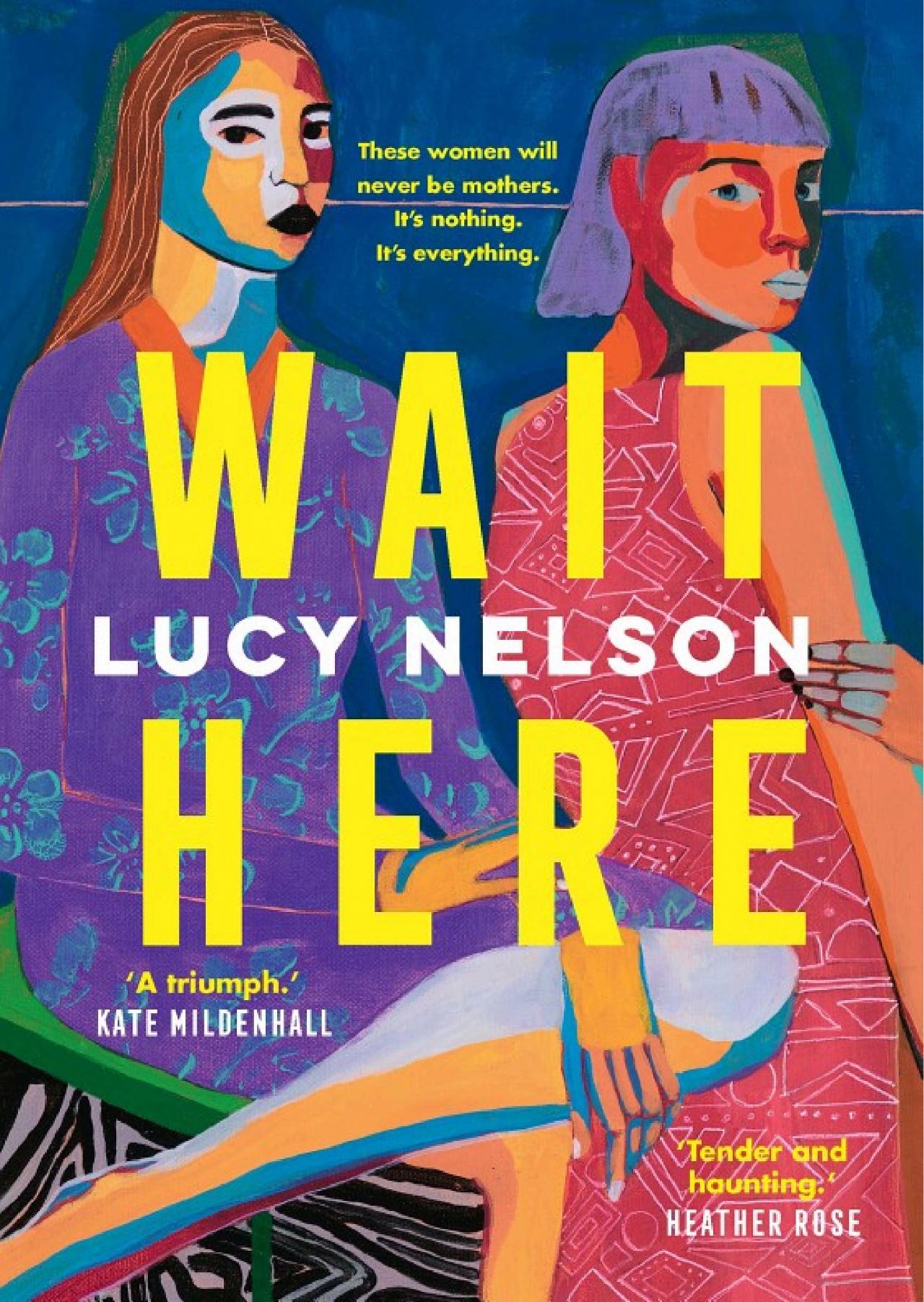
Wait Here by Lucy Nelson, Summit Books, 2025

I have no qualms about recommending Wait Here by Australian author Lucy Nelson. This short story collection features protagonists who do not have children and probably never will. More important, these are great stories, quirky and original. In “Ghost Baby,” we read about a woman who looks for her aborted baby everywhere. In “The Feeling Bones,” Nelson uses the bones of the body to tell mini stories about her characters’ lives.

The title story, “Wait Here,” takes place entirely in a therapist’s waiting room. There, the lead character finds a comfortable oasis where she can invent stories and avoid what she has come to talk about: a baby she aborted or miscarried (it’s not spelled out). I truly enjoyed these stories. They’re easy to read and a relief for childless readers who are weary of fiction that always ends with the woman having a baby or heavy books that rail against the evils of pronatalism. This one is fun all the way through.  

When I first started writing about childlessness, there weren’t many books published on the subject. Most were Christian-oriented books on infertility that ended with a baby. It is good that writers are offering books now that show the many different faces of life without children.

Do you have any books recommend? Please share in the comments.


Three posts to go before I stop posting regularly here at the Childless by Marriage blog. What would you like to read here? I will keep up the website, with its reference list and an index of the 900 posts I have published over the years. You can also find me at the Childless by Marriage Facebook page.


If you want to know what I’m up to these days, visit my “Can I Do It Alone?” Substack at https://suelick.substack.com or friend me on Facebook at https://www.facebook.com/suelick

The Big Change Nobody Wants to Talk About

Menopause. The big bugaboo people don’t talk about except to make hot flash jokes. 

The deadline that looms for those desperately trying to get pregnant before they run out of time.

The end of worry for those who fear getting pregnant when they don’t want a children (or another child).

The Childless Elderwomen met last Saturday, and we talked about it in depth. We could have gone on for hours. We may not usually discuss it with anyone but our doctors, but judging by the more than 100 questions that our host Jody Day received beforehand, people are interested and anxious about it. 

Our panel ranged in age from 49 to 79, from Catherine-Emanuelle Delisle, who went into early menopause at age 14, to Maria Hill and I, for whom it has been decades since our period. Others are still dealing with the effects.

For all women, the arrival of the monthly period, the sloughing off of the lining of the uterus that was prepared for a possible baby, signals that they are not pregnant. For some, that’s a relief because a baby was the last thing they wanted, at least then in their current life situation. For those who wanted to be pregnant, it can be a mild disappointment or a crushing blow, depending on how long they have been trying and how difficult it has been. It’s a reminder that another month has passed, their attempts have failed, and at some point, their fertile years will be over. 

It can be hard, but it’s not the end of the world. In fact, as writer and life coach Maria Hill said, “Once you hit menopause, you’re really starting to come into your own.” Others put it more bluntly. We reach the point in life we were give far fewer “fucks” about things that don’t matter. 

Yes, the end of your monthly cycles means you will not be able to give birth, but it also ends the pressure to keep trying. It allows you to move on.

The preparation phase of menopause, called perimenopause, is a drag. Periods come and go willy-nilly, heavy one time, light the next, one after another, or with big gaps when you think maybe it’s over and then it’s not. You may suffer from hot flashes, weight gain, vaginal dryness, and mood swings, but when it’s over, ahhhhh. 

Imagine life with no more cramps, no more PMS, no more pads or tampons, and no more birth control. I’m here to tell you it’s nice. 

In our talk, we discussed sex, physical changes that come with aging, feeling invisible, and especially to men. We touched on hormones and other options for dealing with the discomforts of perimenopause and menopause. I won’t lie. Some people have a hard time.

But we also talked about feeling like we have a fresh start, almost as if we are back to being the girls we were before puberty. We have a better perspective on what matters. We can spread our maternal energy in many directions. In other words, life is not over. 

My own menopause occurred at the same time I was dealing with my mother’s death, my husband’s dementia, and my own bouts with Graves’ disease, a hyperthyroid disorder. I was also in grad school. It was hard to distinguish menopause from everything else.

My male doctors wanted me to take hormones. I’m afraid some OB-Gyns are only interested in patients who are having babies. Menopause? Give them a pill and send them out the door. I insisted on doing it naturally. There’s no shame in taking hormones or trying natural therapies for your symptoms, but if your doc refuses to listen to what you want to do, find another one.

Menopause happens at different times for different people. Catherine was a teenager. Stella Duffy menopaused early as a result of cancer treatment. For many, the signs of impending menopause may begin in their 40s and conclude around 50, but it varies. My mother claimed to still have hot flashes in her 70s. However it happens, you deal with it and go on. Life is not over. In many ways, you are entering a newer, freer phase of life.

Btw, your sex drive will not go away. With your periods over, you may feel lustier than ever. Just sayin’.

Jody asked us what we would say to our younger selves about menopause if we could. I said I would tell her that the lead-up is annoying, but menopause is good. You get yourself back again after being controlled by your ovaries all these years. You are not old and dried up. You are still a strong and powerful woman.

I say the same thing to you. There may be some turbulence along the way, but you’ll arrive at a better, calmer place. You go through the bloody fertility tunnel and come out the other side. Without a baby, yes, but you do come out, and it’s all right here in menopause land. 

For men reading this, don’t feel left out. Understand that menopause is like going through puberty in reverse. If someone you love is going through it, know it won’t last forever. She’s still the same person she always was. Offer hugs, bubble baths and chocolate, along with air conditioning or a big fan. 

Enjoy the video posted above. About halfway in, I share something I have never told anybody. I’m embarrassed, but someone had to say it. Check it out.

Your turn

  • Does it offend you that I’m writing about this?
  • Have you gone through menopause? How was it?
  • How do you feel about the end of your fertile years?
  • What does having no more periods mean to you, whether you’re looking back or looking ahead to the future?
  • What would you say about it to your younger self?

Four posts to go before I stop posting regularly and move on to other things. What would you like to read here?


If you want to know what I’m up to these days, visit my “Can I Do It Alone?” Substack at https://suelick.substack.com or friend me on Facebook at https://www.facebook.com/suelick

Childless by Marriage is all grown up–and we have an audiobook now

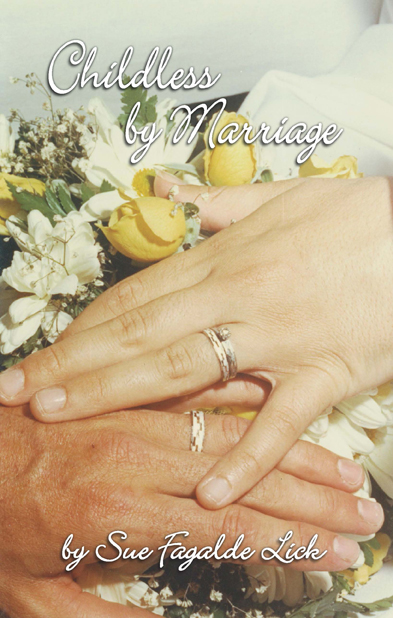
Childless by Marriage the book is a teenager. Published in 2012, it’s not the bestseller I had hoped it would be, but it’s a good book, and I hope it has helped people understand what it’s like to not have children because your partner is unable or unwilling to make babies with you.

It has lots of siblings now, including Love or Children: When You Can’t Have Both, which includes some of the most popular posts and comments from the blog between 2007 and 2020. There have been many new posts since then, and they are all archived on this site.

When Amazon offered a chance to create an audiobook version of Childless by Marriage, I went for it. The voice is computer-generated, not mine, but I like the way she sounds. This makes the book accessible to people who are visually impaired or who simply prefer to listen to books while they do other things.

While I was listening to the audio version, following along with a printed copy of the book, I discovered typos and words left out or misspelled. I was horrified. Typos in books drive me crazy, so I had to fix them. I spent many hours doing that last month. I am happy to report that I have now corrected and updated all versions, print, Kindle ebook, and audio. You can buy them at Amazon.com, or your favorite bookstore can order the print book through Ingram.

One good thing about producing books instead of children, especially in the computer age, is that you can go back and fix your mistakes. You can’t do that with most things in life. If for some reason you can’t have the children you wanted, you can’t go back to the original Word file and change the story of your life. Instead, you’re forced to make a tough decision. Do you accept the situation as it is, find a new partner, adopt, or try IVF? Do you settle for fur-babies or open a daycare? Do you grieve the loss or embrace the childfree life, or a little of both?

As I mentioned a couple weeks ago, I will soon stop blogging here. By the end of August, I will have shared 900 posts. If the book is a teenager, the blog is old enough to move out and live on its own. It’s time to let it go.

All of the posts will remain online for you to read, along with my resource page, bibliography, and updates on all things childless. I plan to create an index, but meanwhile, you can search right here on this page for whatever interests you.

I will also continue my Childless by Marriage Facebook page and would love to see some of you there.

At this point, my life is so far past the question of whether or not to have children that it’s time to let younger writers take the stage. There are many of them with so many more books, blogs, podcasts and support groups for people who are childless not by choice.

We even have a World Childless Week, hosted by Stephanie Joy Phillips, which offers tons of talks and workshops, readings, and resources, all online. This year it will be Sept. 15-21. Visit https://worldchildlessweek.net for more information.

One of the strongest voices in the no-kids community is Jody Day, founder of Gateway Women and author of Living the Life Unexpected. She has passed her own torch to Katy Seppi, who continues the work as The Childless Collective. Meanwhile, Jody has turned her attention to childless older women and is doing wonderful work there. Read her newsletter and subscribe to her Substack, https://jodyday.substack.com.

Not so long ago, people didn’t talk about childlessness. If someone didn’t have children, there were whispers about possible infertility—poor thing—but no one said anything out loud about it. But times have changed, and our numbers have risen. We can share our stories without shame so people can know and understand. No more secrets.

Question: As I prepare my last few posts, what do you wish someone had told you as you faced the possibility of life without children?


Nomo Crones meet next week

Jody Day hosts quarterly “Childless Elderwomen Fireside Chats” with women from all over the world. I have been lucky to participate in most of them. We have discussed everything from aging alone to how to deal with obnoxious questions about our parenting status. On Saturday, June 28, at 11 a.m. Pacific time, we “NomoCrones,” as Jody calls us, will discuss the often-buried subject of menopause and life beyond our fertile years. As always, it will be lively, with plenty of laughter and probably some tears. You can register to join us anonymously at bit.ly/gwe-meno. You will not be seen or heard, but the chat is always a big part of the festivities. The session will be recorded, so you can listen live or whenever you want to.

Meanwhile, Jody has published a terrific post about menopause and aging without children. You can read it here.


If you want to know what I’m up to these days, visit my “Can I Do It Alone?” Substack at https://suelick.substack.com or on Facebook at https://www.facebook.com/suelick

What does the current pro-baby push mean for you?

Would $5,000 change your mind about having a baby?

Fertility rates are falling all over the world. Leaders of many countries, from the U.S. to Europe and Asia, worry that we will soon have too few workers and too many old people needing care. As a result, the pronatalism movement, which promotes childbearing, is growing.

Anyone who has found themselves surrounded by people who keep asking when you’re going to have a baby has met the babies-are-great-and-everyone-has-to-have-some crowd, but now we’re hearing it from our governments, too.

In the U.S., the birthrate has fallen to 1.6 births per woman, below the 2.1 needed to sustain a stable population. Many countries are offering incentives to encourage couples to have more babies. Here in the U.S. under the Trump administration, we’re hearing similar conversations.

In April, President Trump said, “I want to be the fertilization president.” Father of five himself, he has done his part.

Vice President J.D. Vance, father of three, and famous for his childless cat lady comments, said at a March for Life in January, “I want more babies in the United States of America.”

Elon Musk, said to have fathered 14 children, has called low birth rates “a much bigger risk to civilization than global warming.”

The Trump administration has talked about awarding $5,000 for each baby born. His administration has discussed tax breaks for parents, financial help with IVF, and even a medal for mothers of six or more children. No mention of the fathers. No mention of people who might not be equipped to be good parents.

As a baby boomer who grew up hearing that we needed to stop having so many babies because overpopulation was killing the world, this blows my mind.

I’m not in the baby game anymore, but I’m pretty sure none of these so-called incentives or the words of our current leaders would have made any difference for me. It was the circumstances of my own personal life that made me childless, not anything Uncle Sam might do or say. I’m sure it’s the same for other non-parents.

Over and over, I’m hearing that young couples can’t afford to have children, due to the estimated $300,000 it costs to raise a child, the daunting cost of childcare, and the high cost of owning a home suitable for raising children. It takes two incomes to support a family these days, but if both parents work full-time, who has time to take care of the kids?

The pronatalists seem unaware of the umpteen legitimate and often sad reasons why someone might not have children. What about people struggling with infertility, people whose partners are unable or unwilling, people who don’t have partners, or people who are dealing with physical or emotional illnesses that force them to abandon their plans to have children?

What about people who are working so hard to stay financially afloat that they can’t even think about babies? What about people who are giving everything to their careers and just don’t have the time or energy to raise children? What about those who look at our world and don’t want to subject children to what’s coming, whether it’s wars, climate change, or a civilization run by AI?

Some conservatives blame feminism and women in the workplace for the decreasing birth rate. They recommend a return to the old model of Dad at work and Mom at home taking care of the family. Is that even financially possible anymore? Do we really want women who enjoy their careers to step back into the 1950s when they had no rights and few opportunities?

Oops, my politics are showing. But we do already have a lot of people in this world. Look at the traffic in any major city during commute times. Do we really need to worry that older folks outnumber young ones? It’s a concern, sure, but is having more babies the solution?

Would a $5,000 bonus, tax breaks or a Mommy Medal make any difference in your childless status? What would it take? Is there anything the government can offer that would change your situation?

If your partner has been unwilling to parent, would any of these things make him or her change their mind?

Are your family and friends talking about the need for more babies?

This post seems to be all questions. I don’t have the answers. I only know that I entered the world during the 1950s baby boom, ran into roadblocks with my two husbands, and came out the other side childless. The government had nothing at all to do with it.

What do you think? I welcome your comments.


You might be interested in my recent “Can I Do It Alone?” Substack post about buying a home. How can anyone afford it these days? Are we doomed to rent forever? Check it out at https://suelick.substack.com/p/does-being-alone-mean-you-cant-own.

Processing…
Success! You're on the list.

I Forgot How Childlessness Felt When I was Young

How will you feel about your childless journey 15 or 20 or 30 years from now? 

I’m finding out as I reread my Childless by Marriage book for the first time in years. I’m preparing an audio version. As I listen for mispronunciations, I feel like I’m hearing these stories for the first time.  

It’s not my voice. It’s a computerized voice but one that sounds like it could be me or my mom. She’s good. I listen, mesmerized, as this woman tells of the early years of my marriage, my angst over not having a baby, and my relationships with my stepchildren. 

This book came out in 2012, but I started researching and making notes in 1989, which was a very long time ago. I have changed. The world has changed.

Was there really a time when I thought and acted like a mom, when my youngest stepson, Michael, was a huge part of my life? How could I have forgotten?

How could I forget when my mother and I both had “grandbabies” at the same time? 

Did I really share so many personal and sometimes traumatic moments–My multiple experiments with birth control, having sex in the bathroom while the family watched a movie, sobbing at a women’s retreat because I would never be a mother, listening in horror as my stepdaughter told my husband he was a terrible father–I shared all that? 

Thank God my parents never read Childless by Marriage. The book is not just my story. I interviewed many childless women and did tons of research in the days when you could not find it all online. Chapters include information on infertility, birth control, vasectomies, the childfree movement, pets as child substitutes, losing friends when they become parents, and the physical and emotional effects of never having children. But I had forgotten how much of my own story was in there. It reads like a memoir in essays. 

I was still in the process of transitioning from newspaper reporting to writing creative nonfiction in those days. I hired an editor to look at the book. She said she wanted more of my story and less research. So, I changed it. Some of the stories are also included in my newest book, No Way Out of This: Loving a Partner with Alzheimer’s. I duplicated myself. I guess that’s okay. The words are different, and it came from a different time in my life. 

I was so young, still in my 30s, when I started researching childlessness. I was still having periods and still hoping that somehow I would have children. I was also trying hard to develop a motherly relationship with my husband’s kids.

As I reread this book, I miss them. I want to call each of them, hug them, and claim a place in their lives, but we have had no real contact since their father died 14 years ago. Michael visited once so I could show him where Fred was buried. Gretchen is a Facebook friend. Ted . . . nothing.

Ted, Fred’s oldest, was livid when he read the first ebook edition of Childless by Marriage. He threatened to sue if I didn’t take out the things I had written about him. I took them out. Considering what I said about Michael and Gretchen, it’s a wonder all three of them didn’t sue. I didn’t write it to hurt anyone, just to share how it is when you’re a childless stepmother, but not everyone sees it that way.

The kids are 46, 56, and 59 now. Gretchen is a grandmother. I will never see her grandchildren. I feel the loss. For a while, I was a mom of sorts. Does that mean I’m not childless? Well, the stepchildren stepped away. I never gave birth to my own kids. There is no child out there with my eyes and the name I gave him or her. No one calls me “Mom.”  

It’s not a sad book. Portions are funny, and most of it is upbeat. We learn there are many ways to mother and to nurture. I mothered my staff at the newspaper I edited. I mothered my students and the singers in the church choir. I mother my dogs, my plants, and l even mother the spider I capture in a cup and carry out to the lawn. I create books from a thought or a word and turn them into something lasting that I can share with the world. That’s not nothing. 

I know this is unusual post. Eighteen years into this blog, I’m running dry. I have moved on to writing about the issues of aging and living alone (see my Substack, “Can I Do It Alone?”) I have published many other books since Childless by Marriage came out.

I’m 73, widowed and live in an aging community where everyone has cats and dogs, but we don’t see a lot of babies. My friends’ grandchildren and great-grandchildren live elsewhere, so they’re not in my face.

When I see families having fun together, I still feel sad. I read about grown men and women taking care of their elderly parents and worry about who will do that for me. I daydream about having a family like other women my age. But I’m mostly caught up in the day-to-day of life here and now. 

My Childless by Marriage book, the one I honestly thought would make me famous (ha!) is good. I’m relieved. When a writer rereads her old writing, sometimes she shudders at what she let get into print. But no, I think it’s relevant and well-done, as beautiful as that six-foot tall, brown-eyed son I might have had, the one who might have called to take me out to lunch on this sunny spring day. 

One of the early books on childlessness, it is still the only one I know of that focuses on being childless because your partner can’t or won’t give you children. Well, except for my other book, Love or Children: When You Can’t Have Both. That one is a best-of-the-blog compilation; you might want to read that, too. 

Why am I telling you all this? Not to sell books (well, okay, if you want to buy one, I won’t mind), but to share how our views of things change over the years. You walk around saying, “I’m not a mom” when in fact you are mothering your husband’s kids or your students or your fur babies. You remember crying in the closest but forget how you also were free to travel the world, go to shows, eat at fancy restaurants, and make love in the living room. You look at some of the choices you made that led to being childless and think: Why didn’t I try harder? Why did I give in so easily to a life without babies? 

You wonder: Why am I not still a size 12?

I have been blogging here at childlessbymarriage.com since 2007. This is my 893rd post. I’m going for 900. Somebody do the math: At least 800 words times 900 equals . . . Oh my God. I had hoped to get to 1,000 posts, but my well has run dry. I have aged out of this gig. I won’t leave you altogether. We have seven more posts to go. I plan to redesign my Childless by Marriage website and keep you up to date on childless events, books, articles, and other things I might want to share. I will maintain my resource list. I will also continue my Childless by Marriage Facebook page. But it’s time. 

I expect to be finished with the audio book by June 1. I’m obsessed, so it’s going quickly. Page after page, this book reveals new things to me. I hope Childless by Marriage is a revelation to you, too, whether you already read it years ago or are hearing about it for the first time. 

Thank you for being here. Your comments are welcome and treasured. 

Processing…
Success! You're on the list.

How does it feel to be childless on Mother’s Day and every day?

“What is it like, being childless?” That title of a recent post at the Life without Children Substack got me thinking. In a minute, we will look at how author Colleen Addison answered the question, but first, let’s think about this. What is it like for you and for me?  

With Mother’s Day happening this weekend, why not start there. What is it like? 

  • Last night at church choir practice, two moms in the group were talking about the Mother’s Day breakfast happening Sunday after Mass. Apparently, they serve mimosas to the mothers. I have never attended. I try to avoid church and all public places on Mother’s Day because it’s uncomfortable having to repeatedly explain that I am not a mother and therefore should not be receiving a flower, mimosa, or special blessing.
  • It’s like I don’t have the right clothes, so I can’t attend the party. 
  • I speak to women my age or older whose adult children help them with every aspect of their lives. Do these mother women even see that I have no kids to help me? But I am proud that I can manage things by myself.
  • I see pregnant women and know that amazing process will never happen in my body. I also know that that process can change a body in ways I don’t really want, so I’m a little relieved. 
  • I see moms snuggling with their little children and know the best I can do is snuggle with a dog. 
  • I see the physical characteristics shared by moms, dads, and kids, and wonder what my children would have looked like. 
  • Sometimes when people assume I’m a mom, I let them think I am because it’s easier than explaining why I never had children. 
  • I see kids acting out and wonder where I would find the patience and self-restraint not to kill them or give them away. 
  • When I hear politicians and theologians raving about “these selfish women” who don’t want to have children, I want to scream, “But I did want them!”
  • I feel younger than my peers, as if I’m still waiting to go through the life stages they experienced decades ago. 
  • I feel older than my peers because I’m not around children and don’t know what young people are doing and thinking these days. 
  • I think about the choices I made and the things that have happened and wonder what if, what if, what if.
  • I am often alone on the holidays and my birthday. I am free to do whatever I want on the holidays and my birthday. 
  • My name will not disappear as I become Mom or Grandma. I will be Sue forever. Sometimes Aunt Sue, which I treasure more than I can express. 
  • I will forever grieve the loss, a loss most people don’t recognize–how can you grieve what you never had?–and I will forever enjoy my freedom. 

That’s what it’s like for me. 

Let’s get back to the article. Addison’s therapist was the one who asked, “What is it like?” The therapist was a father with family photos on the shelves behind him. 

  • Like all of us, Addison has many answers. “I can say that I am sometimes happy I didn’t have children, and that there is guilt in that.” 
  • “I can tell you that there are bad aspects and that I veer away from them. I don’t look at babies and avert my eyes from pregnant women.” 
  • “…if I had children I would be someone else, utterly and profoundly…the me I am now would be lost if I had had children and the loss would have been as sad or nearly as the loss of my imagined children.” 
  • “It is being alone, really alone, on a wide wide sea.” 

I have never lived the life I might have lived if I had had children. I only know this one. I do know it is different in many ways from that of people who have children. Look around my living room. There are no pictures of children, only landscapes and photos of long-dead loved ones. There are no toys. Nothing is child proofed. Nothing is child sized. I’m not saying that’s good or bad; it’s just how it is.

Your turn. Ask yourself, “What is it like?” If a therapist, friend, or podcast interviewer asked, what would you say? I invite you to share your answers in the comments. 

I thank Ali Hall for her fabulous Life Without Children Substack. Subscribe. You’ll like it. 

Photo by Wojciech Kumpicki on Pexels.com. Why a cat picture? He looks like he wants to know what you think, doesn’t he?


Jody Day and Katy Seppi are offering a free masterclass, “Navigating Mother’s Day as a Childless Woman” on Saturday, May 10 at 11 a.m. PDT. If you register here, you can attend live on Zoom or watch the video later.


The electronic edition of my book No Way Out of This: Loving a Partner with Alzheimer’s is on sale for just 99 cents! The sale will last through May 11, then go back to the usual $9.99 (I don’t set these prices). If you have ever thought about reading NWOOT, as I call it, now is the time. It’s practically free.

Processing…
Success! You're on the list.

Without Kids, Will You Spend Your Holidays Alone?

Dear friends,

Today, I’m sharing a revised version of a post I wrote for my “Can I Do It Alone?” Substack on Easter. I don’t dwell on childlessness there, but the sad truth is that if you don’t have kids, you may wind up alone in old age.

I’m watching “American Idol” on TV and crying. All those weepy moms in the audience remind me that I will never have a child to love and support like that.

It’s Easter. I have been trying hard to be Zen about not having a family to spend the holiday with, but now the reality is sinking in.

This afternoon, a niece posted a photo of my sister-in-law surrounded by her grandchildren in front of a homemade birthday cake. They had gathered for a combined Easter/birthday celebration. The kids didn’t have to be reminded and cajoled to do something for their mother. They just did it. I am happy for her. She works hard taking care of those kids and my brother.

On my last birthday, which was better than average, I went to my weekly open mic, where my fellow musicians sang to me and made me feel loved. At church, having read my posts about my upcoming birthday, our videographer brought me flowers. My neighbors invited me over for supper. It was a little uncomfortable because there were four of them and one of me. But it was kind of them, and we had fun.

I couldn’t help thinking people felt sorry for me because I was alone. Hell, I felt sorry for me.

If I didn’t say a word, who would think to do anything? And when was the last time someone baked a cake for me?

Back to the moms in the “American Idol” audience. I started wondering what my kids would be like. Would I have a pretty daughter like my niece or a tall son who would adore me and take care of me? Would they add in-laws and grandchildren so my family could be as big as my brother’s? Would I never spend a birthday or holiday alone? Would I bake cakes for their birthdays?

Excuse me while I fetch some Kleenex.

Yes, I know. I could have children who would not show up for me. Several of my parent friends spent the holiday alone because their kids were busy, lived far away, or they weren’t getting along. Some people’s children have died; surely that pain is worse than anything we might feel about never having them. Babies don’t come with guarantees.

I had three stepchildren. When my husband died, they slipped away. What little I know about them these days is posted on Facebook. What if I had tried harder to keep in touch, to be part of their lives? Would they have let me? I don’t know. I didn’t know how to be a mom, especially when my husband wasn’t enthusiastic about being a dad, but I think I blew it.

By choosing Fred, I chose a life without children of my own. He was a wonderful husband. We were so in love. Who knew he’d have early-onset Alzheimer’s and die at the age I am now? I thought he would be with me for at least another ten years.

At the top of my to-do pile is my health care advanced directive form, which specifies what I want done in a medical emergency if I can’t speak for myself. It has spaces to list the people who will speak for me. It has been on that pile for months. Besides my brother, who lives 700 miles away, I still don’t know who to choose as my alternate representative. If I had children, I’d put their names down and expect them to do it.

Who else would care enough to hang around a hospital making life and death decisions for me? I have friends, but do I have the right to put that kind of responsibility on them? Should I recruit one of my cousins, the cousins I only see at funerals? What if I put out a call for volunteers? Would anyone respond? I’m stuck.

I will figure it out. I will find someone, even if I have to pay a professional. I just learned there are “nurse advocates” who will step in if you don’t have family to speak for you. But I’m jealous of those people who can call on their grown children for everything from Easter parties to rides to the doctor to managing their affairs when they can’t do it anymore.

When a couple has children, it starts with one baby but grows into a family, with young ones to replace the older ones who pass on to the next life. If you give that up for the love of one man or woman and they leave or die, you will be alone. On Easter. Christmas. Your birthday. The anniversary of your husband’s death. The day you win a prize. The day the doctor says you have cancer.

Many people happily choose not to have children and are confident they can deal with their childfree future. Others are physically unable to get pregnant or carry a pregnancy to term, and they will feel the loss all their lives.

For those of us who are childless by marriage, who have choices, we need to think very hard before we put all our eggs in the no-kids basket. If your partner is able but unwilling, talk to them about what will happen if they are gone, and you’re left alone. If they really love you, maybe they’ll change their minds.

I know this is a weird post, but it’s what I’m thinking about this week.

How was your Easter? Was not having children an issue for you? Have you thought about what will happen when you’re older?

Image generated by AI

***************************************************************************************************************

At my “Can I Do It Alone?” Substack, we talk about all sorts of things related to living alone. Come join us at https://suelick.substack.com.

Processing…
Success! You're on the list.