Are We Avoiding the Tough Childless Conversations?

My new book, a memoir titled No Way Out of This: Loving a Partner with Alzheimer’s, came out on Tuesday. 

Publicity is a big part of publishing a book. I have been doing interviews and podcasts, including an interview yesterday online with the marvelous Jody Day, founder of Gateway Women. I hope you will watch the recording and consider buying my book.

See what I just did? Marketing. But that’s not what I want to discuss today. Reviewers and interviewers frequently bring up my childless situation and how Fred didn’t want to have children with me. Some make him sound like a selfish person who didn’t care about me, and that’s not fair. He was terrific. But he was older and had already raised three children. At 48, he didn’t want to start again. I understand that now. 

But we didn’t talk about it nearly as much as we should have. Our June 19 Childless Elderwomen panel discussion, also led by Jody Day, was about “Courageous Conversations” and how we often shy away from discussing tough topics with family and friends. One of those conversations I dodged was the one with Fred about having children. When he said he didn’t want any more children, I said, “You don’t?” and pretty much let it go. 

I had been divorced for several years, dated some unsuitable men who would have happily impregnated me, and finally decided I would be alone forever. Then came Fred. Our love was so good I didn’t want to do anything to spoil it. He knew I had not had children. We talked about adoption. We talked about reversing his vasectomy. But when he said he didn’t want any more children, the conversation ended. 

Why didn’t I ask why? Why didn’t I insist that I have my own chance at motherhood? Why didn’t I make it a dealbreaker? Because I was afraid to lose him. Now, so many years later, I suspect that if I had insisted, he would have given in. I don’t know how we would have done it, but we would have. He paid for my master’s degree. He paid for our trip to Portugal so I could research my book. He spoiled me rotten. I know he felt bad when I grieved on Mother’s Day. But he didn’t offer to make me a mom, and I didn’t insist. 

Even if he hadn’t had a vasectomy, I don’t know if he could have gotten me pregnant. His first two kids were adopted. It took Fred and his first wife 17 years to have a surprise baby of their own. Then he rushed into a vasectomy. I should have asked a lot more about their troubles conceiving and pressed harder to find out why he didn’t want more kids. I should have asked why he spent so little time with the kids he had. He didn’t seem to want to talk about any of it, but we needed to. Maybe we would have reached the same conclusion, but I would have felt better about it. 

I also needed to have a talk with myself. I was so busy defending my childlessness to the world. We couldn’t have children. God had other plans. Maybe later. Why did I accept not having children so easily? If any man had asked me to give up my writing or my music, I would have left him. Was having children less important to me than I have always said? Why does that make me feel like I might have been faking it all these years?

I don’t think I realized what I was giving up. I was so busy with work, music, school, and homemaking. Only with the passing of years and life stages has it become clear what I missed. It’s not just babies. It’s young children, older children, teens, young adults, mature adults, grandchildren, great-grandchildren, weddings, graduations, babies, Christmas presents, family gatherings, someone to watch fireworks with on Fourth of July, someone to help me when I need help, and someone to inherit my culture and my grandmother’s china teacups. Now, 40 years after that no-kids pronouncement, I know I should have pursued it more. Everything might have been different.  

I did not have the conversations I should have had. It’s hard. Partners sometimes get angry, or clam up, or start to cry. I grew up learning to avoid conflict. As soon as the conversation got hot, I backed off. It’s a learned skill to speak our truths calmly and lovingly. 

Perhaps you could say, “I know you have said x, but I need you to understand that I feel z. I’m trying to understand what’s holding you back. Can we talk about this a little more? Maybe if we talked it through, we could reach an agreement that will make us both happy.”  Maybe sharing a bottle of wine would help ease the tension. 

What do you think? Are you avoiding difficult conversations? What would happen if you kept talking?  Have you tried? What happened? 

Let’s talk about talking about it. I look forward to your comments. 

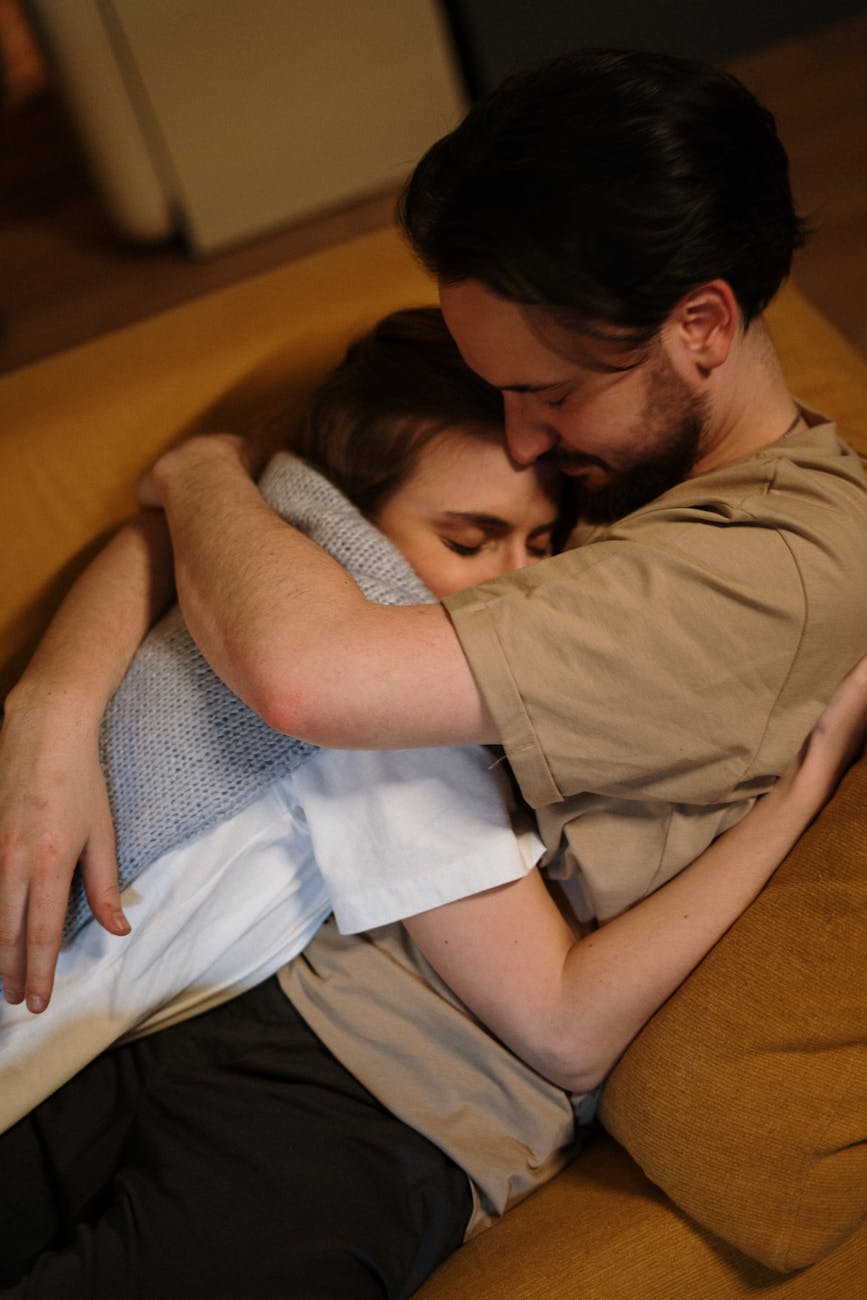
(Photo by Vitaly Gariev on Pexels.com)

Processing…
Success! You're on the list.

Father’s Day vs. Mother’s Day: Is It Easier for Guys?

Father’s Day is this Sunday in the United States. Is it just me, or does Father’s Day get a lot less attention than Mother’s Day?

Think about it. Moms get flowers and presents. Restaurants are flooded with people taking their moms out to brunch. The clergy praise the glories of motherhood while the media overflows with ads for Mother’s Day gifts.

Fathers get a card and a Best Dad mug, and we’re done.

Mother’s Day makes those of us who are not mothers want to crawl into a cave where people won’t assume we are mothers or make us feel small for not having children. Stepmoms yearn for recognition from their stepchildren, but it rarely comes. “You’re not my mom” is the kids’ theme song.

Father’s Day is kind of ho-hum. No flowers, fewer ads, less to-do. The clergy may still rattle off a prayer for dads, but generally guys don’t deal as much with assumptions about their parenting status or guilt if they’re not dads. It’s almost a regular day, except for the ads for fishing gear and barbecue supplies.

The holiday still can sting. Tony, a frequent commenter here, calls it “Chopped Liver Day” because that’s how he feels. Father’s Day is another reminder that he is still not a dad, that he will not be adding a World’s Best Dad mug to his collection.

If we’re lucky enough to have our parents around, we can turn our energies to honoring them. If the parents are gone or you don’t get along, that adds another layer of sadness. My father would have said, “It’s just another day,” but if it’s a day that makes you feel left out, it’s not just another day.

What do you think? Is Father’s Day different from Mother’s Day?  Why or why not? How will you handle the holiday? I will be playing the piano at church. When Father Joseph calls for the fathers to stand up, I will be watching to see who does not stand up. I will sympathize with them.

Stay off social media this weekend, and Monday, too. All those happy family photos will kill you.

Have a peaceful weekend. We will get past this parent-palooza and on to Fourth of July.

Additional reading:

“Thoughts for Childless Men on Father’s Day”

“Coping with Father’s Day as a Childless Man,” by Dr. Robin Hadley 

Some background on Father’s Day: en.wikipedia.org/wiki/father%27s_Day

“Father’s Day Tortures Childless Men”

Processing…
Success! You're on the list.

Women Without Kids: Making a Choice That Society May Not Accept

Women Without Kids: The Revolutionary Rise of an Unsung Sisterhood by Ruby Warrington, published by Sounds True, 2023.

I had a hard time reading this book. The author never wanted to be a mother and that bias pervades the pages. At first, she seems to think motherhood is a dirty trick foisted upon women to take away their freedom. Once pregnant, all choices will be taken away. You will be saddled with childcare 24/7, and the father will not help. 

Yes, but . . . 

I think babies are a miracle, one not all of us get to experience. A PERSON is formed and grows inside our bodies. How could we not want to take care of them and love them forever after? That’s just my opinion. And yes, I’m Catholic, a religion that is very pro-baby.

As I read on, Warrington is not as hard-hearted as I thought. She writes extensively about how children should not be born to parents who are not ready to support them and into a society that offers minimal support to parents. No one should be forced to procreate if they would rather devote their lives to something else. 

Toward the end, she writes, “. . . accepting that you may never be ready to be a mother in this life might lead to a period of intense grieving. Not that experiencing sadness about not having kids means you can’t also be confident in the choice not to pursue parenthood. It’s okay to grieve something you will never have and to feel empowered in your decision to prioritize other things.” 

Amen. We have choices, and who is to say one is better than the other?

Warrington is much younger than I am and proof that women from different generations have grown up in very different cultures when it comes to women’s roles.

For my mother, raising children in the 1950s and 60s, mothering was her job. Full-time, no days off. If you asked her, she’d say that was exactly what she wanted to do. Her mother and grandmother did the same. There weren’t many opportunities for women outside the home anyway. We could be secretaries, nurses, or teachers, not much else. 

Of course in those post WWII baby boom days, a family could buy a home and survive on one income. Not that it was ideal. My mother often said she thought she would lose her mind in the years she was stuck at home with two toddlers all day while my father was at work. She was responsible for all childcare, cleaning, cooking, and laundry. I know she envied my “career-girl” life when I was a young woman, when I thought motherhood was just around the bend.

We baby boomers were a mix of mothers who stayed home and mothers with jobs. In the wake of the Women’s Movement, as I graduated from college and got married two weeks later, we had the ability to do a lot more different things, but that also meant trying to juggle work and family, not an easy task. And yes, the bulk of the child-related responsibilities still fell on the women. Divorce also became a lot more common, leaving single mothers trying to do everything by themselves.

My plan was to be a stay-at-home mother-writer. I would do both, writing best-selling novels while the babies were napping or at school. Easy-peasy. Instead, I worked as a journalist, supporting my first husband, supporting myself between marriages, and still working full-time during my second marriage. And yes, most of the chores fell on me.

Now, fewer couples are getting married, and fewer are having children. If you’re reading this, you are likely among them. The economy has made it nearly impossible for young people to afford a place to live, even when both partners work at well-paying full-time jobs. How can they add children to the mix? Should we bring more people into an overpopulated world that seems to be self-destructing? Plus, young women like Warrington see the responsibilities of parenting as prison and hold onto their freedom with both hands. “Just the two of us will be fine. We’ll get a dog” is a common refrain.

In the last century, couples got pregnant and figured out the financial part later. Babies were expected as the natural thing that comes after marriage. Birth control and abortion were not readily available. If parents were exhausted and wished they could shake free of their kids now and then, well, too bad. If the husbands skipped off to their jobs and left their wives doing the bulk of the work at home, so be it. In time, the kids would grow up and leave the home, and the parents could enjoy their empty nest. 

But now, we have so many choices. Birth control. Education. Living together without getting married. Careers of all kinds open to both women and men, careers that require the biggest investment of time and energy at the same age women are most able to have babies. Couples are putting off parenthood, sometimes until it’s too late. And some, like Warrington, are just saying, “No!”

My generation and those that followed have learned that you really can’t do everything at once. Choices must be made, and few of us have the luxury of devoting all our time to parenting, even if that’s what we want to do. Warrington argues that without more support for parents–flexible work schedules, affordable childcare, and maternity leave–parenting is just too difficult. 

Maybe in the childless-by-marriage situation, when it’s not a matter of biological complications, at least one of you feels like Warrington. They look at how hard it seems to be and say no, I don’t want to do that.

Dear readers, I’m grandmother-old. I have very little connection with people who are raising children. Tell me how it looks these days. Among the couples you know, do mothers still do all the childcare and home chores, or do the partners, male or female, share the load? Do you see parenting fitting into their existing lives or taking over? Is that one of the reasons you don’t have kids? Would you be happy to make whatever sacrifices were required if you could have a baby? Or is that too much to ask these days? 

Processing…
Success! You're on the list.

Does Your Partner Step Up When Childlessness Hurts?

Reminders that we don’t have children are hard to avoid.

  1. Friends and family gathered in a rented hall in Yachats, Oregon at tables laden with flowers under hanging “90” banners.

The seemingly ageless woman who ushers at Saturday Mass was turning 90. Her family had gone all out to surprise her. Friends and cousins had flown across the country. Children, grandchildren and a 14-month-old great grandchild were there.

I sat with friends from church. We chatted and nibbled on cannelloni, fruit, rolls, and crackers until we got the word to hush.

In she came, too shocked to speak for a minute. Her daughter wrapped a beauty queen banner around her and we continued the party. There were pictures, stories, a fancy cake and champagne. Photos under a flowered arch.

I was happy for the guest of honor—and so jealous. Who will throw me a 90th birthday party, if I live to that age? The older people in my life will be dead by then, and I have no children or grandchildren.  

Maybe I shouldn’t assume. Maybe my niece and nephew and their kids, grown up by then, would be thrilled to honor me. Maybe I’ll throw my own party.

2. From the party, I drove to church. It was Mother’s Day weekend. I would hide if I could, but I play the piano at the Saturday Mass, so I can’t avoid the mother mania.

A wonderful woman who volunteers for everything interrupted choir practice with a box of floral corsages. Real flowers, very pretty, all different colors. I said, “I am not a mother.” She pished that away and pinned a yellow corsage on my blue sweater.

By the time Mass started, all the women had corsages. You could not tell the mothers from the non-mothers. Maybe that’s good.

Mass proceeded. I sang, I played, I warmed up and took my sweater off. At the end, Father Joseph invited mothers to stand. I sat. “Stand up,” Martha hissed. I shook my head. No. People need to know that some of us don’t have children. In a Catholic parish full of elderly people, we’re a minority, but we exist, and Mother’s Day is difficult. To pretend to be just like everyone else feels wrong.

I may not be a mother, but I’m keeping that yellow chrysanthemum until it falls apart.

3. As a guest at a book club meeting last night, I answered readers’ questions about my novel Up Beaver Creek, which features a childless woman as the main character. One person was curious as to why PD’s childlessness was emphasized. Did I, the author, have children? No, I said, I don’t. I could have said so much about how not having kids can affect a person’s whole life, but I was busy trying to explain that my character is NOT me, that she is someone I made up. I also noted that it isn’t easy to find fiction featuring people who don’t have children. I’m not sure she understood.

Question: All of this led me to wondering. Do the partners who who deny us children understand how it feels at times like Mother’s Day or any gathering where people are surrounded by their kids?

Are they sympathetic? Do they offer any comfort? That’s a big question. I knew my husband was aware and that he cared. At least once, he gave me one of those, “You’re not my mom, but Happy Mother’s Day” cards, and that was helpful.

This shouldn’t be your problem alone. You need to help each other get through the bumpy times. It might not be Mother’s Day. It could be your niece’s christening or the birth of someone else’s baby. It could be a birthday party or a baby shower. It could be an ordinary day when you see a happy family and suddenly burst into tears.

Your partner could suggest an outing far away from the festivities. A hike instead of brunch. A movie that has nothing to do with the holiday. A just-because-I-love-you gift. You should support each other rather than one of you crying in the bathroom and the other doing whatever he or she usually does on that day. Isn’t that what love is about?

I’m just saying if your partner is the reason you have this hole in your life, he or she needs to help you on the occasions that make it hurt.

It should work both ways. Mother’s Day is over for another year, but Father’s Day is coming. Or as frequent commenter Tony says, “chopped liver day.”

What do you think? Does your partner comfort you when the lack of children gets to you? Is this a sore spot between you? Is there someone else you can go to for comfort?

I look forward to your comments.

Photo by cottonbro studio on Pexels.com

Processing…
Success! You're on the list.

Four simple words that can end a conversation

“I don’t have children.”

At the reception after my father’s funeral a few years ago, I was sitting with dad’s neighbors. Such nice people. We were exchanging the usual pleasantries—nice service, he was a good man, etc.

Then they asked about my children. The Mrs. pointed to my niece. “Is that your daughter?”

I wish.

“No, she’s my brother’s daughter,” I said.

“Where are your children?”

“I don’t have any children.”

Thud.

They didn’t know what to say after that. I don’t remember what I said. Did I talk about my work, boast about my niece and nephew, or discuss the music at the funeral? I excused myself soon after and threaded through the crowd to the company of cousins who already knew I was widowed and childless.

The next day, after I sobbed through the process of settling Dad’s ashes into place next to my mother’s at the mausoleum, the adults gathered their kids and drove away. They were too busy wrangling the little ones to realize I had no one to be with.

The question and the conversation-exploding answer of “I don’t have kids” happens all the time, especially among women. Generally men chat more about work and sports, but not always. They ask, too. It’s understandable. When your life revolves around raising children, and most of the people you know are also parents, kids are the one thing everyone has in common.

Folks skip right past “Do you have children?” to “How many children do you have? “How old are your children?” “Do your children go to X school?” or “Do your adult children live nearby?”

If I have a choice, I usually don’t mention my childless situation. Why set off that bomb if you don’t have to?  

The question comes most often during those years when you’re of an age when you would be raising children if you had them, but it still comes up in later years. Substitute “grandchildren.” You can’t have grandchildren if you never had children.  

Saying you never had children confuses people. It leads conversations to dead ends. It leads to one of you suddenly needing to get another drink, use the restroom, or go talk to someone on the other side of the room.

People respond in funny ways. Oh, I didn’t realize. Oh, there’s still time. Lucky you. I’ll give you mine. I just assumed . . . They rarely ask why—unless they are also without children. Those who are childless by choice may answer, “I never wanted any either,” leaving you to protest, “I wanted them, but . . .” Or maybe you just smile.

It depends on where you are, of course. In a gathering of writers, “What do you write?” is the big question. Classic car collectors will ask, “Are you driving that blue Chevy over there?” Gardeners may ask, “How are your tomatoes doing?”

But in the general public, especially among families, you’re going to get the kid question.

Mother’s Day is coming, a day when our lack of children may make us want to stay in bed with pillows over our heads. The advertisements have already begun: gifts for “Mom,” brunch for “Mom,” special Mother’s Day concerts. Schoolchildren are making craft projects to honor their moms.

For those of us without children, it’s just another Sunday, but one where we’re even more likely to hear those questions. How many kids do you have? How many grandkids?  Are they taking you out today? Here’s a carnation, MOM.

Until you’re forced to say, “I don’t have any children. I’m not a mom.”

Then you get the look: slacker, freak, cold-hearted selfish person. No flower for you.

Let’s talk about this. Where and how do you face questions about offspring? What happens when you say, “I don’t have children”? Why does it feel like a confession when we haven’t done anything wrong?

I look forward to your comments.

Processing…
Success! You're on the list.

Childless Not by Choice: The Grief is Never Completely Gone

Red-haired woman crying. She's wearing wedding rings, has red nail polish and red lipstick, and is holding a tissue. No one is comforting her.

All it took was one word to break my heart again.

That word was “Mama.”

I was down in the dumps anyway as I took my usual walk down Cedar Street. A migraine had dogged me all weekend. I missed a music jam I was looking forward to. I was tired of being alone.

A German shepherd standing in a driveway reminded me of Annie and all the dogs I have lost, including Heidi, the German shepherd I lost along with my first marriage.

Then I passed these two little brown-haired boys, one maybe two years old, the other maybe six.

As the little one stared at me, the big one shouted, “He might call you ‘Mama.’”

And then he did. “Mama!”

Gulp. No one has ever called me Mama.

I smiled and waved. “I don’t mind,” I assured the older boy as tears threatened. “He’s cute.”

What? Like a puppy? It was a dumb thing to say.

I let the tears fall as soon I got out of their sight. The pain of never having children was just as bad 20 years past menopause as it was when I was 35.

That scarred place in my heart breaks every time this happens.

A couple weeks ago at church, I was playing the piano at Mass. The family close to me in the front row included an adorable toddler happily squeezed between her mother and grandmother. Black hair, brown skin, big eyes, dimples. If I had had a little girl, she would have looked a lot like this one, maybe not as brown, but she’d have the same black hair and brown eyes.

Grandma held a big cloth book while the child turned the pages.

Oh my God, I wanted to be one of those women. I wanted to hold that baby. But I never would. I had no claim to her.

All I could do was keep playing the piano.

Back on my walk, I was visiting a neighbor’s dogs a little later when the boys came down the street with an older girl. In trying to keep up, the little guy stumbled and fell. He was not hurt, but he looked at me and cried “Mama!” I kept petting the dogs while the girl scooped up her little brother. She was already a mother-in-training. I missed that class.  

I belong with the dogs, I told myself. I’m a dog person. I’m going to get another dog soon. I will feel better.

Why do I share this today? Because it still hurts. Because I want you to know that while you will feel okay most of the time about not having children and will build a good life without them, it’s still going to hurt when you least expect it. That scar is there, and it’s brittle.

As Jody Day, founder of Gateway Women and author of the book Living the Life Unexpected, likes to say, our pain is an unacknowledged, disenfranchised grief. When someone dies, it’s awful, but everyone sees and understands your loss. They hold you while you cry. They bring casseroles. They know it hurts and give you a break. When you get a divorce, lose a job, or crash your car, everybody sympathizes.

But not having children doesn’t seem to count. How can you grieve what you never had? Besides, they say, unless you were physically unable to bear children, you made the choices that led to this situation. Right? So get over it.

It’s not that easy. It will hurt sometimes. It’s okay. Cry, stomp, curse, whatever you have to do. Talk about it with people who might be sympathetic. Try to explain: When I hear the word Mama, it kills me.

It will pass. You’ll go on with the other wonderful things in your life. But it’s never gone.

Listen to Jody Day’s talk on Disenfranchised grief and know that those of us who experience this kind of grief are aware of your tears and your pain and acknowledge that it is real.

Are there words or situations that trigger your emotions? Do the people around you understand why you’re upset? Let’s talk about it in the comments.

Photo by Karolina Grabowska on Pexels.com

**************

I have a new Substack titled “Can I Do It Alone?” Since my first post on April 1, it has taken off like wildfire. See what all the fuss is about at https://open.substack.com/pub/suelick/p/introducing-can-i-do-it-alone?r=ejjy9&utm_campaign=post&utm_medium=web

Processing…
Success! You're on the list.

Would you rather be childless than single?

Are you terrified of ending up alone?

It’s okay to admit it if you are. Most people feel that way. I’m not as afraid as I used to be because I have been on my own for many years, but I know people who absolutely can’t handle it. No need to feel bad about that. Animals hang together for safety, and we’re hardwired to do the same.

I suspect I married my first husband because I was afraid no other man would want me. As I wrote in 2021, no one asked me out until I was in college. Too nerdy, too fat, not social enough, parents too strict? I don’t know. I was already wondering if I’d ever find anyone, if I’d be like my Barbie doll without a Ken.

I was afraid no man would love me when everything in my world told me a woman needs to get married and have children. So when someone finally wanted to date me, I didn’t ponder whether I liked him; I said yes. And I continued to say yes through a first marriage that failed and a series of unsuitable boyfriends between marriages. When I think of all the garbage I put up with just to hold onto a man . . .

By the time I met Fred, I had come to believe I would be single for the rest of my life. What if he hadn’t come along? I hope I wouldn’t have married another dud just to have someone. I know people who have done that. Don’t you?

When we want and expect to have children, when we are physically able and have no reason not to, and our partner says, “Nope. I don’t want to” or “I’ve already got my kids and don’t need anymore” or “maybe someday, definitely not anytime soon,” why do we stick with them anyway?

Is it love or fear of being alone? I knew my first husband was not a perfect match. I saw red flags all over the place, but I still married him. Because that’s what women my age were supposed to do. I had visions of domestic bliss and babies and a happy family life. None of that happened. What if instead of moving from my parents’ house to the apartment I shared with my husband, I had created my own grownup life first?

My second husband, Fred, was definitely a keeper. Such a good man, so in love with me, dependable, the kind of guy who puts up with your relatives and sits with you at the hospital when you get sick. But he had three kids from his first marriage and wasn’t willing to have any more. Should I have said no to him? I was 31 and fertile. I should have fought harder. Shoulda woulda coulda, right?

By the time Fred came along, I had been single for several years. I could have carried on by myself. But I chose to marry him. I chose to accept his kids as mine and not have my own. This time, the love was enough to make up for the rest.

I never expected Fred to be diagnosed with Alzheimer’s in his 60s and die at 73, leaving me alone, probably for the rest of my life. I did not choose this. But here I am, alone in the house we bought together on the Oregon coast. Even our dog has passed away. It has been 15 years since Fred moved into a nursing home, 13 years this month since he died.

If I made different choices at the beginning when I married the man who seemed to be my only choice, would my life be completely different now? Would I be surrounded by grown children and grandchildren? I’ll never know.

This raises multiple questions for me, and I would love to know what you think.

* Do we commit our lives to someone less than ideal because we’re afraid of being alone?

* Are we willing to leave a partner who won’t give us kids and risk ending up alone if we don’t find someone else who does want to be a parent?

* What if this relationship ends in divorce or widowhood and we are left alone anyway?

Our world is set up for couples and families with children. It’s not easy when your “family photo” is a selfie. But we can do it.

I have started a new Substack series titled “Can I Do It Alone?” The answer to that question is, “Heck yeah.” Apparently, a lot of people are worried about being alone. The subscriptions and comments are flooding my inbox. If you’re interested, take a wander over to suelick.substack.com and see what that’s all about.

Meanwhile, here at Childless by Marriage, let’s talk about it. Did we settle for a childless life out of fear of being alone? What if this relationship ends?

Thank you so much for being here. I treasure you all.

Processing…
Success! You're on the list.

“Barbie” doll leads the way for not-moms

A little girl dressed in pink stands inside a pink Barbie doll box surrounded by pink balloons.

I watched the Barbie movie again last week after Ryan Gosling rocked the “Ken” song on the Academy awards. I needed a night full of pink, woman power, and fun music. Barbie is one of us, you know. Never had kids. Most versions of Barbie never got married, and well, it’s difficult to make babies when you don’t have genitals.

I was also reminded of Barbie when I came across a chapter that didn’t make it into my Childless by Marriage book. It’s titled “I’d Rather Die Than Be Like My Mother.” Now, those are not my words. I was quoting someone else. I think my mother was fantastic. I did want to be like her. But let me share a little about Barbie and the other dolls from that missing chapter.

On the TV soup commercial, the little girl with pigtails tells us about her mother taking care of her big family, making sure everyone is healthy, happy and well-fed. “She’s supermom,” the girl says. “I want to grow up to be just like my mom.”

Click. Suddenly I realize what makes some little girls want to be mommies while others don’t want anything to do with motherhood. It’s role models. You want to emulate the people you admire. My mother was a great mom, so I grew up wanting to be one, too. I also wanted to be a writer like Grandma Rachel, and I wanted to be in show biz like all the people I saw on TV. My Barbie dolls were always singers going off to do a show, not mommies in the kitchen making dinner.

Interestingly, some of the women I interviewed said their Barbies were themselves or their friends. Others saw Barbie as an adult role model. Gina, an unmarried 42-year-old court reporter, says, “Barbie kicked ass and was a professional woman, not a wife and mother.” But Talia, who at 34 still hopes to find the right man and have children, confesses, “My dolls were all my babies. I’d even make my Barbie doll pregnant.”

Most of the women in my life were mothers. My grandmothers, aunts, cousins, and the other women who lived on our block were all mothers. The ladies on TV were mothers. Even those show business icons I admired were mothers or destined to become mothers once they met and married the man of their dreams. In the fairy tales I read, the hero and heroine got together and next thing you knew they had children.

It was even in the songs: “Tea for Two for two and two for tea, me for you and you for me. We will raise a family, a boy for you, a girl for me. Can’t you see how lovely it will be.”  

Babies were considered a good thing. When my Aunt Joyce gave birth to my cousins Tracy and Chris, it was great news. Everyone was happy. Babies were held out as a treasure. “Do you want to hold him?” the mothers would ask.

I didn’t spend too much time around babies growing up, unless you count all the dolls I treated like my children, but I was raised to believe that every little girl would grow up to be a mommy. Watching my mother modeling near-perfect motherhood every day of her life, I never questioned wanting to be a mother. Of course I wanted children.

At one point in the introduction to the Barbie movie, we see a group of little girls cuddling and caring for their baby dolls. All the little mothers look a little brainwashed. But then, Barbie arrives with the music from “2001” playing, and the little moms smash their baby dolls to bits.

That’s how much our world changed in the years when I was growing up. But the Barbie dolls of the movie were not content to be stereotypes with perfect figures and high heels on their forever tiptoed feet. They start to realize there’s more to life and they have the power to go after it. As for poor Ken, sorry.

I don’t want to dive into politics, but our world seems to be changing again with a large contingent of U.S. conservatives wanting to take away reproductive choices by outlawing abortion and more recently, declaring illegal some of the key aspects of fertility treatments. Are they trying to bring back the world where little girls spend all their time taking care of make-believe babies until they grow up expecting to raise real babies? Let’s look at the beginning of the movie again, just before Barbie arrives. There are five girls on the screen. Take the infant dolls away from two of them. Those girls are us, the ones who do not have babies.

I don’t know if there has ever been or will be a short, dumpy, gray-haired Barbie in a pink hoodie and jeans who is always reading or writing, but there might be. Writer Barbie! We are each free to be our own kind of kick-ass Barbie, mother or not. As non-mom narrator Helen Mirren says in the movie, “Because Barbie can be free to be anything, women can be free to be anything.” Bottom line, motherhood is the traditional choice, but it is not the only choice. If you still have your doll, raise her up high and vow to keep it that way.  

While you’re at it, read this fabulous poem by Denise Duhamel about Barbie facing Medicare. It was published on March 19 at the Rattle poetry site. Also take a look at The Barbie Diaries by my friend Dale Champlin , and Barbie Chang by Victoria Chang.

In fact, there are a lot of Barbie books. Clearly she is more than just a doll.

Photo by Criativa Pix Fotografia on Pexels.com

Processing…
Success! You're on the list.

What if nobody was talking about their kids?

What is it like to be in a room full of people who are childless like you? A room where no one insists on showing you their baby pictures or asks when you’re going to “have a family” of your own?

I can tell you it’s fantastic. In 2017, I attended the NotMom Summit in Cleveland, Ohio. Organizer Karen Malone Wright invited women who were childfree by choice and who were childless not by choice for whatever reason. One might wonder if the two groups would clash, but we had so much more in common than we had differences that we bonded immediately.

Putting on an in-person conference of any kind is a huge endeavor, requiring a lot of money, time and effort, and Wright was not able to do it again, but this year Kati Seppi, who has hosted an annual Childless Collective Summit online for the past years, is hosting the first in-person Childless Collective Summit April 12-14 in Charleston, South Carolina. The weekend includes talks, workshops, opportunities to get to know other women and men who don’t have children, and a fun day at the beach. Keynote speaker Jody Day, founder of Gateway Women, is one of many great reasons to consider going.

Seppi says, “The theme of the summit is celebration. If you’ve had to let go of your dream of parenthood, celebrating may be the last thing on your mind. But, please hear me when I tell you this: You are worthy of celebration. There is room for joy, even in the midst of grief. I’m willing to bet you’ve spent a lot of time celebrating the baby-related milestones of friends and family members. When we’re childless, a lot of our big moments pass by, unrecognized. Our milestones deserve to be seen and celebrated too. This is a party just for us.”

The summit sessions are designed to support you in: 

  • Building friendships with others who are childless.
  • Learning to identify and amplify your greatest strengths.
  • Recognizing your value and worth.
  • Identifying new avenues to meaning and joy.
  • Feeling seen and validated in your childless experience.
  • Finding inspiring examples of rich and full lives without kids.

The cost is $550 before March 15, $600 after, which covers all the sessions, catered lunches each day, and transportation to the beach for the party there. Participants also become members of a private online group that will continue to support each other after the summit.

Learn more and get your ticket to join the summit.

If you’re feeling lonely in your childlessness, I encourage you to think about attending the summit. I believe you will come out feeling recharged and feeling much better about your life.

Due to work and health situations that keep me from flying across the country at this point, I can’t attend this year, but it will be on my calendar for next year.

I know this sounds like an advertisement, but it’s going to be fabulous, and Katy needs more signups to cover her costs. Think about it, okay?

***********

My poetry chapbook Blue Chip Stamp Guitar, book two of the four I have coming out this year, is in print, and oh so beautiful. Click here to attend my online reading from the book this Saturday at 4 p.m. Pacific time.

You may also want to read Between the Bridges, the third in my series of novels about a childless woman named PD and her friends living on the Oregon coast. In this one, she feels her childlessness more than ever, and I think many of you would identify with her and enjoy her story. Between the Bridges is available at Amazon and wherever books are sold. You can also ask your library to order it.

**********

My Feb. 22 post about more people owning pets than having children had some incorrect numbers, according to Sarah Rose of the World Animal Foundation. As of this year, she says, 86.9 million U.S. households own a pet, which accounts for 66 percent. It’s still a lot. If you survey my church choir or my neighbors here in Oregon, it would be 100 percent, whether they have kids or not.

Processing…
Success! You're on the list.

Obsessing Over Dogs vs. Obsessing Over Children

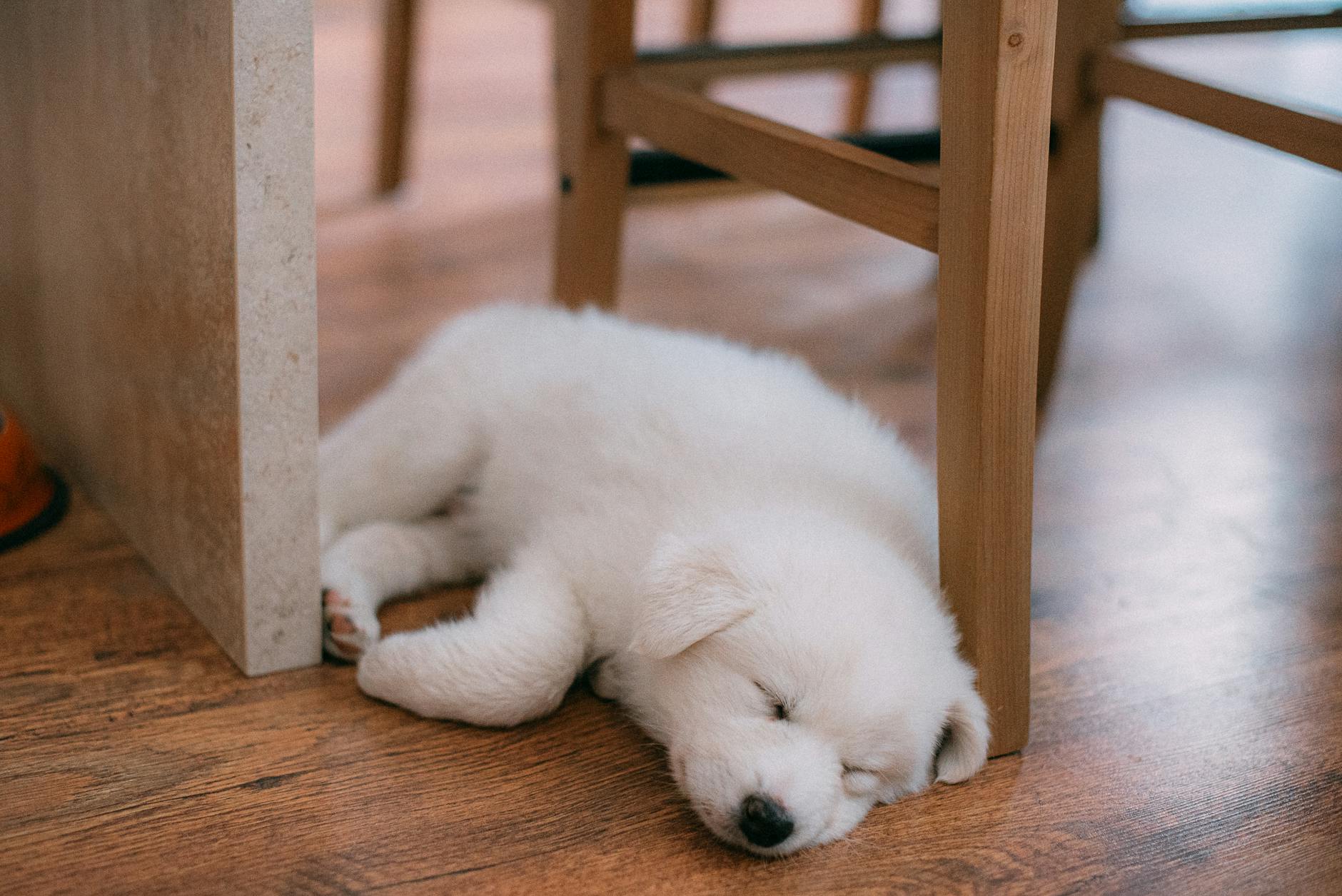
Photo shows gorgeous all-white puppy with black nose asleep between a wooden chair and a beige wall on a brown hardwood floor.

The tiny dog in the flannel jacket put her paws on my knees. I bent down. “Hi, I’m Aunt Sue,” I said. She licked my face with her tiny tongue. Aww, said everyone at church choir practice.

It was all about dogs last night. I’m not complaining because I adore dogs, and my idea of heaven is to roll around in a pile of dogs. This dog, a puppy, is the newest addition to our church choir family. Her owners don’t feel comfortable leaving her home alone yet.

All of the singers have or have had canine family members. My Annie passed away in September, but I have plenty of stories to contribute. We talked about chewing, biting, barking, random things they have eaten, and places they have snuck into. Earlier in the day, our director’s dog destroyed a box of Q-Tips and scattered them from hither to yon.

Eventually we got around to practicing our songs while the dog continued to flit from one singer to another until her “mom” pulled her up and snuggled her in a blanket in her lap.

As a dog mom, I don’t mind dog talk. But what if I didn’t have dogs? What if I couldn’t have a dog? What if I was a cat person? A few months ago, a singer quit the choir, partially because we were always bringing our dogs to practice and talking nonstop about dogs. She not only didn’t have a dog; she was terrified of them, due to a bad experience when she was younger.

Isn’t it the same way when everyone at a gathering is talking about their children? Maybe they bring a baby or toddler with them, and you sit there feeling left out. We’re always tensed for the questions: How many kids do you have? How old are your children? Do you have any grandchildren yet? You don’t have children? Why not?

Most of our choir members are grandparents, but their families live far away. Besides, we know them, so we can share in the conversation. It would be different if they were in the midst of raising their children instead of dogs.

The National Association of Realtors recently shared census statistics that showed there are more American households with pets than with children. Way more. As of 2022, 40 percent had kids in the home, down from 48 percent in 2002. The Pet Products Association reported that 70 percent of American households own a pet, up from 56 percent in 1968. (The World Animal Foundation says it’s 66 percent.) You can read the whole article for more details, but wow. Birthrates are going down; pet ownership is going up.

Why? For all the reasons people are having fewer children: marrying later if at all, more divorces, easy access to birth control, finances, concerns about the state of the world, physical or emotional challenges, infertility, etc.

Dogs are a big commitment but not as much as a baby, especially once they grow out of the puppy stage. You cannot leave a baby in the backyard and go out to dinner. You can’t take them to a kennel and go on vacation. They need you 24/7. Dogs will never become teenagers who tell you they hate you. They will not grow up and leave you with an empty nest.

Pet ownership has changed over the years, not just in numbers but in how we treat our “fur babies.” Many people I know share their beds with their dogs and cats. In my father’s day, people wouldn’t even let them in the house. They were animals. Now they’re family.

The small towns on the Oregon coast where I live are full of dogs. A little black one “works” at the Waldport library. A poodle named Ruby works the waiting room at my hearing aid place in Newport. A little fur ball greets customers at the Nye Beach bookstore. Our pastor, Fr. Joseph, has two poodles, Allie and Bailey, and is frequently seen walking them on the streets of Waldport. On my walks here in South Beach, I say hello to the neighbor’s Great Pyrenees, Lumin. On the next street, Winnie the Corgi and Bobo the chocolate Lab come running out to walk with me.

I love dogs, and I’m aching to get another one. When I do, I guarantee it will be all about the dog. But I’m beginning to realize we don’t all have and love dogs anymore than we all have and love human children.

What if I was not a dog person and people were incessantly talking about their dogs? Change the language. What if I was not a mom or dad and people were incessantly talking about their children and grandchildren? That’s something most of us have experienced. It hurts.

How about you? Do your pets feel like family? Like children? Like friends? When you’re in a group of people, are they talking about pets or children? How does it make you feel? Let’s talk about it.

Photo by Tanya Gorelova on Pexels.com

Processing…
Success! You're on the list.