I don’t have children, but I do have . . .

My dear friends,
I stayed up late last night reading and responding to a comment on one of my earliest posts, one that seems to strike a chord in so many people that it has more comments than any other. As you can read here (scroll up a couple to Anonymous Aug. 18), this commenter felt so depressed about her lack of children that she felt she couldn’t go on. She has a husband and three live-in stepchildren. Her husband is reluctantly willing to have more children, but her pregnancies have all ended in miscarriages. Now her doctor is telling her she’s too old.

It’s a sad situation. I get quite a few comments and emails like this, and I’m not sure how to help other than to offer condolences and prayers and suggest they seek counseling. I’m not a psychologist or psychiatrist, just a childless writer who has lived through some hard things. I have also been in counseling for years. There is no shame in it. If the first person you see isn’t helping, find someone else.

I have days when I don’t want to go on either. Yesterday was one of them, but this morning, despite the drippy fog outside, I feel good again. I slept well and had a nice dream, it’s Saturday, and I have a cinnamon roll waiting for my breakfast. When all else fails, please count the big and little blessings in your life. Can you walk, talk, see, hear? Some people can’t, and they go on. Do you have a husband or partner who loves you? A home? Work? Enough money to buy groceries? Some don’t, and they go on. Even the smallest blessing can help: the taste of a cup of hot coffee or a sandwich or a piece of cake, the smell of a rose, a favorite TV show, a song, a new pair of shoes, sunset over the ocean . . .

A few days ago, I asked if you could say, “I’m never going to be a mother.” Some can, some can’t. But now I challenge you to finish this sentence: “I don’t have children, but I do have ____________________.
"I’m Never Going to Be a Mother"

Can you say “I’m never going to be a mother?” Calmly? Without tears? You’re a stronger woman than I am.

Back when Fred and I were engaged but not yet married, he told me on a camping trip that he really didn’t want to have any more children. I was upset, but I never really accepted the situation as permanent, and I married him anyway. As I say in my Childless by Marriage book,

“Despite Fred’s declaration in the woods, I honestly believed that somehow I would still have children. But how did I expect that to happen? Immaculate conception? One stubborn sperm that survived the vasectomy? I was 50 before I could say, ‘I am never going to be a mother’ and mean it. I have asked dozens of childless women if they could say it out loud. Most had no problem with it. But just as I delude myself that I can lose weight while eating muffins for breakfast every morning, I held on to the idea that I might still have a baby.”

Crazy? Perhaps. When it began to dawn on me that it really might never happen, I felt sorry for myself, as if this terrible fate had been placed upon me. It took a long time to understand that I consciously married a man who neither wanted nor was able to make me pregnant. That situation was not going to change. I chose Fred over children.

So, I am never going to be a mother.

How about you? Can you say this? Do you foresee being able to say it? If not and there’s still time, you may need to take drastic steps to make it happen.


Is a childless writer handicapped?

Is a writer–or any artist–without children lacking an important component for her art? Can she ever portray a complete human experience without having experienced giving birth and raising children? On the other hand, can a mother ever be free to fully pursue her art?

This discussion, which never ends, came up recently after the death of bestselling Irish author Maeve Binchy. Most of the news articles mentioned her childlessness. In an essay in the Daily Telegraph, writer Amanda Craig argued that Binchy would have been a better writer if she had been a mother, giving her a “deeper understanding of human nature.” Binchy, who struggled with infertility, had written about how much she wanted children but was unable to have them. It wasn’t a choice for her. But did it make her less of a writer? Many famous authors of the past, including Virginia Woolf, the Bronte sisters, and Jane Austen, were childless. In their day, it was believed you couldn’t be both a successful writer and a mother. Which argument is right?

For me, I admit I have some gaps in my knowledge. At a meeting last night, things moved into talk about doing a program at the local schools. Suddenly the parents in our group had all these suggestions that obviously came from their experiences with their kids. I felt like a guy must feel in a discussion about makeup: clueless.

Although I haven’t had the same experiences, I have been a child, growing up with other children. I have been a stepmother, and I have been around other people’s kids and families all my life. That has to count for something. If I wanted to volunteer at the school, I could learn what those people at the meeting know. I have also raised dogs–which makes parents of humans roll their eyes–but this week, as I’m treating Annie’s third ear infection this year, I feel pretty darned motherly. (It’s getting much better, thank you.)

Let’s look at the other side of the equation. Because I live alone with my dog, I have been able to spend my day like this: I got up when I felt like it, did a little accounting before eating a leisurely breakfast with no one else to feed, spent over an hour playing the piano and starting to write a new song before going to a doctor’s appointment, decided on the spur of the moment to take myself to lunch at a wonderful restaurant overlooking the ocean, then came home and spent the next three hours finishing the song. Even without children, I have never had so much uninterrupted time. For songwriting, I need complete concentration. I need to be able to keep going over the song, smoothing out the bumps until I can sing and play it with confidence, and that takes hours.

Whether it’s writing, music, art or whatever our passion, it is easier without children. Of course, when we’re done, we wish we had somebody to share it with, but let’s be honest. A childless woman has a lot more freedom to create. Whatever grief or loss we might feel, that is a blessing for which we should be grateful.

Your thoughts? 

"If you’re pregnant, I’m leaving."


We’ve been talking about husbands not wanting children for various reasons. Today I’m sharing an excerpt from my Childless by Marriage book. This comes early in the book, during my first marriage.
         Perhaps the baby showers got to me, or maybe my ovaries were feeling neglected, but I did start thinking more seriously about children. My cousin Marian, whose mother had just died, clasped my hand as she met me in the aisle after the funeral. She was finally pregnant after years of trying. “Susie, don’t wait too long. Don’t wait until your mother passes away to have a baby.” I knew she was right.
         But not yet, Jim always said. And indeed it did not seem like the right time. Wait until I have my degree and we have a house, he said. That made sense. When grandparents and nosy aunts wondered aloud when Susie was going to have children, my mother ran interference. “Oh, they’re not ready yet.” “Yes, of course she wants them.” “They will.” God bless my mother.
          And God bless Jim’s mother, who went to her grave without grandchildren. Much as she tried to micro-manage every other aspect of our marriage, she kept her mouth shut about babies.
       In 1979, I started babysitting the next door neighbors’ infant. Remembering my previous babysitting failures, I hesitated to take on this tiny diapered screaming machine, but I hoped Jim would help. Wrong. When I brought the crying baby back to our apartment, he instantly raised a fuss. “Shut her up. I can’t stand that noise.”
“I’m trying. She’s just a baby. Maybe she’s hungry.”
“Well, I don’t want her here.” He sniffed. “God, she stinks.” He lit a cigarette, grabbed his keys, and walked out the front door while I stared into the infant’s red face. If he couldn’t stand this one, who was only here for a couple of hours, how would he handle a baby of our own? 
 When they got home, I told the neighbors I was sorry but I didn’t have time to take care of their baby anymore.
Shortly after that, I thought I might be pregnant: late period, fat belly, nausea, weariness, all the symptoms I had seen on TV. Jim was not happy. “If you’re pregnant, I’m leaving,” he said.
            Surely he didn’t mean it, I thought, but I’ll never know because my period started a few days later. We continued to use the diaphragm. In the early years, we had occasionally used condoms on camping trips and wilderness outings, but now we rarely went anywhere together.
            By 1980, it was over.
What happened next? Get the book by visiting at http://amzn.to/2DseNwZ.
See you Saturday.

He says, ‘We can’t afford a baby’

Over the years of writing and talking about childlessness, I have heard lots of reasons why people decide not to have children. Often it’s the man saying, “We can’t afford it.” The couple may be short on cash. They may fear that if one stops working, even for a short time, they’ll go under. God knows it costs money to bear and raise a child. This Huffington Post article estimates $245,000, but most people find a way. Sometimes I wonder if saying, “We can’t afford it” is just a way of putting off babies indefinitely. I can certainly see the validity of planning and saving money to prepare for parenthood, but many times, I don’t see these naysayers doing anything to improve their financial situation.They just keep saying, “We can’t afford it.”

What do you think? Is money a valid reason to not have children? Have you been told, “We can’t afford it?”

***
Did you know more babies are born in August than any other month? Must be the holidays and cold weather that come nine months before. Anyway, it’s babies, babies, babies around here. Everywhere I look, despite the cost of having a child, I see more babies. At the farmers’ market the other day, I found myself dodging moms and and dads and strollers all along the way. My friends all seem to be welcoming grandchildren and great-grandchildren. I’m truly happy for them, but I’m starting to feel kind of lonely. How about you?

See you Thursday.


He Might Have Been a Bad Dad

On Thursday, we talked about the situation in which one never finds that special someone they want to spend their lives with. Some people end up both single and childless. Well-meaning friends suggest they find a sperm donor, adopt or take in a foster child, but those options are not as easy as they sound, especially if you’re doing them alone.

But what if you have that special someone, a life partner who is wonderful in many ways, but you don’t think they’d make a good parent? I have talked to women who held off on motherhood because their husbands had problems with drugs or alcohol or anger. Others worried about mental illness that ran in their families. Maybe there were physical problems that would make parenting difficult. In some cases, the marriage was shaky, and they didn’t want to bring children into an unstable situation.

In my first marriage, we had some of these problems. My ex was a sweet and gentle man, but he drank and he cheated on me. Should I have done as one relative suggested and secretly stopped using birth control so I could have the baby I longed for? No. Bad idea. As much as I know now that that was the time in my life when I should have become a mother, I also know that my husband would not have miraculously changed when I handed him a baby. I suspect he would have run away. I wish I’d had a child, but I know it was probably a blessing that I didn’t.

What about you? Have you been in or observed couples where both parties might have been willing to have children, but it’s just not a good situation and they wouldn’t have been good parents? Let’s talk about it.

What if you never find that special someone?

We often talk here about having found a partner who is great in every way except for being unable or unwilling to have children. But what about those people who don’t find that special someone? I just read an article by Mandy Appleyard from the UK that talks about her experience with this. I really recommend you read “The Love I’ll Never Know.” Appleyard talks about the cruel comments people make. They assume that she chose career over family and that’s why she has neither husband nor children. But her relationships never worked out. She was even married for a while and had two miscarriages before that marriage failed. People don’t understand. She talks about how she copes by enjoying her career and transferring her love to her godchildren. I think we can all identify with a lot of what she says. Read the comments, too. It’s unbelievable how thick-headed some people can be.

Most of us somehow find a partner along the way, but not everyone does. Among the people I interviewed for my book was a nurse named Barbara who had never married. Yes, she had a career, but that career didn’t fill the empty place in her heart. For a while she worked in the maternity ward and she would weep as she delivered newborns from the nursery to their mothers. Would she have liked to have a family? Yes. But it just didn’t happen.

I was lucky enough to be married twice to men I loved. At least on the surface, I had the beginnings of a family. If we had agreed to have children, we could have. The problem was that we didn’t agree.

There’s no guarantee in this world that we’re going to find that special someone. I’m amazed that most of us do end up getting married at least once. But what if it never happens? What if every relationship goes bad and we’re still alone as our fertility dries up? Use a sperm donor or adopt, some people suggest, as if those are easy options. They’re not, and I don’t think we can blame anyone who decides not to try single parenting.

For those of us who don’t have children but do have partners or spouses whom we love, I think we should give them a big hug and thank them for being there. It could be worse.

What do you think about all this?

My Childless Dog and I

You can tell I’m tired and overwhelmed when the blog is this late and I take to writing about my dog, but I’m still here. Keep those questions and comments coming.

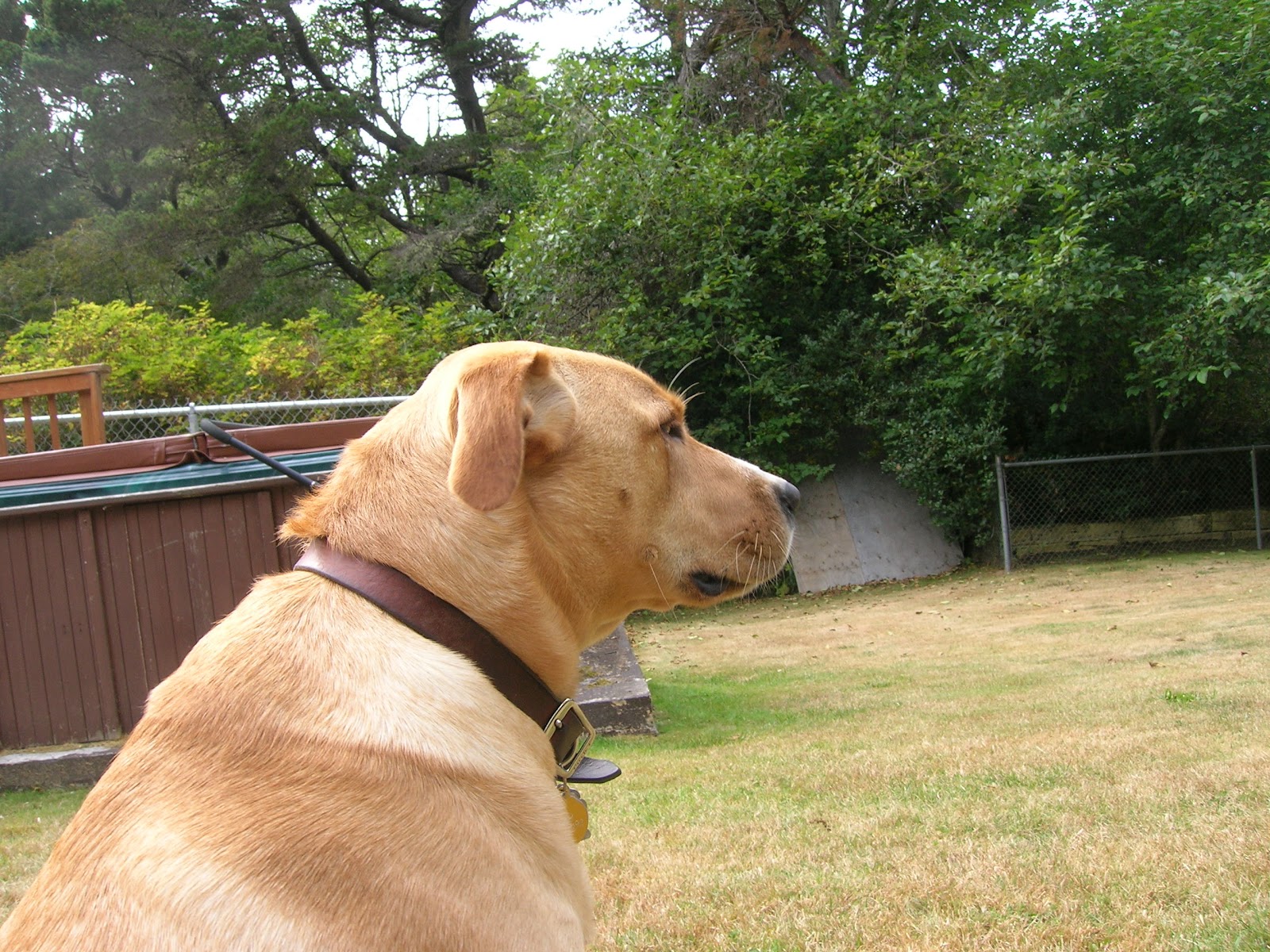
I live with a dog named Annie. She’s almost 4 1/2, half Lab and half Staffordshire bull terrier. We started with two dogs, Annie and her brother Chico, but Chico got a little crazy and had to go live somewhere else. Losing my little boy broke my heart. But that’s not the main topic today. The subject is how my dog and I are both childless.

As soon as Annie was old enough, we had her spayed, vet talk for a hysterectomy. We didn’t ask her if she wanted to have puppies. Nor did we ask the two female dogs that preceded her in our lives. We just did it. We didn’t want to acquire a houseful of puppies, and I never wanted to face the heartbreak of giving them away and separating them from their mother. I know that’s the way it goes, and the dogs are probably fine. Annie’s mom seemed relieved when the puppies were gone. When Annie met up with her mother more than a year after we adopted her, they fought, and we had to pull them apart.

We hear a lot about the need to spay and neuter our pets to keep from having too many unwanted animals, and most of us do it because we really only want the one dog or cat and we don’t want the hassle of dealing with baby animals. We only allow our pets to mate when we want them to have babies. Otherwise, we strive to keep males and females apart.

Some advocates of the childfree lifestyle argue that we ought to do the same for people because there are too many of us. They fight for the right to have their tubes tied, often encountering doctors who refuse to do the surgery because they might change their minds.

Me, I never got spayed. I still have all my parts, but I never used them to make babies. Now Annie and I hang out together, two childless females mothering each other into old age.

*****

Ellen Walker, author of Complete Without Kids, interviewed me about my book recently for her Psychologytoday.com blog, and it was published Sunday. Give it a look at http://www.psychologytoday.com/blogs/complete-without-kids/2012-7/are-you-childless-marriage. You might want to subscribe to her blog. It’s full of good things, and we’re all sisters in this childless game. Annie, too.

We are entitled to grieve for the children we never had

In nearly 300 posts at this blog, the one that has engendered the most comments is is a two-paragraph entry I posted in 2007. Titled “Are You Grieving Over Your Lack of Children?” it quotes a newspaper article about a woman dealing with childless grief, then asks the readers, “Have you come to terms with not having children?” We’re up to 98 comments so far, with new ones coming almost every day.

Clearly grief is a big issue for us. People who are not in our situation don’t seem to get it. They’ll tell us “oh well, you can adopt” or “the world has too many people in it anyway” or “get over it” or even “sometimes I wish I didn’t have any kids.”

It’s not that easy, is it? When we want children and we don’t get to have them, we have lost something huge. In some ways, it’s like a death. We have lost the children we would have had, along with the grandchildren and great-grandchildren. If we hang up stockings at Christmas, there will be only two–or one if we’re single. When we see someone cuddling their new baby, we feel pain. At all the times when our parenting friends celebrate the milestones in their children’s lives, we feel left out.

Yes, there are advantages as well as losses to life without children. We are free to do things we couldn’t do if we were raising children. We miss a lot of heartache and frustration along with the good times. And yes, we can be beloved aunts or uncles, teachers or friends to other people’s kids.

However, we have a right to grieve. And the grief will come back again and again, like any big loss. Does it get easier with time? Yes. Being past menopause has helped a lot. But the grief never completely goes away. Just last night, I found myself crying over a TV show where a baby was born. Again!

All I’m saying is we’re entitled to feel the loss of the children we might have had.

I welcome your comments.


Childless by Marriage the paperback is here

Dear friends,

Copies of the paperback edition of the Childless by Marriage book are in the house. All over the house actually. After more than a decade, the book is complete and, for better or worse, it’s in print. If you want to help me pay for them and clear up the house by buying many many copies, I’d love it. If you decide not to, keep coming back to the blog anyway.

It’s a beautiful book, which I can’t believe I’m holding in my hand. In a way, it’s my sixth child, following The Iberian Americans, Stories Grandma Never Told, Azorean Dreams, Freelancing for Newspapers, and Shoes Full of Sand. (Info at www.suelick.com/books). As the baby, it will require extra care until it can stand up on its own.

I have begun to realize that this book, which is very personal, may also be controversial. There isn’t one chapter that people couldn’t find something to argue about. If you don’t have children in this world full of parents, you know that some people just don’t understand. They may get angry when I talk about the “mom club.” My chapters on step-parenting might set them off. The “childfree” crowd may object to my pro-child stance, might rage about my Catholic orientation, might take offense at what I say about the angry minority who call women who want children “breeders.” I’ll get guff from people who refuse to admit there are any psychological or physical differences between mothers and women who have never had children. I’ll hear from people who believe old age is no different without children than it is with them. I’ve been in the writing business long enough to know that I’ll hear objections about things I never suspected would irritate people. The reviews will probably be either five stars or no stars, love or hate with nothing in-between. Writing is easy; this is the scary part.

I’m really worried about what my father and my church friends will say, but our stories need to be told, and I could not go to my grave without publishing this book. I hope you all will continue to support me in this Child by Marriage life we share. Thank you, all you anonymous and named readers, for all of your love and support. It means a lot to me.

See you Thursday.