Troubled Childhood Can Lead to Childless Adulthood

“I’m afraid to have kids because of how messed up my own childhood was.”

That sentence is taken from a blog post by psychotherapist Annie Wright, who finds many of her clients worry that if they grew up with less than perfect parents they can’t possibly be good parents themselves. That’s not necessarily so, she assures them. In fact, they may be fabulous parents as they strive to do what their own parents could not.

How we grew up has a big effect on how we feel about having children. Those effects can start setting in before we’re old enough to have conscious memories. Did your parents love being parents or hate it? Were they involved in your life or more hands off? Were they abusive? Did they argue all the time? Did your parents divorce and leave you feeling like a lasting relationship is impossible? Was money a problem? Were you a latchkey kid raising yourself? Were you forced to babysit your siblings so much you feel as if you already “did” parenthood? For women, was motherhood considered the only option, one of many choices, or the end of a happy life? For men, was fatherhood portrayed as a noose around your neck or the best thing in the world?

My mother loved babies. Once she gave birth to my brother and me, she quit her secretarial job and never worked outside the home again. Caring for us and Dad and the house was her job. Of course, that was the 1950s and 1960s. Think “Leave It to Beaver” if the dad wore a hard hat and khakis to work. I think my father resented the obligations of parenthood, but he never questioned the rightness of having children. It was an era when, as he told me later, “That’s what you did.” Mom and Dad modeled a happy marriage and treated us well, so I grew up thinking having children was a good thing.

Add in the dozens of dolls I mothered and all those old-fashioned movies and TV shows that ended with “love, marriage and the baby carriage,” and I never questioned that I’d be a mother someday. I figured I would write books, raise children and live happily ever after with my Prince Charming.

Oh well.

My first husband and his sister also seemed to grow up in a happy traditional home, but neither ever wanted to have children. Their parents were overly involved in our adult lives. Other than that, they seemed fine, but I wasn’t there in the early years. Were there things I didn’t know about? A lot of important impressions are formed before a child reaches kindergarten. What happened to them?

Most readers of this blog have grown up in a very different world, a post 9-11 world facing climate change, a divided country, and an economy that makes it nearly impossible for young people to buy a home. How can they possibly afford to raise children? Adding to the confusion, divorce is common, husbands and wives are both working, and couples are waiting longer to consider getting pregnant, which can lead to fertility problems.

Where does that leave you? My upbringing caused me to want and expect to have children and to grieve when I didn’t. How about you? Did the way you grew up make you want to have babies or shudder at the thought? Is there something in your partner’s past that makes him/her shy away from having children? Have you talked about it? Without pushing for babies, this might be a good conversation to have just to understand each other better. “What was it like growing up in your family . . . ?”

Please comment. I’d really like to get a discussion going on this.

Processing…
Success! You're on the list.

Can You Live with Your Decision Not to Have Children?

When you want Chinese food and he wants pizza, how do you decide which to get? Settle on KFC instead? If he gets his pizza, will you still be wishing for Chinese or decide pizza’s not so bad after all? Will you not really care because it didn’t matter that much to you? Or will you hold it over his head. “I gave up moo shu pork and egg rolls for you, and I’ve got heartburn from eating your stupid pizza.” Will he give in and have Chinese but insist it was the worst Chinese food he ever tasted?

Deciding whether or not to have children is not the same as deciding on takeout food, of course. Years later, will you remember whether you ate moo shu or pizza? No, but whether or not you have children will affect your entire life.

Relationships are full of decisions. Where will you live? Where will you work? Will you paint the living room blue or white, go to his parents’ or yours for the holidays? But next to getting married, whether or not to have children is the biggest decision you will ever make.

If you’re lucky, you and your sweetheart agree on most things most of the time. It sure makes life a lot easier. It’s like, “Let’s have . . .” and you both say “Chinese!” at the same time. But we wouldn’t be here at the Childless by Marriage blog if life were that easy.

It would be nice if we were all saints, too. “I will sacrifice what I want because I love you. And I’ll never bring it up again.”

That’s how it goes in fairy tales.

In real life, when someone gives up what they want, they may not be able to let it go. When you disagree about having children, someone is going to be unhappy and that unhappiness might never go away.

If you’re the one who wants children and you do somehow convince your partner to make a baby—or adopt or pursue fertility treatments, he or she might decide that like the pizza, yes, this is good and they’re glad they changed their mind. But it is quite possible they will carry some resentment and bring it up whenever things get difficult. I never wanted kids. See, now we can’t take a vacation because your son needs braces.

If you didn’t get the children you wanted, you might cry about it in secret or yell about it out loud. Because of you, I’ll never be a mother or a father. Because of your selfishness. It doesn’t help that the world makes you feel less-than because you’re not a mom or dad like everyone else seems to be.

Maybe it’s not just a matter of want but can’t. Your partner can’t have children so you decide you will give them up too because you love them. You want to be together. Wonderful. Again, saintly. But there are going to be those moments when you think I screwed up. I shouldn’t have just given up like that. It wasn’t fair of him to ask me to.

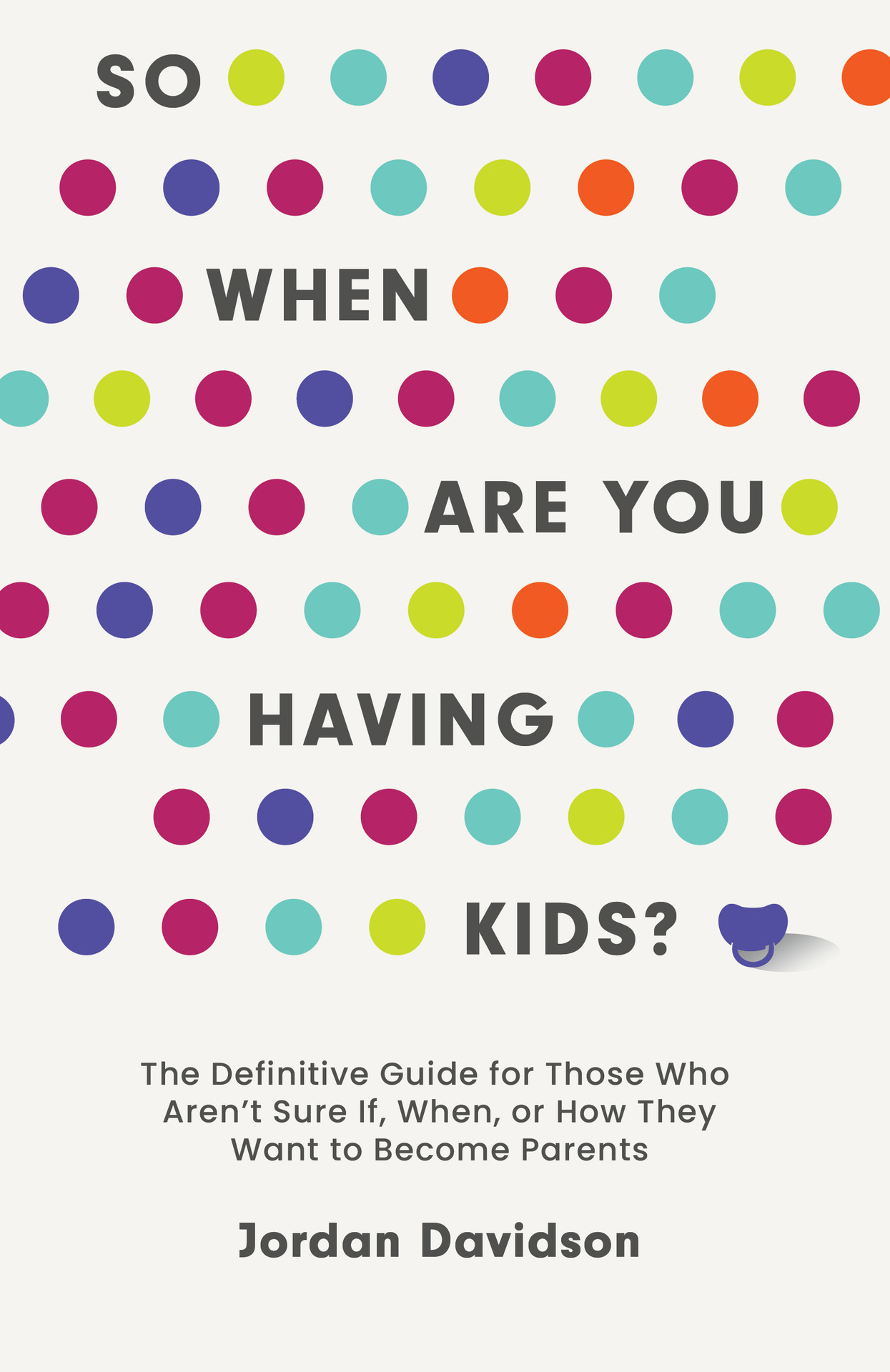
In Jordan Davidson’s book So When are You Having Kids?, which I wrote about in my April 5 post, she cited a UK study that showed many couples decide whether or not to have children after only one discussion. Each person usually comes to that one discussion already knowing what they want. Ideally, we bond with people who think like we do, but when we disagree on something so important, it gets tricky.

Davidson says the one who feels strongest about what they want will usually prevail. The other gives in out of love or simply to save the relationship. “Those who felt comfortable with their ultimate decision said they never felt manipulated or forced into deciding, whereas those who expressed some level of regret or dissatisfaction with parenthood felt rushed or coerced.”

“If you convince your partner to align with your decision, you may feel guilty, like you decided their future for them. Your partner may also harbor some resentment if they feel like their desires weren’t fairly considered.”

What am I trying to say? Only that there’s no easy answer here. If you nag and cry and make your partner crazy until they give in just to get some peace, you might get what you want, but at what price to your relationship? If you quietly give in but can’t really accept the decision, it will fester inside. All you can do is make your desires known. Talk it through thoroughly—and not just once. Then decide whether you can live with the results.

As my mother always told me about boyfriends, there are more fish in the sea, but if this is the only fish for you, one of you is going to have adapt to the other fish’s speed.

What do you think about this? Can you compromise on the baby question and still be happy together? I welcome your comments.

Photo by Quang Nguyen Vinh on Pexels.com

Processing…
Success! You're on the list.

The Question: So When are You Going to Have Kids?

That’s a question many of us have heard a lot. Even if we answer “We’re not having children,” no one believes us and we keep meeting other people who can’t resist asking the question, especially if you’re married and under 40 years old.

When I found this book, titled So When are You Having Kids? by Jordan Davidson on the new-books shelf at my local library, I had to bring it home. I thought people might giggle if they saw an old lady like me reading this book. That ship has sailed, hasn’t it? Yes. I’m not contemplating getting pregnant, but the book is still full of information that everybody should have, whether or not they ever plan to procreate.

With the subtitle “The Definitive Guide for Those Who Aren’t Sure If, When, or How They Want to Become Parents,” it provides answers to every question a person could have about the making of babies. It’s the only book I have read on the subject that includes LGBTQ readers every step of the way. Davidson offers the reasons why people decide to have children or not, details on how sperm meets egg and what happens then, the straight facts on fertility treatments and odds of success, the inside story on surrogacy and adoption, details on contraception and sterilization, and so much more. All this, and it is not boring. Davidson intersperses personal stories of people with and without children throughout. Even though I’m well past menopause way past menopause, I found it fascinating. Here is everything you did not get in The Talk with your parents or in sex education classes.

“When are you going to have kids?” God, I hated that question. When I was with my first husband, everyone assumed as I attended my cousins’ baby showers, that “Susie” would be next. I would mumble something like, “maybe,” even though I knew my husband wasn’t up for it, not then, maybe never. When I married Fred, I was a little older, but they still assumed babies were coming, and if they didn’t, well, at least I had Fred’s kids and could be a stepmom. I tried to avoid the question as much as possible because another question always followed: Why not?

Well, we’ve got the other three, there are health problems (his vasectomy), I’m prone to diabetes, etc. I never just said, “Fred doesn’t want to have any more kids.” I didn’t quite believe myself that it would never happen, plus I didn’t want to make my husband look bad. So, I just mumbled something and changed the subject.

The author shares an interesting quote from Ethicist Christine Overall, author of Why Have Children: The Ethical Debate: “In contemporary Western culture, it ironically appears that one needs to have reasons not to have children, but no reasons are required to have them.”

She is so right.

I will be returning to this book in future posts because it’s so packed with relevant topics, but this week, I’d like to hear your comments. What do you say when someone asks, “Hey, when are you going to have kids?”

Happy Easter, dear readers. Don’t let all the child-oriented Easter Bunny stuff get you down.

Processing…
Success! You're on the list.

New Book Shows Us Childlessness is Nothing New

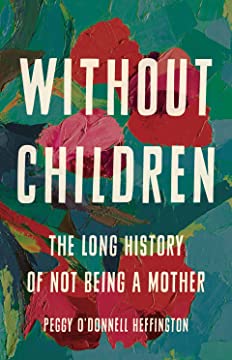
Without Children: The Long History of Not Being a Mother by Peggy O’Donnell Heffington, Seal Press, coming out April 18, 2023. [pre-publication copy sent by publicist]

Women didn’t start choosing not to have children in the late 20th century with the advent of legal abortion and The Pill. As historian Peggy O’Donnell Heffington describes in this book, it has been happening throughout history. Women were using a variety of herbal concoctions and crazy methods to keep sperm from meeting egg long before birth control pills became widely available in the 1970s. What is new is the way families have separated themselves up into mom-dad-children units, each living in their own separate homes instead of the multi-generational communal living of earlier eras. In those times, mothers had aunts, grandparents and siblings to help. Now they’re expected to do all the childcare AND work outside the home, giving most of their income to daycare.

Other things have changed, too. Couples worry more about overpopulation, climate change, and the financial challenges of parenting. Women delay parenting to pursue education and careers, then struggle with infertility when it’s almost too late. It’s much less of a scandal these days if a couple decides not to reproduce, but there is still a strong belief that having children is the norm and if we’re not doing that we need to explain ourselves.

This book looks at the various reasons for not having children, including wanting more out of life, concerns about our overcrowded planet, the frustrations of infertility, and simply choosing not to have them. Heffington goes into great depth on each subject. We learn about early birth control, family organization, activists who fought for women’s right to control their own bodies, how fertility treatments work and the statistics on their effectiveness, and much more. The level of detail is incredible, but the facts never bog down the narrative. Don’t let the footnotes scare you away. I highly recommend it for anyone trying to decide whether or not to have children or dealing with the decision after it’s a done deal, as well as for the people who love them.

My only quibble is that she doesn’t say much about being childless by marriage. It’s sort of buried in the many ways we can wind up without children. I wish she had said more about that. Still, it’s full of fascinating facts. For example:

*Nearly half of millennial women have no children and an increasing number don’t ever plan to.

* Births have dropped dramatically since the 2008 recession because couples feel they just can’t afford it. Add in the pandemic, and even fewer are willing to jump into the parenting pool. The same thing happened during the Great Depression early in the 20th century.

* Contraception has only been legal in the United States for married women since 1965 and for all American women since 1972. (That’s the year I lost my virginity. That blows my mind. If I had started having sex one year earlier, I would not have been able to get The Pill. I would probably have been pregnant on my wedding day.)

* People have been using all kinds of methods to prevent or to end pregnancies throughout history. Among the possibilities: mixing a spermicide made of hydrated sodium carbonate with crocodile droppings, blocking the cervix with a disk made of acacia gum, and rubbing crushed juniper berries on the man’s penis. Some of the things described here actually worked.

* There’s a theory that humans live far beyond their reproductive years so they can care for their extended families and the children in their communities rather than having more or any children of their own.

* The choice not to have children may not feel like much of a choice at all when you factor in the challenges of establishing a career, finding the right partner, saving for a home, paying off student loans, or working multiple jobs to make ends meet. (I would add dealing with physical or emotional problems, marrying partners who already have children, who have had vasectomies or hysterectomies, or who just plain don’t want them. Is it really a choice when you can have this person you love OR children and might end up with neither?)

Heffington, who claims a husband and two pugs as family, writes from the point of view of a historian. A professor at the University of Chicago, she writes and teaches on the histories of gender, rights, and the environment. It all comes together in Without Children.

The book comes out next month, but you can preorder it now.

Processing…
Success! You're on the list.

When Childless Grief Knocks You Down, What Do You Do?

Last Thursday was a beautiful day, the snow almost melted, the sun shining. I was walking the dog in the woods when I had this thought: What if when we got home, someone from my family was there waiting for us?

What if my brother, nephew, niece, or cousin were there? What if my grown children were there, ready to spend time with “Mom.” I could almost feel the hugs. They could take me out to dinner, fix the lights that don’t work, and help me figure out what to do about . . . so many things. 

But they aren’t coming. My real-life relatives live far away and have busy lives. I don’t have any children, just the deaf old dog with vertigo who keeps veering across the path, pulling me along with her. With no one around to see me, I let the tears fall. In the movies or on TV, someone always shows up to offer comfort, but not in real life. I went home to my house that’s way too big for one person and buried my feelings in pastry and work. It’s when my mind is open, like when we’re walking, that I hear that voice saying, “You are alone; you’re not supposed to be alone.” 

When I married Fred, I gave up the chance to have children. I don’t know if another man would have come around if I waited. I don’t think so. I have never met anyone else I wanted to spend my life with. I chose Fred, along with his kids from his previous marriage, because he was wonderful. I had no idea he would get Alzheimer’s disease and die or that his children would break the connection with me right after the funeral. I did not expect to end up alone. But here I am. 

I suffer from depression. I know the grief attack will pass. But in the moment, it hurts like hell. I’m jealous of everyone who still has a partner. I hate that I’m alone while they’re surrounded by children and grandchildren. I know I’m not the only person in this situation. I know I have wonderful friends. All I have to do is call them, but when I’m depressed, I can’t make myself do that.

The rest of the world really doesn’t understand childlessness. They advise us to get involved with other people’s children. Become a teacher, work in daycare, be a mentor, cozy up to the offspring of your friends and family. Be a super aunt or uncle. But that is not and never will be the same. When it’s time to go home, the children go with someone else.

Choosing a partner who will not give you children means giving up the family you might have had. You lose the safety net that would keep you from being alone if for some reason he or she left you behind. I hope it never happens. I hope you have a lifetime of love together. If you end up alone, you will find your own way, but you might be doing it with tears streaming down your face.

I’m on my way to a writing conference in Seattle, where I will be surrounded by people who love words as much as I do. It will not be family, but I will not be alone and I will not be thinking about the children I never had. Last night I visited with my cousin, who lives in Washington. Her life is filled with children, but we have so much in common beyond children that it doesn’t matter. Today I am anxious–big city, crowds, commotion–but I am not depressed. I pushed myself out of my hermitage in the woods to seek out other people because I need them.

What about you? Does the grief knock you down sometimes? How do you get back up? Do you feel a wall between you and your family because you are the one without children? Please share in the comments. 

Photo by Pixabay on Pexels.com

Processing…
Success! You're on the list.

Can I Declare Myself Happy without Children? Can You?

That question makes me squirm.

I happened upon a podcast from a couple years ago that was titled “Childfree by Circumstance and Happy.” It’s not uncommon to hear people who are childfree by choice say they are happy, delighted even, with their choice. No regrets, just loving their freedom. But what if it wasn’t your choice, what if it just happened due to medical problems, infertility, bad timing, or lack of a willing partner, and you decided to be happy about it? Can you do that?

Jackie Shannon Hollis and Shirley Wang, the two guests on the show, said they could.

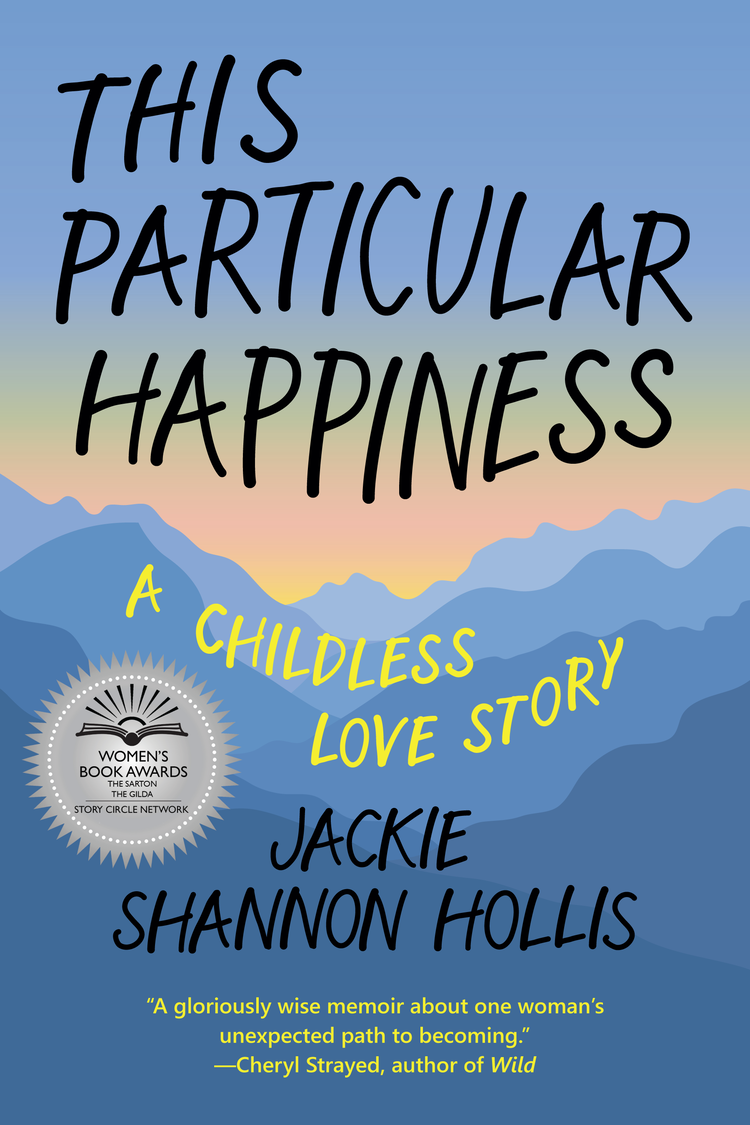
Hollis is author of a fantastic book titled This Particular Happiness: A Childless Love Story. Her first marriage ended in divorce without children. Her second husband, who was older than she was, declared he absolutely did not want children. She wanted to spend her life with him, so she made a conscious choice to live without children and embrace a childfree life.

Rather than mope about it, Hollis added being a parent to the list of things she would never be in her life, the parallel lives she might have lived, just as she would never be a doctor or an Olympic athlete or a hundred other things. Hollis asked herself “Am I happy right now?” She was, so why not continue living the life she had?

Wang, an opera singer, pianist, and author, said she had never met the right man to be her life partner and father of her children. A medical issue at age 38 forced her to decide whether or not she really wanted to have children. She realized she didn’t need to have children of her own to be happy. She enjoyed her life of traveling and performing. With her students and nieces and nephews, she had plenty of kids in her life. “I felt free,” she said.

How emotionally healthy these women sound. Wang says she rarely thinks about the fact that she doesn’t have children. She just enjoys her freedom. In fact, the slogan on her website is “freedom to create.”

I am a creative person, too, and I appreciate the time and freedom to do my writing and music, but I can’t let go of my childless grief. I really wish I was a mother and grandmother. It hurts that I’m not. I envy people my age with big families. My marital life was very similar to Hollis’s, except that I didn’t make a conscious choice to be “childfree.” I thought my stepchildren would fill the gap, and I somehow thought that at some point I would have my own babies. That didn’t happen. Now that my husband is gone, I’m living with a dog in the woods far away from my family, and I’m lonely.

“Let it go,” says a voice in my head, possibly my former therapist. “Move on.” You wanted to be thinner, a concert pianist, and have curly hair, too. You wanted to sing in a band. Let it go. Let it all go. But you know what? It’s my grief. I’ll weep if I want to.

This is getting pretty heavy. How about you? Can you stop torturing yourself about not having kids? Can you let go of being childless and celebrate being childfree? What would it take to do that?

As always, I welcome your comments and really appreciate you being here.

Processing…
Success! You're on the list.

Dropping Birth Rate has Many Governments Worried

My great-grandmother Louisa Gilroy had 10 siblings. Her husband, my great-grandfather Joe Fagalde, had 12. Joe and Louisa raised three sons. Those sons, Clarence, Louis, and Lloyd, had two, three and no children respectively. My dad, one of Clarence’s two sons, had two children. My brother has one biological and one adopted child. I have non

Lest this start to sound like tiresome “begats” chapter in the Bible, I’ll stop there. What I’m saying is each generation seems to be having fewer children. Experts who study these things are starting to worry. We have this huge bulge of baby boomers who are all moving into their senior years, leaving fewer younger adults not only to care for them but to do the work needed to keep society going. Also fewer people to contribute to programs like Social Security and Medicare in the U.S.

It’s not just here.

Recent news reports have talked about how Japan’s birth rate is the lowest it has been since the 1800s. The population is aging rapidly, with a shrinking number of workers.

The median age is 49, highest in the world. The government has been offering incentives such as more parental leave and childcare allowances, but it’s not having much of an effect. Young couples are just not that interested in procreating. It costs a fortune to raise a child in Japan and young women pursuing their careers are not eager to take on a traditional role raising children.

The same thing is happening in China, where the population is decreasing. The situation was exacerbated by the one-child policy put in place in 1980, where it was illegal to have more than one child. Now that has backfired. Deaths exceed births, and the workforce is getting smaller. The one-child rule ended in 2015, but young people raised in homes with only one child are not jumping to take on the costs and sacrifices of having multiple children.

Many other countries are looking at aging populations and fewer births. Why? We at Childless by Marriage can tick off the reasons:

* Birth control and abortion offering more choices

* Women waiting until their late 30s or early 40s when their fertility is already waning

* Couples struggling to finish their education and build their careers before having children

* The high cost of raising children

* The lack of support such as childcare

* Being attracted by other options in life

* Infertility and other health problems

* Partners who are unable or unwilling to have children

* The rise in divorces and multiple marriages, increasing the chances that childless people will marry partners who have already done the parenting thing and don’t want to do it again

For most people, it’s probably a combination of reasons. Nearly all of us shudder at the thought of the enormous families of a century or two ago, especially when we consider that these are just the ones that survived birth and childhood. It’s relatively safe now, so why not have a couple of kids? But a lot of people are saying “no thanks.”

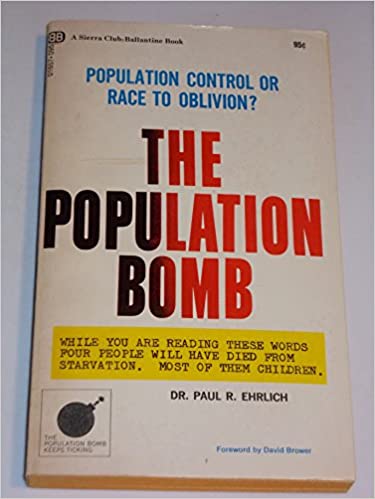
When I was young, the buzz was all about the horrors of overpopulation. Read 1970’s The Population Bomb by Paul Ehrlich. That book caused a lot of couples to choose the childfree life. Fifty-three years later, we still have too many people. Look at traffic, pollution, starving people in third world countries, and the homeless camping on our American sidewalks. The problem is more who and where than how many.

I’ll be gone by the time the low birth rate is a major problem, but what do you think?

Do population numbers have anything to do with your own childless situation? If your government was pleading for more babies, would you have children for the sake of your country? Or does that seem ridiculous?

I welcome your comments.

Processing…
Success! You're on the list.

What If Your Partner Dismisses Your Childless Grief?

Does your partner really understand how you feel about not having children? Do they sympathize or tell you to “get over it?”

I got to thinking about this after listening to a podcast about “disenfranchised grief” and childlessness with new Lighthouse Women leader Katy Seppi and Dr. Nisa Darroux. Darroux, who specializes in the subject, made some excellent points. I recommend listening.

Disenfranchised grief happens when other people don’t recognize your loss. To them, it looks like you haven’t actually lost anything. When someone dies, it’s clear. People offer cards, flowers, sympathy, and casseroles and gather around for support. But when it’s ambiguous, like losing the possibility of having children, they don’t know how to relate. With death, you had something and lost it. But with childlessness, well, you never had it.

This is not news to most of us. We’re familiar with people who say things like “why don’t you just adopt?” or “why don’t you . . . ,” with people who tell you it’s your own fault if you don’t have kids, that you must not like kids or want them bad enough, that you didn’t fight hard enough, or the ever-popular “you’re better off not having kids; if I had it to do over, I wouldn’t have any.” We have heard the relatives asking when we’re going to get pregnant, making us feel guilty for not producing grandchildren, or comparing us to our siblings who do have children.

Friends say look at my adorable baby pictures, come to the baby shower, or this Halloween party is just for “families.”

People, society, the family don’t acknowledge your right to grief, but what if your partner does not recognize your grief as valid? What if he/she is the one who says, “Aren’t you over that yet?” “We’ll get you a puppy, okay?” “You knew I wasn’t going to change.” “Don’t cry over spilled milk—or spilled sperm?” “Look at all the money we’re saving.” Or, “Hey, I’m the one with the bad sperm/eggs/whatever. What are you crying about?”

You know?

What if your partner does not acknowledge the magnitude of your loss? It seems to me if a person really loves his or her partner, they would do whatever it took to make them happy, including having a child even if they’re not really into it. Maybe that’s stupid because they might be resentful and unhelpful throughout. Or maybe one of those TV miracles would occur and they’d fall in love with the child and wonder why they were ever reluctant.

But I have to ask: How can you love someone who dismisses your tears as foolish or invalid? I was lucky. I think my husband truly felt bad about my grief, although I tried to hide it most of the time. At least he didn’t dismiss it. And he did come with those three offspring for me to stepparent. “I can’t give you kids, but you can share mine.”

What if the one most dismissive of your grief is your partner? I don’t know what to tell you, except to try to make them see how it is for you. The only other possibility is leaving, and I’m not suggesting that. Or am I? I don’t know. Your partner should be the one person you can count on. If you can’t, that compounds the grief, and you shouldn’t have to carry it alone.

All I can say is talk about it, cry about it, yell if you need to. Don’t deny yourself the right to feel what you feel. Acknowledge it and hold it like the baby you didn’t have.

What do you think about this? Please share in the comments.

Processing…
Success! You're on the list.

I’m an Alien from the Planet of No Children, Only Dogs

To illustrate how I prefer dog pictures to baby pictures, the photo shows a big yellow dog with a white face on a beat-up green sofa, fireplace and laundry baskets in the background.

My friend, whom I love, insisted on showing me a video on her phone of her grandchild babbling nonsense. I reacted in much the same way my father would have. A head nod and “yeah, cute,” but she stood there waiting for more. Another woman came over to look. Right away, she started gushing and oohing and couldn’t get enough of it. I don’t know how to do that. I come from a planet without children. That visceral response just doesn’t happen. Yes, she’s cute, and yes, I know she was a preemie and it’s wonderful that she’s growing and learning like other babies now. But I can’t give you that gushing mommy reaction.

When we met a one-year-old Lab-Golden Retriever named Bella at the vet’s office yesterday, I got plenty gooey. Oh, you’re so beautiful. Oh, what a cute puppy. And when my Annie, who doesn’t usually relate to other dogs, walked over and touched noses, I was beside myself with happiness. But human babies? It just doesn’t happen. 

The other night, I was rewriting an old essay that carries a food theme through my life from first marriage to first apartment post-divorce to new marriage and widowhood. It’s about tuna noodle casserole, not the one with potato chips. Basically neither husband liked it, so I cooked it for myself whenever I was alone.The essay covers a whole life, but when I read it over, it seemed to be missing something. Married, alone, married, alone–

Where are the children and grandchildren? Wouldn’t I be making tuna noodle casserole for them? Would they like it? I’m thinking they wouldn’t because it has mushrooms and nuts, but it doesn’t matter because they weren’t at the table. Children were not a factor in this life story. If I were being 100 percent accurate, I might mention the stepchildren, but I probably never served them my tuna noodle casserole. I knew they would hate my favorite comfort food.

My dog would love it, but she didn’t make it into the essay either.  

On what planet does a life not include children? Mine. Yours. We’re approaching a quarter of American women who reach menopause without giving birth. Their life stories don’t revolve around children, and their lives don’t revolve around Betty Crocker casseroles, with or without potato chips. 

On this planet of no kids, we do not learn to speak Mommy. We don’t develop the gushing-over-baby-pictures  area of our brains. We fill that area with pets or other things we enjoy. There’s a widowed man in my church who goes nuts every time he sees my Martin guitar. Babies not so much. I don’t know if he was always from the Planet of No Children, but he lives there now.  

Maybe, male or female, we are like the old “bachelors,” the unmarried fellows the aunties were always trying to marry off. In the cliched picture, they’re into work, cars, and maybe women, but not kids, oh no, not kids. They wouldn’t go all soft at the photo on the phone either. Being guys, they might be more interested in what type of phone you’re using. 

These days, I’m pretty much indifferent to baby pictures. My fertility ended long ago. For you, the sight may cause deep pain because you’re still trying to deal with the possibility–or certainty–that you will not have children. You can’t really refuse to look at the doting mother’s or grandmother’s pictures. If it makes you want to cry, I say go ahead. Let the tears fall. Admit that it’s hard for you to look at baby pictures because you don’t get to have any of your own. Maybe, just maybe, they will realize that not everybody has to see the baby pictures and no one should be forced. If their reaction is not pure adoration, there’s a good reason.

Then again, it’s quite possible people assume you don’t want to look when you really do.A few years ago, when a family member said, “Sue doesn’t do kids.” I was so hurt. I don’t have kids, but it doesn’t mean I don’t do kids.

What’s your reaction when someone shoves a phone in your face to show off baby pictures? Are you able to gush and spew praises or do you just hope to move on as quickly as possible? Does your life story look a little empty with no little ones? Or are there plenty of babies in your life, just not your own? 

What is your favorite comfort food? 

I welcome your comments. 

Happy New Year!

Processing…
Success! You're on the list.

What Will You Do with Your Fresh New Childless Year?

Dear friends,

This is my last Childless by Marriage post of 2022. We could rehash all the previous posts. In June, for example, we talked about the Supreme Court’s abortion decision, school shootings, babies on airplanes, heedless comments, and Louis May Alcott. But you can read the old posts for yourself, and I hope you do. Sometimes when you read something again on a different day, you have a completely different reaction.

I could note that I joined four childless elderwomen chats, that I published another novel featuring a childless heroine this year, I signed a contract for a memoir that will be out in June 2024, and I promoted poetry in my role as president of the Oregon Poetry Association. I also traveled to California and Ohio, got the catalytic converter stolen off my Honda Element, got hurt falling through a broken board in my deck, and caught a late-breaking case of Covid. I’ve done readings, participated in a bazillion zoom meetings, and as of today, read almost 100 books. What does that have to do with childlessness? I suppose that not having children gives me time to do all those things. I’m finding that those of us without kids often lead more colorful lives.

What were the major events of your 2022? Did anything change in your childless situation? Were any decisions made, to try for pregnancy, for example, or turn the would-be nursery into an office? Has the subject just sat like a big rock in the corner all year, one that nobody dared touch for fear it might explode into a big fight? A new year is about to start. If you don’t talk about that big rock, not having children in a world where most people do, surely it will blow up. So make this the year you are honest with each other and express how you feel. And not just to your partner. Talk about it with others, too. It’s okay to say you are sad, angry, frustrated, guilty, or unsure. You feel what you feel.

I just put away the Christmas wrapping paper last night. Scrolling through Facebook, I have seen lots of photos of people unwrapping their presents. You won’t see any of me because I was doing it alone. But I didn’t cry this year, and that’s a step ahead. This whole Christmas was different. I set up a Zoom with my brother’s family so I could see them and my nieces and nephews. They had seven people crowded around an IPad, and I couldn’t hear them very well, but we made the connection. I want them to know “Aunt Sue,” and it’s on me to make that happen.

Most Christmases, I have been with friends’ families and felt like the one who didn’t quite fit in, even though it was very nice. This year, three single women from church with no family around got together in one of our houses. Dinner was potluck. We ate, sang Christmas songs, and talked for hours. It was the most comfortable Christmas any of us had spent in years. We all feel like the ones who don’t quite fit in with our families, but we matched perfectly with each other. I am so grateful.

When you’re young, with parents still living, with family demanding your attention, and possibly stepchildren to entertain on the holidays, you don’t have a lot of choices. I remember the early married years where we shuttled from one family gathering to another. It was exhausting. One of the joys of being on your own in old age is having more choices. But you can try new options at any age. Maybe you won’t fly home next year. Maybe you’ll eat enchiladas instead of turkey. Maybe you’ll . . . ?

We’re coming into a new year. It’s a time for make resolutions and plan changes. I have my list. Do you? One of the things I’m planning to change is the frequency of posts at this blog. After 830 posts over 15 years, it’s getting harder to come up with new ideas every week, so the Childless by Marriage blog will appear every other week next year, unless I have something urgent to say in-between. I welcome guest posts, as long as they stay on topic. I will continue to post on my Childless by Marriage Facebook page, too. If you haven’t connected there, give it a shot.

As I type this here on the Oregon coast, the wind storm that started last night continues. It is still dark, and I wonder what damage I will see when the sun finally rises. No one knows what the new year will bring. I hope it’s good news for all of us. May you have peace, good health, and happiness in 2023.

See you next year.

Sue

Photo by Karolina Grabowska on Pexels.com

Processing…
Success! You're on the list.