Will Abortion Bans Mean Fewer Childless Couples?

Since a June 2022 Supreme Court decision allowed U.S. states to ban or severely restrict abortion rights, the birth rate has gone up, particularly where it’s most difficult to get an abortion. Not a surprise, right?

Dubbed the Dobbs decision, the Supreme Court ruling said there is no constitutional right to an abortion. The ruling ended nearly 50 years of legal abortion under Roe v. Wade and opened the doors for the individual states to make their own laws about abortion.

The Center for Reproductive Rights, which offers a state by state analysis of the abortion situation, says fourteen states have outright bans on abortion. Abortion is protected by state law in twenty-one states and the District of Columbia and is at risk of being severely limited or prohibited in twenty-six states and three territories.

In an NPR interview, Caitlin Myers, a professor at Middlebury College, discussed a study by Middlebury and Georgia Tech that showed a 2.3 percent increase in births. They also see people flooding from abortion-banning states to other states for abortions. These options are not available to everyone. In a large state like Texas, for example, where births increased 5.3 percent, they might have to drive hundreds of miles to find a state where abortion is still allowed. Travel to access abortion requires money, time off work, and sometimes access to child care. Aborting via medication by mail is another option, but it may not be the best option for everyone, and it’s not easy to get a prescription.

While people are still having abortions, some feel trapped in unwanted pregnancies and are having babies they might not otherwise have had, Myers said.

In an article for NBC News, writer Suzanne Gamboa said a study by the University of Houston’s Institute for Research on Women, Gender, and Sexuality showed the Texas teen birthrate for Latinos has risen dramatically since the abortion ban. “Texas women delivered 16,147 more babies in 2022 than in 2021. Of those, 84 percent were delivered by Latinas. In addition, the average fertility rate rose 5.1 percent among Latinas while the overall fertility rate for Texas rose by 2 percent.”

Another factor: For many, abortion is something done quietly, often in secret. How do you keep it secret when you have to go to such efforts to find someone willing to do the procedure? It might be easier to just have the baby.

What has this got to do with being childless by marriage? When I was researching my Childless by Marriage book, I was astonished by the number of women who had had abortions, sometimes more than one. Many were encouraged or even ordered to do so by partners who did not want any children. For some, the aborted pregnancy turned out to be their only chance to become mothers. If abortion had not been legal and relatively easy to obtain, would they have had children? Would they be raising them alone after their men dumped them?

I have more questions than answers about all of this. I am Catholic and not a big fan of abortion, but I hate to see people’s rights so restricted. I have not had an abortion, nor have I helped anyone else through the process, so you readers may know more about it than I do. What do you think? How will the abortion ban affect people in situations where one partner is unwilling to have children? If you have personal experience in this area, would you be willing to tell us about it? Have you considered what you would do if you fell pregnant and didn’t feel able to have the child? If you live in another country, what is the abortion situation there?

(photo by Ashley Jones, Pexels.com)

****************

The marvelous Jody Day interviewed me on June 29 about my new book No Way Out of This: Loving a Partner with Alzheimer’s. If you missed it, you can watch it here.

Processing…
Success! You're on the list.

Women Without Kids: Making a Choice That Society May Not Accept

Women Without Kids: The Revolutionary Rise of an Unsung Sisterhood by Ruby Warrington, published by Sounds True, 2023.

I had a hard time reading this book. The author never wanted to be a mother and that bias pervades the pages. At first, she seems to think motherhood is a dirty trick foisted upon women to take away their freedom. Once pregnant, all choices will be taken away. You will be saddled with childcare 24/7, and the father will not help. 

Yes, but . . . 

I think babies are a miracle, one not all of us get to experience. A PERSON is formed and grows inside our bodies. How could we not want to take care of them and love them forever after? That’s just my opinion. And yes, I’m Catholic, a religion that is very pro-baby.

As I read on, Warrington is not as hard-hearted as I thought. She writes extensively about how children should not be born to parents who are not ready to support them and into a society that offers minimal support to parents. No one should be forced to procreate if they would rather devote their lives to something else. 

Toward the end, she writes, “. . . accepting that you may never be ready to be a mother in this life might lead to a period of intense grieving. Not that experiencing sadness about not having kids means you can’t also be confident in the choice not to pursue parenthood. It’s okay to grieve something you will never have and to feel empowered in your decision to prioritize other things.” 

Amen. We have choices, and who is to say one is better than the other?

Warrington is much younger than I am and proof that women from different generations have grown up in very different cultures when it comes to women’s roles.

For my mother, raising children in the 1950s and 60s, mothering was her job. Full-time, no days off. If you asked her, she’d say that was exactly what she wanted to do. Her mother and grandmother did the same. There weren’t many opportunities for women outside the home anyway. We could be secretaries, nurses, or teachers, not much else. 

Of course in those post WWII baby boom days, a family could buy a home and survive on one income. Not that it was ideal. My mother often said she thought she would lose her mind in the years she was stuck at home with two toddlers all day while my father was at work. She was responsible for all childcare, cleaning, cooking, and laundry. I know she envied my “career-girl” life when I was a young woman, when I thought motherhood was just around the bend.

We baby boomers were a mix of mothers who stayed home and mothers with jobs. In the wake of the Women’s Movement, as I graduated from college and got married two weeks later, we had the ability to do a lot more different things, but that also meant trying to juggle work and family, not an easy task. And yes, the bulk of the child-related responsibilities still fell on the women. Divorce also became a lot more common, leaving single mothers trying to do everything by themselves.

My plan was to be a stay-at-home mother-writer. I would do both, writing best-selling novels while the babies were napping or at school. Easy-peasy. Instead, I worked as a journalist, supporting my first husband, supporting myself between marriages, and still working full-time during my second marriage. And yes, most of the chores fell on me.

Now, fewer couples are getting married, and fewer are having children. If you’re reading this, you are likely among them. The economy has made it nearly impossible for young people to afford a place to live, even when both partners work at well-paying full-time jobs. How can they add children to the mix? Should we bring more people into an overpopulated world that seems to be self-destructing? Plus, young women like Warrington see the responsibilities of parenting as prison and hold onto their freedom with both hands. “Just the two of us will be fine. We’ll get a dog” is a common refrain.

In the last century, couples got pregnant and figured out the financial part later. Babies were expected as the natural thing that comes after marriage. Birth control and abortion were not readily available. If parents were exhausted and wished they could shake free of their kids now and then, well, too bad. If the husbands skipped off to their jobs and left their wives doing the bulk of the work at home, so be it. In time, the kids would grow up and leave the home, and the parents could enjoy their empty nest. 

But now, we have so many choices. Birth control. Education. Living together without getting married. Careers of all kinds open to both women and men, careers that require the biggest investment of time and energy at the same age women are most able to have babies. Couples are putting off parenthood, sometimes until it’s too late. And some, like Warrington, are just saying, “No!”

My generation and those that followed have learned that you really can’t do everything at once. Choices must be made, and few of us have the luxury of devoting all our time to parenting, even if that’s what we want to do. Warrington argues that without more support for parents–flexible work schedules, affordable childcare, and maternity leave–parenting is just too difficult. 

Maybe in the childless-by-marriage situation, when it’s not a matter of biological complications, at least one of you feels like Warrington. They look at how hard it seems to be and say no, I don’t want to do that.

Dear readers, I’m grandmother-old. I have very little connection with people who are raising children. Tell me how it looks these days. Among the couples you know, do mothers still do all the childcare and home chores, or do the partners, male or female, share the load? Do you see parenting fitting into their existing lives or taking over? Is that one of the reasons you don’t have kids? Would you be happy to make whatever sacrifices were required if you could have a baby? Or is that too much to ask these days? 

Processing…
Success! You're on the list.

Childless Thoughts About U.S. Elections and Thanksgiving

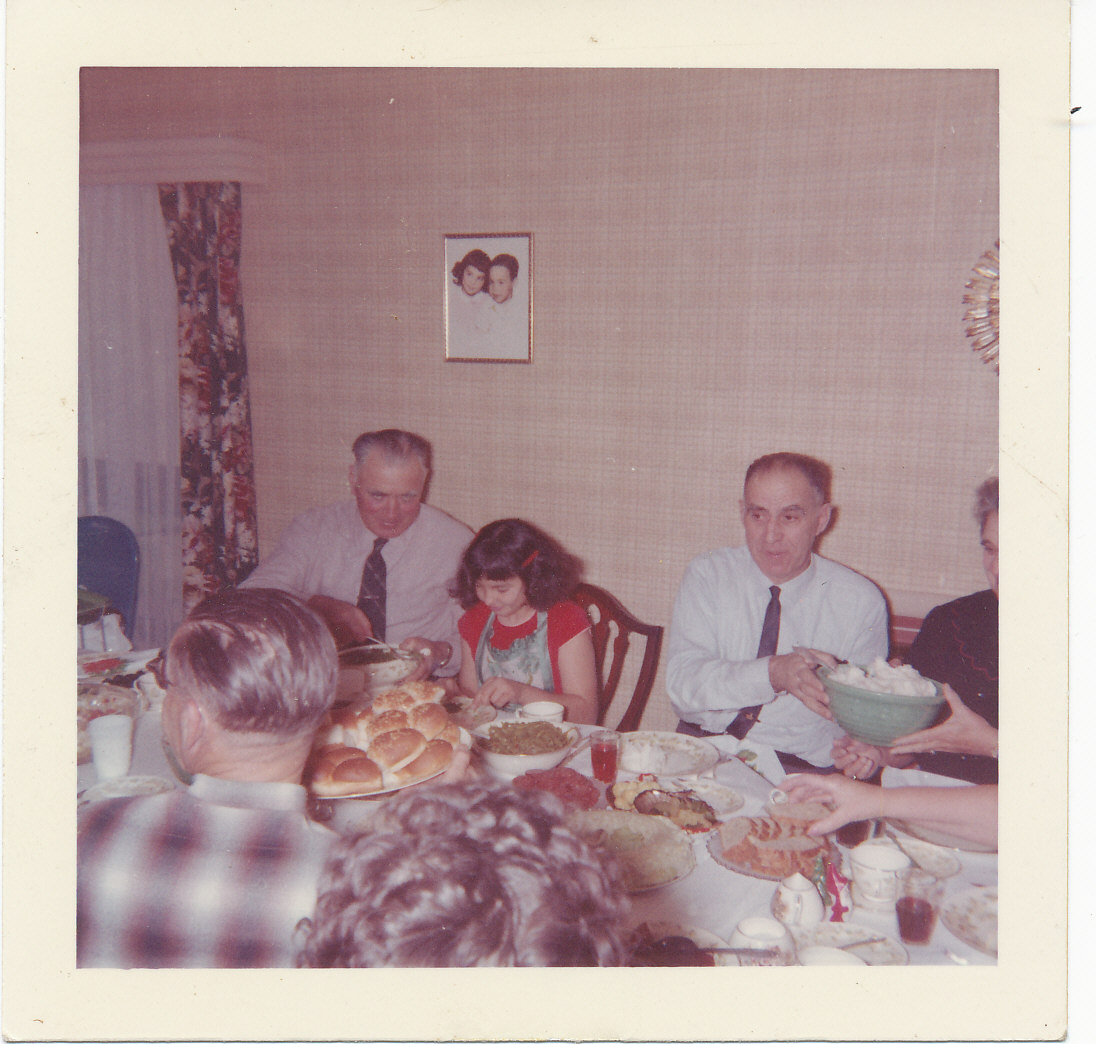
Dark-haired little girl surrounded by her grandfathers, both in white shirts and ties. Table full of holiday food.

Last night, I stayed up late watching TV coverage of the mid-term election. As I type this in the morning, we are still awaiting results in many races, still waiting to find out whether Republicans or Democrats will rule.

Reproductive rights is one of the big issues this year, especially after the Supreme Court overturned Roe v. Wade, the decision that protected the right to abortion. Many states have since enacted anti-abortion laws that either prohibit terminating a pregnancy or make it nearly impossible. If the uber-conservative Republican Party dominates the government, more states will follow.

What does this have to do with childlessness? Well, more oops pregnancies would be carried to term, babies that might not otherwise have been born. We hear threats that if the Republicans rule, they will go after contraception next. What if you didn’t have easy access to the pill or other contraceptive of your choice? How would that affect the choice to have children with a spouse who doesn’t really want to?

At 8 a.m. on the Oregon coast, frost covers the lawns. It’s 33 degrees out, darned cold for this area, and my neighbors across the street have already turned on their Christmas lights. Too soon? It is for me, but Thanksgiving is only two weeks away. Normally I spend the holiday with my brother’s family, but he and his wife are going to Hawaii this year. Bravo for them, but I don’t want to spend Thanksgiving alone.

The other day at church, I got to thinking about the circle of life. Traditionally, when the old die, young people are born to take their seats at the Thanksgiving table, so the numbers remain about the same. I have fond memories of sitting at my parents’ dining room table surrounded by grandparents, parents, aunts and uncles, and cousins (see photo). As the years passed, the grandparents died and my brother and I moved up a generation as young newlyweds. While I remained childless, my brother had two children. Now he has three grandchildren who climb into his lap and play with his white beard. Our parents and the aunts and uncles are gone, but his table in California is still full. At my house, 700 miles away in Oregon, it’s just me. I’m hoping to get together with friends from church, but it’s not the same.

If I look more closely at the old photos, I see the cousin who never married or had children. I see the childless aunt and uncle who never talked about why they didn’t have kids. But they all had a place at the table. In every generation, there are some who do not have children. In my generation, that would be me. And you.

This post meanders a bit, but I wonder if it sparks any thoughts or comments from you. If you’re in the United States, how do you feel about this election and the way reproductive rights seem to be going? (Be nice. I know these issues engender strong feelings). How are you feeling about the upcoming Thanksgiving holiday? Do you have a place at the family table?

I look forward to hearing from you.

Processing…
Success! You're on the list.

How Does Abortion Ruling Affect Childless-by-Marriage Couples?

If abortion had been illegal 10, 20, or 30 years ago, would you be a mother or father now? 

Abortion rights are tumbling across the United States in the wake of the Supreme Court’s June 24 ruling overturning Roe v. Wade. Roe was the 1973 decision that gave women a constitutional right to have an abortion. It’s going to be a lot more difficult to get a legal abortion now. Some states have already outlawed it completely and made it a crime to have an abortion or to help someone else to have the procedure. Those who are able may travel to other, more liberal states, such as Oregon where I live, but many women will find themselves in the same situation that trapped women into unwanted pregnancies before Roe v. Wade. 

Abortion was illegal when I was a kid. I didn’t know anything about it because people didn’t talk about such things. For an embarrassingly long time, I thought God gave you a baby when you got married; it came out of your belly button. I’m so grateful for the book my childless step-grandmother gave me that cleared things up. 

While no one talked about abortion, I did hear plenty about girls “getting in trouble.” Two of my high school classmates “had to” drop out because they were pregnant. For girls who got pregnant “out of wedlock,” their lives were considered ruined. 

Later, my ideas about abortion came from movies where young women went to houses in bad neighborhoods to have the fetus removed by quacks under terrible conditions. Some nearly died and/or lost their ability to bear children. Their lives were pretty much ruined, too.

Many years later, I do know people who have had abortions, including some friends and family members. People say it out loud now. Got pregnant at 15, had an abortion. Something was wrong with the baby, had an abortion. My boyfriend wasn’t ready to be a father, so I had an abortion. It was legal and could be done safely in a clinic or hospital. 

For most readers here, abortion has always been an option. Not any more.

What does this have to do with being childless by marriage? Over the years, quite a few childless women have told me they had abortions because their partners did not want them to have the baby. To save the relationship, they agreed to terminate the pregnancy. Maybe, in some cases, the increased difficulty of getting an abortion will mean that they keep the baby. The guy will stick around or not, but they won’t be childless. In other cases, the woman may put herself in danger to have an abortion at any cost.

Maybe, just maybe, fewer women will be childless by marriage because the abortion option is off the table. Or maybe it’s irrelevant because they won’t get pregnant in the first place.

Abortion is a difficult subject. I try to avoid it here, but we do need to look at this decision and what it means for us. What do you think about the loss of Roe v. Wade? Has abortion, legal or illegal, affected your childless-by-marriage situation? 

I welcome your comments. 

Processing…
Success! You're on the list.

Motherhood didn’t used to be a choice

Prescribing birth control for unmarried women was not legal in the United States until 1972, the year I lost my virginity and started taking birth control pills. It only became legal for married couples as I was entering high school in 1965. When Roe V. Wade legalized abortion in 1973, I was 21.

A lot of things were different when I was growing up. In 1974, the year I married my first husband, Congress passed the Equal Credit Opportunity Act. Before that, it was difficult for women to secure credit cards or loans or buy their own homes. Can you imagine that now? What do you mean I can’t have a credit card in my own name?

I know most readers here are considerably younger than I am. In your lives, birth control and abortion have always been legal. As for women being able to run their own financial lives, how could it be any other way? But it was. Consider this: We weren’t even allowed to wear slacks or jeans when I was in school, only skirts. With pantyhose.

I’m reading a new book titled All the Single Ladies. Author Rebecca Traister takes us through the history of the women’s movement and the stories of a persistent percentage of women who choose independence rather than be bound by marriage. It’s heavy reading but fascinating. I will tell you more about it when I finish the book. I want to talk about people who prefer independent lives over married life, but what I have read so far sure makes me think about how things have changed.

Through most of history, women have not been considered equal to men, and they have not had the same rights as men. Traister quotes so-called experts from the 19th century who maintained our brains were not as big as men’s brains and who also said that if we stressed our brains doing jobs not suited to women we would damage our reproductive organs. Craziness, right? But women as recently as my mother’s generation truly saw few other choices in life besides being wives and mothers. Even when I came of age, I expected every relationship to turn into marriage and that would lead to having children. That’s what everybody did. I just wanted to be a writer, too. I’d do it while the kids were at school.

When women found themselves pregnant before marriage, it was a scandal. They had to get married in a hurry or go off somewhere to give birth in secret and give the baby up for adoption. Abortion was rare, dangerous and illegal until 1974, four years after I graduated from high school, four years after several of my classmates found themselves “in trouble.” Being a nerd with no social life and hyper-protective parents probably saved me from that.

I got married two weeks after I graduated from college. If my ex hadn’t put a monkey-wrench into the baby plan, I’d be a grandmother now. Early in our dating life, he hustled me to the student medical center for birth control pills. Those pills were a disaster. They made me sick, fat and depressed. I tried various types of pills. On some, I bled almost all month long. Others caused giant painful bumps to break out on my legs. I experienced the mother of all yeast infections because I didn’t know what to do and I didn’t dare tell anyone I was having sex before marriage. But I didn’t get pregnant. What if I had been born just a few years earlier?

Shortly before the wedding, I switched to a diaphragm. Every time I bought the contraceptive jelly for it, I felt like everyone in the store was looking and judging. Even after I got married.

And yet, I had so many more options than my mother did. I don’t know if she had sex before marriage. I don’t want to know. I do know she and my dad used condoms to stop having children after they had my brother and me. My snoopy brother found them in a drawer, but we never discussed it. God no. For us, The Talk about sex consisted of one word: Don’t.

Birth control took away the fear of pregnancy, both in and out of marriage. Plus, because the times were changing, I was able to work as a newspaper reporter, doing work that men used to do. I was always in debt, but I could manage my own affairs. My mother, perhaps your grandmother, did not have that freedom. She lived in a world where men controlled women’s lives and women’s destiny was motherhood.

Things have changed so much. It’s good, right?

We have so many choices now. Sometimes that makes it more difficult, especially when we find partners who don’t feel the same way as we do about having children. It used to take some doing to prevent the babies from coming. Now we have to fight for the right to have them. It doesn’t seem fair. Or is it more fair than it ever was before?

What do you think about all this? How have things changed in your lifetime? How has the availability of birth control and abortion affected your situation? Let’s talk about it in the comments.


‘He forced me to have an abortion’

“I was forced into several abortions and wish now that I was still running in fear. At least I wouldn’t be childless.”

A woman calling herself Mary included this sentence in a comment sent in earlier this week. It was a long paragraph full of information about how she had always wanted to be a mother, and she tossed this in like oh yeah, probably should mention this. Dear God, what was she running from?

It’s not the first time I have heard this. Although women cannot be forced by law into aborting a pregnancy, they frequently feel forced into it by disapproving family or partners who threaten everything from abandonment to physical harm if they keep the baby.

I was already shocked by this comment, and then I was shocked again by the statistics on abortions. The numbers vary, with anti-abortion groups reporting far more than government groups that I hope are unbiased. The U.S. Center for Disease Control’s most recent report says there were 623,471 legal abortions in 2016 in the United States, that there are 186 abortions per 1,000 live births every year, and that 91.6 percent take place in the first 13 weeks of pregnancy. National Right to Life reports 874,100 abortions in the same period. 

Let’s just say there are a lot and get back to the question of forced abortions.

Abortion, always a touchy subject, is particularly volatile right now, with the new president looking to topple Roe v. Wade and people marching both for and against a woman’s right to choose what to do with her own body. I’ll say right now that I am Catholic and I’m not keen on abortion. But I believe governments should keep their hands out of our vaginas.

I was even more shocked when I read this article, “The Reality of Forced Abortion in America” by Kristi Burton Brown. Take a moment to read it, if you want, knowing that toward the end it gets a little anti-abortion preachy.

Okay, now. Why would a woman let anyone tell her what to do with the baby that is in HER BODY? Why wouldn’t she holler, “No!” if she really doesn’t want an abortion, if she always wanted to be a mother, and she wants this baby?

Think about the many situations we see here at Childless by Marriage where a person, usually the woman, does not have children because her partner says no. So many readers are struggling to decide whether to let their partner make that decision for them. This week, I got a comment from a woman whose husband was fine with kids until two weeks after their wedding. Suddenly he didn’t want any. Grrr.

But when there’s already an actual baby being created, maybe only the size of a grape now, but still a baby, isn’t a forced abortion the same thing at a more intense level?

I understand that the woman may be afraid to lose the guy and perhaps end up broke and homeless with a baby. Perhaps she’s afraid of a scandal or of raising a child alone. But does she want to stay with a man who would force her to have an abortion? Isn’t that some kind of abuse?

There are some situations where abortion seems almost necessary: when the mother is too young, when she has been raped, or when the pregnancy threatens her health, but when it’s just a partner who doesn’t want a baby, I cry bullshit. How can he do this to someone he allegedly loves? And where was his condom if he was so set on not having kids?

Perhaps my Catholicness is showing here, but I think the right to choose includes the right to choose to have the baby rather than ending its life and regretting it forever. If you both agree that you need to have an abortion, then that’s between you and God, but don’t let anybody force you into an abortion if you don’t want it.

And please don’t stop reading this blog because you disagree with me or hate Catholics. We’re all just trying to figure this out together.

So let’s have your comments.


Followup: If I had it to do over again . . .

Years have passed since I interviewed the childless women who are quoted in my Childless by Marriage book. I have begun contacting them to find out what happened after we talked. Are they still with the same guy? Did they have children after all? How do they feel now about not having children? Most recently I caught up with “Aline,” who went by another name in the book but prefers to keep her identify private.
When we talked in 2004, Aline, a journalist, told me that her ex-boyfriend had insisted she abort the pregnancy she had at age 30. She had always planned to have children but had not found the right partner to do it with. At age 34, she said she would go ahead and have a child on her own if it didn’t happen within the next six months. As you’ll see, that didn’t happen.
If you were with a guy when we talked, are you still with him?
I’ve been single for the past year.
Did you wind up having children after all? Is there any chance you still might?
Unfortunately not. Considering my age, I think it’s unlikely. I suppose I can still get pregnant, but no man I know wants a baby with a 42-year-old, regardless of how attractive she may be.
When people ask you now why you don’t have children, what do you tell them?
I want to tell them it’s none of their business, but I just smile and change the subject.
Do you regret the choices that led to you not having children?
Yes. It’s eating me up. I feel like I’ve missed out in life. I feel inadequate and everyone makes me feel so.
If you could go back and change things, would you?
Absolutely. I would listen to my mom and be less picky about men. I would also have kept the baby I was expecting at age 30 and wouldn’t take into consideration the father’s (who incidentally is now married with two children) demands that I get an abortion.
Are there stepchildren or other children in your life that fill the gap?
I wish! I have a 13-year-old niece though who often asks why she doesn’t have a cousin from me.
11. Are you worried about being alone in old age?
All the time. It upsets me that no one will be there for me in my old age. It’s a source of anxiety.
What are you proudest of doing in your life so far? Could you have done this if you had children?
I had an exciting career as a journalist and film critic, traveling all over the world. And I live much of the year in Paris. It upsets me that I have no one to share these with. My friends juggle kids and career, so it wouldn’t have been impossible to raise kids at the same time. It just takes organization and discipline.
What would you say to others who are dealing with partners or spouses who can’t/don’t want to have children?
If you really want children and your partner doesn’t or can’t, then you need to re-evaluate your relationship. Do you love the person enough to make this compromise? You may wake up in ten years’ time full of regret. It’s a big and important issue and if you can’t change his/her mind, then it’s time to move on. Never compromise your happiness for a partner. I should know—I did and it kills me a bit each year.

Politics and childlessness: there is a connection

Election day is finally here in the U.S. Thank God. We’ll finally be done with all the advertising and phone calls from campaign people who pretend to be doing surveys when they really want you to commit to voting for their person or cause. Here in Oregon, it’s all pointless anyway, because we vote by mail. Many of us mailed in our ballots days or weeks ago.
So what does this have to do with being childless? Directly, nothing. Indirectly, maybe a lot. The presidential candidates, as well as many of the candidates for other federal, state, and local offices, have strong views on things like abortion and contraception. People talk about the “sanctity of life” or “the woman’s right to choose” or “a woman’s right to control her own body.” Abortion became legal in the U.S. with Roe v. Wade in 1973, yet the debate over whether it should be legal has never ended. A new president with strong anti-abortion views could change things by appointing Supreme Court justices who agree with him or by getting legislation passed that curtails our rights.
Birth control has been legal for a long time, although it took a while to trickle through all the states. When I first started taking the pill in 1972, it had only recently become legal in California. Now, although nobody is trying to make it illegal to use birth control, there is a lot of talk about the money part of it, whether insurance would cover it, whether religious institutions can refuse to provide it. There are also politicians who want to shut down Planned Parenthood, which provides not only abortions and contraception but vital health care for women.
The choices we have had since the’60s and ‘70s have made it possible for couples to consciously decide when or if they want to have children. Those choices have also made it possible for women to do other things with their lives besides being mothers. Being able to choose is a huge responsibility, a frightening one. What if we make the wrong choice? What if we want children and our partner doesn’t, or vice versa? Things were so black and white before. You got married and had children, if you could.
Now we have more choices. We can debate all day about whether abortion and birth control are sinful or immoral, wise or something we have a right to, but I think individuals should be able to decide these things for themselves, taking their own life situations, beliefs and religious views into consideration. I pray that doesn’t change with this election or any other.
By now, you have probably voted, but if you haven’t, go do it now. It matters.