Will You Ever Find Peace with Your Childlessness? 

Facing a future with no children used to drive me crazy. Back when I was fertile and married to a man who was not, I cried a lot, mostly where he couldn’t see me. I resented my friends whose lives revolved around their kids. I did not want to hear their happy stories or look at their pictures. Baby showers? What do I know about babies? Count me out.

As far as I knew, there was nothing wrong with my baby-making parts, but they were being wasted, evidenced by painful periods every month, reminders I was running out of time. 

Now I’m 72, childless and widowed. Although being alone can be difficult, I have to tell you that I don’t think about childlessness all the time anymore. If you are in your 20s, 30s, or early 40s, feeling bad because you wanted children and might never have even one baby, know that it does get easier. Like any loss, it doesn’t go away, but you do learn to live with it. 

Yes, you will feel breakthrough grief and anger. You’ll see a family at play or hold someone else’s baby and think I could have had that, but as you get older, it will become a less important feature in your life. You will wonder who will care for you in old age, but know that even if you had children, they might not be available to help.

When you’re surrounded by people getting married and having babies, you feel excluded, jealous, and angry at whatever keeps you from having the children you always wanted. Or you resent the people who keep pushing you to have the children you never wanted. You’ll regret it, they warn. What if they’re right? It can be a brutal time. 

The night before my 40th birthday, I had a meltdown that I describe in my Childless by Marriage book. At a Catholic women’s retreat, everyone was talking about their kids. Our guided meditation put me face to face with what I had lost, and it felt unbearable. As the women running the retreat held me, I sobbed in front of everyone. I felt broken. It didn’t help that I really wanted a drink, and there was no alcohol around.

But as I approached menopause, so many other things took my attention. My writing career was taking off. I was performing music almost every weekend. I earned my long-delayed master’s degree. We moved from San Jose, California to Oregon and experienced a very different life in a small coastal town.

My mother died, my husband was diagnosed with Alzheimer’s disease, and my father needed lots of help before he passed away. You hear about the “sandwich generation,” about people caught between caring for their children and caring for their parents. Without children, we can be open-faced sandwiches, helping our older relatives without neglecting our children. 

By my 50s, people stopped bugging me about having kids, and my friends were free to do non-kid activities again. Yes, the grandchildren came, but that was an off and on thing. We could still be friends.

Do I wish I was a grandmother? Sometimes. but childlessness is not at the front of my mind anymore. I took a different path, and it’s too late to turn back.

With every choice, you lose the chance to pursue the other option. By moving to Oregon, we lost the chance to grow old in San Jose, closer to family and so many resources that don’t exist here. If I had married someone else or not married at all, my story would be different. You choose one road and let the other one go.

I can torture myself by imagining what it would be like to have children, how they would look, what we would do together, how I would hold my grandbabies in my arms. But my life didn’t go that way, and I suspect that’s how it was meant to be. 

Not having children has given me the gift of great gobs of time that mothers don’t always have. Time and freedom. I don’t have to find a babysitter or take a kid with me if I decide I want to go to lunch, take a walk on the beach, or spend the night elsewhere. I just go. 

Would I trade my freedom for a walk on the beach with my son or daughter, maybe with their children splashing in the surf or building sandcastles? In a heartbeat. But that’s not on the menu for me. And I’m 80 percent okay with it.  

Maybe you’re at that age when becoming a parent would still be possible under other current circumstances and you’re driving yourself crazy trying to decide what to do: Leave your partner in the hope of finding someone who will give you kids? Try IVF? Hire a surrogate? Adopt? You may fight with your partner over it and cry a lot.

I know how bad it hurts. I’m saying that later it will be easier. Childlessness will not be the center of your life, and that makes room for other things, wonderful things. 

That’s not nothing.

How about you? Are you going crazy over being childless? Do you regret the choices that led you to be without children? Did you have a choice? Do you think you will ever be okay with it? Or are you fine with it now? Have you found peace with your situation? How?

I’m great-grandmother old. Tell me how it is for you at whatever age you are.

I welcome your comments.

***************************

If you enjoy this blog, you may want to visit my Substack, Can I Do It Alone?
Processing…
Success! You're on the list.

Can I Declare Myself Happy without Children? Can You?

That question makes me squirm.

I happened upon a podcast from a couple years ago that was titled “Childfree by Circumstance and Happy.” It’s not uncommon to hear people who are childfree by choice say they are happy, delighted even, with their choice. No regrets, just loving their freedom. But what if it wasn’t your choice, what if it just happened due to medical problems, infertility, bad timing, or lack of a willing partner, and you decided to be happy about it? Can you do that?

Jackie Shannon Hollis and Shirley Wang, the two guests on the show, said they could.

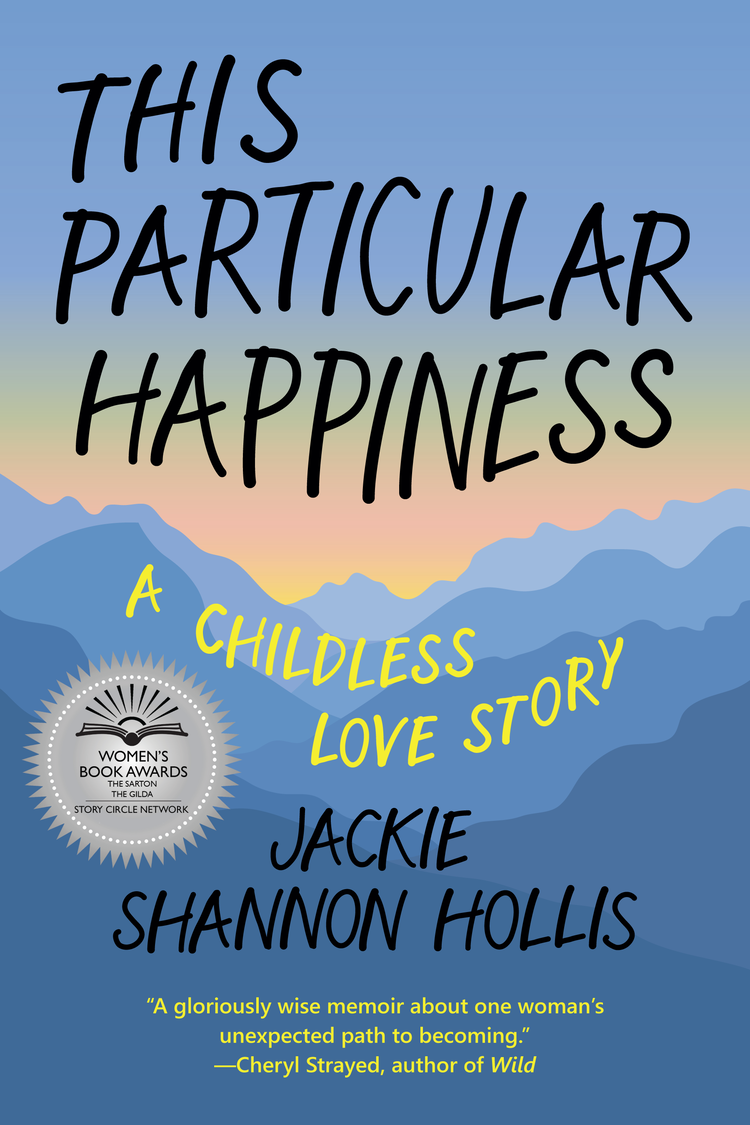
Hollis is author of a fantastic book titled This Particular Happiness: A Childless Love Story. Her first marriage ended in divorce without children. Her second husband, who was older than she was, declared he absolutely did not want children. She wanted to spend her life with him, so she made a conscious choice to live without children and embrace a childfree life.

Rather than mope about it, Hollis added being a parent to the list of things she would never be in her life, the parallel lives she might have lived, just as she would never be a doctor or an Olympic athlete or a hundred other things. Hollis asked herself “Am I happy right now?” She was, so why not continue living the life she had?

Wang, an opera singer, pianist, and author, said she had never met the right man to be her life partner and father of her children. A medical issue at age 38 forced her to decide whether or not she really wanted to have children. She realized she didn’t need to have children of her own to be happy. She enjoyed her life of traveling and performing. With her students and nieces and nephews, she had plenty of kids in her life. “I felt free,” she said.

How emotionally healthy these women sound. Wang says she rarely thinks about the fact that she doesn’t have children. She just enjoys her freedom. In fact, the slogan on her website is “freedom to create.”

I am a creative person, too, and I appreciate the time and freedom to do my writing and music, but I can’t let go of my childless grief. I really wish I was a mother and grandmother. It hurts that I’m not. I envy people my age with big families. My marital life was very similar to Hollis’s, except that I didn’t make a conscious choice to be “childfree.” I thought my stepchildren would fill the gap, and I somehow thought that at some point I would have my own babies. That didn’t happen. Now that my husband is gone, I’m living with a dog in the woods far away from my family, and I’m lonely.

“Let it go,” says a voice in my head, possibly my former therapist. “Move on.” You wanted to be thinner, a concert pianist, and have curly hair, too. You wanted to sing in a band. Let it go. Let it all go. But you know what? It’s my grief. I’ll weep if I want to.

This is getting pretty heavy. How about you? Can you stop torturing yourself about not having kids? Can you let go of being childless and celebrate being childfree? What would it take to do that?

As always, I welcome your comments and really appreciate you being here.

Processing…
Success! You're on the list.

‘Childless by the Marriage I Love’

Today, we have a guest post by Darinka from Hungary.

“But if you tame me, then we shall need each other. To me, you will be unique in all the world.

To you, I shall be unique in all the world.”

(Antoine de Saint-Exupéry, The Little Prince)

I like the story of The Little Prince, especially when the Fox tells this to the little boy. Reminds me of the “name it to tame it” approach that can help many times to settle our fears and heavy feelings. I set out for my journey of taming (and naming) my fox (or I could call it my monster) of childlessness three years ago when after seven years of marriage I learned that my husband didn’t want kids.

We live in an Eastern-European country, started our life together with very little means. We moved from one rented place to another, never feeling really settled. We both worked long hours, yet we didn’t feel financially safe enough to start a family. The topic did come up a few times over the years, but we felt the same way, that it was not the time yet.

Three years ago, we finally moved into our own home, which was a huge step for us. Now we were in our perfect little two-bedroom house on the edge of a small village by the woods. We now had the room and financial stability, so just after we moved, I felt it was time. My husband disagreed. We had to face that there are deeper reasons behind us not having kids than just financial ones. We started to go to counseling and found out more about our deeper reasons. My husband had a distant father who spent most of his life in severe depression, in and out of jobs, spending years in almost total silence and withdrawal. My husband was 17 when his youngest brother was born. He was an emotional crutch for his mum for many years, sharing the worries and troubles of his four siblings. So, my question of “Shall we have kids?” did not come to him as a sweet, exciting plan for life, more like another kilometer after a thousand-kilometer-long journey…no, no, not another one. 

A year after this, we decided to go for a puppy. My hopes were raised because I thought this meant we were making progress. We read books on how to bring up a puppy. Watched programs. Equipped the small bedroom, and so we brought home the sweetest black and white greyhound of six weeks. After three days, I sensed something was wrong. After five days, we both knew. My husband showed clear symptoms of burnout. He could not sleep, could not enjoy any of it, felt absolutely exhausted and depressed. He had such a strong physical and emotional reaction to caring for this little newcomer that finally it reached not only my mind but my heart, that this may be more serious than I thought, this may be permanent. We took the puppy back after a week. Cleared all her things. Packed up and went away for a few days because we couldn’t stay in the house. This sweet little puppy found a way to us. Showed my husband that he can’t accept the father within himself, showed me that I may never become a mum. She has opened a channel for my tears and sorrow. I cried for about six months. We shared many feelings, anger, fears, disappointment, hopelessness. But despite of all this (or because of all this), we moved closer to each other; our marriage became stronger.

I wanted to accept my husband’s feelings and decision. I read a lot, searched the web, joined groups, but couldn’t find a name for my monster. I deeply felt for those who struggled with fertility issues, but I didn’t. My brother and his wife were trying for a baby for seven years, my brother-in-law and his wife the same. We couldn’t really share our struggles with them. I couldn’t identify with those who are childfree by choice either. I am definitely not one of them. I felt it was neither my decision nor my medical circumstance, but what was it then?

I am still struggling with feeling the pressure of meeting others’ expectations, some guilt as I believe children are gifts from God. I find it difficult to say no to them, fear for the future. But I also know that the last thing I would want for my kids is for them to be unwanted by one of their parents. I’ve been there, I grew up like this, and I know it’s not a happy place. This is why I can’t follow advice like: just do it, no need to be ready, don’t worry, men usually want children less than women, just say you want it. Well, I can’t.

So, you see, it’s not only my husband; it’s me too. I am being loved and accepted by my husband. I feel it and I let myself enjoy this. I may still not feel wanted (that is too deep a wound to heal quickly), but I already know that I am.

Slowly a name is forming after all: I’m childless by marriage . . . and lately it seems less scary and less painful because I’m childless by not any marriage . . . but the marriage I love.

************************************************************

Thank you, Darinka, for filling in for me this week. I am deep into the final proofreading for the new book, Love or Children, coming very soon.

I you want to contribute a guest post to the Childless by Marriage blog, see the information in the sidebar.

How do you begin to heal from childless grief?

Grief. My 2007 post about childless grief has been the most clicked and commented on over the last seven years. Readers continue to pour out heartbreaking stories about being denied the chance to have children and finding the loss unbearable. They write, “I don’t know what to do.” “I can’t go on.” “My heart is breaking.” I tell them I’m sorry. I tell them I’m praying for them. I urge them to find someone to talk to, whether it’s a friend, family member, or therapist. I tell them to keep talking with their spouse; don’t hurt in silence.

The pain is real. The loss is real. You are trying to figure out how to live without the family and the life you thought you would have. It’s not just the children. It’s not just grandchildren and descendants through the ages. It’s also a way of life, an identity as a mother or father, an experience that most people have and you never will.

How do you begin to heal? What do you do with this pain? A reader recently suggested that I write about this. In the next few posts, we will look at ways to heal. Even if you do eventually have children, you won’t forget the years when you thought you never would, so healing is needed.

The stages of grief outlined by Elisabeth Kubler-Ross can be applied here: denial, anger, bargaining, depression, and acceptance.

Denial: He’ll change his mind. We’ll do IVF. I’ll get pregnant by accident. She’s 43, but it’s not too late. We all do this. We think a miracle will happen, and we will have a baby. While we’re waiting for that miracle, our lives are passing us by.

Anger: It’s his/her/God’s fault, and I am so pissed. He cheated me out of my chance to be a mother. She’s too selfish to give me the children I always wanted. I never should have married this @#$%. I’m an idiot. And God, you suck.

Bargaining: I’ll let him get his degree/sports car/trip to Europe, and then we’ll get pregnant. If I get a second job, she’ll change her mind. If we move to Cleveland, which I hate, he’ll let us have a baby.

Depression: I am so sad I can’t go on. I want to have babies. I want them so bad I die every time I hear about somebody else having a baby. My friends and my sisters are all having kids, and I feel so left out. They just don’t understand. Nobody understands. I’m never going to have children, and my life is ruined.

Acceptance: They say you have to hit bottom before you can start working your way out of your troubles. One day, you will begin to see that although you don’t have children, life has many other good things to offer: a partner who loves you, great food, blue skies and green trees, work you enjoy, a house you love, hobbies, friends, God. You realize lots of other people do not have children and live happy, successful lives, and you can, too. You still wish you had children, but life goes on whether you’re a parent or not.

As anyone who has suffered the loss of a loved one knows, we don’t progress through the stages of grief in a straight line. One day you’re feeling acceptance; the next day you’re back at depression or anger or denial. I still feel sad sometimes, and sometimes I cry and punch things because I’m furious at how my life worked out. But the acceptance grows with time until it becomes your usual mood.

In coming posts, we will look at alternate life plans, ceremonies and rituals to let go of grief, and more steps to take toward healing.

Please forgive me if my posts are not quite on time this month. I’ve been in California taking care of my father, who broke his hip, and there is no WiFi at his house. But I will not desert you. You are all in my thoughts and prayers as we heal together.

Copyright 2014 Sue Fagalde Lick