Childless, childfree: Does Either Word Really Fit?

Childless. How does that word feel to you? Comfortable or not quite right, like the dress I ordered online and might have to return because it doesn’t allow enough room for my bust?

Do you call yourself childless? I use it in the name of this blog, but there are a lot of people who bristle at the term.

Child-less. It implies we’re missing something. Our life is less than it might otherwise be. But can’t our lives be full of wonderful things without children?

People who have chosen not to have children often call themselves childfree. They emphasize the freedom of a life without children to care for, as if kids were a heavy load they don’t have to carry.

I could claim the childfree term, too. I mean, even if I expected to have children and grieve that I didn’t, I don’t have the obligations of parenting. I am therefore free. Right?

I don’t know. The whole concept makes me squirm.

Here’s another question: if you are still young enough and fertile enough that having a child is possible, albeit unlikely, when do you declare that you are childless or childfree? If you have had a hysterectomy or had your tubes tied, you have a definite answer. No kids. But what if it’s still a possibility? How do you classify yourself when you’re not certain if this is forever?

What if your partner is happily childfree but you feel childless?

Neither of these terms is comfortable for everyone. Other terms have been suggested: not-mom, nonparent, or nomo (not mother). But they’re all “not” something.

In medical terms, a woman who has not given birth is nulliparous. I don’t know what doctors call a man who has not fathered a child. Just a man, I suppose. This article in Psychology Today calls them “non-dads.”

For men, sometimes there’s the snide addition “as far as we know,” implying one or more of their sperm might have hit home during their various sexual liaisons.

Wikipedia defines childlessness as the state of not having children. They break down the reasons for childlessness: infertility, ob-gyn problems, mental health difficulties, chronic illness/disability, lack of a partner or same-sex partner, social or legal barriers, economic or social pressure to pursue career before children, lack of resources, insufficient money, lack of access to medical care, jobs commitments, unwillingness of one’s partner to conceive or raise children, and death of one’s conceived children before birth or after.

Childfree, says Wikipedia, refers to people who choose not to have children.

Rachel Chrastil, author of the book How to Be Childless: A History and Philosophy of Life Without Children, wrote in another Psychology Today article, “I define someone as childless if they never had a biological child and have never been deeply involved in raising a child, whether through legal adoption or otherwise.”

She says she calls herself childless “with the caveat that I don’t view the absence of children as a deficit to be overcome.”

In an article at She Defined.com, Donna Carlton defines childfree as making a conscious decision not to have children and childless as a situation where the person wanted to have children but was not able to and thus “the decision is out of their hands.”

That sounds pretty black and white, but it’s not. Judy Graham, counselor and founder of WomenHood, a support service for childless Australian women, says that sometimes women move from defining themselves as childless to childfree as they get older and realize they prefer life without children.

I call myself childless in my writing, but when people in real life broach the subject, I don’t say, “I’m childless.” I say, “I never had any children.” Or “I don’t have any kids.” Then, as we have all experienced, the conversation stalls out, or the other person says something dumb, like, “I wish I never did” or “You can have mine” or “You’re lucky.” If you’re younger, you probably hear, “There’s still time” or “Don’t wait too long.”

I don’t know about you, but I often feel driven to explain how I really did want children but was not able to have them. Sometimes I say, “God had other plans.” Although the real reason is that both my husbands were unwilling, I never put the blame on them. Usually, I just change the subject.

To be one hundred percent honest, sometimes it hurts like hell that I don’t have children and grandchildren, and other times, it’s okay. Where’s the term for that?

I started thinking about this during the recent World Childless Week, where, of course, “childness” is part of the name. Many of those involved are childless due to infertility, which was not my situation. But I attend because however you got to not having children, the bottom line is you don’t have them.

Childless. How does that word feel to you? Comfortable or not right, like the dress that didn’t allow enough room for my bust?

Photo by Leeloo The First on Pexels.com
Processing…
Success! You're on the list.

Different Generations Have Different Ideas about Having Children

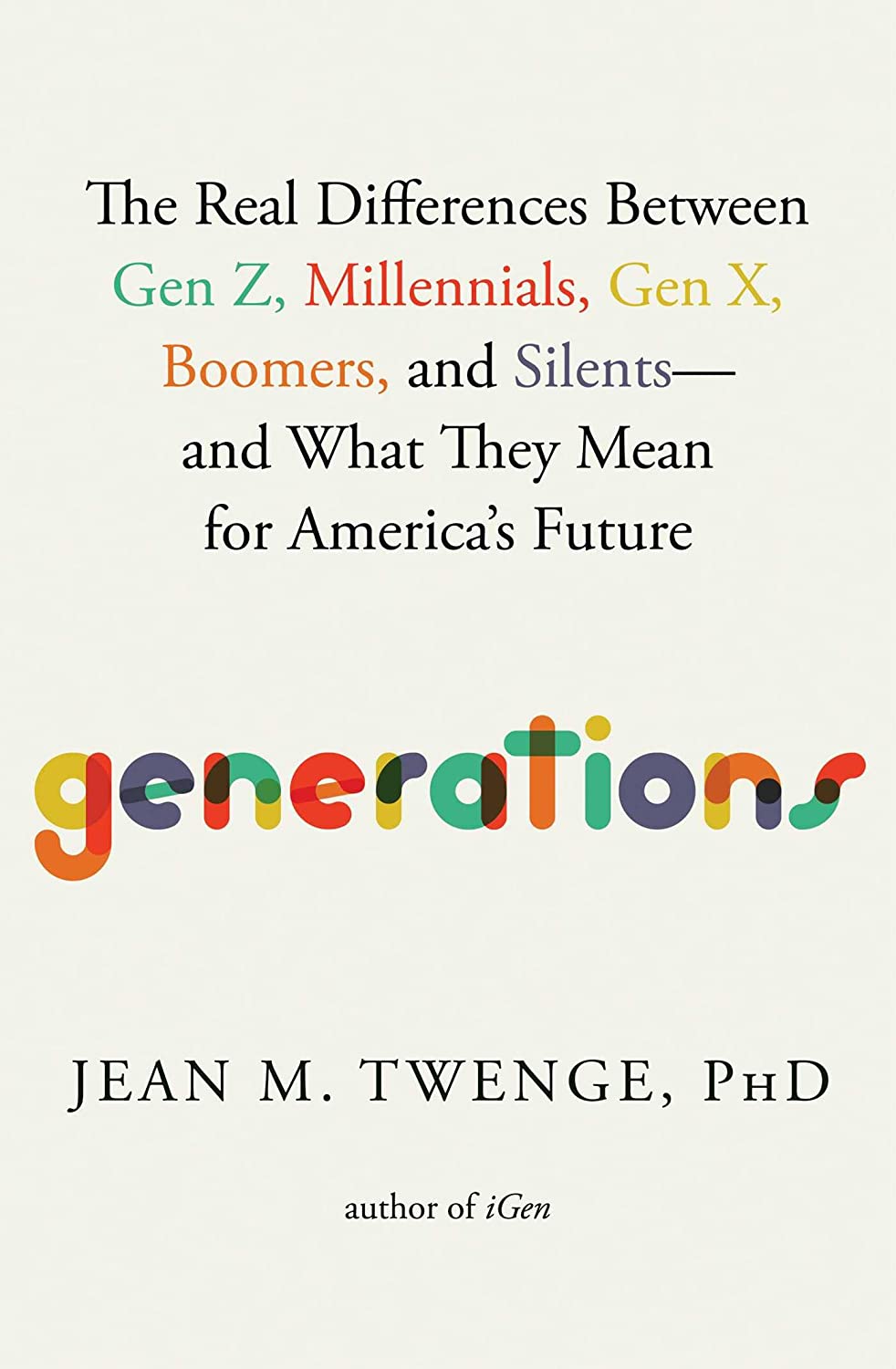
When you were born has a huge effect on how you feel about marriage and having children (and a whole lot of other things). I knew this in a vague sort of way, but the book Generations by Jean M. Twenge really opened my eyes. Gen X, Millennial, and Gen Z readers, I see you more clearly now.

The world is so different from when I was growing up as a baby boomer in the 1950s and ‘60s. Yes, I’m old, at least on the outside. On the inside, I’m still that long-haired hippie wannabe wearing mini-skirts and panti-hose and certain I would fall in love, get married and have children, just like all the other women in my family. Okay, not all. There were a few who didn’t have kids, but people didn’t talk about that stuff.

So much has changed. Birth control, legal abortion (until lately), women working outside the home as much as men, more people living into their 80s, 90s, and past 100, more young people going to college, student loan debt, the cost of living, LGBTQ folks going public and getting married, Internet, social media, smart phones . . . It’s not an Ozzie and Harriet world anymore.

A what? Exactly. Ozzie and Harriet Nelson were a real couple who had a black and white sitcom on TV featuring their lives with their two sons, Ricky and David. They were all musicians, and their problems were always resolved in less than a half hour, with time for a song at the end.

In her book, Twenge looks at each generation, from the Silent Generation (1925-1945) that was alive during World War II and their boomer children (1946-1964) through Gen X (1965-1979), Millennials (1980-1994), Gen Z (1995-2012), and what she calls Polars (2013-2029), the youngest generation. The changes are striking.

With each generation, people are waiting longer to get married, from late teens/early 20s in my day to an average of 28 for women and 30 for men now. And that’s just the average. Twenge writes: “Millennials are the first generation in American history in which the majority of 25- to 39-year-olds are not married.” They may or may not be living with a romantic partner, but marriage is pushed way down the road.

The trend continues with Gen Z, the oldest of whom are now at the height of their fertile years. The average age of women having their first child is 30, much later than earlier generations. But many millennials are choosing not to have children at all. It’s just not “required” the way it felt when I first married in 1974 at age 22. Couples are waiting longer, and many are deciding they don’t really want to be parents. They want to be free to work, travel, or do whatever they enjoy. Thanks to reliable birth control, it is easier to make that choice these days.

Even people who want children don’t see how they can do it, considering their student loan debt, the impossible cost of buying a home, and the equally impossible cost of childcare. They also look at the state of the world and think, really? I’m going to subject a child to that?

By the time they decide to get pregnant, they may be dealing with fertility problems, which leads to the whole world of fertility treatments, surrogates, and adoption, all difficult and crazy expensive.

How does this factor into being childless by marriage? In an era when more people are putting off having children or declaring they don’t want them, it’s more likely that one’s partner will be unable or unwilling to have babies. Of course, things get even more complicated when one partner has already had children and doesn’t want any more.

Twenge blames most of the changes over the generations on technology, including social media, birth control, and all the gadgets that dominate our attention. What do you think?

Generations is over 500 pages long and not a quick read, but it is fascinating, and I highly recommend it. If you’re much younger than I am, it could help you understand your parents and grandparents just as it helps me understand those born generations later than I was.

When I was young there was a saying: Never trust anyone over 30. We talked about the “generation gap.” Surely the generations have always disagreed on things. Do you think the differences are more pronounced now? Or is all this Gen X, Gen Z, etc. stuff nonsense?

Let me know what you think in the comments.

****************

During World Childless Week, I spoke on two panels, one about the image of childless people in the media and the other about aging without children. If you missed them or anything from World Childless Week, you can still watch the videos at https://worldchildlessweek.net.

Processing…
Success! You're on the list.

Other Than Mother: Choosing Childlessness with Life in Mind

Other Than Mother: Choosing Childlessness with Life in Mind by Kamalamani/Emma Palmer, UK, Earth Books, 2017

Kamalamani is a Buddhist priest from the UK who has chosen not to have children. In this book, she looks at the reasons why one might choose a childfree life and how one makes that decision. There is a lot of brilliance here about the childfree life. There is also a lot about Buddhism that is interesting but has minimal connection to the topic. This book is well-written, heavily referenced, and adds new ideas to the discussion, especially about whether our troubled planet needs any more people and whether remaining childfree might be the best response. Women trying to decide whether or not to become mothers may find it helpful.

If this book is about being childless by choice, why should we care about it? Those who are childless by marriage or infertility do have a lot in common with the childfree crowd. Childless by choice or by chance, we are different from people who have children, and we experience many of the same challenges.

For example, we get asked why we don’t have children and have to deal with suggestions from people who do not understand our situation.

Says Kamalamani, “Women are still primarily defined in relationship to motherhood (or non-motherhood). . . I do not question a person or couple’s decision to have children—unless they are close friends seeking advice or a therapy client, and then I tread carefully—so I am intrigued as to the social rules that apply when a stranger feels free to question my decision not to bear children or to tell me with certainty that I shall live to regret my decision.”

In other words, how dare they?

She goes on: “Friends caution that you are missing out on life’s most exhilarating pleasure or reason that your partner will not feel any ties to a childless relationship.”

This statement caught my interest. Is it possible that some men (or women) don’t want to have kids because they don’t want to be tied down, because they see children as the glue that will create a permanent commitment to their spouse or partner? Think about your own situation. Might your partner’s refusal to have children be a way of keeping the door open so that he or she can leave at any time? It’s a worrisome thought, but what do you think? Is that what’s happening in some cases?

Kamalamani is worried about the effect of having so many people on the planet. Maybe we should put as much energy into saving the earth as we put into raising children, she suggests. “After all, whether or not we are parents to children we have ourselves borne, we are all stewards in handing on the legacy of our time on earth to the next generation of earth dwellers, human and other than human.

She looks at other aspects of non-motherhood, including the effects of our childhood and the examples set by our parents; couples who try to fix a broken marriage by having a child, and fear of regrets later in life;

Most people without children seem to feel less regret, not more, as they get older, she says. “In my forties, I think infrequently about motherhood and what I have missed. I am more focused on many other fruitful things: My work as an aunties, therapist, writer, lover, and gardener. Not being a mother is no longer a huge part of my self-identity, although, of course it is a factual reality.”

Instead of having children, Kamalamani suggests, we can tackle “baby-sized projects”. “Many of you are likely to have your own baby-sized projects gestating, well under way, or complete. For those of you who are childless and who have perhaps felt a bit rootless or meandering for the past few years, particularly if this meandering has been due to not knowing whether to try for children, do bear in mind opportunities arising for the emergence of a baby-sized project. This might be re-training in the line of work you have always longed to do, following a vocational calling, going travelling, moving house, or creating a home . . . . There are many ways to create without creating babies . . . deciding not to have children is not an ending, it is a beginning, and the chance to decide to do something other than procreate. It is not necessarily about loss and doom and gloom–as it is sometimes portrayed or maybe misunderstood through others’ projected sympathy—but a potential gain and a different expression of creativity and nurturing.”

This is a fascinating book, but it is loaded with Buddhist philosophy. If that’s a turnoff, you might want to read something else. But I recommend this book. It will get you thinking.

For more information, visit https://www.kamalamani.co.uk/about

I welcome your comments.

***

Earlier this week, I experienced a “sleep study” at the local hospital. How they expect anyone to sleep with dozens of wire attached and someone watching, I don’t know. I felt as I didn’t sleep at all, but the technician said I was “snoring away.” You can read more about this at my Unleashed in Oregon blog.

Not having children never came up during this experience, but I sure wished I had a partner to care for the dog, drive me back and forth, and make breakfast when I got home.

Happy spring, dear friends.

Processing…
Success! You're on the list.

Childless photographer asks: What Will Your Legacy Be?

Dear friends, 

This week I have asked my friend Kristin Cole to tell us her story and discuss the Legacy Project she is working on. Says Kristin: “There are many reasons women have children. There are even more reasons why women do not. I’m interested in focusing on one aspect of not having children, either by choice or circumstance, and that is the concept of legacy. What legacy do childless women leave behind? I want to explore this subject and facilitate the creation of legacy through the sharing of women’s stories through images and words.”

Kristin is childless by choice, but her words about what we will leave behind certainly apply to all of us, whether or not we chose to live without parenting. 

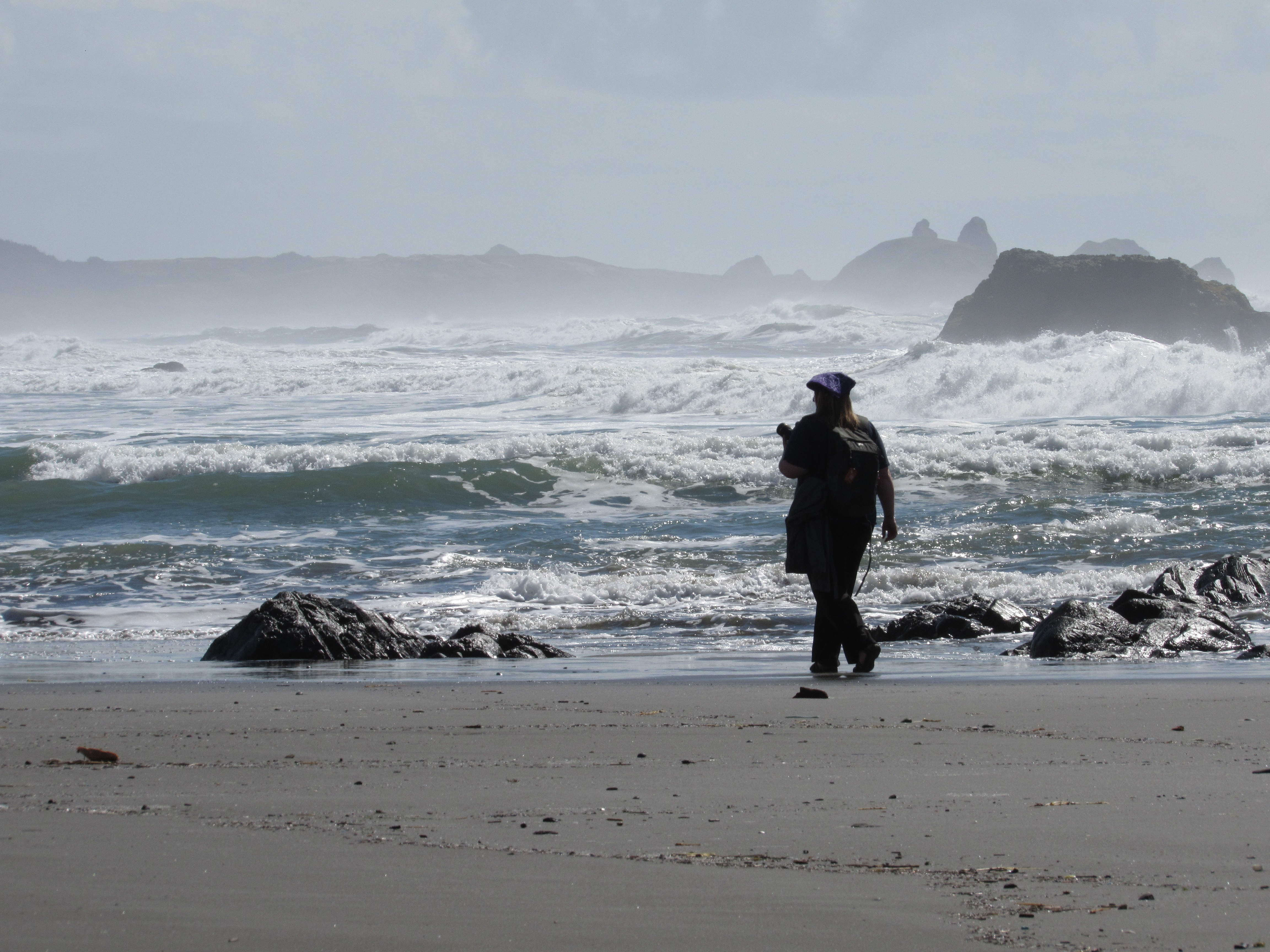
Kristin on beach

What will Your Legacy Be

By Kristin Cole

I began to think about my life and the larger impact it could have in my mid-twenties. Through my role at the National Credit Union Foundation in Madison, Wisconsin, I met people from all over the world who were living both big and small, yet passionate and meaningful lives. They had the most inspiring stories of travel, volunteerism, cultural experiences, and good will. They were affecting real change in real people’s lives.

It was difficult not to take a hard look at my own life at that point and see that I had been going down a rather insignificant path, that there was so much more I needed to do.

I first considered the idea of “legacy” a few years later. Keeping true to my new vision of what I wanted for my life, I started a new career as the manager of a small animal shelter. Because I had never done this kind of work before, I reached out to other shelter leaders. One of them asked me something that has stayed with me ever since: “What do you want your legacy to be?”

The dictionary defines the term “legacy” as “a gift or a bequest that is handed down, endowed or conveyed from one person to another. It is something descendible one comes into possession of that is transmitted, inherited or received from a predecessor.”

There are all sorts of ways one leaves a legacy. Some people do it through their children by passing down traditions, history, and values. Loudon Wainwright III did an excellent job of portraying this type of legacy through a recent Netflix special entitled Surviving Twin in which he intertwined his music with his father’s writings and letters to show the story of four generations in his family.

Others may leave their legacy through their careers or political work and some by their societal contributions or art. Think of women like Eleanor Roosevelt, Susan B. Anthony, Rosa Parks, Ruth Bader Ginsburg, Emily Dickinson, Amelia Earhart, Helen Keller, Harriet Tubman, Maya Angelou, Gloria Steinem, and Jane Goodall.

Kristin and Cole
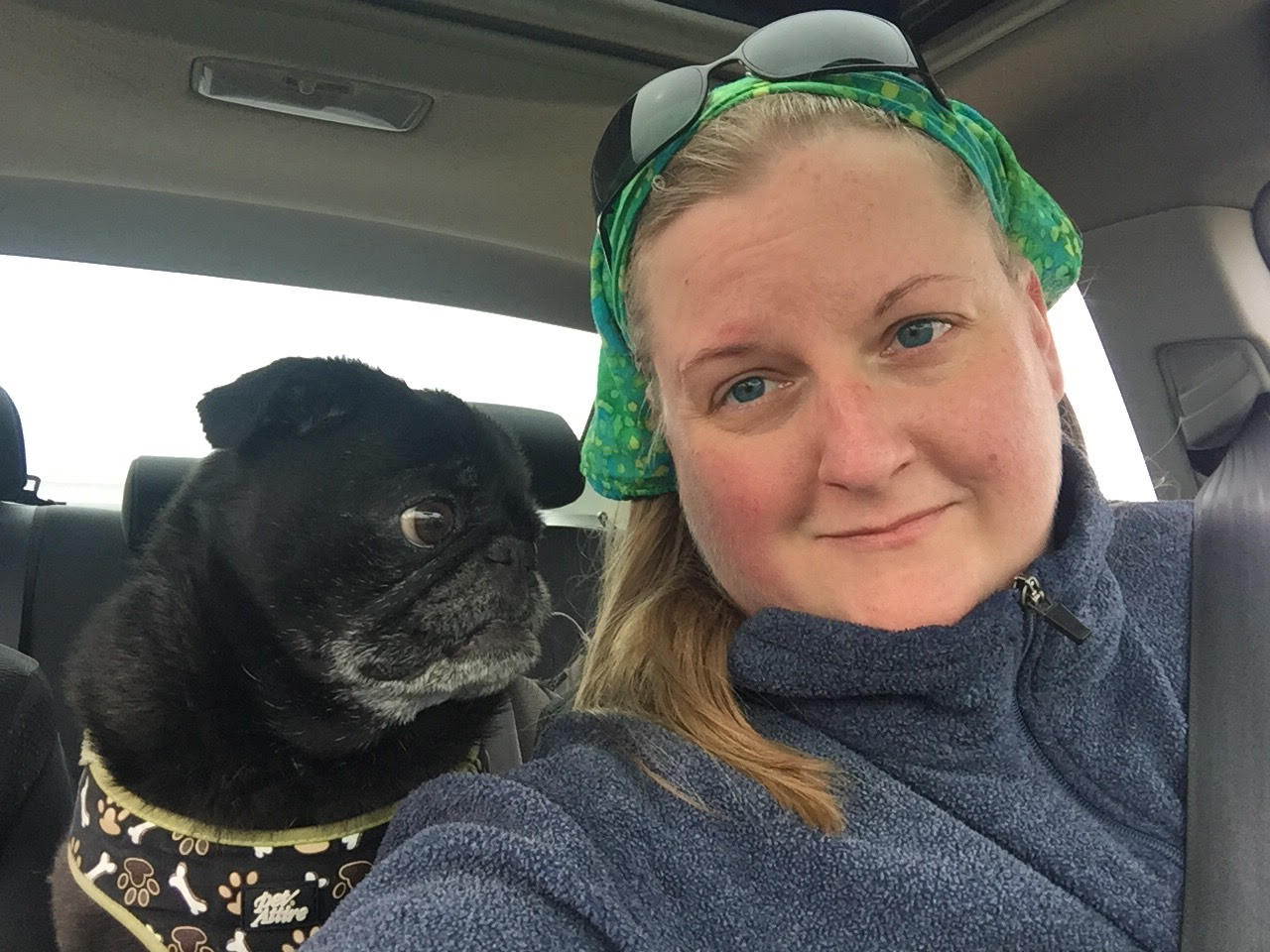
Kristin and her pug on the road

I can’t help but wonder when I’m gone, what my life will have meant, if anything at all? I hope that I am remembered as someone who was passionate and who unapologetically lived her dreams. I’d like to be known as the kind of person who wasn’t afraid to take chances, who lived boldly but was also compassionate and honest.

I hope that I will be remembered as someone who inspired others to explore, create, and follow their own curiosities down whatever path they took them on. I would like my life to have been one of authenticity and that it be known that my most valuable gift was the time I gave others. I hope that my photography and writing will help carry my legacy forward. I don’t know if any of these hopes will come to be known after I’m gone, but one thing I do know for certain is that whatever my legacy will be it will never be carried on through my children, for I am someone who chooses to remain childless.

Choosing not to have kids is often considered selfish in our society, and I suppose that is true in the literal interpretation of the word, but we only get one life, after all, and who else do we owe to live it for other than ourselves? Doesn’t it make the most sense to live it in our own way on our own terms? And so, I have.

I have purposefully kept myself free of long-term commitments such as owning a home or having children. I try to keep my debts and possessions minimal. Doing so has given me the freedom to take risks in my career and the ability to live wherever I want. It’s how I find myself living in Oregon right now.

I fell in love with the area when on vacation eight years ago. A few years after that vacation, I found my life in an interesting place. I was still living in Wisconsin but losing the passion I once had for the work I had been doing for a farm animal sanctuary. A romantic relationship that I thought was going to last a long time ended unexpectedly. Shortly after that, my grandfather lost his battle with Alzheimer’s. It became painfully clear to me, as I stared at a photo at his funeral of his younger self in front of some mountains in Colorado, that life is all too short. I remember saying to myself, “What are you waiting for?!?” Before long, I found myself saying farewell to Wisconsin and moving across the country to Oregon to pursue my passion for photography.

I’ve been living in Oregon almost five years now and it has been a truly transformative time. From the places I’ve explored to the people I’ve met, I’ve learned so much about myself and what I’m capable of. I’ve also clarified further what is most important to me as I quickly approach the next phase of my life.

Kristin's lady
Legacy Project: Jean Rosenbaum

In the past year or so, I’ve been thinking a lot about the variety of ways childless women contribute to the world and what sort of legacies are being born from their journeys. I suspect there are many inspiring and interesting stories of seemingly ordinary women just waiting to be told. That realization leads me to pursue my latest photo essay project, Legacy. I started searching for childless women aged 65 and older who, through interviews and photographs, share their life’s story to show us what a life, despite or because of being childless, can look like when it is well-lived. The essays not only include their reflections on the subject of legacy and childlessness but also on all the events that make up the sum of their lives to date as well as their thoughts about what the future holds.

In our digital age, for better or for worse, it is possible to create something that lasts forever, which is why I believe a photo essay is a perfect medium for this project. Even when I think about my own great-grandmother, I have little understanding of who she was and what her life was like. There is so much we can gain from one another, so I hope this project helps facilitate a more lasting form of legacy. I view it as an opportunity for women, regardless of the reasons behind their childlessness, to tell their stories and let their lives speak.

Through sharing their hopes, failures, accomplishments, regrets, and lessons learned, they can impart wisdom to others. They can assure us that sometimes it’s acceptable to walk away or to change our minds. That we don’t have to have it all figured out all the time. That a meaningful life does not always come in a perfect package or with a happy ending but that above all else, our lives are valuable, and our stories are worth sharing.

Maya Angelou said, “I’ve learned that people will forget what you said, people will forget what you did, but people will never forget how you made them feel.” Let your life not only touch others in a way that is difficult to forget, let your legacy live forever through images and words that will reach countless generations to come.

Kristin Cole is Midwest transplant currently living in Portland, Oregon. She enjoys road tripping with her pug sidekick and sharing the beauty of the Pacific Northwest through her photography and in her blog, Misadventures of a Nature Junkie. More information about her Legacy project can be found at http://www.KristinColePhotography.com.

***

MERRY CHRISTMAS TO ONE AND ALL! DON’T LET THE CRAZINESS GET YOU DOWN.


A Safe Place for the Childless Not by Choice

Dear friends,

Lately in the comments, a few people have been sniping at each other. That’s not good. We get enough of that in the rest of the world. As childless people, we face questions, disapproval, accusations, and folks who can’t resist giving you unwanted advice. Right? Let’s not do that here.

Last week we talked about how some of us—maybe all of us—sometimes keep quiet about our childless status because we don’t want to deal with the reactions. We’d rather blend in and let the parent people think we’re just like them. We don’t want them coming at us with why, what’s wrong with you, etc. Most of us don’t know how  to explain or justify our situation because we’re not sure how it happened or what to do about it. We’re still trying to figure it out. There aren’t any easy answers.

Of course, I’m talking about those of us who have not chosen to be childless, who are hurting over their childless status. The childless-by-choice crowd sometimes gets pretty militant about their choice: Never wanted kids, happy about the situation, feel sorry for you breeders who want to waste your bodies, money and time adding to the world’s overpopulation. Get over it, and enjoy your childfree life. But how can you when you feel a gaping emptiness inside?

In an ideal world, we would all accept each other’s choices, but the world is not ideal. We feel left out, guilty, ashamed, angry, and hurt. We need a safe place. Let this be one. If someone asks for advice—and many readers do—chime in, but we need to support each other’s decisions once they’re made. Don’t add to the hurt. And if a certain gentleman wants to leave his childless older wife for a young, fertile woman who will give him a family, ease up on him. We women might resent some of his sexist comments, but we don’t know what it’s like for him. He’s aching for children just like we are. And sir, don’t be knocking older women. Some of us take that personally. 🙂

Let’s try to be kind here. I am grateful for every one of you. Hang in there.

P.S. Easter was brutal for me. All those kids in Easter outfits. All those happy families while I was alone. Luckily I spent so much time playing music at church that I was too tired to care by Sunday afternoon. How was it for you?

Not having kids means I’m free to be me me me

Let’s talk about the selfish side of not having children. I hesitate to do that because then people will think I didn’t want them. I don’t want to reinforce the false stereotype that all people without children are selfish and immature. They’re not. But maybe I fantasized my offspring would be like the dolls I played with as a kid. My dolls sat quietly on a shelf or in a box until I wanted to play with them. The rest of the time I was free to ride my bike, read until my eyes hurt, or eat cookies without anybody grabbing for a bite. I may be confusing children with dogs in that last bit, but you know what I mean. No need to share my food, my stuff or my time unless I wanted to.
When I was  a child, Mom took care of everything while I just had to do my homework and a few easy chores. Once they were done, I was free to do anything I wanted.
As an adult, especially one without a husband, I have my work and more time-consuming chores, but I am still free when they’re done. I spent years with a live-in stepson. I know what it’s like to have to think about the child’s needs in everything you do. Salad for dinner? He won’t eat it. Want to rent a movie? It has to be PG. Let’s go away for the weekend? What about the boy? I didn’t mind most of the time. I was happy to live some semblance of motherhood.
But I do understand why the childless-by-choice crowd choose to be “childfree.” Kids don’t sit quietly in a box. They cry, complain, get sick, need help, need love, need to be fed, cleaned and taken to the orthodontist. You can’t do whatever you want when you’re a parent, at least not until the kids grow up. Then you can buy an RV and tour the country, start a new career or write a novel.
Speaking of which, November is National Novel Writing Month, known as NaNoWriMo. During this month, writers pledge to write a 50,000-word novel in 30 days. That’s a lot of writing. To devote that kind of time and concentration would be very difficult with children around. I have signed up before but haven’t followed through. This year, I plan to do some marathon writing for the book I’m working on.
There are other month-long challenges, a poem a day, a blog a day, a short story every day. They’re great for producing a lot of work in a short time, but I don’t think I could do any of them and keep up with my regular work if I had kids around.
We spend a lot of time here grieving our lack of children. The grief is real and it never completely goes away, but look at the other side of it. What are we free to do because we don’t have children? Even if you’re still trying to figure out if and how you’ll become a parent, what can you do right now that you couldn’t if you were a mom or a dad? Let’s talk about it in the comments.

No Kidding: The book, the club, the goats?


Book review: 
No Kidding: Women Writers on Bypassing Parenthood, edited by Henriette Mantel, Seal Press, 2013
When I started working on my Childless by Marriage book, nobody was writing about being without child. It was almost a taboo subject, but now the shelves are filling up with books about not having kids. Most of them, like this one, are about the joys of being childless by choice. In this case, 37 women writers in the entertainment business tell the story of how they ended up not being mothers. Although a few did try to have children and learned that they couldn’t, most never wanted them in the first place. They were too busy with their careers and not interested in the sacrifices required to raise a little human being.

The writing here is good. Many of these women are comediennes, and they know how to put together an amusing essay. But after a while, all the stories blend together in my mind because they are so similar. Some of the names are familiar. Most are not. It is an entertaining read. Readers in the childfree-by-choice crowd are sure to enjoy it. Perhaps those who are childless not by choice will find some encouragement and see that life can be wonderful without children. At least that’s what these women tell us.

The club: 
In addition to being the title of a book, No Kidding is the name of an international club that provides opportunities for members to make new friends whose lives are not wrapped around their children. Members are all ages, married and single, and lack children for all kinds of reasons. You can find chapters all over the world or start a new chapter if your area doesn’t have one. Many of the people who comment on this blog and at other childless sites describe how uncomfortable they are at gatherings where everyone else seems to have kids. This is a chance to find friends with whom you have more in common.

The goats: 
When I was young, people who used the word “kid” were quickly corrected and told that a “kid” is a baby goat. Well, we humans have stolen their word and often use it to describe our own offspring. Funny we don’t call them calves or puppies. Unlike humans, goats don’t use birth control. If you put a he-goat and a she-goat together at the right time, they will have baby goats. Believe it or not, there are actually goat mating videos on YouTube. I don’t want to get in trouble for recommending goat porn, but they’re pretty funny.

The word “kid” applied to a child apparently traces back to the 13th century with Olde English and Norse origins. But how did the word kid come to be used also as a synonym for joking? Beats me.

Have a happy day.

No Way Baby!

Karen Foster, a Portland, Oregon counselor and speaker, has published a new book called No Way Baby! In it, she offers people like herself, whom she calls “childfrees,” information to refute the dumb things people say to them. We’re all heard these things: “So, you don’t like kids?” “It’s your duty to go forth and multiply.” “But I want grandchildren.” “Who will take care of you when you’re old?” and “You’ll regret it.” Sound familiar?

Of course, those of us who are childless by marriage or otherwise not by choice might have different answers from what Foster offers. She does acknowledge the difficulty of being in a relationship where one person wants kids and the other doesn’t. There is no way to compromise on this issue, she says. One person always loses.

Foster is not anti-child and applauds people who consciously choose to be parents, but you get a little taste of her attitude when she talks about being “child-burdened” vs. “childfree.”

There’s a lot of good information in this book, although it sometimes wanders off course. For example, we don’t need the whole history of Social Security or a rehash of the feminist movement. We can, however, find lots of useful information and encouragement for enjoying life as non-parents in this book.