In Conclusion: My Childless by Marriage Commencement Address

Well, my friends, this is the last post. As far as I know. If I get itchy to write something new, I will. For now, Childless by Marriage is changing focus, not going away.

This is still the only space that is all about being childless because your partner can’t or won’t have babies with you. You are not necessarily infertile. You could have sons and daughters if you were with someone else. Information about fostering, adopting or any other birth alternative is irrelevant if your partner doesn’t want kids in the first place.

In a world where most people become parents, you will be surrounded by people who don’t understand your situation. I hope this blog has helped you to deal with the clueless questions and suggestions.

You may grieve the loss of the children you’ll never have or feel relieved that it worked out this way. You may shed a tear when you watch others with their children or cheer when you’re free to do things parents can only dream of. These emotions won’t go away, but they will change as you age and focus on other things. The hardest part is when you’re still fertile and your friends are all having babies while you’re not. I remember that part all too well. Your body is screaming “Do something!” and you can’t.

We have things in common with both those who are physically unable to conceive or bear children and those who have chosen to be childfree. But this is our space. We are the ones who chose love over babies.

If you want to keep up the conversation, come to the Childless by Marriage Facebook page. We can even start a private group there if you’re worried about other people reading your comments. Just let me know. I’m also on Instagram–@suefagaldelick. Find all my connections at my website, https://www.suelick.com, or email me at sufalick@gmail.com.

These days, much of my attention is going to my “Can I Do It Alone” Substack and eventual book. Aging alone is a natural extension of being childless by marriage. When the marriage ends by death or divorce, you may find yourself with no family. Your parents and aunts and uncles will die. Your siblings and cousins may live far away or be too busy to hang out with you.

While others have their children and grandchildren for company, you will have yourself and maybe a dog or cat. People don’t talk enough about this result of not having children, so I’m doing my best to shine a light on all its glories and dark places.

I will continue to be active in the childless community. In fact, I will be part of the next Childless Elderwomen Fireside Chat, happening September 20 as part of World Childless Week. The theme is “We are Worthy.” Register here to attend live or receive the recording later.

Do consider getting involved in World Childless Week, Sept. 15-21, all online. It offers many workshops, panel discussions, and opportunities to share your own story. Some of the sessions will not apply to you if you are not dealing with infertility. Skip those and attend the ones that fit.

If you’re struggling with your childless-by-marriage situation, don’t keep it a secret. In my mother’s day, no one discussed why certain people never had children. But there is nothing to be ashamed of. It helps to talk about it. Share how you feel with your family and friends. They may be more understanding than you expect. If they say hurtful things—that you must hate children, or that you should leave your partner—set them straight. Stand by your choices. Stand by your man or woman.

Explain that there is more than one way to lead a good life. Children are terrific, but everyone doesn’t have to have them. It’s all right to explain you really wanted them, if you did. But your life is still full of wonderful things.

If they get it, they get it. If they don’t, let it go.

When you encounter other childless people, invite them to get together for coffee, a play date at the dog park, or whatever sounds like fun. 

Also talk to your partner, not just once but often, about how this situation affects you. Don’t hide your feelings or let them fester. You may not change their minds or change the circumstances that have led to being childless, but don’t treat it like a secret that should not be discussed. Listen to your partner, too. Their feelings count as much as yours.

If you play a parent-like role as a stepparent, aunt, uncle, foster parent, or teacher, try to love others’ children like your own, whether they love you back or not. Even if you never create your own family, you can play a mother or father role in the world. We all need older people to love us, guide us, and show us how to live well.

Thank you all for reading this blog over the years. Some of you have been commenting for over a decade. Others just read, sometimes hiding it from their partner. I know you’re out there. Here’s a big hug to one and all.

If you want to keep reading about the childless/childfree life, visit my resource list at https://www.childlessbymarriageblog.com/childless-by-marriage-home-page. I will keep updating it.

Jody Day recently published a long list of related blogs at https://gateway-women.com/resources/recommended-blogs. Do check that out.

More and more terrific writers are blogging or Substacking about life without children. For a start, see Ali Hall’s “Life Without Children,” the No Mo Book Club, Kate Kaufmann’s blog, and Andy Harrod’s https://invisiblechildlessness.substack.com.

Of course, I’d love for you to read my books, Childless by Marriage and Love or Children: When You Can’t Have Both.

I am still and always will be childless by marriage. It has affected every bit of my life, as I’m sure it has yours. If you want to talk, I’m here.

See you soon.

Love,

Sue

My Childless Story is Not the Same as Yours

Photo shows young woman perched on a couch playing guitar and singing. She is wearing red glasses, a red jacket, gray pleated skirt, and red loafers. Behind her is a faded blue and white quilt. Photo is from the early 1980s.

Dear young childless readers, I have a confession to make: the older I get the less I think about not having children. That’s one of the blessings of aging, but it’s making it hard to know what to write about in this blog after nearly 20 years.  

I know many of you are still in the throes of trying to decide what to do. The years are passing, menopause looms, and you worry that if you don’t have a baby, you will regret it forever. Your friends and family are after you to get pregnant. But your partner doesn’t want to, and maybe in your heart you’re not sure you want to either. Or you’ve been trying hard to have a baby and getting nothing but heartbreak. Maybe the decision is made, and you are grieving so hard you don’t know how you’ll survive. 

I remember that feeling, but it’s fading. I see this giant wall rising between me and you and between me and those years in the 1970s, 80s, and early 90s when I was conflicted, furious, and heartbroken. Now, I’m grandmother age. I still wish I had children. I wish I didn’t feel so awkward around other people’s children. I hate that my “family photo” includes just one person while my friends and family fill the frame with their grown children, grandchildren, and great-grandchildren, and all their spouses.

But that ship sailed so long ago. My fertile years took place before many of you were born. I started having sex in 1974, the year birth control became legal in the U.S. for unmarried women. We didn’t have computers or cell phones. Calculators were high tech then. We listened to vinyl records and heated our food on the stove because we didn’t have microwave ovens. I had to see a doctor to get prescriptions to treat my cramps and yeast infections. You certainly couldn’t purchase condoms off the shelf at Safeway. Now you can buy all that stuff on Amazon. 

Life was so incredibly different, and it was less common for people to decide not to marry or have children. I never considered either option. I fell into the timing hole between the first husband, who was never ready to be a father, and the second one, who already was a dad to three nearly grown children. 

I have told my childless story so many times here that regular readers can probably recite it from memory. It’s time to put it in the cedar chest with my mini-skirts and peasant blouses. It’s time to tell your story.  

In my own life, my focus is on aging and living alone these days. That’s really all I want to write about (see my “Can I Do It Alone?” Substack), but I don’t want to keep giving you the old lady voice. The grandma voice. The one that can only offer hindsight, not what it’s like right now for women stuck in the childless-by-marriage conundrum. It’s even harder to write for the few men who read this blog because I have never been a man. I don’t know what it’s like to be a father or want to be a father. Or NOT to want to.

I’m not quitting. Childless by Marriage will go on. I will keep sharing what I can gather from readers, the media, and those moments when I feel the non-mom grief again. But know that I’m writing from the other side of the wall. I feel like the older woman sitting at Starbucks with a younger woman who has come to her for advice. As if this older woman knows anything but her own story! Which doesn’t change! How did it happen? Bad timing? Do I regret my choices? Did I have a choice? If so, yes, but I’m not sure I did. Would I do it again? No. I shouldn’t have married the first husband for a lot of reasons. Not marrying him would have changed everything that followed.

My advice always boils down to this: If the problem is your partner and you can’t live with it, dump him/her. If the problem is physical, do your best to accept it and move on. If the problem is money, spend less on other things, and have a baby before it’s too late. Have more than one because people need brothers and sisters. 

I keep trying to sneak back into that younger skin to give you worthwhile posts, but I need your help.

  1. Tell me what you want to see here. What bothers you the most? What do you want to talk about? 
  2. Write a guest post or a letter I can post and answer. You can be as anonymous as you would like.
  3. Send me links to resources, news stories, blogs, Substacks, or whatever you find that might spark a new post. 

Help an old lady out, and let’s keep this going. I’d really like to get to 1,000 posts. This is number 874. Together, we can do it.

By the way, World Childless Week is coming around again online next month with a ton of workshops, panel discussions, articles, and videos to enjoy. I will be joining Jody Day’s Childless Elderwomen on Thursday, Sept. 19 for another fireside chat as part of World Childless Week. Our topic is “Friendships Across Life,” particularly what happens when our friends have children and we don’t. Go to https://worldchildlessweek.net to see how you can participate and to register to attend some or all of the events. Most of them are free, although donations are welcome.

Photo is of me around 1983 at my grandparents’ house. Note the spiffy red glasses and permed hair.

Processing…
Success! You're on the list.

Different Generations Have Different Ideas about Having Children

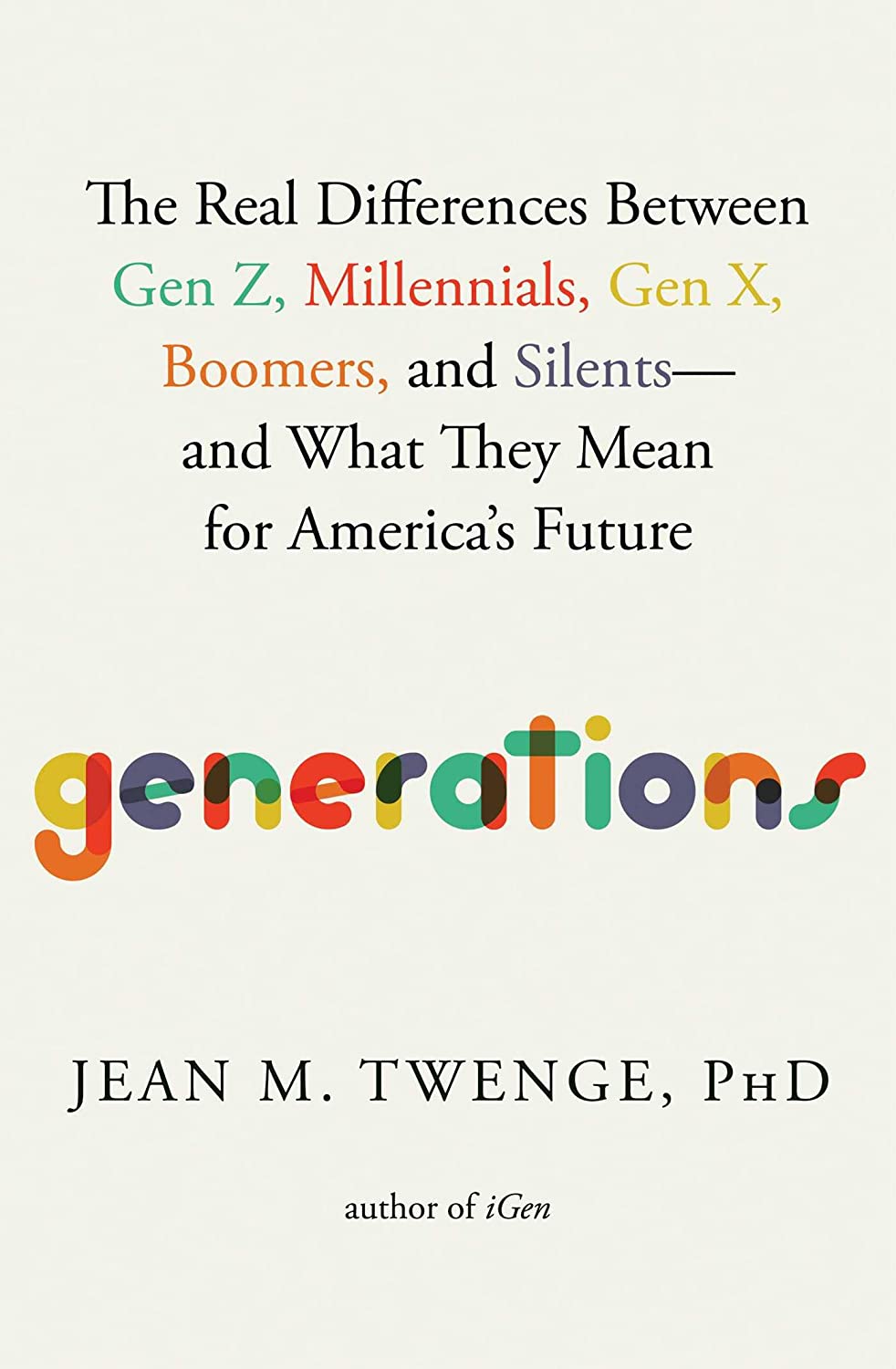
When you were born has a huge effect on how you feel about marriage and having children (and a whole lot of other things). I knew this in a vague sort of way, but the book Generations by Jean M. Twenge really opened my eyes. Gen X, Millennial, and Gen Z readers, I see you more clearly now.

The world is so different from when I was growing up as a baby boomer in the 1950s and ‘60s. Yes, I’m old, at least on the outside. On the inside, I’m still that long-haired hippie wannabe wearing mini-skirts and panti-hose and certain I would fall in love, get married and have children, just like all the other women in my family. Okay, not all. There were a few who didn’t have kids, but people didn’t talk about that stuff.

So much has changed. Birth control, legal abortion (until lately), women working outside the home as much as men, more people living into their 80s, 90s, and past 100, more young people going to college, student loan debt, the cost of living, LGBTQ folks going public and getting married, Internet, social media, smart phones . . . It’s not an Ozzie and Harriet world anymore.

A what? Exactly. Ozzie and Harriet Nelson were a real couple who had a black and white sitcom on TV featuring their lives with their two sons, Ricky and David. They were all musicians, and their problems were always resolved in less than a half hour, with time for a song at the end.

In her book, Twenge looks at each generation, from the Silent Generation (1925-1945) that was alive during World War II and their boomer children (1946-1964) through Gen X (1965-1979), Millennials (1980-1994), Gen Z (1995-2012), and what she calls Polars (2013-2029), the youngest generation. The changes are striking.

With each generation, people are waiting longer to get married, from late teens/early 20s in my day to an average of 28 for women and 30 for men now. And that’s just the average. Twenge writes: “Millennials are the first generation in American history in which the majority of 25- to 39-year-olds are not married.” They may or may not be living with a romantic partner, but marriage is pushed way down the road.

The trend continues with Gen Z, the oldest of whom are now at the height of their fertile years. The average age of women having their first child is 30, much later than earlier generations. But many millennials are choosing not to have children at all. It’s just not “required” the way it felt when I first married in 1974 at age 22. Couples are waiting longer, and many are deciding they don’t really want to be parents. They want to be free to work, travel, or do whatever they enjoy. Thanks to reliable birth control, it is easier to make that choice these days.

Even people who want children don’t see how they can do it, considering their student loan debt, the impossible cost of buying a home, and the equally impossible cost of childcare. They also look at the state of the world and think, really? I’m going to subject a child to that?

By the time they decide to get pregnant, they may be dealing with fertility problems, which leads to the whole world of fertility treatments, surrogates, and adoption, all difficult and crazy expensive.

How does this factor into being childless by marriage? In an era when more people are putting off having children or declaring they don’t want them, it’s more likely that one’s partner will be unable or unwilling to have babies. Of course, things get even more complicated when one partner has already had children and doesn’t want any more.

Twenge blames most of the changes over the generations on technology, including social media, birth control, and all the gadgets that dominate our attention. What do you think?

Generations is over 500 pages long and not a quick read, but it is fascinating, and I highly recommend it. If you’re much younger than I am, it could help you understand your parents and grandparents just as it helps me understand those born generations later than I was.

When I was young there was a saying: Never trust anyone over 30. We talked about the “generation gap.” Surely the generations have always disagreed on things. Do you think the differences are more pronounced now? Or is all this Gen X, Gen Z, etc. stuff nonsense?

Let me know what you think in the comments.

****************

During World Childless Week, I spoke on two panels, one about the image of childless people in the media and the other about aging without children. If you missed them or anything from World Childless Week, you can still watch the videos at https://worldchildlessweek.net.

Processing…
Success! You're on the list.

Younger Self Asks: What if I Never Use My Womb?

The picture shows an open notebook and a woman's hand holding a pen poised over the page. The blurred background appears to be in a wilderness area with lots of fall-color trees.

“I am a woman without children. I’m a fertile woman who can’t have children. It’s more painful than physical inability.”

I’ve been cleaning cupboards. Lots of stuff going into the recycle bin. But these words scrawled on the inside back cover of a yellow notebook from a college European Literature class in 1989 caught my attention. At that time, I was four years into my marriage with Fred. I was 37 years old and making my second attempt at grad school while working as a full-time newspaper reporter. I struggled to take care of home, husband, and my youngest stepson, who had recently moved in with us. It wouldn’t be long before I dropped out of school again because it was too much.

But that note written in tiny cursive where no one else would see it reminds me of how terrible I felt in those days about not having children. All around me, friends and relatives, including my stepdaughter, were having babies. My period every month reminded me that I was not and would never be a mother if I didn’t change my situation ASAP. I was angry and sad and certain that life was NOT FAIR.

Many years later, I have become part of a childless community where most of the people speaking out about it have had fertility problems. They suffered through surgeries, IVF treatments, and miscarriages. They went through hell trying to conceive and bear a child. How can I grieve or complain when I didn’t go through all that? As far as I know, I could have had a baby with no problem—if I had a different husband.

The first husband was never ready, and the second was done with children. He had had a vasectomy and was not going to reverse it. Nor was he willing to adopt. So, no babies for me.

It hurts that I never had a chance to try. Well, there were a couple times without birth control over the years with men who still had sperm, but nothing happened. It’s probably for the best. Those men were scum. But when I imagine lying in bed with a man who says, “Let’s make a baby,” I want to cry.

Yes, I watch too many movies.

People are all too eager to tell me it’s my own damned fault. I should have demanded babies, even if I had to find a different partner. Do I have any right to grieve? If you’re in the same situation, do you?

My former neighbor, a pretty young woman named Brittney, turned up with a newborn the other day. Her third boy. This girl clearly has no problem having babies. Me, I just have an ancient dog who can’t hear and can barely walk.

Not fair? Or just the way life is?

1989 was a long time ago. I’m not 37 anymore. But I feel for that curly-haired woman looking away from her notes about Aristotle’s poetics in literature class, thinking about the babies she was never going to have and writing that tiny heartfelt note.

What do you think? If we accept a life with a partner who can’t or won’t give us children, are we entitled to feel bad about it, as bad as someone who has struggled with infertility? If you left a note to your future self about your childless situation, what would it say?

Photo by ROMAN ODINTSOV on Pexels.com

Processing…
Success! You're on the list.

Childless by marriage vs. childless by infertility

Being childless through infertility and being childless by marriage, when the issue is not lack of eggs or sperm, are two very different things. With infertility, couples try hard to conceive and deliver a child. They undergo all kinds of invasive treatments, spend huge amounts of money, and ride a rollercoaster of hope and disappointment, only to end up still childless. Some suffer multiple miscarriages and a grief those of us who have never been pregnant can only imagine.

They have no choice in this outcome. They did everything they could. Adopt? It’s not so easy, especially if you have already used up all the time, money, and energy you can spare.

When a couple is infertile, whether the problem is from his sperm or a problem with her reproductive system, their only choices are to accept their fate, try whatever they can, and ultimately to stop trying. They do it together because they both long to be parents.

It is possible to be childless by marriage because your spouse is infertile. You may not know that in advance. When you find out, you have a choice: stay and face the same choices as other infertile couples or split up and look for someone who can give you children.

Is that your story? I know some of you reading this are in that situation.

What if you knew going into the marriage that children would be impossible with this person? So many men, especially those who were married before, have had vasectomies. Is it possible to get them reversed? Yes, but the surgery doesn’t always work. The longer it has been, the less likely the man will be able to provide healthy sperm.

What if there’s no physical reason you can’t have children together? What if it’s just that your mate does not want kids? That’s quite different. I wonder about relationships where couples disagree on something so huge. What else will they clash on? Money? Career? Where to live? But you love each other. So maybe you can accept a marriage without children. Or maybe you can’t. You do have a choice. You can take your healthy sperm or your fertile ovaries elsewhere.

What if you never find anyone else? Ah, that’s the risk. It’s a gamble. But unlike those struggling with infertility, at least you get to roll the dice.

Last week’s webinars at World Childless Week got me thinking. A majority of the speakers were childless due to fertility problems. They are grieving and trying to build new lives after years of fertility treatments and disappointment. As I sat here with my healthy never-used uterus, I could identify with much of what they said because we are all lacking children. We all deal with insensitive comments, feel left out at family gatherings, and grieve the children we might have had, but suddenly it came at me with big flashing lights: I had a choice. They did not.

What do you think about this? How is it different being childless due to infertility and being childless because you chose a person who doesn’t want kids? I’d love to hear your thoughts.

If you missed any or all of the sessions at World Childless Week, you can still watch the recordings at worldchildlessweek.net.

Thank you all for being here.

Processing…
Success! You're on the list.

Is Childlessness by Marriage Not the Same as ‘Real’ Childlessness? 

“Imposter syndrome” is a phrase that gets tossed around a lot these days. In my understanding, it means you don’t feel qualified for the thing you are doing. For example, I would be suffering from it if I believed I wasn’t a good enough writer to be published, even though I have been published many times. 

Says “Very Well Mind”: “To put it simply, imposter syndrome is the experience of feeling like a phony—you feel as though at any moment you are going to be found out as a fraud—like you don’t belong where you are, and you only got there through dumb luck.”

Some of us probably feel this way in our careers. When I play the piano at church, I expect someone to figure out that I don’t have much training and leave out a lot of notes because I can’t play them all without my fingers getting tangled up. It hasn’t happened so far. I get lots of praise, but I know, and God knows. 

But how does this apply to being childless, particularly childless by marriage? Pamela Mahoney Tsigdinos, author of Silent Sorority, talked about it at our Childless Elderwomen fireside chat last Sunday. (You can watch the video here if you missed it). I hadn’t thought about it before, but I realized I had felt that.  Here are some ways we might be feeling like phonies and fear being caught:

  1. You’re in a gathering where most people are parents. They’re chatting about their kids, school, sports, whatever. You’re nodding, adding a comment here and there. But you just know any minute someone is going to ask how many children you have and you’ll have to confess you don’t have any. Busted!
  2. You’re hanging out with friends who don’t have children because they never wanted them. You agree about the freedom, spare time, and extra cash it gives you. But you’re faking it. You would gladly give up your time and money to have someone call you “Mom” or “Dad.” 
  3. You’re talking with people who are physically unable to have children, sharing the yearning and grief, but you know you are not infertile, that if you had chosen a different partner, you could have had all the kids you wanted. So what right do you have to complain? 
  4. Your partner has children, making you a stepparent, legally or in practice. How can you call yourself childless? 

Are we phonies? Are we imposters? No. Our grief is real. We had a dream of how our lives would be, and we lost that dream. For one reason or another, we did not create life. Maybe it was our choice of a partner. Maybe it was just bad timing.

I can’t imagine the pain of infertility, often coupled with multiple miscarriages. And yes, I do enjoy the freedom I have. My husband shared his children with me. Although it was not the same as having my own, it was a little like having kids–for a while. But I still ache for those children and grandchildren I will never have. I am not an imposter, and neither are you. 

The subject of Sunday’s chat was the blurred line between being childless and childfree. We have more in common than you might think. Nosy questions, rude comments, feeling left out, fear of old age alone, we all experience that. It’s a continuum, and we’re all on it. 

Your truth, whatever it is, is real and valid. You are not a phony. 

I welcome your thoughts in the comments. 

Processing…
Success! You're on the list.

Childless by Marriage looks ahead to 2022

What a year. Fires, floods, tornadoes, Trump fans storming the capital, racial unrest, pulling out of Afghani, new anti-abortion laws, and COVID. Didn’t we all think the pandemic would be over a year ago? At least we have vaccines now, but it’s far from gone. Crazy times. My yard is full of snow–and I live at the beach. Crazy!

Meanwhile, we are still here talking about being childless by marriage. Can you believe this is post number 779? What could possibly be left to talk about? But there’s always more because the fact that we don’t have children colors every aspect of our lives. 

My older friends all seem to be moving away to be near their kids. I can’t do that. If I am suddenly incapacitated, who will be here to talk to the doctors, pay the bills and bring all those little necessities you might need in the hospital or, God forbid, a nursing home? Who will take care of my dog? One of my friends who has a grown son she really can’t count on just keeps saying she needs to keep exercising and eating healthy foods so she can continue to take care of herself. But we both know we need to get some safeguards in place. Make that my resolution for 2022. Make a plan. 

You are probably much younger and in a completely different situation. Are you still trying to figure out whether or not you will have children, whether you dare ask your reluctant partner one more time or seek one more medical intervention? Are you watching your friends become parents and feeling jealous, angry, sad, or left out? What are you going to do? Maybe you need a plan, too. Look at your day-to-day life, just one regular day. Is it good? Would it be okay without children for all the rest of your days or is the thought unbearable? No one should have to make this choice, but that’s how it is.

If your partner is unwilling, the trick is to find out whether this is a firm and forever no or just temporary anxiety about having a baby. Talk about it. Don’t let it fester. And, dear ones, some people will never change their minds. You can accept their decision or move on. 

Speaking of accepting childlessness or moving on, the book Love or Children: When You Can’t Have Both has been out for a year now. It’s a collection of posts from this blog up to 2020. All the subjects are covered, from how one becomes childless by marriage to dealing with snarky comments to facing old age without kids. If you haven’t got your copy, order one, Kindle or paperback, from Amazon or at your favorite bookstore. It’s not very expensive. If you send proof of purchase to me at suelick.bluehydrangea@gmail.com, I will send you a free paperback copy of Childless by Marriage, the book that came first. Free!

New U.S. census results have been published. A couple statistics for you:

  •  In 2021, 34 percent of adults age 15 and over had never been married, up from 23 percent in 1950. Estimated median age for first marriages was 30.4 for men and 28.6 for women, up from ages 23.7 and 20.5 respectively, in 1947. 
  • Of women ages 15 to 50 years old, among married women, 17.5 were childless. Among never married women, 75.8 never had children. That’s a lot of non-moms.

Finally, there’s a great article on the development of fertility treatments, written by the first IVF baby in the United States, in the current issue of the AARP magazine. Borrow a copy from your parents or grandparents or read it online here. First Infant Born Via IVF Turns 40 (aarp.org)

Your comments are not just welcome, but cherished.

May your 2022 be filled with blessings. Happy New Year!

Processing…
Success! You're on the list.

10 Challenging Thoughts About Childlessness

1. Don’t assume you know what your partner wants. Ask. Ask again later to be sure, but don’t nag. Nagging doesn’t help, whether you trying to get someone to take out the trash or change their mind about having children. They feel the way they feel.

2. It’s not just women who get caught in childless-by-marriage situations. Men do, too. They just don’t talk about it as much.

3. When guys meet, they don’t ask, “How many kids do you have?” They ask, “What do you do?” Maybe we should all just say, “Tell me about yourself.”

4. Childless women still have motherly instincts. Example: Our new neighbor’s little boy runs around naked most of the time. He’s too old for that, plus it’s cold around here. I want to wrap a blanket around him and get him some clothes.

5. People with giant families will never understand what it’s like to be just you and your partner or to be alone.

6. Mother’s Day is a drag for most people. I’m guessing 80 percent of us hate it. Some don’t have children. Some have stepchildren who ignore them. Some don’t get along with their mothers. Some loved their mothers, but they’ve passed away. Father’s Day gets less attention, but the same issues apply: no kids, no dad, no acknowledgement from stepchildren. And all those pictures of fathers fishing, hunting or barbecuing with the adoring family, bleh!

7. There will come a point in your life when you don’t want a baby. The idea of caring for an infant sounds exhausting. But you do want grown children and grandchildren. You would give anything to have someone who looks like you call you “Mom” or “Dad.”

8. Most of us can’t point to the day we knew we were never going to have children. It just happens. When do you change from potentially childless to forever childless?

9. The UK and Australia appear to be way ahead of the Americans in forming groups and offering meetups and online support for the childless. Why is that? I have considered doing some kind of Zoom thing, but then I remember most of you prefer to be anonymous. So what should we do? Ideas?

10. Our book Love or Children: When You Can’t Have Both is listed for sale at target.com. I don’t know if you can buy it at an actual Target store; we don’t have any of those here. But people are ridiculously impressed. #1 on the New York Times bestseller list? Yawn. Available at Target? Wow!!!

Things have gotten a little too quiet around here. If you feel moved to comment on any of these, do it. Let’s talk!

Hugs from the Oregon coast.

Processing…
Success! You're on the list.

Advice for the Potentially Childless by Marriage

What would you tell a young person facing a childless-by-marriage situation? I was interviewed last night for the UnRipe podcast from Australia. Interviewer Jo Vraca and Mina  Sedgman kept asking me this question, pushing for a concrete answer. What I wanted to say was “I don’t know” or “Every situation is different.” I said, “Talk about it,” “Make a conscious decision,” “Don’t do what I did.”

I felt like what I did back in my 20s and 30s was so wishy-washy. I never made an actual decision, even after we considered the options and Fred told me he really didn’t want to have any more children. I never told him, “Hey, I really want to have children and you need to step up.” I never said, “Okay, if I marry you, I accept that I will never have my own children.”

I just went ahead and got married, tried to bond with his children, and gradually decided I had been ripped off. I had not. I was just doing my usual denial of facts. Way too many Disney movies had convinced me that if you just wish hard enough for something, it will come true. Queue the music for “When You Wish Upon a Star.”

Sometimes you don’t get your wish. I don’t think I really got that until I was in my 50s, when menopause, my mother’s death, Fred’s fatal illness, and my father’s years of major health problems pushed all thoughts of parenthood way into the past.

So, now that I’ve had time to think about it, what would I advise?

1) Talk about it, talk about it, talk about it. If you have always wanted children, start the discussions early. A few dates in, it’s okay to mention that you look forward to having children and ask how they feel about it. As the relationship progresses, keep checking in. As we have seen in many posts and comments here, people change their minds. You and your partner need to be a team, not adversaries.

2) If the person you’re falling in love with offers a hard no to kids and you can’t stand the idea of never having them, walk away. I know that’s hard. In the interview, they asked me if I thought about walking away from Fred. I did not. I was obsessed with my career, and I had my stepchildren, who I thought would fill the gap. I was so in love and so sure no one else would ever love me like he did that leaving didn’t seem like an option. But it was. I was 33 when we got married; I still had time. I was wrong to think I’d been ripped off. Consciously or not, I chose this. So I advise you to make a conscious choice: Is this a deal-breaker? Then go. Are you willing to live with it? Then stay. I know many of you feel trapped, but you do have a choice.

3) Having children is huge, but many of us are called to do other things with our lives. Consider what else you are besides a potential mother or father. What talents and interests can you pursue full out without the constraints of parenthood? Consider the possibilities instead of the impossibilities.

4) If you accept the childless life, let yourself grieve the loss of the life you thought you would have. Don’t be silent about it. Tell your mate, family and friends what you’re dealing with, and don’t let them shame you into thinking you’ve done something wrong or that you have no right to grieve.

Dear readers, having come this far in your childless journey, what would you advise someone facing a similar situation? What would you do now if you had it to do over again?

My interview on the UnRipe podcast will be online shortly. I’ll let you know where to hear it. My thanks to Jo Vraca and Mina Sedgman for a fabulous conversation and for their continuing efforts to support childless women.

Clueless Comments That Hurt

We have all heard them, the mean or ignorant comments that cut to our souls. How many kid do you have? Why don’t you just adopt? You must not like children? This party is just for moms/dads/families.

That was the subject of a lively discussion at one of the World Childless Week presentations earlier this month. Speakers Sarah Roberts, founder of The Empty Cradle, and Krin Enfield de Vries, operations director for Gateway Women, offered some of the cutting words people had shared with them:

  • Can’t your sister have one for you?
  • I’d love to have your freedom
  • You can always adopt
  • Being an aunt is almost the same
  • You said you weren’t sure if you wanted them
  • At least you have each other

“I get so mad,” said deVries, for whom cancer took away her ability to have children. “How dare you dismiss my grief? Don’t you think we’ve considered every option already?” People would understand if someone had a child who died, she added, but they don’t get how much it hurts when the opportunity to have the future they dreamed of has been taken away. You may not have lost an actual child, but you have lost your chance at parenthood, to hold a baby, etc. Some people understand, but others never will.  

Motherhood had always been a part of her future, Roberts said. To not have that is a “staggering loss.” She is often surprised at the lack of empathy.

Comments come in all different forms, including advice, pronatalist assumptions, blaming/shaming/hostility, the assumption that you had a choice, minimizing your grief, minimizing the importance of your situation, idealizing the childfree life, or invalidating your pain. There’s also the awkward silence when people find out you don’t have children.

So what do you do? In some situations it’s okay to explain how inappropriate the comment is or to say you don’t want to talk about it, Roberts said. But you need to consider who they are and where you are. It will be different with your boss at work, for example, than with your mom or your friend. Consider what’s behind the comment, she suggested, and try to help them understand.

Other options:

  • Walk away,
  • Change the subject
  • Counter with a sarcastic comment or a joke,
  • Give a brief, clear answer
  • Be honest about the emotional impact
  • Use it as a “teachable moment”

“You don’t have to justify that you’re grieving,” Roberts said.

After such a comment, take care of yourself. Cry if you need to, talk to your friends who get it, and think about what you can do to change things. As time goes on and you become more accepting yourself of your childless status, the comments may not hurt so much. But they’re still going to come. If you can take the time to wonder what causes people to say these things, it helps. Maybe one comment at a time, we can help to make the world understand.

What clueless comments about childlessness bother you the most? How do you respond? In retrospect, how do you wish you could respond?

*********************

Would you like to write something for the Childless by Marriage blog? I’m looking for stories, 500-750 words long, that fit our childless-by-marriage theme. You could write about infertility, second marriages, partners who don’t want children, stepchildren, feeling left out when everyone around you has kids, fear of being childless in old age, birth control, and other related issues. Tell us how you how you came to be childless “by marriage” and how it has affected your life. Or you could write about someone else. We love stories about successful childless women. We do not want to hear about your lovely relationship with your children or how happy you are to be childfree. Not all submissions will be accepted, and all are subject to editing. If interested, email me at sufalick@gmail.com.

********************

I have received the first cover designs for the new book, Love or Children: When You Can’t Have Both, which is a compilation of the best of the Childless by Marriage blog. I will show them to you here as soon as I’m allowed, but this is exciting. Stay tuned.