Is This Not Mothering?

I may not be an actual mother, but sometimes I get weary of mothering anyway. I take my husband, who has Alzheimer’s Disease, to the doctor and find myself explaining where we’re going and why and assuring him that the doctor will not hurt him. He will not give him any shots. As we walk, I hold his hand, not out of affection the way it used to be, but to keep him from getting lost or falling down. In the doctor’s office, I speak for him because he’s not good with words anymore. The doctor speaks mostly to me because my husband does not understand what he’s saying. When it’s over, I wait while he goes to the bathroom, then treat him to a hamburger. Is this not mothering?

Likewise, when I come home from a trip, I need to pick up my dog at the kennel. First, I wash her blankets and straighten out her bed. I make sure I have enough food and make an appointment with the vet for her shots. Then I go get her. She runs out of her cage, gives me a big wet kiss and jumps into the car. All the way home, she’s trying to get my attention. Pet me, love me, entertain me. Is this not mothering?

***
I recently read about a new website for Jewish women who are childless. It’s called Yerusha.com. Take a look. Even if you’re not Jewish, you may find something helpful.


When the dog-child runs away


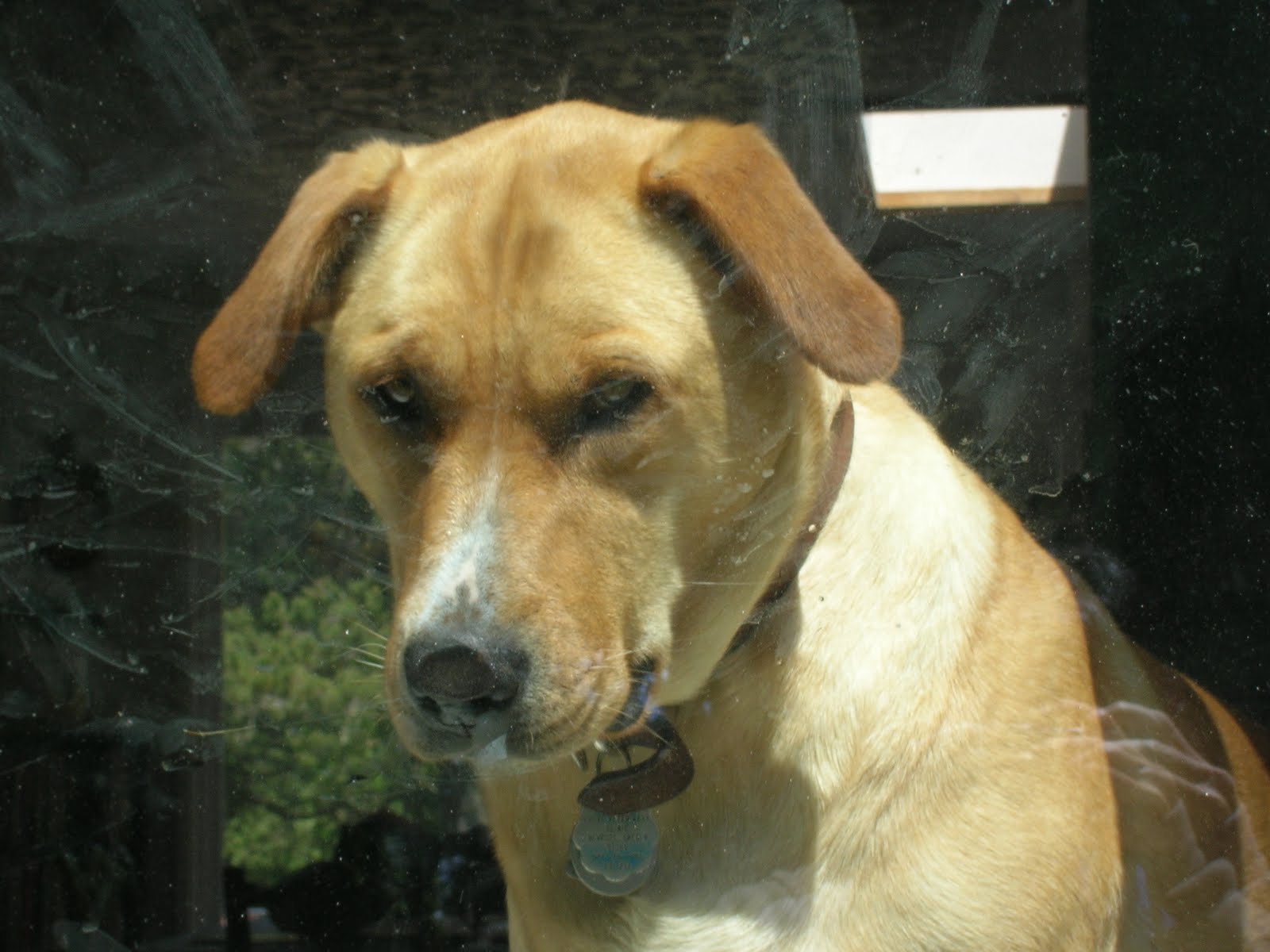
I sat under the tree in the backyard at midnight crying. My dog (the one in the picture, now full-grown) was gone. She ran out through a gate left ajar by the new gardener. For a while I heard her rustling through the forest that surrounds our house, but now I heard nothing but the ocean in the distance. it was a dark, cloudy night with no stars or moon showing. I had done everything I could to raise this puppy to adulthood and keep her safe, but now I didn’t know if I’d ever see her again. Oh, how I cursed that gardener in my mind. The gate had looked closed, but he didn’t hook the latch, so Annie must have pushed it open.

I wandered the neighborhood calling for Annie, swinging my flashlight around. The growth was too thick in most areas for a human to walk. When I didn’t find her nearby, I drove my car slowly down the streets where we take our walks. Everything looked different in the dark, the trees gray and spooky, the houses dark and silent.

I was exhausted, but I couldn’t go to bed without finding Annie. I feared she would be attacked by a coyote or fall into a ravine. If she got out onto the highway, she could be hit by a car as easily as the raccoons, squirrels and possums I see on the road every day.

No sign of Annie. No one to call at that hour. I was completely alone–except for God. I sent up a prayer and drove home. Once upon a time, when I had both Annie and her brother Chico, I used to be able to get them home by waiting in the open car. They’d think I was leaving and jump in. I parked my Honda Element in the garage and settled onto the tailgate with my flashlight, a box of Milkbones and the garage door remote control. In a few minutes, I heard twigs crackling. And then, praise God, Annie ran and jumped up beside me. Before she could think, I closed the garage door.

I gave her a big hug. “You’re grounded,” I informed her. My dog is my child. My only child. Thank God she’s back.

Pink Draft is Done

I finished the latest draft of my Childless by Marriage book this week. Some tweaking and I will be ready to market the book, as well as excerpts and related stories. I call this “the pink draft,” printed on pink paper so I can tell it apart from the other drafts.

I have interviewed many women and a few men over the past decade. Some are childless by choice, but lots of them tell tales of motherhood thwarted by husbands and boyfriends or delayed until it was too late. I will be trying to contact these women to find out what has happened since we talked and make sure it’s still okay to use their comments. For some folks, the contact information I have is no longer valid. If I interviewed you for my book, please e-mail me privately at suelick@casco.net.

Let us work together to make sure the world knows what it’s really like for us.

Thanks for reading this blog and for your many comments. We will go on indefinitely.

Is he worth it?

By the time Fred let me know that he didn’t want any more children, I was in love with him and we were planning to get married. That left me with a difficult choice: stay with the man I loved or leave him in the hope I would find someone else who wanted children. I chose Fred.

It’s a terrible choice to have to make. I interviewed another woman last week who found herself in a similar predicament except that they were already married. At first, neither she nor her husband had much interest in having children. However, she gradually changed her mind. He didn’t. In fact, when she confessed her desire for babies, he stood firm, telling her that if she couldn’t live without being a mother, she would have to find someone else. She chose to stay with her husband. Not having children causes her great pain, but she’s certain she made the right decision.

Another woman told me she had left her home in another country to be with the man she loved. Only after she had said goodbye to home, family and job did he inform her that the daughter he had from a previous marriage was all the children he wanted. When I talked to her, she was still trying to decide what to do, knowing she was running out of time if she wanted to conceive a child.

Every woman I know who is childless by marriage has heard the suggestion that she forget her birth control accidentally on purpose and get pregnant. Once that happened, he would come around. But we all know that’s not necessarily true. Besides, how could you trick someone you love on a matter that is so important?

Women are not the only ones in this predicament. Sometimes it’s the man who wants children and finds that his wife/partner does not. So how do you decide? What do you think? Is it worth dropping an otherwise wonderful partner to look for someone who is willing to have children?

We’ve got to talk about it

I wound up childless because I didn’t have THE CONVERSATION with my husbands-to-be before we got married. I did not tell them I definitely wanted children and make sure they wanted them, too. I just assumed. It’s always a bad idea to assume anything. You might be wrong.

I get lots of e-mails these days from women, and a few men, who are in the same position. They thought they’d have children. They married or entered long-time partnerships, discovering later that their mates did not share their desire for offspring. I have heard stories of hidden vasectomies, forced abortions, and, most often, partners who just refused to discuss having children. My friends, if they refuse to talk about it, they are probably also going to refuse to parent–or maybe they have concerns that can be worked out. You’ll never know for sure if you don’t put it in words.

In my own situation, I have come to realize that if I had communicated how important it was for me to have children, my husband would have cooperated. Yes, he said he didn’t want more children, and I know he meant it, but I also know after all these years, that he loved me enough to do it to make me happy. I didn’t say the words. I was afraid I’d lose him.

We also need to talk about it with our friends and relatives. One man recently told me he’s afraid to say anything to his childless friends about the fact that he has children and they don’t. That’s how friendships end and the world divides into parents and non-parents. Sometimes it hurts not to have children. Let your friends know that, but know they don’t have to hide their kids from you either. Talk about it. It will make life a lot easier.

A Few Men Finally Get It

…Recently in the gynecology waiting room, I seemed to be the only one who wasn’t pregnant or accompanied by children. When one new mom was called in, her husband took over care of their baby. Oh, how tenderly he touched that soft skin, how gently he lifted his daughter out of her carrier and cradled her in his arm. Why did I not marry a man like that, I thought. A few minutes later, I was in the examining room answering questions: How many children? None. How many pregnancies? None. Post-menopausal? Yes.

This is the final paragraph of a section of my Childless by Marriage book that I read at an open mic last night. The audience was so silent I thought I had bombed, but afterward, many people came up to tell me how moved they were by what I had written. Most of them were men. In fact, one began by asking, “Are you all right?” My words had been so emotional he thought I must be in terrible pain. I assured him I was fine. The men, all about the right age to be my husband if I weren’t already married to Fred, said they admired me for saying such private things out loud, that they didn’t realize how a woman might feel about not having children, and that most people are afraid to talk about the subject with their childless friends and relatives.

It was encouraging and enlightening. I have always thought my main audience was women. But perhaps men will read more to find out what we haven’t told them.

How do you answer THE QUESTION

When people ask why you don’t have children, what do you say? My favorite answer so far is “because I’ve seen yours.” Another good one is, “No, would you like to give me yours?” But really, a lot parents start their conversations with “Do you have children?” And when you say “no,” they want to know why. Depending on my mood, I just say, “No I don’t. God had other plans,” or I explain that I have three stepchildren but no kids of my own. Several of my friends just say they have dogs.
Do people ask you? What do you say?

Are you grieving over your lack of children?

As many of us know, not having children can be painful. A terrific article in today’s Contra Costa Times talks about this and describes some of the agencies that are helping childless women deal with their grief through therapy. The piece, called “Childless by Fate, Choice,” was written by Jessica Yadegaran. It includes a forum to answer the question “Have you come to terms with not having children?” I would love to have people answer that question here, too.
I’m currently working on the chapter about grief in my Childless by Marriage book, and it is interesting how one’s feelings change over time. It’s also hard not to project my feelings onto other people.
So how do you feel about it? Do you regret your choice? Are you still trying to decide what to do? What advice would you give someone like the 35-year-old woman I interviewed this weekend who is dating a man who doesn’t want any more children?

Alone in the Emergency Room


Going through my old notes, I find this, written in the local hospital emergency room where I drove myself last spring when my eye turned red and began oozing puss so thick I was half blind.
Sitting in this little room in the ER at Samaritan Pacific Communities Hospital, I feel more and more sorry for myself. Everyone else has people with them: parents, children, siblings, friends, somebody.
“Who drove you here?” the first nurse asked.
“I did.”
A look of concern passed over his face.
My husband, 15 years older than I am, has Alzheimer’s and can’t drive anymore. Nor could he help me with insurance cards or forms. In fact, if he were here, it would be like having a child along, an impatient child who kept fiddling with the medical equipment and asking when we could go home.
I had sat down to dinner but wasn’t hungry. My eye was getting worse. I got up, put the food away, brushed my teeth, grabbed my purse and drove myself to the hospital. No, wait, I called a friend who always says to call her if I needed help. She wasn’t home.
So here I am, alone, half blind, stuffed up, thirsty and wondering if I will be able to drive home. Husbands die, I think. I should have had children. They’d be adults by now and could take me to the hospital.
I sit on the table, swinging my legs, waiting. I can hear a small dog barking. He has been barking for at least an hour.
Going nuts with nothing else to do, I make notes about the room I’m in. Not much bigger than my bathroom, it has fluorescent lights, a fire sprinkler, and white linoleum with grey speckles. There’s a green plaid curtain, a gray stool, a plastic wall rack holding four boxes of blue plastic gloves marked small, medium, large and extra large. There’s a hazardous waste depository, a paper towel holder, a Corporate Service Excellence award posted for the third quarter of 2006. I see a rack with tissues, swabs, sheets, plastic covers, pillow cases, blue hospital gowns, and barf basins. There’s some sort of heart machine, a bed, an IV pole with four hooks, a rack full of flashlights to look in your eyes and nose, an oxygen machine, a blood pressure bulb, a wastebasket, brochure racks—empty except for pamphlets on HIV/AIDS. A magazine rack holds copies of Metropolitan Home, People, Western Interior, and Sunset. Swell. If I could see to read, I could do a little freelance-writing market research. There’s a code call button, a phone, a red light switch and a gray help call button. I want to push them all.
Across the hall is a bathroom with a commode and a handicap toilet. I’d use it, but I’m afraid that’s when the doctor would come. After two hours, I’m not taking any chances.
The doctor finally comes in, swabs the gunk for lab tests, looks in my nose, mouth, and eyes, listens to me breathe and disappears for another hour.
Let’s describe the doctor: wiry hair, green scrubs, white tennis shoes. Grouchy.
Nearing four hours, he comes back with a diagnosis: On top of pharyngitis–an infection in the voice box–now I have conjunctivitis, popularly known as pink eye. It’s a viral infection, very contagious. I need to use wet compresses and eye drops and keep my stuff away from everybody else’s. For the throat, he advises salt water gargles. He hurries away, his shoes squeaking on the linoleum.
For this, I waited here alone until almost midnight.
A nurse comes in with a package of pain pills. They are exactly the medication I told the first nurse I couldn’t take. Besides, it doesn’t hurt bad enough for narcotics. On a scale of one to ten, I rated my pain at one and a half.
With the gunk wiped away, I can see a bit better. I go home and prepare my own gargles and compresses. In a couple days, the first eye is clear. The infection has moved into the other eye, but I know what to do, and it soon goes away.
It’s all very minor, but I can’t help thinking: what if this was something more serious where I could not drive, could not speak, could not tell anyone my name, date of birth, medications, insurance numbers or allergies. What if they just gave the me the pills that make me sick because there was no one to say, “Hey, wait a minute.”
Damn, I should have had kids. Those ever-present buddies on TV shows are a myth. Childless, parentless, we’re on our own. What is that Tennessee Williams line about always depending on the mercy of strangers? I don’t want to.

Yes, I know everyone says you can’t count on your children to help you in your later years. But at least, if you have children, it’s a possibility.

I’d Be Wishing They Were Dogs

Do You Want the Dog Honda or the Child Honda?

Honda in Japan is giving childless customers the option of installing a dog crate or a Pekingese-sized glove compartment nook instead of child car-seats. With the childless rate nudging toward one-quarter of the population, the car manufacturer figures if they build it, people will buy it.

Since I have no chance of having a baby at this point,I would. One dog Honda, please.

I recently read an article on Boston.com by Reuter’s Sophie Hardach (“In Dog We Trust: Japan’s Childless Turn to Canines”) about Japanese professional women pushing prams with tiny dogs inside, tiny dogs dressed in little doggie clothes. A surgeon quoted by the author said she was too busy for husbands and children, but she got lonely, so she adopted dogs. Does this not sound like little girls torturing the family dog with bows and doll clothes? Suddenly I think of an old joke where a guy looks into a carriage at a dog in a baby bonnet and says, “That’s the ugliest baby I ever saw.”

Over the years, we’ve all known people who treat their pets like children. Look at my friend Carol, whose parrot Barney runs her life. The other day when we met at the mailbox, she said she had to hurry back in because Barney knew she was home from work. If she dallied outside, he would get angry and poop on her.

On weekends, Carol wears shirts torn by Barney’s talons and teeth and stained by his droppings. Every day she plays music for him, takes him into the shower with her and shares her meals with him. She and her human partner never leave town together because they can’t leave Barney alone. After Barney bit Carol recently, leaving a deep red gouge in her finger, I said if it were me, I’d smack him so hard there would be green feathers flying all over the house. She just smiled and shook her head. “I just told him not to do it again.”

Childless interviewee Bonnie says, “I treat my dogs like children at times. My adoptive mom always said she’d like to come back as one of my dogs. Maybe I treated them better???

It’s probably good that I don’t have kids. I might kill them. One night shortly after we adopted our dog Sadie, I dragged home from work exhausted and hungry, put my dinner on the counter for a minute and turned around to find she had eaten half of it. I whacked her so hard I felt bone against bone. I apologized afterward. Being a dog, she forgot all about it. She’s still trying to cadge my chow 10 years later.

I flash on my Grandma Rachel’s dachsund, Gretchen, whom she referred to as “Gretchie.” She coddled that dog, much to the frustration of my grandfather who preferred the big old mutts that used to keep him company on the ranch. Grandpa’s second wife, Rachel never had children of her own. She was such a terrible cook that her offspring might have starved, and she was more than a little eccentric. I can still hear her reading poetry to us one visit and see her behind the curtains pretending she wasn’t home the next. But she was completely devoted to her dog.

Two generations later, I don’t have children either, but I have Sadie. And yes, she runs my life. If she breathes funny or limps, I’m on the phone with the vet. Every little sneeze or wheeze and I ask, “Are you sick?” Lately she has taken to moaning. I jump down to the floor, asking, “Are you all right?” She eases away from me, annoyed.

“She’s fine. She’s just trying to talk,” my husband says. Typical father. He’s not the one who gets up in the night to let her out. He’s not the one who abandons whatever he’s doing to open a door or feed her a “cookie.” He’s not the one who says, “Sadie’s bored. Let’s go for a walk.”

He’s also not the one who makes faces at the dog to see if she’ll make the same face back. I have gotten her to yawn and to lick her lips. I think I can make her smile, too. Okay, I’m a little nutty like Grandma Rachel. Every generation should have a crazy artistic relative, right? But maybe she shouldn’t reproduce.

When other people call me Sadie’s mom, I say, no, I’m not her mother. Her mother was a canine with four legs and a tail. And yet . . . I know every inch and scar of my dog, but I don’t even know if any of my stepchildren ever had the measles. Furthermore, while other women go gaga when someone brings a baby into the room, I stand off to the side, not sure what to do. Bring in a dog, and I’m all over it. I gush over puppy pictures the way other women melt over baby photos.

Dogs and I connect. We communicate. In fact, I would love to be surrounded by dogs, all rolling around together in a pile. Babies are complicated. Dogs are simple. Eat, sleep, poop, play. They never grow up into something that wears size 13 shoes and decides you’re an idiot.

Good thing I didn’t have kids. I’d be wishing they were dogs.

copyright 2007 Sue Fagalde Lick