Will You Ever Find Peace with Your Childlessness? 

Facing a future with no children used to drive me crazy. Back when I was fertile and married to a man who was not, I cried a lot, mostly where he couldn’t see me. I resented my friends whose lives revolved around their kids. I did not want to hear their happy stories or look at their pictures. Baby showers? What do I know about babies? Count me out.

As far as I knew, there was nothing wrong with my baby-making parts, but they were being wasted, evidenced by painful periods every month, reminders I was running out of time. 

Now I’m 72, childless and widowed. Although being alone can be difficult, I have to tell you that I don’t think about childlessness all the time anymore. If you are in your 20s, 30s, or early 40s, feeling bad because you wanted children and might never have even one baby, know that it does get easier. Like any loss, it doesn’t go away, but you do learn to live with it. 

Yes, you will feel breakthrough grief and anger. You’ll see a family at play or hold someone else’s baby and think I could have had that, but as you get older, it will become a less important feature in your life. You will wonder who will care for you in old age, but know that even if you had children, they might not be available to help.

When you’re surrounded by people getting married and having babies, you feel excluded, jealous, and angry at whatever keeps you from having the children you always wanted. Or you resent the people who keep pushing you to have the children you never wanted. You’ll regret it, they warn. What if they’re right? It can be a brutal time. 

The night before my 40th birthday, I had a meltdown that I describe in my Childless by Marriage book. At a Catholic women’s retreat, everyone was talking about their kids. Our guided meditation put me face to face with what I had lost, and it felt unbearable. As the women running the retreat held me, I sobbed in front of everyone. I felt broken. It didn’t help that I really wanted a drink, and there was no alcohol around.

But as I approached menopause, so many other things took my attention. My writing career was taking off. I was performing music almost every weekend. I earned my long-delayed master’s degree. We moved from San Jose, California to Oregon and experienced a very different life in a small coastal town.

My mother died, my husband was diagnosed with Alzheimer’s disease, and my father needed lots of help before he passed away. You hear about the “sandwich generation,” about people caught between caring for their children and caring for their parents. Without children, we can be open-faced sandwiches, helping our older relatives without neglecting our children. 

By my 50s, people stopped bugging me about having kids, and my friends were free to do non-kid activities again. Yes, the grandchildren came, but that was an off and on thing. We could still be friends.

Do I wish I was a grandmother? Sometimes. but childlessness is not at the front of my mind anymore. I took a different path, and it’s too late to turn back.

With every choice, you lose the chance to pursue the other option. By moving to Oregon, we lost the chance to grow old in San Jose, closer to family and so many resources that don’t exist here. If I had married someone else or not married at all, my story would be different. You choose one road and let the other one go.

I can torture myself by imagining what it would be like to have children, how they would look, what we would do together, how I would hold my grandbabies in my arms. But my life didn’t go that way, and I suspect that’s how it was meant to be. 

Not having children has given me the gift of great gobs of time that mothers don’t always have. Time and freedom. I don’t have to find a babysitter or take a kid with me if I decide I want to go to lunch, take a walk on the beach, or spend the night elsewhere. I just go. 

Would I trade my freedom for a walk on the beach with my son or daughter, maybe with their children splashing in the surf or building sandcastles? In a heartbeat. But that’s not on the menu for me. And I’m 80 percent okay with it.  

Maybe you’re at that age when becoming a parent would still be possible under other current circumstances and you’re driving yourself crazy trying to decide what to do: Leave your partner in the hope of finding someone who will give you kids? Try IVF? Hire a surrogate? Adopt? You may fight with your partner over it and cry a lot.

I know how bad it hurts. I’m saying that later it will be easier. Childlessness will not be the center of your life, and that makes room for other things, wonderful things. 

That’s not nothing.

How about you? Are you going crazy over being childless? Do you regret the choices that led you to be without children? Did you have a choice? Do you think you will ever be okay with it? Or are you fine with it now? Have you found peace with your situation? How?

I’m great-grandmother old. Tell me how it is for you at whatever age you are.

I welcome your comments.

***************************

If you enjoy this blog, you may want to visit my Substack, Can I Do It Alone?

Processing…
Success! You're on the list.

Childless Not by Choice: The Grief is Never Completely Gone

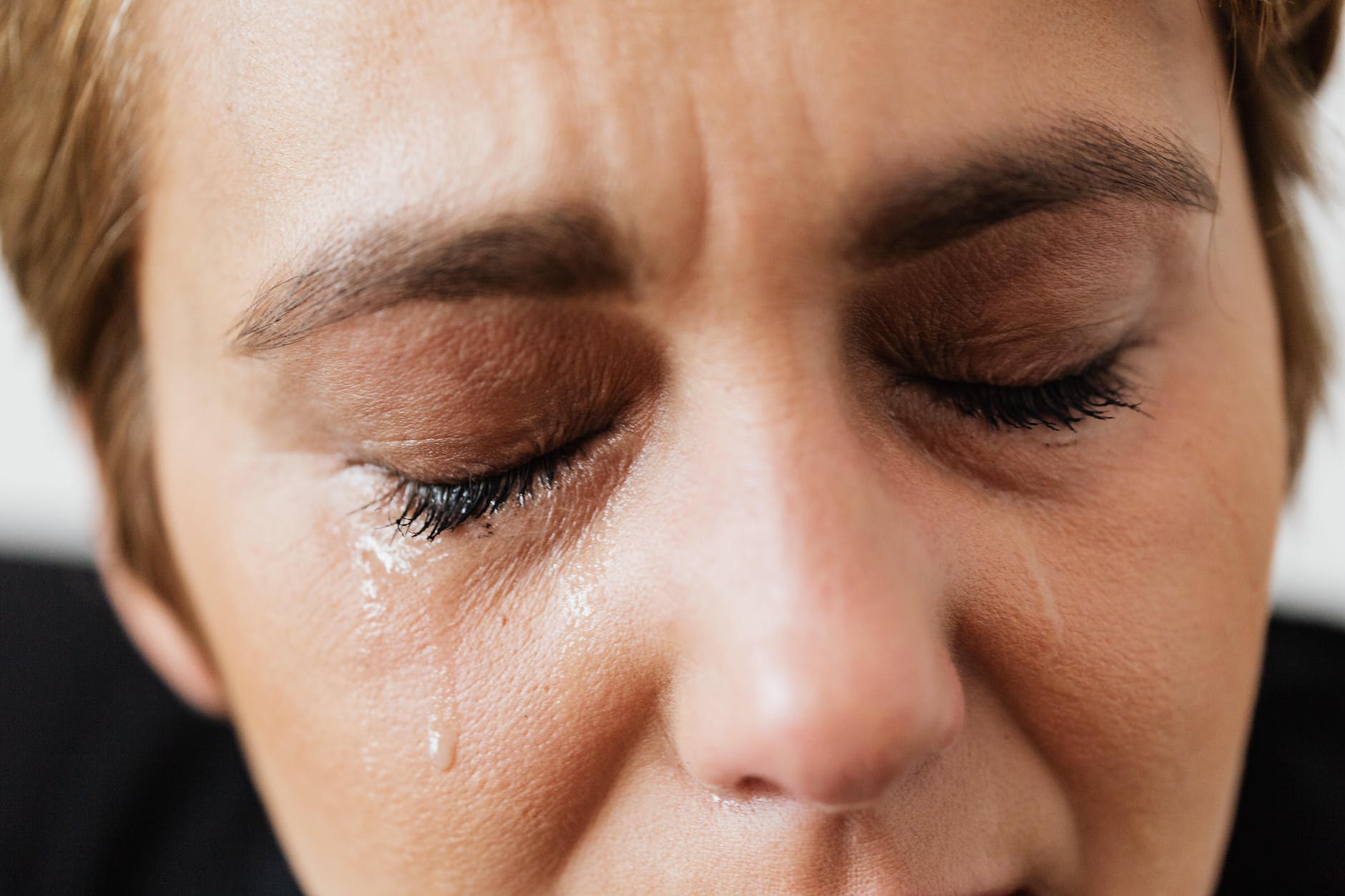
Red-haired woman crying. She's wearing wedding rings, has red nail polish and red lipstick, and is holding a tissue. No one is comforting her.

All it took was one word to break my heart again.

That word was “Mama.”

I was down in the dumps anyway as I took my usual walk down Cedar Street. A migraine had dogged me all weekend. I missed a music jam I was looking forward to. I was tired of being alone.

A German shepherd standing in a driveway reminded me of Annie and all the dogs I have lost, including Heidi, the German shepherd I lost along with my first marriage.

Then I passed these two little brown-haired boys, one maybe two years old, the other maybe six.

As the little one stared at me, the big one shouted, “He might call you ‘Mama.’”

And then he did. “Mama!”

Gulp. No one has ever called me Mama.

I smiled and waved. “I don’t mind,” I assured the older boy as tears threatened. “He’s cute.”

What? Like a puppy? It was a dumb thing to say.

I let the tears fall as soon I got out of their sight. The pain of never having children was just as bad 20 years past menopause as it was when I was 35.

That scarred place in my heart breaks every time this happens.

A couple weeks ago at church, I was playing the piano at Mass. The family close to me in the front row included an adorable toddler happily squeezed between her mother and grandmother. Black hair, brown skin, big eyes, dimples. If I had had a little girl, she would have looked a lot like this one, maybe not as brown, but she’d have the same black hair and brown eyes.

Grandma held a big cloth book while the child turned the pages.

Oh my God, I wanted to be one of those women. I wanted to hold that baby. But I never would. I had no claim to her.

All I could do was keep playing the piano.

Back on my walk, I was visiting a neighbor’s dogs a little later when the boys came down the street with an older girl. In trying to keep up, the little guy stumbled and fell. He was not hurt, but he looked at me and cried “Mama!” I kept petting the dogs while the girl scooped up her little brother. She was already a mother-in-training. I missed that class.  

I belong with the dogs, I told myself. I’m a dog person. I’m going to get another dog soon. I will feel better.

Why do I share this today? Because it still hurts. Because I want you to know that while you will feel okay most of the time about not having children and will build a good life without them, it’s still going to hurt when you least expect it. That scar is there, and it’s brittle.

As Jody Day, founder of Gateway Women and author of the book Living the Life Unexpected, likes to say, our pain is an unacknowledged, disenfranchised grief. When someone dies, it’s awful, but everyone sees and understands your loss. They hold you while you cry. They bring casseroles. They know it hurts and give you a break. When you get a divorce, lose a job, or crash your car, everybody sympathizes.

But not having children doesn’t seem to count. How can you grieve what you never had? Besides, they say, unless you were physically unable to bear children, you made the choices that led to this situation. Right? So get over it.

It’s not that easy. It will hurt sometimes. It’s okay. Cry, stomp, curse, whatever you have to do. Talk about it with people who might be sympathetic. Try to explain: When I hear the word Mama, it kills me.

It will pass. You’ll go on with the other wonderful things in your life. But it’s never gone.

Listen to Jody Day’s talk on Disenfranchised grief and know that those of us who experience this kind of grief are aware of your tears and your pain and acknowledge that it is real.

Are there words or situations that trigger your emotions? Do the people around you understand why you’re upset? Let’s talk about it in the comments.

Photo by Karolina Grabowska on Pexels.com

**************

I have a new Substack titled “Can I Do It Alone?” Since my first post on April 1, it has taken off like wildfire. See what all the fuss is about at https://open.substack.com/pub/suelick/p/introducing-can-i-do-it-alone?r=ejjy9&utm_campaign=post&utm_medium=web

Processing…
Success! You're on the list.

Younger Self Asks: What if I Never Use My Womb?

The picture shows an open notebook and a woman's hand holding a pen poised over the page. The blurred background appears to be in a wilderness area with lots of fall-color trees.

“I am a woman without children. I’m a fertile woman who can’t have children. It’s more painful than physical inability.”

I’ve been cleaning cupboards. Lots of stuff going into the recycle bin. But these words scrawled on the inside back cover of a yellow notebook from a college European Literature class in 1989 caught my attention. At that time, I was four years into my marriage with Fred. I was 37 years old and making my second attempt at grad school while working as a full-time newspaper reporter. I struggled to take care of home, husband, and my youngest stepson, who had recently moved in with us. It wouldn’t be long before I dropped out of school again because it was too much.

But that note written in tiny cursive where no one else would see it reminds me of how terrible I felt in those days about not having children. All around me, friends and relatives, including my stepdaughter, were having babies. My period every month reminded me that I was not and would never be a mother if I didn’t change my situation ASAP. I was angry and sad and certain that life was NOT FAIR.

Many years later, I have become part of a childless community where most of the people speaking out about it have had fertility problems. They suffered through surgeries, IVF treatments, and miscarriages. They went through hell trying to conceive and bear a child. How can I grieve or complain when I didn’t go through all that? As far as I know, I could have had a baby with no problem—if I had a different husband.

The first husband was never ready, and the second was done with children. He had had a vasectomy and was not going to reverse it. Nor was he willing to adopt. So, no babies for me.

It hurts that I never had a chance to try. Well, there were a couple times without birth control over the years with men who still had sperm, but nothing happened. It’s probably for the best. Those men were scum. But when I imagine lying in bed with a man who says, “Let’s make a baby,” I want to cry.

Yes, I watch too many movies.

People are all too eager to tell me it’s my own damned fault. I should have demanded babies, even if I had to find a different partner. Do I have any right to grieve? If you’re in the same situation, do you?

My former neighbor, a pretty young woman named Brittney, turned up with a newborn the other day. Her third boy. This girl clearly has no problem having babies. Me, I just have an ancient dog who can’t hear and can barely walk.

Not fair? Or just the way life is?

1989 was a long time ago. I’m not 37 anymore. But I feel for that curly-haired woman looking away from her notes about Aristotle’s poetics in literature class, thinking about the babies she was never going to have and writing that tiny heartfelt note.

What do you think? If we accept a life with a partner who can’t or won’t give us children, are we entitled to feel bad about it, as bad as someone who has struggled with infertility? If you left a note to your future self about your childless situation, what would it say?

Photo by ROMAN ODINTSOV on Pexels.com

Processing…
Success! You're on the list.

When People Having Babies on TV Make You Cry

The other day, looking at Facebook videos, I came across a bit from an old sitcom where the husband and wife walk in with their newly adopted son. The family weeps with joy. Finally their dreams have come true.

Then the new mother quotes the old line about how sometimes after people adopt, they get pregnant with a baby of their own. Well, guess what?

“You’re not?”

She nods, tears streaming down her face. “I am.”

More crying, more hugs, more joy. End of scene.

I’m sobbing. Again. My afternoon is trashed. After all these years. My husband will never look at me that way. My parents will never be overjoyed to become grandparents to my kids. I will never be able to appoint a friend or sibling as godmother. I will never hold my own baby in my arms. (And yes, I will not have to wake up five times a night when she’s crying.)

I’m not telling you this so you can feel sorry for me. I watched a movie, ate dinner, and got over it until the next time. This is not about me. I want you to consider how you react.

The tears I shed every time someone has a baby on TV or in real life are not planned. They are a visceral reaction that shows me how important it was and is to me that I never had children. It’s a loss, just like the people in my life who have died. I can say anything I want: Oh, I never had time for them anyway, my man was worth the sacrifice, my life is good, I’ve got my dog, kids can break your heart . . . . I can tell myself and everyone else that it’s cool, I’m okay with it. My sudden tears on an otherwise happy Sunday afternoon tell a different story. It’s worth paying attention.

Some of you are still trying to decide whether to stay with a partner who is unable or unwilling to have children with you. Now, when you can still do something about it, is the time to pay attention not just to the words, but to your gut. All the pros and cons in the world will not give you the true answer. No one else can figure this out for you.

When someone announces a pregnancy or shows off their baby, how do you feel? Are you sad for the rest of the day? Or angry, banging doors and pots and growling at the people around you? Can you calmly say, “Congratulations” and go on with your day unscathed?

There’s your answer.

If you need to change your situation, change it. Or at least reconsider while you have time: Can I give up children to spend the rest of my life with this person? If the answer is no, fight for what you need, whether it’s adoption, fertility treatments, or a different partner. Or get used to weeping over TV babies.

That’s my tough-love advice.

I welcome your comments, even if you want to yell at me.

Photo by Karolina Grabowska on Pexels.com

Processing…
Success! You're on the list.

When Childless Grief Knocks You Down, What Do You Do?

Last Thursday was a beautiful day, the snow almost melted, the sun shining. I was walking the dog in the woods when I had this thought: What if when we got home, someone from my family was there waiting for us?

What if my brother, nephew, niece, or cousin were there? What if my grown children were there, ready to spend time with “Mom.” I could almost feel the hugs. They could take me out to dinner, fix the lights that don’t work, and help me figure out what to do about . . . so many things. 

But they aren’t coming. My real-life relatives live far away and have busy lives. I don’t have any children, just the deaf old dog with vertigo who keeps veering across the path, pulling me along with her. With no one around to see me, I let the tears fall. In the movies or on TV, someone always shows up to offer comfort, but not in real life. I went home to my house that’s way too big for one person and buried my feelings in pastry and work. It’s when my mind is open, like when we’re walking, that I hear that voice saying, “You are alone; you’re not supposed to be alone.” 

When I married Fred, I gave up the chance to have children. I don’t know if another man would have come around if I waited. I don’t think so. I have never met anyone else I wanted to spend my life with. I chose Fred, along with his kids from his previous marriage, because he was wonderful. I had no idea he would get Alzheimer’s disease and die or that his children would break the connection with me right after the funeral. I did not expect to end up alone. But here I am. 

I suffer from depression. I know the grief attack will pass. But in the moment, it hurts like hell. I’m jealous of everyone who still has a partner. I hate that I’m alone while they’re surrounded by children and grandchildren. I know I’m not the only person in this situation. I know I have wonderful friends. All I have to do is call them, but when I’m depressed, I can’t make myself do that.

The rest of the world really doesn’t understand childlessness. They advise us to get involved with other people’s children. Become a teacher, work in daycare, be a mentor, cozy up to the offspring of your friends and family. Be a super aunt or uncle. But that is not and never will be the same. When it’s time to go home, the children go with someone else.

Choosing a partner who will not give you children means giving up the family you might have had. You lose the safety net that would keep you from being alone if for some reason he or she left you behind. I hope it never happens. I hope you have a lifetime of love together. If you end up alone, you will find your own way, but you might be doing it with tears streaming down your face.

I’m on my way to a writing conference in Seattle, where I will be surrounded by people who love words as much as I do. It will not be family, but I will not be alone and I will not be thinking about the children I never had. Last night I visited with my cousin, who lives in Washington. Her life is filled with children, but we have so much in common beyond children that it doesn’t matter. Today I am anxious–big city, crowds, commotion–but I am not depressed. I pushed myself out of my hermitage in the woods to seek out other people because I need them.

What about you? Does the grief knock you down sometimes? How do you get back up? Do you feel a wall between you and your family because you are the one without children? Please share in the comments. 

Photo by Pixabay on Pexels.com

Processing…
Success! You're on the list.

What If Your Partner Dismisses Your Childless Grief?

Does your partner really understand how you feel about not having children? Do they sympathize or tell you to “get over it?”

I got to thinking about this after listening to a podcast about “disenfranchised grief” and childlessness with new Lighthouse Women leader Katy Seppi and Dr. Nisa Darroux. Darroux, who specializes in the subject, made some excellent points. I recommend listening.

Disenfranchised grief happens when other people don’t recognize your loss. To them, it looks like you haven’t actually lost anything. When someone dies, it’s clear. People offer cards, flowers, sympathy, and casseroles and gather around for support. But when it’s ambiguous, like losing the possibility of having children, they don’t know how to relate. With death, you had something and lost it. But with childlessness, well, you never had it.

This is not news to most of us. We’re familiar with people who say things like “why don’t you just adopt?” or “why don’t you . . . ,” with people who tell you it’s your own fault if you don’t have kids, that you must not like kids or want them bad enough, that you didn’t fight hard enough, or the ever-popular “you’re better off not having kids; if I had it to do over, I wouldn’t have any.” We have heard the relatives asking when we’re going to get pregnant, making us feel guilty for not producing grandchildren, or comparing us to our siblings who do have children.

Friends say look at my adorable baby pictures, come to the baby shower, or this Halloween party is just for “families.”

People, society, the family don’t acknowledge your right to grief, but what if your partner does not recognize your grief as valid? What if he/she is the one who says, “Aren’t you over that yet?” “We’ll get you a puppy, okay?” “You knew I wasn’t going to change.” “Don’t cry over spilled milk—or spilled sperm?” “Look at all the money we’re saving.” Or, “Hey, I’m the one with the bad sperm/eggs/whatever. What are you crying about?”

You know?

What if your partner does not acknowledge the magnitude of your loss? It seems to me if a person really loves his or her partner, they would do whatever it took to make them happy, including having a child even if they’re not really into it. Maybe that’s stupid because they might be resentful and unhelpful throughout. Or maybe one of those TV miracles would occur and they’d fall in love with the child and wonder why they were ever reluctant.

But I have to ask: How can you love someone who dismisses your tears as foolish or invalid? I was lucky. I think my husband truly felt bad about my grief, although I tried to hide it most of the time. At least he didn’t dismiss it. And he did come with those three offspring for me to stepparent. “I can’t give you kids, but you can share mine.”

What if the one most dismissive of your grief is your partner? I don’t know what to tell you, except to try to make them see how it is for you. The only other possibility is leaving, and I’m not suggesting that. Or am I? I don’t know. Your partner should be the one person you can count on. If you can’t, that compounds the grief, and you shouldn’t have to carry it alone.

All I can say is talk about it, cry about it, yell if you need to. Don’t deny yourself the right to feel what you feel. Acknowledge it and hold it like the baby you didn’t have.

What do you think about this? Please share in the comments.

Processing…
Success! You're on the list.

It Hits Me Hard: I Could Have Made a Person

Dear friends,

I debated about whether to share this post. It’s a bit intense and belies the image I’d like to project of someone who has dealt with her childlessness and become a wise elder, but perhaps this moment of truth will help someone who still has time to change her or his situation. I read it last week at “Coffee and Grief,” an online reading series and now I share it with you

Photo by burak kostak on Pexels.com

I don’t know why these things come into my mind when they do. I was taking a quick bathroom break while my chicken took 10 more minutes in the oven, just long enough for me to put together the rest of my dinner, when it suddenly came to me that instead of choosing my man over the children I might have had, I could have made a person, a full-grown person like me. I never thought about it this way before.

For some reason, my brother comes to mind. I could have made a man like him, a real man. Or a woman. My brother is a judge, but my children could have been anything. I could have made people. With arms and legs and hearts and kidneys. With ideas, abilities, and feelings. With hands like mine. With brown eyes like mine. A man or woman who laughs, cries, loves . . . my heart is breaking. I could have done that, and I didn’t. Who would give up the chance to make a person?

Here at the Childless by Marriage blog, we talk about babies all the time. We want to have a baby. Our partner doesn’t. Or can’t. Babies take lots of care and cost money and interrupt one’s life in enormous ways. But babies are the seeds for grown people. Oh my God, what a miracle. That I could have a grown person walk through my door whom I made inside my own body, that that person could hug me—or fix my broken light fixture–or just talk and listen, that I could teach them and they could teach me…

That we could show up at a restaurant, church, or party as a team, a whole family instead of me walking in alone. That we could watch Fourth of July fireworks together. That they might make me a birthday cake and sing to me. That they could make children of their own and they would all be part of my family and we would grow and grow, new people to make up for each one who died. That someday, a young descendant might look me up on Ancestry.com and trace the lines leading from me to themselves instead of a name leading nowhere. Sure, there would be losses and sorrows. Some of my family might die. Some might be disabled. Some might be nasty, rotten people who want nothing to do with me. I know.

Of course, I might have proved to be infertile, although I don’t know of any problems in that area. If I were infertile, there would be no end to the sorrow, but maybe I’d feel less guilt. At least I tried.

In this minute while my chicken is probably burning and the dog is picketing my office door because her dinner is late, suddenly the reality is unbearable. I missed my chance, and now I can’t go back.

I consider my marriages. My first husband was a child, barely 30 when we divorced. He was unfaithful, drank too much, and didn’t want to work, but now I can see he was still so very young, and I was even younger. If the marriage had not failed, we might have had children after all.

And Fred, well, shoot, nobody ever loved me like that. Nobody else ever will. But he was older and had already made his own family. And now, too soon, he’s gone. Alzheimer’s. It’s just me and the dog.

It was all timing. Miserable, unfortunate timing.

Damn.

Maybe my church is right. Throw out the birth control, outlaw abortion. I know, we can’t do that. We need those things, but sometimes . . . What if we just tell all those people who don’t want children to find other people who don’t want children and leave the rest of us alone.

Young women whose partners won’t give them children often worry that they will regret their choice later. You will. No matter what you do. But not all the time. Most days, I’m fine, and you will be too. We can only do the best we can. If that means we cook a chicken dinner for one on a Sunday night, so be it.

This thought, that I could have made a person, hit me shortly after I turned over the chicken in the oven. It couldn’t be the chicken’s fault, but be warned, even at 68, childlessness can suddenly squeeze your heart and make your chicken taste like cardboard.

Today I’m okay. Taking care of business. But I still have these moments. How about you? I welcome your comments.

*****

Annie is doing better, but now she has an infected wound near her eye, requiring ointment and more pills and frequent checks to make sure she’s not rubbing it. I may not have had children, but I do know about taking care of other family members.

*****

Processing…
Success! You're on the list.

You’ve got to ask the hard questions

Two days ago, Richa wrote:

I am going through the worst pain of my life. On the second day of my marriage, my husband told me that he already has two kids so he would not want kids from me. It came to me very shocking. He just announced his decision and never thought what I wanted. Today, after four years of marriage, I keep fighting for kids, but he just turns a deaf ear. I have started having menopause and he never ever discusses anything about my pain of being infertile. Many times I talk about adoption, but he doesn’t even want to do anything about it. I loved him but I hate him for this. I am really not a risk taker and because of insecurities that life offers, I continue to live with him. But it is really difficult to forgive him for all this.

On the second day of their marriage???

As someone far removed from the situation, I’m thinking I’d be screaming, “Annulment!” But then I try to put myself in her situation on that day. She loves this man. For months or maybe years, she has been planning this wedding and this life together. Now, with the wedding dress not yet put away, the gifts not yet all opened, the ring still new and shiny on her finger, her new husband drops this bomb. She feels stuck. Heartbroken. Disbelieving. Surely he doesn’t mean it. He’ll change his mind.

He didn’t.

Why didn’t he say something sooner? Did he just realize he wasn’t comfortable with the idea of becoming a father? Was he afraid he’d lose her if he told her the truth? Is he just a jerk?

What would you do if you were that woman? From the comments I have received here at Childless by Marriage, I know that some of you ARE that woman or that man who found out after the wedding that you did not feel the same way about having children.

If you’d like to respond to Richa, go to https://childlessbymarriageblog.com/2013/02/26/sometimes-childless-grief-is-too-much-to-handle-alone/#comments.

There are certain questions that need to be asked before a relationship goes too far. Maybe I’m influenced by the finale of “The Bachelor” TV show that happened on Monday. I hope I’m not spoiling anything, but Nick chose Vanessa. Unlike the usual “bachelorettes” who swoon into their engagement as if it were the happy ending of a fairy tale, Vanessa still has lots of questions and concerns and is not ready to plan a wedding until she knows some answers.

I’m with Vanessa. Love is great, but you’ve got to get some things straight before you make a long-term commitment. The following is a list of things you really need to talk about. If your partner refuses, see that as a giant red flag.

  •  How do you feel about having children with me? Do you want them? How soon? How many? What if we have fertility problems? Would you be willing to try in vitro fertilization or other techniques? Would you be willing to adopt children?
  •  Where do you want to live? Would you be willing to relocate? Are there places you would never want to live? Would you be willing to change jobs so we can live where I want or need to be?
  •  What are your goals in life? What do you dream of doing? Do you have a secret desire to be a singer, mountain climber, or astronaut? What would you regret never having a chance to do?
  •  Are you religious? What church do you belong to? Would you be open to changing churches or expect me to convert?
  •  Republican or Democrat?
  •  Have you ever been arrested?
  •  Do problems with alcohol, drugs, mental illness or domestic violence run in your family? Do certain diseases run in your family?
  •  How will we handle money? Who will be in charge of the checkbook?
  •  Dog or cat?

It’s funny. We learn our sweethearts’ favorite foods, favorite music, and favorite football teams, but we don’t always know about the things that really matter. If I don’t eat sweet potatoes or okra, so what? But if I won’t set foot in the church that means everything to you, that’s a problem. Likewise, if I say no to the children you have always wanted. Sometimes we don’t ask because we’re afraid the answers will destroy the relationship. They might, but better now than when it’s too late.

So ask the hard questions. Sometimes people will give you the answers you want to hear instead of the honest truth. But push for real answers. It will save a lot of heartache later.

What do you think? Let’s talk about it.


Have a Talk with Yourself on Paper

Dear friends,

Often in the comments, people tell me they are so depressed, so sad, so confused they don’t know what to do. I’ll bet you feel that way sometimes, as if what you’re going through now or facing in the future is just unbearable. You want children so badly, but you might never have them. You love this man or woman with all your heart, but if you stay with them, you have to give up your dream. It hurts. Right?

And what do I tell you? Talk to somebody. Talk to your partner, your family, your friends, a minister or a shrink. Easy to say, not so easy to do. I know. People are always telling me to call them when I feel depressed, but I can’t. It’s just too hard to pull out of my funk long enough to dump it all over my friends and relatives. If I do call, they either don’t understand or they offer solutions that just make me feel worse. But there’s something I can do that really helps: I can write. As a lifelong professional writer, I naturally turn to words, but writing is a great outlet for anyone.

Writing is great therapy. It allows you to get your feelings out of your head and onto paper, to work through problems and to figure out exactly what’s bothering you. It doesn’t have to be perfect or professional. Who cares if you spell all the words right? You don’t have to share it with anyone. It’s just for you. So get out some paper or boot up the computer and give it a shot. Here are some suggestions.

1) Journal: Write about what’s going on, about how you feel, about why you think you feel that way, what you would change in your life if you could.

2) Make a list: What’s bugging you? Put it all down. Feeling hurt, resentful, sad or scared? Write it down. Don’t know what to do? Try a list of pros and cons. Feel guilty or hurt or resentful? Write it down. List every last little thing that’s bothering you, no matter how trivial. Get it all out.

3)Write a letter: Is there someone you’d really like to talk to but can’t because they’re not alive or not around or you don’t dare say what you’d like to say? Write it out. You don’t have to mail it, but just putting it down will help.

4) Fantasize: If all your dreams came true, if your partner changed his mind, if her infertility suddenly disappeared, if you got pregnant or met the perfect person who can’t wait to have kids with you, what would it be like? Just write it down and let yourself enjoy the dreams. What would you have to do to make those dreams come true?

5) Count blessings: Yes, you do have blessings, and if you can find a few, it will help you feel better. It doesn’t have to be big. A perfect hamburger. A dog who loves you. A favorite pair of shoes. Maybe your partner’s hugs make you feel safe and warm. Maybe you have a wonderful job. Maybe the sky is a gorgeous shade of blue or the rain feels good on your face. Writing down your blessings can help you see it’s not all bad.

6) Get creative: Try making up a story about someone else. Give them lots of troubles, then find ways to solve them. Or try writing a poem or song. Some of the world’s greatest songs have come from composers who were feeling bad. Remember “I’m So Lonesome I Could Cry”?

You could just go to Facebook or Twitter and tell the world you feel bad. But that will just bring a flurry of pity responses and then everyone will forget about it. That doesn’t help much. Try writing something that only you and God will see.

I have suffered from depression and anxiety for as long as I can remember, and I have considerable experience with various types of therapy, but for me, the best therapy is writing. Most people I meet don’t know about my “blue days.” I don’t call them. I write.

When that doesn’t work, I go out and eat a massive sandwich and a ton of French fries. I look forward to your comments.


Don’t hide your childless tears from your partner

“My God, I cried and cried reading your post as I sit here in the dark outside grieving for what will never be. I love my partner, and I hate him a little too because he doesn’t want children and I am left bound by that decision. I feel my time running out and wish every single day he would change his mind, but he is unwavering in his decision. And at the same time, I can barely acknowledge this pain and grief to myself because I am terrified of it consuming me. This is the first time I have ever really sat down and let it all wash over me. I can’t stop crying. I don’t know how I am going to walk inside and pretend I’m okay because he doesn’t understand.”

One of my earliest posts, “Are Your Grieving Over Your Lack of Children,” published Nov. 7, 2007, still draws more comments than any other. The comment above is the most recent. It brings back memories for me. I too hid my grief from my husband. I cried in the bathtub, in the car, or in the garage, but not in front of Fred. Oh no. Mustn’t make him feel bad or risk making him mad. But looking back, I think that was wrong. I should have shown how I felt instead of hiding my feelings and hoping some kind of miracle would occur.

I am also bothered by her statement, “I am left bound by that decision.” Is she? It’s so hard to see a situation clearly when we’re in the middle of it. We can’t see any way out. We think we have no options, but we do. To Anonymous, I say reopen the conversation. You can agree to disagree, but don’t hide your feelings. They count as much as his.

I don’t cry all the time anymore. Sometimes I just curse and kick things, but when you’re at the time of life when you see your chances of parenthood disappearing with every passing day, it hurts like hell. Losing your chance to have children is a big loss, and we don’t need to hide it. If people don’t like it, too bad.

I’d love to hear your comments.