How does it feel to be childless on Mother’s Day and every day?

“What is it like, being childless?” That title of a recent post at the Life without Children Substack got me thinking. In a minute, we will look at how author Colleen Addison answered the question, but first, let’s think about this. What is it like for you and for me?  

With Mother’s Day happening this weekend, why not start there. What is it like? 

  • Last night at church choir practice, two moms in the group were talking about the Mother’s Day breakfast happening Sunday after Mass. Apparently, they serve mimosas to the mothers. I have never attended. I try to avoid church and all public places on Mother’s Day because it’s uncomfortable having to repeatedly explain that I am not a mother and therefore should not be receiving a flower, mimosa, or special blessing.
  • It’s like I don’t have the right clothes, so I can’t attend the party. 
  • I speak to women my age or older whose adult children help them with every aspect of their lives. Do these mother women even see that I have no kids to help me? But I am proud that I can manage things by myself.
  • I see pregnant women and know that amazing process will never happen in my body. I also know that that process can change a body in ways I don’t really want, so I’m a little relieved. 
  • I see moms snuggling with their little children and know the best I can do is snuggle with a dog. 
  • I see the physical characteristics shared by moms, dads, and kids, and wonder what my children would have looked like. 
  • Sometimes when people assume I’m a mom, I let them think I am because it’s easier than explaining why I never had children. 
  • I see kids acting out and wonder where I would find the patience and self-restraint not to kill them or give them away. 
  • When I hear politicians and theologians raving about “these selfish women” who don’t want to have children, I want to scream, “But I did want them!”
  • I feel younger than my peers, as if I’m still waiting to go through the life stages they experienced decades ago. 
  • I feel older than my peers because I’m not around children and don’t know what young people are doing and thinking these days. 
  • I think about the choices I made and the things that have happened and wonder what if, what if, what if.
  • I am often alone on the holidays and my birthday. I am free to do whatever I want on the holidays and my birthday. 
  • My name will not disappear as I become Mom or Grandma. I will be Sue forever. Sometimes Aunt Sue, which I treasure more than I can express. 
  • I will forever grieve the loss, a loss most people don’t recognize–how can you grieve what you never had?–and I will forever enjoy my freedom. 

That’s what it’s like for me. 

Let’s get back to the article. Addison’s therapist was the one who asked, “What is it like?” The therapist was a father with family photos on the shelves behind him. 

  • Like all of us, Addison has many answers. “I can say that I am sometimes happy I didn’t have children, and that there is guilt in that.” 
  • “I can tell you that there are bad aspects and that I veer away from them. I don’t look at babies and avert my eyes from pregnant women.” 
  • “…if I had children I would be someone else, utterly and profoundly…the me I am now would be lost if I had had children and the loss would have been as sad or nearly as the loss of my imagined children.” 
  • “It is being alone, really alone, on a wide wide sea.” 

I have never lived the life I might have lived if I had had children. I only know this one. I do know it is different in many ways from that of people who have children. Look around my living room. There are no pictures of children, only landscapes and photos of long-dead loved ones. There are no toys. Nothing is child proofed. Nothing is child sized. I’m not saying that’s good or bad; it’s just how it is.

Your turn. Ask yourself, “What is it like?” If a therapist, friend, or podcast interviewer asked, what would you say? I invite you to share your answers in the comments. 

I thank Ali Hall for her fabulous Life Without Children Substack. Subscribe. You’ll like it. 

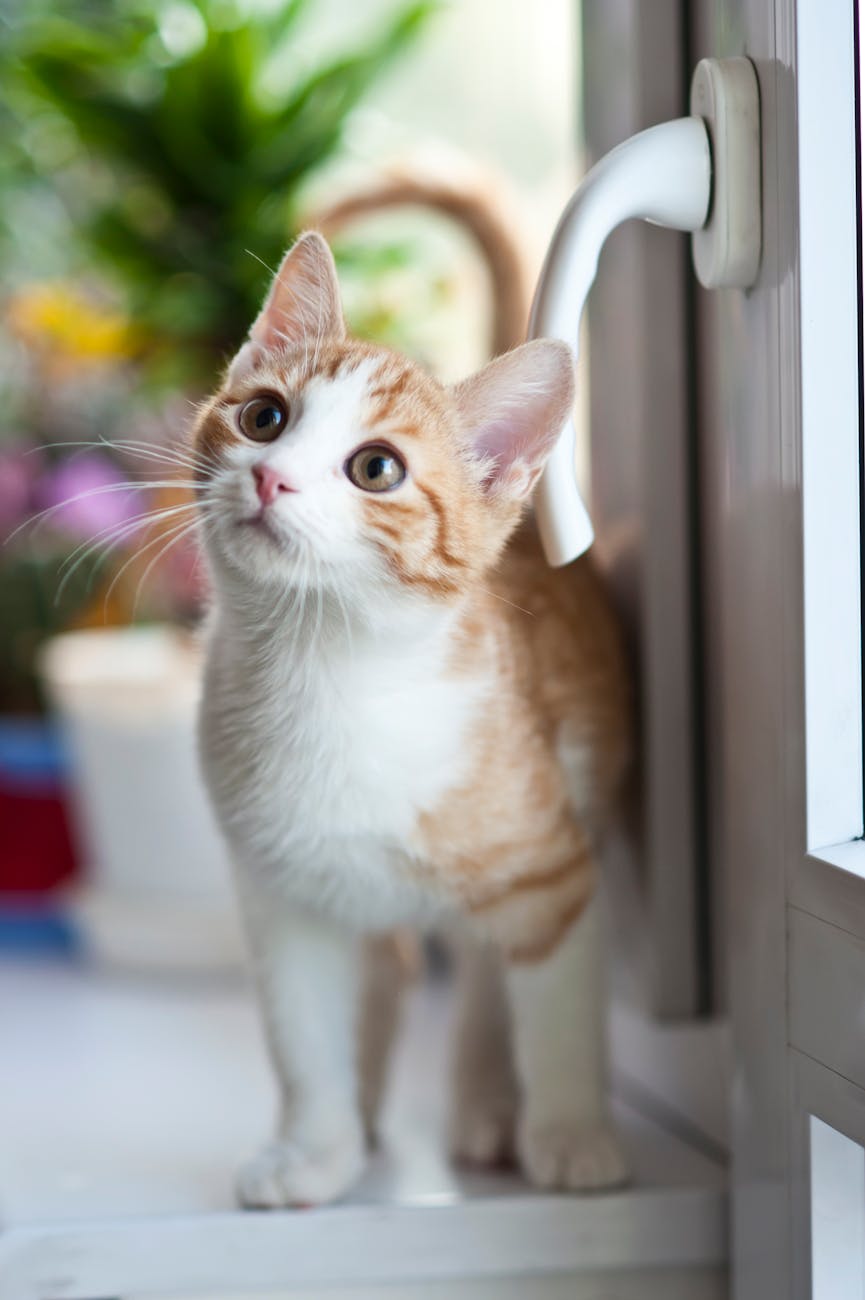
Photo by Wojciech Kumpicki on Pexels.com. Why a cat picture? He looks like he wants to know what you think, doesn’t he?


Jody Day and Katy Seppi are offering a free masterclass, “Navigating Mother’s Day as a Childless Woman” on Saturday, May 10 at 11 a.m. PDT. If you register here, you can attend live on Zoom or watch the video later.


The electronic edition of my book No Way Out of This: Loving a Partner with Alzheimer’s is on sale for just 99 cents! The sale will last through May 11, then go back to the usual $9.99 (I don’t set these prices). If you have ever thought about reading NWOOT, as I call it, now is the time. It’s practically free.
Processing…
Success! You're on the list.

Accepting a Childless Life Should Not Be a Crime

It’s illegal now in Russia to advocate a childfree life. Anyone who spreads “propaganda against childbearing” can be fined. Any content in films, advertising, media, and other online platforms that shines a favorable light on life without children is prohibited.

Russian President Vladimir Putin signed these provisions into law in November.

Russia is one of many countries where the birthrate has dropped, causing fears that soon there will lots of old people with no young people to care for them or to keep the country going.

Other nations, including the United States, are experiencing the same problem but haven’t done anything as drastic as Russia’s new law. They lay the blame on the childless by choice, but let’s be real. Far more nonparents are childless by circumstance than by choice. We don’t have kids due to infertility, physical or emotional health problems, lack of a willing partner, or lack of the financial means to support a child. We would like to have children but, for whatever reason, we can’t.

Is it wrong that after grieving our loss, we seek to put a positive spin on the situation? Even some of the posts I have written here suggesting ways to enjoy life without children might be illegal under Russia’s new law. Would it be a crime to name the many highly successful people who never had kids?

Thank God we don’t live in Russia.

And yet, we can detect the same attitude in our own countries, can’t we?

Remember U.S. Vice-President-elect J.D. Vance and his comments about how “childless cat ladies” don’t have a stake in the country’s future?

Entrepreneur/Trump advisor Elon Musk recently wrote on Twitter in regard to dropping birth rates: “Instead of teaching fear of pregnancy, we should teach fear of childlessness.” He suggested the low fertility rates stem from a cultural hostility toward pregnancy and child-rearing. “We need to stop scaring women that having a kid destroys your life.”

Well, let’s put some context on that last bit. When I was young, yes, our parents told us the worst thing that could happen, short of dying, was to get pregnant outside of marriage. It was the sixties, when unwed mothers were still being hidden away and forced to give up their babies for adoption. And yes, having a baby when you’re young, with no education and no husband, can throw a monkey wrench into your plans, but that’s not what Musk is talking about. He’s buying into the common myth that all of us without children are simply selfish.

This attitude isn’t new. Churches, families, friends, co-workers, and clueless strangers have been after us forever with questions about why we don’t have kids and when we’re going to get with the program. They imply that we’re immature and thinking only of ourselves, defying God’s will and depriving our parents of grandchildren. And now, we’re also unbalancing the population. Most of us feel bad enough without all this guilt and misunderstanding.

Birthrates are falling around the world, and many countries, including the U.S., are doing what they can to encourage more babies by offering tax credits, increased parental leave, and better daycare options. That’s all good, but it’s important to acknowledge that some people don’t have a choice and are grieving the loss of the children they might have had. If, like many of us here, we choose childlessness by partnering with people who are unable or unwilling to have babies with us, that should be no one’s business but our own.

Nor should it be a crime to come through the hard decisions and declare that life without children can be happy and fulfilling. Or that we make valuable contributions because we are not busy raising kids. Look at all the famous writers, artists, scientists, and government leaders who never had children.

I sense a growing belief that nonparents have been preaching to the younger generation that kids are a pain and they’re better off without them. That’s not true for most of us, but there’s nothing wrong with letting kids know they have choices, and that parenthood is not required for a good life.

Russia’s reaction is extreme. I don’t expect any other countries to pass similar laws, but the anti-childless attitude is spreading. All we can do is tell our truths and hope people listen.

I hope you are all off to a good start for the new year. Has your childless situation or your feelings about it changed with the coming of 2025? Please share in the comments.

You may also want to take a look at my Substack, “Can I Do It Alone?” which explores how those of us without partners or children can live our best lives.

If you feel inspired to write a guest post, please get in touch.

Processing…
Success! You're on the list.

Childless Travel Robert Frost’s ‘Road Less Traveled By’

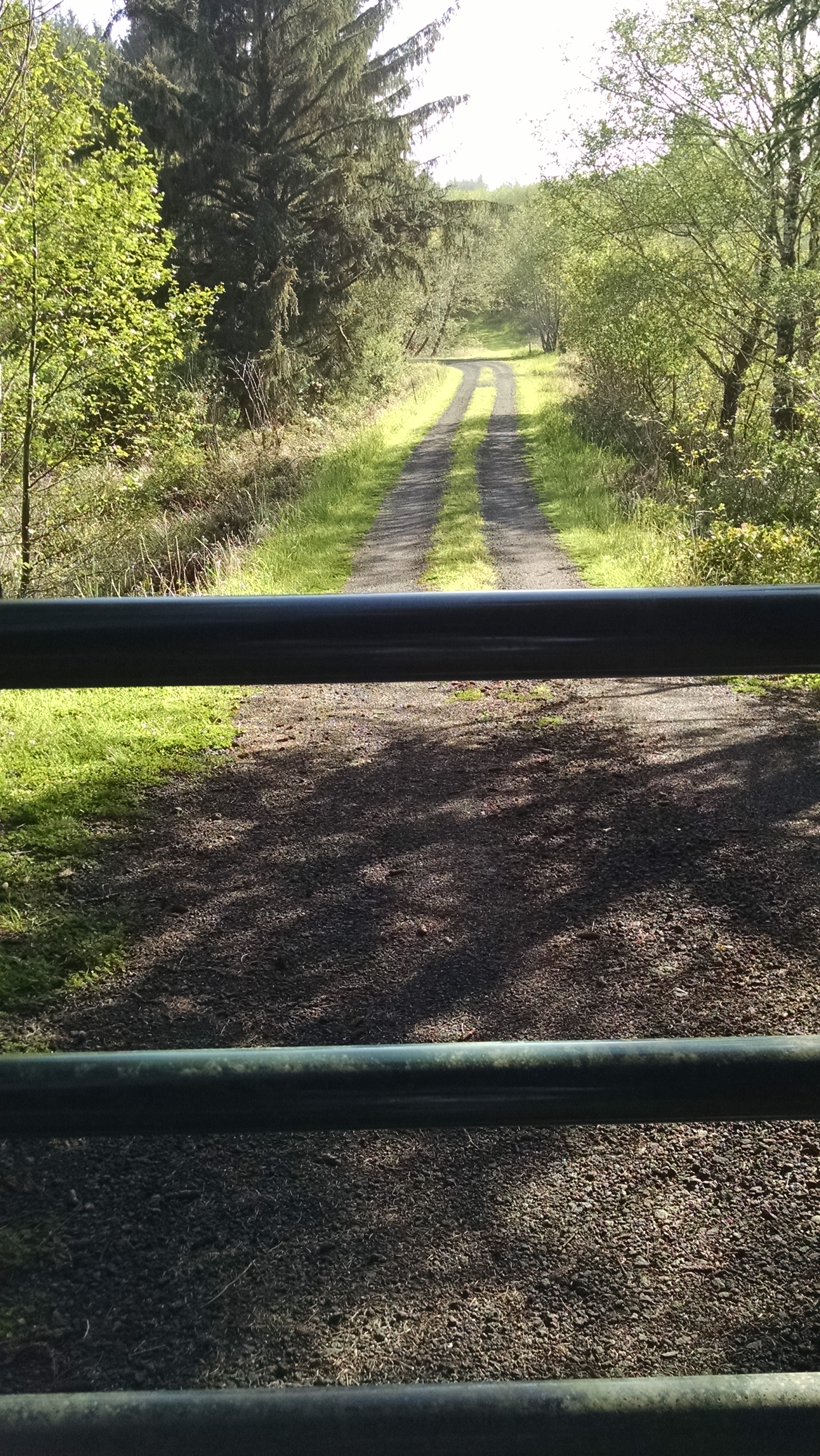
Metal gate in foreground blocks access to rutted road surrounded by trees going off into the distance.

Yesterday was Halloween. I imagine it was a busy day for people with children. Moms and dads would be dealing with costumes, candy, parties and trick-or-treating while their excited kids drove them crazy. Me, I put on my orange sweatshirt and pumpkin earrings and settled in for an ordinary day. I have no children, and we don’t get trick-or-treaters out here in the woods.

Halloween is just one example of how parents and non-parents live in different worlds. The differences are small at first, but they grow exponentially over the years.

We all start out as young people whose lives revolve around family, school, hobbies, friends, sports, jobs, and maybe church. But we grow up. We pair off. When your friends, siblings, and cousins have children, suddenly their lives revolve around their offspring because the little ones need constant attention. Hobbies, social life, and friends fall away.

Meanwhile, you’re still busy with school, work, hobbies, and relationships. Instead of caring for children, maybe you travel, build or remodel a house, or study for a master’s degree or PhD. You try to socialize with your old friends, but they’re busy with their kids. They have new friends, friends who are also parents.

You get older. At your high school reunions, the others talk about their children and grandchildren. They brag about their kids’ marriages and their jobs and commiserate about their problems. You talk about your work, hobbies, and travel. All you have in common is fading memories of your school days and worries about your aging parents.

In old age, your parents are gone. No younger generation is coming up behind you. Your family is shrinking. Your parent friends send Christmas cards filled with news about their growing tribe of children, grandchildren, and great-grandchildren. You send a photo of your dog or cat. If you meet these friends at a reunion or a funeral, you have nothing to talk about.

Yes, there comes a time when the kids are grown and you can come together with the parent people again, but their family will always be their top priority. At times, you will envy them and grieve for what you have missed. At other times, you will relish the freedom that allows you to be more than “Grandma” or “Nana.” You are still a full-fledged person with your own name and dreams that you are still chasing. Do they envy you? Sometimes I’m sure they do.

You live in different realities now. You can visit, but the bridge between worlds is a shaky one.

If you are still deciding whether or not to have children, consider how your life will take a different path. It’s not necessarily better or worse, but it is different, and the distance between the two ways your life could have gone will get wider and wider.  

Robert Frost’s poem “The Road Not Taken” ends with these lines:

Two roads diverged in a wood, and I--
I took the one less traveled by,
And that has made all the difference.

Have you seen the divide happening in your own life as friends and family become parents and you don’t? What do you think about all this? I welcome your comments.

Photo taken on Thiel Creek Road, South Beach, Oregon, copyright Sue Fagalde Lick 2015

Processing…
Success! You're on the list.

Without Kids, Do We Have a Stake in the Future?

Photo shows a white box with the word VOTE in big black letters and a small American flag image with a hand inserting a white card into the slot on top.

Elon Musk, the Tesla billionaire who bought Twitter, recently raised a ruckus when he agreed with a Tweeter who said people without children should not be allowed to vote. “Non-parents have little stake in the future,” he said.

Here’s the link to one of several articles about Musk’s statement. https://www.yahoo.com/entertainment/elon-musk-suggests-childless-people-195500862.html

My initial reaction: Of course we have a stake in the future.

My second reaction: What is it?

My third reaction: I made a list.

* We may not have given birth, but we love and care for stepchildren, nieces and nephews, godchildren, the children of our friends, our students, and our co-workers. Our lives are linked in one way or another with all the young people in the world. What we do and say and vote for affects their future.

* We share the same planet and suffer the effects of climate change, war, economic upheaval, discrimination, poverty, homelessness, and other problems. We can make a difference with our personal choices, our actions, and yes, our vote.

* We affect the economy with how we spend our money now and after we die. Because I have no children of my own, I can choose to fund a scholarship or grant or an outright gift to support organizations I believe in or enable a young person to do things he/she would not otherwise have been able to do.

* We affect the future of our world by our work and our service, by the things we make, the things we organize, and the things we do and say. The childless military veteran, pediatrician, mechanic, cook, artist, author, garbage collector, and firefighter all contribute to the future of everyone.

The voting bit only refers to the United States, but, wherever we live, we do have a stake in the future, as well as in the present, whether we have 10 children or none. That’s my opinion.

Your comments?

Photo by Sora Shimazaki on Pexels.com

I will be making a big announcement in my July newsletter, coming soon via Mailchimp. If you’re not on my mailing list, sign up below.

Processing…
Success! You're on the list.

Want to Be Seen as Radical? Don’t Have Children

Are you radical?

Sounds like something we used to say back in the 60s and 70s when something was really “cool” or crazy. Radical, man, groovy.

But radical is a real word, and one of its meanings is marked by a considerable departure from the usual or traditional. I think that applies to every one of us who does not have children. By not following the traditional pattern of marriage, motherhood, and grandmotherhood, we are both forced and freed to follow a nontraditional path, to be radical.

This was the subject of our spring solstice gathering of the Nomo Crones childless elderwomen on Zoom last week. These women are definitely radical. Straight, queer, single, married, childless by infertility, illness, partner problems, and sometimes by choice, they had a lot to say. Watch the video. We’re a lot of fun, and I don’t think we’re much like the traditional grandmotherly old ladies you may know.

MC Jody Day has dubbed us “Radical Old Women” or ROW. I like it.

I know I haven’t followed the standard patterns in my own life. A lifelong writer/musician, I never had to give up my vocations for motherhood or wait until my children grew up to begin. I have been writing steadily since elementary school. Now that my husband is gone and I don’t need a traditional job, I often do my writing and music to the exclusion of everything else. I work in my pajamas, and my house is a mess. I make elaborate meals when I’m in the mood or grab whatever’s hanging out in the fridge when I’m not because no one except my dog is depending on me to feed them. I wake up and go to sleep when I feel like it. Of course, the flip side is spending holidays alone and having no family to help when I’m sick or injured, but let’s not think about that today.

I don’t feel my age. I notice the physical changes, but without the milestones mothers experience, I don’t feel old, and I’m far from ready to accept the lives many of my friends in their 70s are living. A neighbor, also widowed and childless, told me recently that she was selling her house and moving to a senior residence. I looked it up. Mt. Angel Towers. It looks like a prison to me.

Another neighbor, age 75, rowdy and refusing to give up anything, agrees with me. No way in hell. If she gets feeble, she’ll hire people to help, but meanwhile, she wants to travel, work in her garden, shop at garage sales every weekend, and make her pot cookies.

A childless musician friend who just turned 80 has declared she’s going to be an “outrageous octogenarian.” She is losing her vision and has some major health challenges, but she refuses to leave her three-story dome home overlooking the beach; if she can’t climb the stairs, she’ll install an elevator. And she will keep playing the piano with a little help from her neighbors and friends.

I don’t live like anyone in my family, at least anyone who is still alive. What am I doing out here alone in the woods? Radical.

My step-grandmother, Grandma Rachel, never had children. Instead, she inherited our gang. She was a terrible housekeeper, dreadful cook. She was big, loud, and opinionated and a menace behind the wheel of a car. She loved to read, write, and paint pictures. The family disapproved, but I adored her. She was my role model, filling my life with books and encouraging me to follow my dreams. She died 32 years ago at age 86, but I treasure her letters and poems. I want to be her kind of radical.

I want to be the old lady with the crazy hats who sits around in jeans and tennis shoes playing guitar and writing poetry, who does yoga and travels cross-country by herself, who is not too old to crawl on the floor with the kids, who will never be old enough for an old folk’s home.

Another definition of radical: tending or disposed to make extreme changes in existing views, habits, conditions or institutions. In other words, we refuse to accept the status quo. One of five women will never have children. We need the parent-people to see us, to accept us, to understand that our radical lives have the same value as theirs. Who knows? Maybe someday parenting will be the radical choice.

What do you think? Want to be radical with me? I welcome your comments.

Processing…
Success! You're on the list.

What is a Family? Do You Have to Share DNA?

How was your Thanksgiving? Was it as it as bad as you expected? You know if you go in expecting to be miserable, you will be.

I had a good time. Church in the morning, then dinner at a friend’s house. Folks around the table included two male neighbors who have no family nearby, my friend’s husband and his mother, and their three teenage foster children. Plus Evergreen the cat and Buddy the dog. It was great. I think we all felt loved and welcome, even though we didn’t bring a traditional “family.” The food, to which everyone contributed, was fabulous, too.

The friends who hosted the gathering have their own children and grandchildren, but they live far away, and they have always collected the strays like me for the holidays. I already have an invitation for Christmas, although I am hoping to round up some strays of my own for a “no one alone” celebration.

That might be delayed because I got sick the day after Thanksgiving. I’m coughing and sniffling as I type this. Yes, it’s Covid, despite all the vaccinations. I have to isolate myself, so I might not have time to get anything organized before this Christmas, which is, yikes, less than a month away.

Meanwhile, what is a family? That was the subject of a recent article at “Stephanomics” by Bloomberg columnist Stephanie Flanders. The definition of family is changing, at least in the United States, she says. The most recent figures show 44 percent of Americans age 18-49 don’t have children now and probably never will have. The working age population has fallen for the third year in a row.

What’s going on? Money is a big factor. The Brookings Institution says it now costs more than $300,000 to raise a child in the U.S. and that doesn’t include college. The cost of a home these days is prohibitive. Also, people spend more years getting their education and building their careers, leaving fewer years to have children. Some see their childless peers enjoying their freedom and decide to follow suit. There are all kinds of reasons why Americans are having fewer children, and it raises concerns about who will do the jobs and keep Social Security going in the future.

The article notes that while the U.S. is leaning hard in the no-kids direction, other countries are trending the other way. In the Philippines, for example, they are having a baby boom.

But let’s go back to that question of what is a family. Family Story, a think tank in Washington D.C. which is studying the evolution of families, says the definition of family is moving toward chosen families. Biological families often live far apart, and travel is difficult. They may be split up and scattered by divorce. That’s certainly the case for me. We reach out to friends from work, church, or the community for everything from Thanksgiving dinner to emergency rides to the hospital (thank you, Teresa) to a jug of orange juice when you can’t get to the store (thank you, Martha). Often, we feel more at home with the people we see every day or every week than with our families whom we see only a couple times a year. And that’s okay. We can call or Zoom with our bio families and eat pumpkin pie with our chosen families and have the best of both worlds. Right?

Is anyone feeling guilty? Okay, I am a little. I feel like I should reach out more to my family, but they are far away in ways beyond just geography. Know what I mean?

I spent the last couple months watching every episode of “Friends” on HBO Max. Don’t judge. That show comforts me. Perhaps it is not realistic, but the six friends get together for every holiday and
major event. They all have families but choose to be with their friends instead. Do you have people like that? I don’t, but I’m working on it.

Consider the vision of family described on the Family Story website:

We envision a world in which any individuals bonded by love, support, or care for each other, who by choice or circumstance are interdependent, can be recognized as family; a world which elevates the strengths and ingenuity of all types of families rather than focusing on their perceived deficits; a world where we are served by inclusive policies and in which we are able to form and re-form families–free from judgment and discrimination.”

What is a family? When I was married to my first husband, I argued that my husband and I and our dog and cat were a family. My in-laws didn’t buy it. For them, a family had to have children, but for me, it was true. Are Annie and I a family? Not a traditional one, but yes, we are, even if she can’t drive to the store for OJ. Did the group gathered around my friend Sandy’s table on Thanksgiving constitute a family? It sure felt like it.

I feel as if I have several families, including the one I was born into, my church family, my music family, my writer family, my neighborhood family, and yes, my childless family. I am grateful for every one of them. When I get to feeling alone, I need someone to remind me to just pick up the phone.

Is it okay to spend the holidays with a chosen family rather than your biological one? If a large percentage of the population never marry or have children, thus never forming traditional families, what does the future look like?

What are your thoughts about all this? How was our Thanksgiving? What will you do different for Christmas? I welcome your comments.

Photo by cottonbro studios on Pexels.com


World Childless Week, Sept. 12-18, is Your Chance to Feel Less Alone

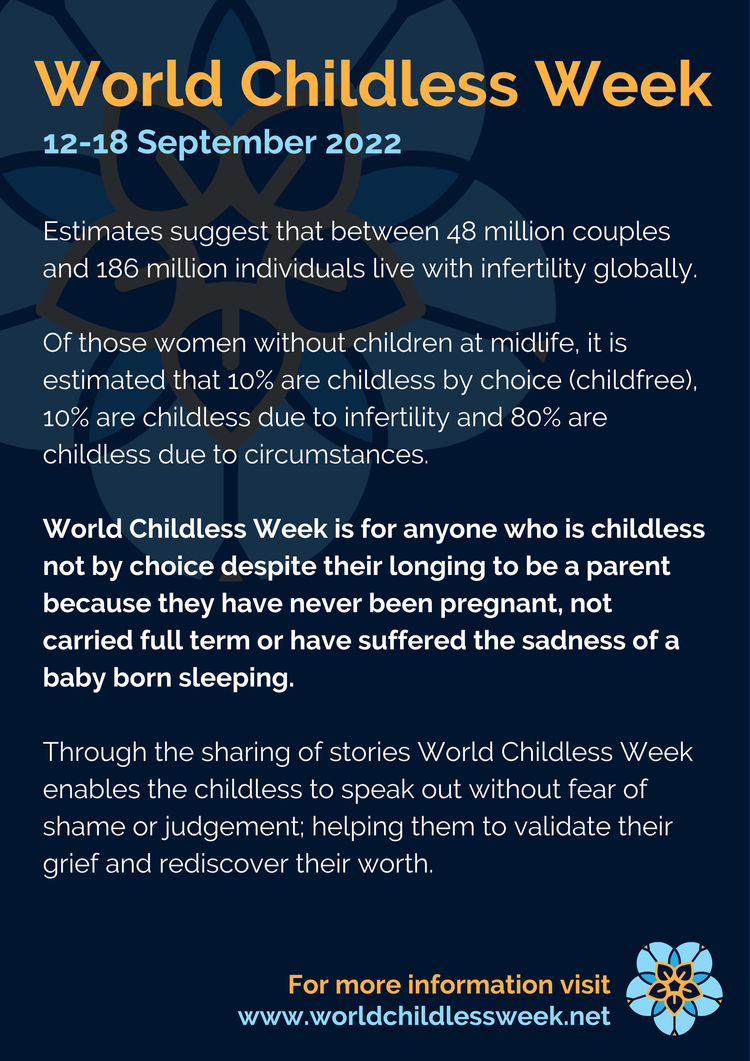
poster for World Childless Week, white type of blue background

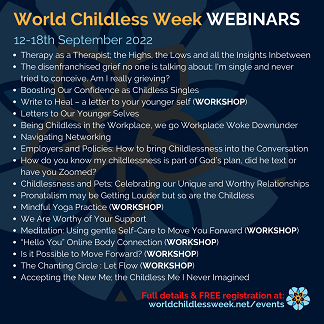
Next week is World Childless Week. Founder Stephanie Joy Phillips offers seven days of webinars, workshops, and access to resources for those of us who are childless not by choice. Some of the sessions focus on those who have struggled with infertility. If that is not your issue, you might want to skip those, but there is still a lot to be gleaned from these free online sessions. See the poster below for a list and register for the sessions that interest you. They will be recorded, so if you can’t make it at the time they’re aired live, sign up anyway. Many of the speakers are in the UK and their time is many hours different for people like me on the U.S. west coast.  

Each day has a theme. On Wednesday, Sept. 14, the “Nomo Crones” group, which includes me, will read letters to our younger selves. What would you say at 40, 60, or 80 to 20-year-old you? I will share mine in a Zoom session with the other crones at noon Pacific time and publish it here in the blog next week. I would love for you to try that exercise yourselves. It doesn’t have to be long, just a page or two. If you are willing, I can share them with the readers here at Childless by Marriage.

Here are Stephanie’s instructions:

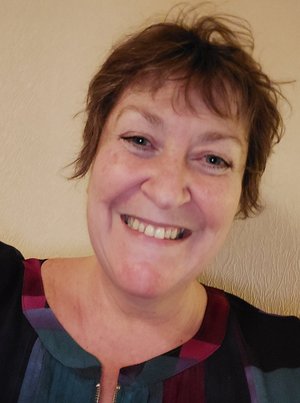
Picture of Stephanie Joy Phillips, multi-colored dress, short red hair, big smile
Stephanie Joy Phillips

“Do you wish you could send your younger self the strength, confidence and love to face the future you’ve already lived? Let them know they are worthy and perfect just as they are, no matter what decisions they make and what life throws at them? Write that letter and share with them everything you can to help them realize how important they are, how much they matter and what positives they bring to the world and those around them.”

I would add: Knowing what you know now, what is your advice for your younger self?

White on blue, webinar schedule for World Childless Week

An alternative: If you feel like you’re too young to write to your younger self, try writing to your older self. What would you say to 60-year-old you?

I usually write more in this space, but you have your assignments, should you choose to accept them: Sign up for at least one event at World Childless Week and write that letter to your younger self.

***

Brief side note: Did you watch the Bachelorette episode where Gabby booted a guy she really liked because she wasn’t ready to become a stepmother? I welcome comments on that, too. It’s a dumb show, but I’m hooked on it.

Processing…
Success! You're on the list.

With Childlessness, the Related Losses Multiply

When you don’t have children, what else do you lose?

A lot, according to Tanya Hubbard, one of the speakers at last weekend’s online Childless Collective Summit. Hubbard, a counselor from Vancouver, Canada, specializes in working with people who are childless not by choice, a group that includes most of us here at Childless by Marriage.

She spoke about secondary losses, the often unacknowledged losses that come along with a primary loss. If someone you love dies, for example, you grieve the loss of that person, but there are other losses that come with it. After my father died, his house was sold. The new owners tore it down, ripped out everything in the yard, and built a new, much larger, house. One might say it was just a house, but it broke my heart. For 67 years, it was home to me.

For people who have dreamed of having children and now realize they never will, there are many secondary losses. Your identity in the world and your role in the family change. You lose friendships, the pleasure of giving your parents grandchildren, your sense of creating the next branch on the family tree, someone to inherit your memories and prized possessions, and someone to care for you in old age. At church, at work, and wherever you go, you will be different from most people. If you struggled with infertility, there are physical losses, such as hysterectomies, scars and trauma from IVF failures and miscarriages, financial losses, and a feeling that you can’t trust your body to do what it’s supposed to do.

However you end up childless, your dream of what your life was going to be goes out the window. Sure, you can dream a new dream. It’s possible to have a terrific life without children, but there are losses. As with everything in life, when you come to a fork in the road, you have to choose one way or the other. You can’t have both.

Hubbard suggested we draw a diagram shaped like a daisy. Write “childlessness” in the middle and then fill in the petals with other things you lose because you don’t have children. Some of us are going to need more petals. When you finish with that, I suggest you draw a second daisy, write “me” in the center and fill in the petals with everything else you are besides childless. I hope you need more petals for that, too.

We need to acknowledge and give ourselves permission to grieve our losses. Other people, particularly parents, may not understand, but the losses are real and you have a right to be sad. It’s okay to talk about it and to even seek therapy if you can’t manage it on your own. Some therapists will question what you’re so upset about. Find another one.

If you are childless by marriage, I pray that your partner acknowledges what you are giving up by choosing him or her and then helps you create a new life plan that will work for both of you.

You can find Hubbard on Instagram at @tanyahubbardcounseling.

I welcome your comments.

Would He Divorce You If You Got Pregnant?

Newsweek: “Woman Accepts Divorce after Twelve Years over Unexpected Pregnancy”

Twelve years ago, this couple agreed they would not have children. Neither of them wanted kids. They were happy being just the two of them, and that’s the end of that discussion. Except that the 40-year-old wife somehow got pregnant in spite of his vasectomy.

Surgical error? Immaculate Conception? Was she cheating on him? We don’t know. She says, “It’s like a miracle.” She wants to keep the baby. The husband has declared that he will divorce her. When he said he didn’t want kids, he meant it. In general, she doesn’t like kids either, but she wants this baby, even if she has to raise it alone.

The article goes on to talk about the impact having children has on a marriage, how things change dramatically and how couples with children are more likely to divorce than couples without. I don’t know how much truth is in this piece, which is annoying to read with its overdose of ads and pop-ups, but what do you think?

Can having a baby ruin a marriage? Is that one of the reasons you’re not pushing to get pregnant? Is the guy in the article a jerk for rejecting his wife when she gets pregnant despite efforts to prevent it? Or is he sticking to what he has always said, that he absolutely does not want to be a father?

The article quotes smartmarriages.com, which says one factor more likely to lead to divorce is the situation where a woman wants a child more than her spouse. “Couples who do not agree on how much they do or don’t want to have children are twice as likely to end their marriage.”

So I ask, because disagreement about having children is the essence of being childless by marriage, if both parties are not 100 percent sure they are not going to have children, no matter what happens, is the possibility of divorce always hanging over their heads?

What do you think? Please share your thoughts in the comments.

***

Katy Seppi’s online Childless Collective Summit starts tomorrow morning at 8:30 PST, 11:30 EST, and runs July 14-17. It includes four days of talks, stories, workshops, and networking with others who are childless. Registration is free. Your anonymity is guaranteed. All sessions are recorded and available for free for 24 hours. By purchasing a Pace Yourself Pass, you can watch them at your convenience. Click here for more information or to register.

**********************************

Processing…
Success! You're on the list.

Innocent Question Creates Awkward Childless Moment

Photo by rovenimages.com on Pexels.com

“Did your family have a good Fourth of July?”

It was just a friendly question as I turned in my rental car and we worked out how much I had to pay after insurance (too much). It had been a difficult week. I had traveled to Ohio for the National Federation of State Poetry Societies convention, which was wonderful. But the trip home was exhausting, with delayed planes, incredible crowds, and no time for a decent meal. When I finally got into my own car in Portland, Oregon, I was looking forward to a relaxed three-hour drive back to the coast. But it was not to be.

While I was in Ohio, thieves stole the catalytic converter from the bottom of my Honda Element, which I had left in a “park and fly” lot at a Portland hotel. The converters, which filter the toxic chemicals from the car’s exhaust, are easy pickings for criminals, who sell them for the precious metals they contain. It’s such a common crime in Portland the police don’t have time to talk to the victims. Read about it here.

I used my premium AAA coverage to get towed to Corvallis, a smaller city where I at least knew my way around, but it took all day to work things out with University Honda, State Farm, and Hertz. I was jet-lagged and still 60 miles from home, with no husband or children I could call to rescue me, although my dog-sitter did offer to come get me. I declined because I would need a car for however long it took to get mine fixed. Parts are scarce these days. I hear horror stories of people waiting months for auto repairs.

I was lucky it only took a week to get my car fixed. Maybe it’s because I cried in the waiting room. Everyone was very nice to me. Meanwhile, I drove a red Ford Escape to watch fireworks with friends on July 3 in Waldport, 10 miles south of where I live. It was all grownups this year because their kids have grown up and moved away.

On the actual Fourth, the friend I had hoped to hang out with was sick, so I spent the day mostly alone. I played a lot of guitar, walked with Annie, visited a neighbor, and watched several old episodes of “Sex and the City.” I danced to the music of Lyle Lovett while making eggplant Parmesan from my Cooking for One cookbook for my dinner. I was so glad to be home.

Toward the end of the day, I got my usual holiday-alone blues. I could hear but not see the firework show in Newport. I pictured everyone else gathered for barbecues, fireworks, and fun on the beach with their families while here I was all by my lonesome self. Woe is me. I wrote it all out in a terrible poem, watched some more “Sex and the City,” and went to bed.

“Did your family have a good Fourth of July?”

I could respond in so many ways. “What family?” “It’s just me and my dog.” “I don’t know. They’re all far away. Why don’t you call them and ask?”

But I didn’t. This pretty young woman and I were getting along so well. Why spoil it with reality? I just said, “Yeah.”

“That’s good,” she said, and we moved on.

How was your Fourth of July? Was your childlessness a factor? Please share in the comments. Non-U.S. readers, substitute any holiday. The assumptions are the same.

Processing…
Success! You're on the list.