The Big Change Nobody Wants to Talk About

Menopause. The big bugaboo people don’t talk about except to make hot flash jokes. 

The deadline that looms for those desperately trying to get pregnant before they run out of time.

The end of worry for those who fear getting pregnant when they don’t want a children (or another child).

The Childless Elderwomen met last Saturday, and we talked about it in depth. We could have gone on for hours. We may not usually discuss it with anyone but our doctors, but judging by the more than 100 questions that our host Jody Day received beforehand, people are interested and anxious about it. 

Our panel ranged in age from 49 to 79, from Catherine-Emanuelle Delisle, who went into early menopause at age 14, to Maria Hill and I, for whom it has been decades since our period. Others are still dealing with the effects.

For all women, the arrival of the monthly period, the sloughing off of the lining of the uterus that was prepared for a possible baby, signals that they are not pregnant. For some, that’s a relief because a baby was the last thing they wanted, at least then in their current life situation. For those who wanted to be pregnant, it can be a mild disappointment or a crushing blow, depending on how long they have been trying and how difficult it has been. It’s a reminder that another month has passed, their attempts have failed, and at some point, their fertile years will be over. 

It can be hard, but it’s not the end of the world. In fact, as writer and life coach Maria Hill said, “Once you hit menopause, you’re really starting to come into your own.” Others put it more bluntly. We reach the point in life we were give far fewer “fucks” about things that don’t matter. 

Yes, the end of your monthly cycles means you will not be able to give birth, but it also ends the pressure to keep trying. It allows you to move on.

The preparation phase of menopause, called perimenopause, is a drag. Periods come and go willy-nilly, heavy one time, light the next, one after another, or with big gaps when you think maybe it’s over and then it’s not. You may suffer from hot flashes, weight gain, vaginal dryness, and mood swings, but when it’s over, ahhhhh. 

Imagine life with no more cramps, no more PMS, no more pads or tampons, and no more birth control. I’m here to tell you it’s nice. 

In our talk, we discussed sex, physical changes that come with aging, feeling invisible, and especially to men. We touched on hormones and other options for dealing with the discomforts of perimenopause and menopause. I won’t lie. Some people have a hard time.

But we also talked about feeling like we have a fresh start, almost as if we are back to being the girls we were before puberty. We have a better perspective on what matters. We can spread our maternal energy in many directions. In other words, life is not over. 

My own menopause occurred at the same time I was dealing with my mother’s death, my husband’s dementia, and my own bouts with Graves’ disease, a hyperthyroid disorder. I was also in grad school. It was hard to distinguish menopause from everything else.

My male doctors wanted me to take hormones. I’m afraid some OB-Gyns are only interested in patients who are having babies. Menopause? Give them a pill and send them out the door. I insisted on doing it naturally. There’s no shame in taking hormones or trying natural therapies for your symptoms, but if your doc refuses to listen to what you want to do, find another one.

Menopause happens at different times for different people. Catherine was a teenager. Stella Duffy menopaused early as a result of cancer treatment. For many, the signs of impending menopause may begin in their 40s and conclude around 50, but it varies. My mother claimed to still have hot flashes in her 70s. However it happens, you deal with it and go on. Life is not over. In many ways, you are entering a newer, freer phase of life.

Btw, your sex drive will not go away. With your periods over, you may feel lustier than ever. Just sayin’.

Jody asked us what we would say to our younger selves about menopause if we could. I said I would tell her that the lead-up is annoying, but menopause is good. You get yourself back again after being controlled by your ovaries all these years. You are not old and dried up. You are still a strong and powerful woman.

I say the same thing to you. There may be some turbulence along the way, but you’ll arrive at a better, calmer place. You go through the bloody fertility tunnel and come out the other side. Without a baby, yes, but you do come out, and it’s all right here in menopause land. 

For men reading this, don’t feel left out. Understand that menopause is like going through puberty in reverse. If someone you love is going through it, know it won’t last forever. She’s still the same person she always was. Offer hugs, bubble baths and chocolate, along with air conditioning or a big fan. 

Enjoy the video posted above. About halfway in, I share something I have never told anybody. I’m embarrassed, but someone had to say it. Check it out.

Your turn

  • Does it offend you that I’m writing about this?
  • Have you gone through menopause? How was it?
  • How do you feel about the end of your fertile years?
  • What does having no more periods mean to you, whether you’re looking back or looking ahead to the future?
  • What would you say about it to your younger self?

Four posts to go before I stop posting regularly and move on to other things. What would you like to read here?


If you want to know what I’m up to these days, visit my “Can I Do It Alone?” Substack at https://suelick.substack.com or friend me on Facebook at https://www.facebook.com/suelick

Will You Ever Find Peace with Your Childlessness? 

Facing a future with no children used to drive me crazy. Back when I was fertile and married to a man who was not, I cried a lot, mostly where he couldn’t see me. I resented my friends whose lives revolved around their kids. I did not want to hear their happy stories or look at their pictures. Baby showers? What do I know about babies? Count me out.

As far as I knew, there was nothing wrong with my baby-making parts, but they were being wasted, evidenced by painful periods every month, reminders I was running out of time. 

Now I’m 72, childless and widowed. Although being alone can be difficult, I have to tell you that I don’t think about childlessness all the time anymore. If you are in your 20s, 30s, or early 40s, feeling bad because you wanted children and might never have even one baby, know that it does get easier. Like any loss, it doesn’t go away, but you do learn to live with it. 

Yes, you will feel breakthrough grief and anger. You’ll see a family at play or hold someone else’s baby and think I could have had that, but as you get older, it will become a less important feature in your life. You will wonder who will care for you in old age, but know that even if you had children, they might not be available to help.

When you’re surrounded by people getting married and having babies, you feel excluded, jealous, and angry at whatever keeps you from having the children you always wanted. Or you resent the people who keep pushing you to have the children you never wanted. You’ll regret it, they warn. What if they’re right? It can be a brutal time. 

The night before my 40th birthday, I had a meltdown that I describe in my Childless by Marriage book. At a Catholic women’s retreat, everyone was talking about their kids. Our guided meditation put me face to face with what I had lost, and it felt unbearable. As the women running the retreat held me, I sobbed in front of everyone. I felt broken. It didn’t help that I really wanted a drink, and there was no alcohol around.

But as I approached menopause, so many other things took my attention. My writing career was taking off. I was performing music almost every weekend. I earned my long-delayed master’s degree. We moved from San Jose, California to Oregon and experienced a very different life in a small coastal town.

My mother died, my husband was diagnosed with Alzheimer’s disease, and my father needed lots of help before he passed away. You hear about the “sandwich generation,” about people caught between caring for their children and caring for their parents. Without children, we can be open-faced sandwiches, helping our older relatives without neglecting our children. 

By my 50s, people stopped bugging me about having kids, and my friends were free to do non-kid activities again. Yes, the grandchildren came, but that was an off and on thing. We could still be friends.

Do I wish I was a grandmother? Sometimes. but childlessness is not at the front of my mind anymore. I took a different path, and it’s too late to turn back.

With every choice, you lose the chance to pursue the other option. By moving to Oregon, we lost the chance to grow old in San Jose, closer to family and so many resources that don’t exist here. If I had married someone else or not married at all, my story would be different. You choose one road and let the other one go.

I can torture myself by imagining what it would be like to have children, how they would look, what we would do together, how I would hold my grandbabies in my arms. But my life didn’t go that way, and I suspect that’s how it was meant to be. 

Not having children has given me the gift of great gobs of time that mothers don’t always have. Time and freedom. I don’t have to find a babysitter or take a kid with me if I decide I want to go to lunch, take a walk on the beach, or spend the night elsewhere. I just go. 

Would I trade my freedom for a walk on the beach with my son or daughter, maybe with their children splashing in the surf or building sandcastles? In a heartbeat. But that’s not on the menu for me. And I’m 80 percent okay with it.  

Maybe you’re at that age when becoming a parent would still be possible under other current circumstances and you’re driving yourself crazy trying to decide what to do: Leave your partner in the hope of finding someone who will give you kids? Try IVF? Hire a surrogate? Adopt? You may fight with your partner over it and cry a lot.

I know how bad it hurts. I’m saying that later it will be easier. Childlessness will not be the center of your life, and that makes room for other things, wonderful things. 

That’s not nothing.

How about you? Are you going crazy over being childless? Do you regret the choices that led you to be without children? Did you have a choice? Do you think you will ever be okay with it? Or are you fine with it now? Have you found peace with your situation? How?

I’m great-grandmother old. Tell me how it is for you at whatever age you are.

I welcome your comments.

***************************

If you enjoy this blog, you may want to visit my Substack, Can I Do It Alone?

Processing…
Success! You're on the list.

Younger Self Asks: What if I Never Use My Womb?

The picture shows an open notebook and a woman's hand holding a pen poised over the page. The blurred background appears to be in a wilderness area with lots of fall-color trees.

“I am a woman without children. I’m a fertile woman who can’t have children. It’s more painful than physical inability.”

I’ve been cleaning cupboards. Lots of stuff going into the recycle bin. But these words scrawled on the inside back cover of a yellow notebook from a college European Literature class in 1989 caught my attention. At that time, I was four years into my marriage with Fred. I was 37 years old and making my second attempt at grad school while working as a full-time newspaper reporter. I struggled to take care of home, husband, and my youngest stepson, who had recently moved in with us. It wouldn’t be long before I dropped out of school again because it was too much.

But that note written in tiny cursive where no one else would see it reminds me of how terrible I felt in those days about not having children. All around me, friends and relatives, including my stepdaughter, were having babies. My period every month reminded me that I was not and would never be a mother if I didn’t change my situation ASAP. I was angry and sad and certain that life was NOT FAIR.

Many years later, I have become part of a childless community where most of the people speaking out about it have had fertility problems. They suffered through surgeries, IVF treatments, and miscarriages. They went through hell trying to conceive and bear a child. How can I grieve or complain when I didn’t go through all that? As far as I know, I could have had a baby with no problem—if I had a different husband.

The first husband was never ready, and the second was done with children. He had had a vasectomy and was not going to reverse it. Nor was he willing to adopt. So, no babies for me.

It hurts that I never had a chance to try. Well, there were a couple times without birth control over the years with men who still had sperm, but nothing happened. It’s probably for the best. Those men were scum. But when I imagine lying in bed with a man who says, “Let’s make a baby,” I want to cry.

Yes, I watch too many movies.

People are all too eager to tell me it’s my own damned fault. I should have demanded babies, even if I had to find a different partner. Do I have any right to grieve? If you’re in the same situation, do you?

My former neighbor, a pretty young woman named Brittney, turned up with a newborn the other day. Her third boy. This girl clearly has no problem having babies. Me, I just have an ancient dog who can’t hear and can barely walk.

Not fair? Or just the way life is?

1989 was a long time ago. I’m not 37 anymore. But I feel for that curly-haired woman looking away from her notes about Aristotle’s poetics in literature class, thinking about the babies she was never going to have and writing that tiny heartfelt note.

What do you think? If we accept a life with a partner who can’t or won’t give us children, are we entitled to feel bad about it, as bad as someone who has struggled with infertility? If you left a note to your future self about your childless situation, what would it say?

Photo by ROMAN ODINTSOV on Pexels.com

Processing…
Success! You're on the list.

Childless by marriage vs. childless by infertility

Being childless through infertility and being childless by marriage, when the issue is not lack of eggs or sperm, are two very different things. With infertility, couples try hard to conceive and deliver a child. They undergo all kinds of invasive treatments, spend huge amounts of money, and ride a rollercoaster of hope and disappointment, only to end up still childless. Some suffer multiple miscarriages and a grief those of us who have never been pregnant can only imagine.

They have no choice in this outcome. They did everything they could. Adopt? It’s not so easy, especially if you have already used up all the time, money, and energy you can spare.

When a couple is infertile, whether the problem is from his sperm or a problem with her reproductive system, their only choices are to accept their fate, try whatever they can, and ultimately to stop trying. They do it together because they both long to be parents.

It is possible to be childless by marriage because your spouse is infertile. You may not know that in advance. When you find out, you have a choice: stay and face the same choices as other infertile couples or split up and look for someone who can give you children.

Is that your story? I know some of you reading this are in that situation.

What if you knew going into the marriage that children would be impossible with this person? So many men, especially those who were married before, have had vasectomies. Is it possible to get them reversed? Yes, but the surgery doesn’t always work. The longer it has been, the less likely the man will be able to provide healthy sperm.

What if there’s no physical reason you can’t have children together? What if it’s just that your mate does not want kids? That’s quite different. I wonder about relationships where couples disagree on something so huge. What else will they clash on? Money? Career? Where to live? But you love each other. So maybe you can accept a marriage without children. Or maybe you can’t. You do have a choice. You can take your healthy sperm or your fertile ovaries elsewhere.

What if you never find anyone else? Ah, that’s the risk. It’s a gamble. But unlike those struggling with infertility, at least you get to roll the dice.

Last week’s webinars at World Childless Week got me thinking. A majority of the speakers were childless due to fertility problems. They are grieving and trying to build new lives after years of fertility treatments and disappointment. As I sat here with my healthy never-used uterus, I could identify with much of what they said because we are all lacking children. We all deal with insensitive comments, feel left out at family gatherings, and grieve the children we might have had, but suddenly it came at me with big flashing lights: I had a choice. They did not.

What do you think about this? How is it different being childless due to infertility and being childless because you chose a person who doesn’t want kids? I’d love to hear your thoughts.

If you missed any or all of the sessions at World Childless Week, you can still watch the recordings at worldchildlessweek.net.

Thank you all for being here.

Processing…
Success! You're on the list.

My Aunt and Uncle Found a Way Past Childlessness

My cousin’s daughter, now in first grade, has started messaging me on Facebook. She sends me goofy photos, videos, and emojis, and tells me about her day. I send goofy photos, videos, and emojis and tell her about my day. I keep it short and simple because she’s still very young, but if feels so good to have this relationship. Her teacher suggested the students message an older relative. I would love to hug that woman hard for making this little girl a factor in my life.

This little girl and her siblings would not exist without what seems like a miracle. Her grandfather, my uncle, was paralyzed from the neck down in a motorcycle accident. He was only 25, a police officer responding to a call. Horrible thing. A brilliant man, he spent the next 40 years in a wheelchair or in bed. When the accident happened, his daughter was two and his son not quite one year old. With their father in the hospital for many months, they stayed at our house most of the time. Ultimately my aunt and uncle split up. Still in her early 20s, my aunt couldn’t face a lifetime of caregiving. None of us could blame her for moving on.

But love struck again. My uncle met a nurse at Stanford Hospital. They fell in love and eventually got married. Her parents were so angry they didn’t come to the wedding. He was divorced, stuck in a wheelchair, and he would never give her a normal life—or children. But he did. I don’t know the details. It was the 1970s, fertility assistance options were not what they are now, and people did not talk about it, but with the help of medical science, they produced a son and a daughter who are now in their 40s and parents themselves.

Men with spinal cord injuries definitely face challenges fathering children. They may not be able to have intercourse in the usual way, may not be able to ejaculate, may not produce viable sperm, but there’s a chance. Many of the methods used for other couples at fertility clinics can be used for paralyzed fathers. This article offers some of the specifics: “The Best Male Fertility Options after an SCI (Spinal Cord Injury).

I’m not using names and feel uncomfortable sharing even this much of a very private story, but I love all four of my uncle’s kids, and I’m so glad they exist.

Disability is one of the many ways a person can be childless by marriage. Certainly my uncle’s second wife, now my beloved aunt, could not count on having children with him. It might have just been the two of them, with occasional visits from her stepchildren, and then just her alone when he passed away at age 65. She made a choice and ended up with a big wonderful family that includes all four grown children and a whole lot of grandchildren.

Would you/have you partnered with someone who is unlikely to be able to have children? Are you willing to do whatever it takes to have children and/or accept that it’s not going to happen? It’s one thing when a mate is unwilling, but when they physically can’t make babies, what then? I welcome your comments.

Processing…
Success! You're on the list.

How Does Childlessness Affect Your Sex Life?

Got your attention? This year, World Childless Week devoted a whole day to talking about sex. What’s sex got to do with it? Everything.

As Michael Hughes of the of the Full Stop podcast noted in a fascinating session, it all comes down to the sperm and the egg and how they need to get together to make  baby. In other words, sex. We don’t talk about it much, he said, but it’s a big thing.

Hughes and his podcast partners Berenice Smith and Sarah Lawrence are all childless through infertility. Each talked about how their efforts to conceive took the joy and spontaneity out of sex. It became less about intimacy and pleasure and more about making a baby. Every time they did it, the question hovered over them. Will it work? Will it lead to heartbreak with another miscarriage or failure to conceive? And how can you feel good about your body when it is not doing what it’s supposed to do or when you’ve gone through so many procedures you really don’t want anyone to touch you? Or when it physically hurts? After a while, they didn’t really want to do it.

The three said it took years after they gave up on trying to conceive to feel good about their bodies and enjoy sex again. Even now, it’s not quite the same as the old magic they had at the beginning.

In another session led by Jody Day, women in all aspects of the childless journey, including those who have never found a partner to make babies with, talked about their struggles with their bodies and sexuality and shared suggestions for learning to feel sexy again. It’s a wonderful session. You can watch the recording here. Also read Jody’s essay “Where Did She Go? Reclaiming My Erotic Self After Childlessness.”

I know that some of you are dealing with fertility issues. How is sex for you? Is every encounter about trying to make a baby? Or is it always a reminder that certain parts aren’t working?

For me, I can’t say that it affected my sex life. With my first husband, we were using birth control, but I always had that hope that when the time was right, we would welcome children.

With Fred, who had had a vasectomy, conception was never possible, and it was not part of our sex life, except for the relief of not needing birth control. We were not trying to make a baby. Our goal was simply intimacy and orgasms, and it was good. Now, listening to these people who struggled with infertility, pain, and hating their own bodies, I am grateful for my health. My body has its issues, but I like it just fine, and I still feel sexy.

This is the Childless by Marriage blog. Infertility is only one of many reasons we don’t or may not have children. If you or your partner are unable or unwilling to conceive, how does that affect your sex life? Do you think about it during sex? Does it make you not want to have sex? Do you resent using birth control because it’s keeping you from the babies you want to have? Do you think about the sperm or eggs being wasted because they’re not being given a chance to connect? Or does being childless free you to enjoy sex without the baby worry?

Sex is a tricky subject. How does being childless or potentially childless affect your sex life?

Do comment. You can be as anonymous as you choose to be.

Processing…
Success! You're on the list.

Infertility vs. Childlessness by Circumstance

Did you attend World Childless Week last week? I missed most of it due to health problems and other complications, but as things calm down, I’m enjoying the recorded sessions and the written testimonies submitted by many childless men and women, including me. I encourage you to give it a look at https://www.worldchildlessweek.net.

You can also watch me and other childless elderwomen gab about what our legacy will be as people without children. I love those ladies. I suspect that if we met out in the world, we would not spend all our time talking about childlessness; we’re all too busy with other things.

Most of the speakers at World Childless week and other online childless gatherings are dealing with infertility. Some spent years trying to get pregnant or to carry a pregnancy to delivery. They suffered multiple miscarriages. They tried IVF, vasectomy reversals, surgeries for endometriosis and other maladies, and none of it worked. In some cases, the speaker’s partner was the one with fertility challenges, but they faced them as a couple, both wanting children.

Only a few talk about being childless by marriage, or lack of marriage in some cases, situations where there is no physical problem, where if both parties were willing, they would have babies. Although we have many challenges in common—the stupid questions people ask, feeling left out among our mothering friends, grieving the life we thought we would have—it is quite different in other ways.

Some of the programs at World Childless Week address learning to love bodies that have failed to procreate, ovaries that don’t offer eggs, uteruses that don’t welcome fetuses, cervixes that release the baby too soon. But for many of us who are childless by marriage, our bodies are just fine. There’s no physical reason we can’t have children.

It’s our situation that doesn’t allow us to have the family we had planned on. We hooked up with a partner who never wanted children, who had a vasectomy, who has already had children and does not want any more. With infertility, we can seek medical intervention, find a sperm or egg donor, adopt, or take in a foster child, but without a cooperative partner, we’re stuck. It’s very different from a couple facing infertility together, both desperately wanting a baby.

Have any of you ever answered the ever-present questions about when you’re going to have children or why you don’t have them with “We can’t.” I admit that I have. Technically, because of my husband’s vasectomy, that was true. But there were ways around if it he was willing. He was not. It was so much easier to say “We can’t” and change the subject than to try to explain the real reasons we did not have children together.

There are always going to be people who won’t understand, who will blame us for bad choices, even if it was really just unfortunate timing.

When someone says they tried to have children, but they couldn’t, it’s as if they get a free pass. People may pity them. But it is an acceptable reason. Of course, then they may have to explain why they didn’t “just adopt.” As if it were as easy as going to Costco and picking up a baby.

I can see how those who have suffered miscarriages, endometriosis, early hysterectomies and other medical problems may have difficulty loving their bodies, but how do we feel about ours? Do we crave the scars and stretch marks we never had or love our bodies for the perfect creations they are?

Let’s talk about it. How is being childless by marriage different from being childless by infertility? Face to face with someone who physically could not become a parent, how do you feel? Is your grief as valid as theirs? Do they respect your challenges? Do you feel like you’re both going through the same thing or do you feel somehow guilty?

Does this all make you really angry at your partner or your situation?

I look forward to your comments.

Processing…
Success! You're on the list.

Having babies twice as hard for gay couple

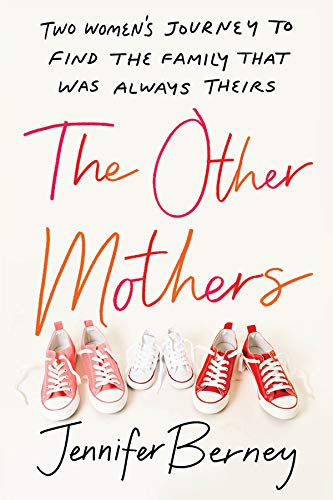
The Other Mothers by Jennifer Berney, Sourcebooks, 2021.

Many couples struggle to have children. Various circumstances, including infertility, work against them. But it’s twice as hard when the couple is two women.

In this marvelous memoir, Jenn and Kellie struggle first to decide whether they both want to try. Kellie is older and not as keen on having a baby, but ultimately she agrees. Then they need sperm to get Jenn pregnant. They try to go through the system, but medical professionals are mostly disapproving or clueless. They look for a husband, not accepting Kellie as Jenn’s life partner. The first doctor they see diagnoses their problem as “lack of sperm.” He also says he won’t do any diagnostic tests until they have been “trying” for a year, the same thing he tells heterosexual couples. Only after they have used up 10 units of donor sperm and Jenn has suffered multiple miscarriages do they find a doctor who is willing to take a closer look to see why all of the pregnancies have failed. By then, they’re out of money and losing hope. Ultimately the couple finds a solution with the help of their friends, but I won’t spoil the story with details. This book is an eye-opener, laced with research on the challenges facing same-sex couples who want to have children. It’s also a darned good story.

For readers here at Childless by Marriage, I have to include a trigger warning. Kellie and Jenn do end up having babies. If this bothers you, you might want to skip this one or stop reading when sperm and egg unite. But I think you might identify with much of the story, even if you’re straight.

I haven’t written much here about gay couples. Being straight, I can’t claim to know what it’s really like. I’m not even sure “gay” is the acceptable word anymore. Too much of my thinking is colored by the same-sex couples I see on TV, which is probably not realistic. The LGBTQ couples I know in real life are all childfree by choice.

It has only been a few decades since parenthood was even considered a possibility for the LGBTQ community. It was assumed that couples of the same gender would never have children because one of the ingredients was missing. But there are ways to make it happen. Adoption. A male friend and a turkey baster. Sperm donors, egg donors, surrogates, and fertility clinics.

But one critical ingredient remains: Both partners must want to have children and be willing to put in the time, money and misery to make it happen. It’s not going to happen by accident. If they’re not on the same page, they’ll be childless by marriage like the rest of us.

Help me fill in the blanks. I would love to hear about your real-life experiences with same-sex couples and parenthood.

*************

The Nomo Crones are meeting again for another Childless Elderwomen chat. On Sunday, June 20, noon PDT, I will join Jody Day, Donna Ward, Karen Kaufmann, Jackie Shannon Hollis, Maria Hill, Karen Malone Wright and Stella Duffy. We’ll talk about coming out of the COVID cocoon and the skills we’ve learned from our childless lives. No doubt, our talk will range all over the place. We’re a rowdy bunch. To register to listen live or receive the recording later, click here.

******

Sunday is also Father’s Day in the U.S. Or as frequent commenter Tony calls it, “Chopped Liver Day” because that’s how he feels. This week, Childless Not by Choice podcaster Civilla Morgan gathered several men to share their views and suggestions for surviving the day. Click here to listen.

Three Strikes, No Kids, and Still Standing

I yield the floor today to S.C., who offers this guest post:

As I prepare to celebrate my 65th birthday, I have been thinking back on my life’s journey and some of the truths that have lived with me since I closed the door on my dream of being a mother 25 years ago. I now lead a happy life with my husband of 36 years, but I hope for a brighter journey for the young childless women of today who are still coping with many of the same challenges my generation did. Although things are changing slowly, our pronatalist society still seems to be most comfortable sweeping childless women under the rug, one of the last of society’s unrecognized disenfranchised groups, written out of the dialogue because people don’t quite know what to do with us.

This post highlights some of the things that have shaped me and helped me grow into the resilient woman I am today.

I always wanted kids, and everybody knew it. I was the one at family gatherings who played with the younger kids because I enjoyed their company. I babysat as soon as I was old enough. I majored in Early Childhood Education in college and envisioned what my kids would look like, who their father would be and how we’d all live happily in the house with the picket fence, never giving a thought to how ordinary it all was but delighting in the dream of being a family. I grew up during the feminist movement and I was convinced I could do it all, family, career, personal life.

At 28 I married a wonderful man eleven years my senior who admitted to being unsure if he wanted children. I was convinced he’d be as happy as I was once they came. After a year of being married and no pregnancy, my doctor told me we should find out why. It turned out my fallopian tubes were very nearly non-functioning, with major blockages. After years of tests, procedures and being monitored for fibroids, I was finally told I had to have a hysterectomy at 39. Strike one.

With natural childbirth off the table, our only chance to become parents was adoption or surrogacy. Now my husband openly balked. He had been willing to go along with trying to have “our own” kids, but raising “somebody else’s” kids didn’t appeal to him at all. Surrogacy using his sperm was the compromise we came to agree on. Finding birth mothers for “hire” was complicated, involving contracts and lawyers, so we agreed to talk to family and friends who qualified as birth mothers. It didn’t pan out. Strike two.

Although we were down to his most objectionable option, I convinced my husband to start down the adoption path and see where it led. We pursued it for six months, but it was mentally grueling after all we’d been through, and I could tell his heart wasn’t in it. All along the way, I had felt my dream of having a family becoming less and less likely, but I knew this was my last chance. By forcing adoption, our once strong marriage would be on shaky ground and there was a better chance than not we’d end up divorced. I was faced with the impossible decision of staying in a childless marriage or leaving in hopes of finding another mate and adopting in my mid to late 40s. I didn’t want to raise children alone, and I loved my husband. Deciding to stay was strike three for my dream of having kids. 

I’d be lying if I said the next five years of our marriage were great and I was sure I had made the right decision. I was in and out of therapy, and although I didn’t want to admit it to myself or to him, I resented our outcome and pinned the blame squarely NOT on me. I didn’t say, “You did this! It’s all your fault.” Instead, I lashed out at him for things he didn’t deserve to be lashed out about. I became sullen and moody. I felt like I was in quicksand sinking fast. 

And then I did something that would turn the tide on our future. With my husband’s full support, I made the terrifying decision to quit my corporate job and took early retirement from a successful but largely unsatisfying career. Combined with no kids, an unfulfilling career had been a drain on my energy, strength, and happiness. We had planned for early retirements financially by banking my check and always living well below our means, but this accelerated the plan for me by close to ten years.

Things didn’t magically turn wonderful overnight, but they gradually got better. I began exploring career options I had always thought I might enjoy: teaching, cooking, coaching, starting my own business. I ended up working as an independent consultant in my profession of Human Resources, and my husband and I even did some corporate training together. We traveled. We reconnected.

We’ll be married 37 years this October. I left the corporate grind 18 years ago. I occasionally think about the what ifs and I’ll always be sad about not having kids. But I made the right choice. Striking out doesn’t always mean going down.

Although I didn’t get to be a mother or a grandmother, it doesn’t define who I am today: a vibrant, happy woman whose gifts include the unique perspective and wisdom gained by traveling the challenging road of the involuntarily childless. 

***

Thank you for sharing your story, S.C. Readers, what do you think?

Processing…
Success! You're on the list.

Can you let go of the dream of being a parent?

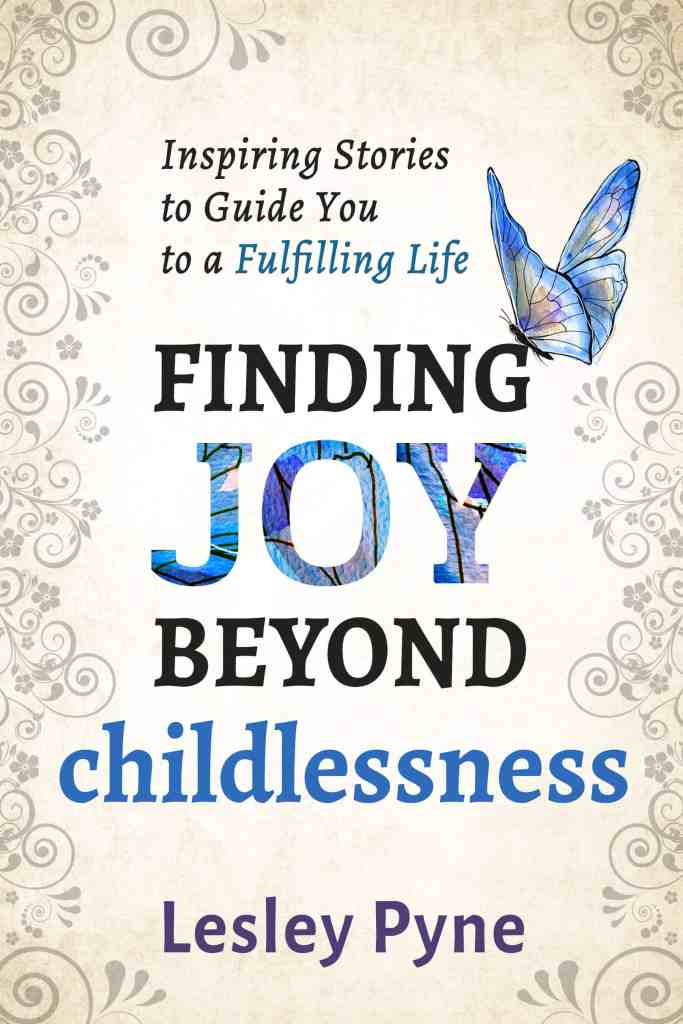
“Let It Go, let it go, can’t hold it back anymore . . .” The hit song from the first “Frozen” movie has been playing in my head since lunchtime yesterday when I read the chapter on “Letting Go” in Lesley Pyne’s book “Finding Joy Beyond Childlessness.” It’s a great song that I’ll never sing as well as I’d like to, and I wonder if I can ever do what the song says. Can I let it go?

Pyne insists that unless we let go of our dream of motherhood/fatherhood, we cannot move on to other dreams and possibilities. I have this vision of a toy boat caught in a swirling current. I send it away, and it keeps coming back. But maybe that’s how it is when you’re childless by marriage rather than physically unable to have children as Pyne and the other women described in her book are. They have tried for years, suffered multiple miscarriages, and spent great amounts of money and hope on infertility treatments that didn’t work. They reach a point where they’re 99 percent certain they are not going to have babies. The barriers of age, money, and physical limitations create a solid wall. They can mourn forever or let go of the dream and move on. Pyne suggests we hold letting-go rituals and get rid of the “grief museum” of things we have gathered for those children who aren’t coming.

I know some of you are in this boat, with you or your partner physically unable to reproduce. My heart grieves for your loss. I can’t imagine the pain of repeated attempts and losses. You should let yourself grieve as much as you need to. Pyne devotes a long chapter to grief. Unless you let yourself feel the grief, you cannot move on, she writes. You can’t run from it. Maybe you need to burn the baby clothes and remove all signs of baby prep in order to start to see a life without children.

But what if you’re not sure it’s over? What about the many readers here for whom the problem is their partner, the one who is unable or unwilling to have children with them? If you changed partners, you might become a mom or dad. The barrier between you and parenthood is not a solid wall, more like a barbed wire fence. If you decide to climb through it, you’ll get cut and scratched, but you’re tempted to try it. Are you willing to let go of the baby dream to stay with your partner? Are things good on this side, except for the not having babies bit. You’re not too old yet. How do you let that dream go? If you truly can’t, does that tell you what you need to do?

Can we let it go? Should we let it go? I find myself resisting. At my age, I know I’m not having children, but what’s wrong with keeping those crocheted baby booties I wrote about in a previous post? What’s wrong with thinking of the names I would have chosen for my children and fantasizing about what they would be like as adults?

I have always had other dreams that had little to do with children, and I have been living them all along. Even when my childless grief was at its peak, I was writing and performing and living a beautiful life with Fred. I did grieve, and it still hits me sometimes, but I have always kept living my life. Maybe I kept riding my boat in circles, but I like my boat and I like my circles.

No two childless journeys are the same, but you might want to check out Pyne’s book. It’s loaded with stories from childless women and step-by-step advice for getting out of the riptide of childlessness and on the way to a different but equally wonderful journey. Pyne, who lives in London, blogs at https://lesleypyne.co.uk/news-blog, and her website, https://www.lesleypyne.co.uk, offers a wealth of resources.

We who live near the ocean are told that if you get caught in a riptide, it’s best to swim with the current until you reach a place where the tide is weaker and you can swim out. Fighting it will only get you carried out to sea. Something to think about. We will all need to let go to a certain extent at some point, but how far down the beach that is will be different for each of us.

How about you? Are you ready to let go of the dream? Have you already done it?

***

My dog Annie, whom I wrote about here recently, is doing much better after her frightening bout with Vestibular Disease and two weeks in the veterinary hospital. She still gets a little wobbly, but is alert, independent, and always hungry. We are so glad to be together again. Thank you all for your prayers and well-wishes.

Processing…
Success! You're on the list.