In a society where most people have kids, some of us don't because our partners are unable or unwilling to make babies. That's what this blog and my book, Childless by Marriage, are about. Let's talk about what it's really like.
Politics is something I usually avoid here. One would think having or not having children has nothing to do with all that mess happening on the news these days. But things have been said that cannot be ignored.
Once again, as has happened in so many other countries, people are questioning whether U.S. Vice President Kamala Harris should run for president when she has no children of her own. Like many of us, she has stepchildren, but has not given birth.
There will always be voters who ignore all the amazing things these women have accomplished and focus on their lack of children. Their intelligence, skill, and heart don’t matter if they can’t lead a beautiful family onto the stage for photo ops.
In a 2021 interview now going viral, Republican vice presidential nominee J.D. Vance called Harris one of the “miserable childless cat ladies.” She and others like her have no direct stake in the US since they are not mothers, he said.
He has even implied that those without children should not be allowed to vote.
Say what?????
What about all those people who would love to have children but can’t for physical or circumstantial reasons? What about people who choose to devote their lives to other things? Are they less valuable human beings? Of course not.
I don’t know which side of the political spectrum you favor, but this is not a blue or red issue. It’s all the colors. As older politicians give way to younger ones, more and more will not fit the traditional family mold. The birth rate is going down. The traditional picture of two heterosexual parents, two kids, a dog, and a house with a white picket fence is fading away.
I just finished watching the TV series “The Good Wife.” In it, our heroine Alicia and her politician husband Peter pose with their kids for the cameras as if they were a happy family when in fact they aren’t even together. Everyone believes Peter would lose the election if people know his marriage was a sham. In fiction as in real life, the implication is you can’t win unless you have that traditional family. If I were running for office, I would be standing up there alone. Would that disqualify me? Would it make me a “miserable cat lady”?
Impossible. I’m allergic to cats. And I’m not miserable.
The United States has never had a woman president. Harris will have to fight plenty of discrimination for being female and non-white. Her childless status adds another layer. Honestly, if she had children, she would probably be accused of neglecting them for her work. That’s not an issue with male candidates because it’s assumed their wives are taking care of the kids.
Despite our lack of children, you and I do have a stake in the future. We contribute in so many ways beyond giving birth to baby humans. We work, create, teach, organize, and provide care. We love and live, and yes, we do contribute. We do leave a legacy. We are fully human and capable. In a world where the birth rate is going down, where marriage and parenting are no longer assumed, we can no longer require parenthood as a qualification for office.
Let’s talk about this. We don’t need to rant about Trump or Biden here. Keep the focus on childlessness. Can a candidate without children run successfully for office? Why do some people think they can’t? How can we convince them we’re as qualified as anyone? Is it different for men than it is for women? What do you see as our contributions to the future?
Processing…
Success! You're on the list.
Whoops! There was an error and we couldn't process your subscription. Please reload the page and try again.
The workshop leader was talking about reasons to publish a poetry book. First on her list: It’s something to show your grandchildren.
Once again, it was assumed we all have or will have grandchildren. Not me. Maybe not you. The only one I have had around to show anything lately was a cat.
I was collecting my trash a few days ago when a black Persian cat came out of the woods and seemed to want to be my friend. As he swished back and forth across my legs, I gave him the tour: This is my garage. This is my car. This is my back yard. He said, “Meow” and kept following me.
The cat was beautiful, but I’m allergic, and he was too healthy to not be someone’s pet, so I didn’t let him into the house even though I was dying for someone to talk to, someone who could see my home and appreciate everything in it, including my books.
It can get lonely out here. People always assume we have kids if we’re a certain age. They also assume those kids will be around all the time, which is not true for many families. Just like everyone assumes we’ll be right-handed and some of us, like me, are not.
When this poet I admire said that at the workshop, did I pop in and say, “Hey some of us don’t have grandchildren?” No. She wasn’t taking comments or questions at that point, and it was not related to what we were talking about. She didn’t mean to offend. She offered other reasons to write a book, including having something to say and wanting to share it, maybe wanting to help, entertain, or inform. You don’t need children or grandchildren for any of that. In fact, I would bet most writers’ families aren’t that interested in their books. I know that’s true of mine. Some of them don’t even know I write.
But there are a lot of things besides books we might want to share with our children and grandchildren: family history and photographs, art, crafts, recipes, our religious faith, our vision of right and wrong, our favorite music, or movies we love. So many things.
We can work or volunteer with kids, reach out to other children in the family or among our friends. We can do all the stuff well-meaning people suggest, but it is not the same, at least not for me.
As always, I have questions:
What should we do in a situation where someone assumes we all have children? Should we speak up and make a “thing” of it or let it go? Take them aside later and say, “You know, I don’t have children or grandchildren? What is the best way to handle this?
What would you like to show your grandchildren if you could? Is there someone else you can share it with instead?
I hope you had a peaceful Thanksgiving. I ended up with friends from church whom I didn’t know well and several other people I didn’t know at all, but we had a good time. They all had grown children but were not with them on that day for various reasons. They mentioned them briefly but didn’t dwell on it. The subject of my childlessness never came up. We talked about other things. How about you? Was it a day of gritting teeth or lots of fun?
***
The Childless Collective Summit starts Saturday. All online, it offers four days of workshops, talks, and information for those who don’t have children. Attendance is FREE, although you can purchase a pass to watch the recordings at your leisure. Click here for information.
Processing…
Success! You're on the list.
Whoops! There was an error and we couldn't process your subscription. Please reload the page and try again.
My mother always said the most important thing she did in her life was to raise my brother and me and help raise my cousins who lived with us for a while during a tough time. She never worked a paid job after becoming pregnant with me, her oldest child. She was brilliant and could have done anything, but my father didn’t like the idea of her going out on her own, so she put all of her efforts into home and family and an endless stream of needlework projects. This was an earlier time when things were different than they are today.
I was raised to be a mom and housewife like my mother, but things didn’t turn out that way. After two marriages, I find myself widowed and childless. Oh, I am married to a house right now, with a never-ending to-do list. But you mow the lawn and it grows back. You wash the clothes and they get dirty again. You bake a cake and it gets eaten. None of that is a legacy; it’s just maintenance.
Unlike my mother, I have always been driven to do more. I’m a musician and a writer, and I volunteer for far too many things. I think I’d do the same if I had children. I can’t see wasting a minute of my life. But if nothing else, I would know I had added these people to the world.
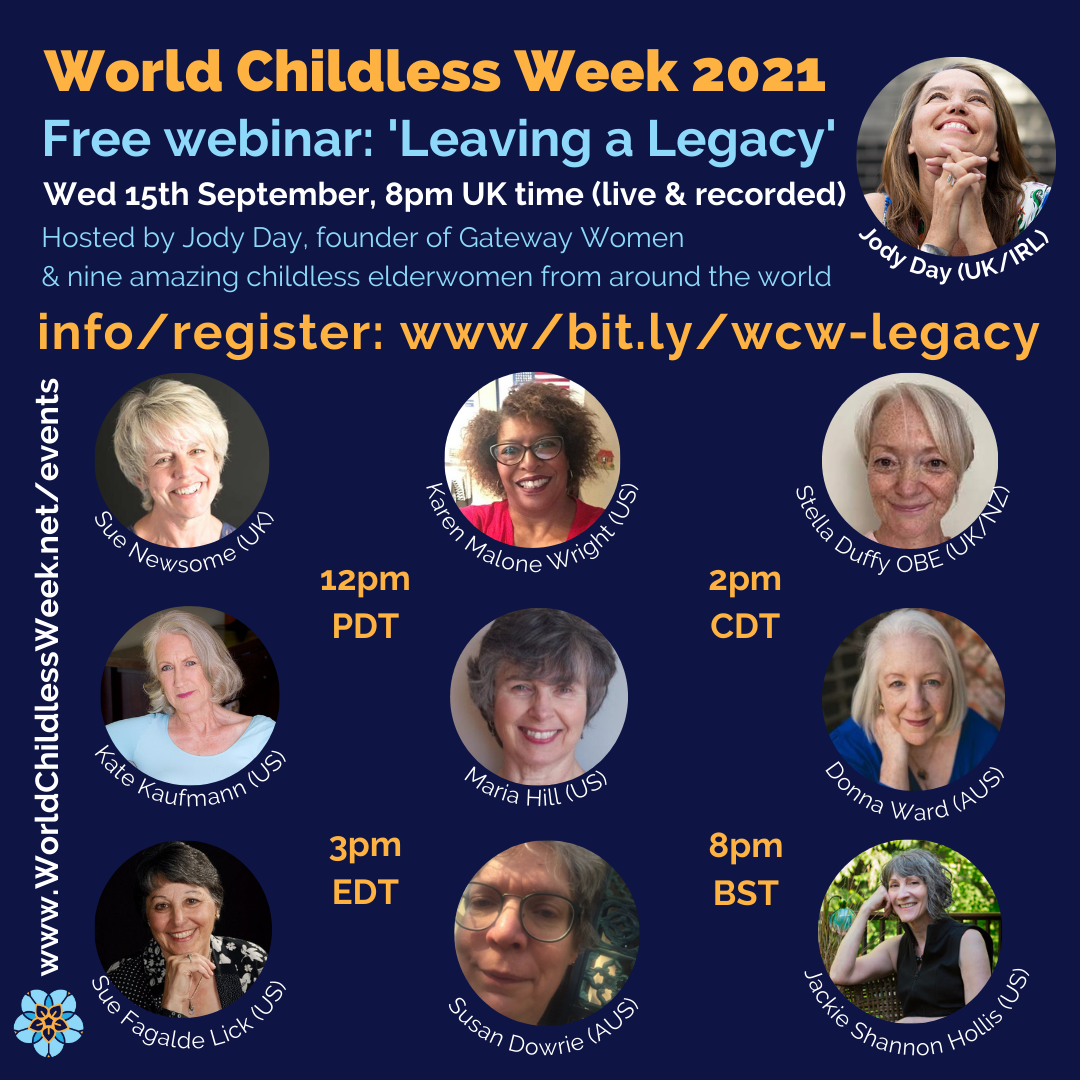
At today’s webinar “Leaving a Legacy,” part of World Childless Week, I will join other women over 60 to talk about what we leave behind if we don’t have children and grandchildren to guarantee we make a lasting mark on the world. For me, I hope my writing will live on in my books and other projects, that my blogs will survive until the Internet changes so much that no one can read them. I hope someone will include me in the family memories, but I am aware that my branch of the family tree ends with me. Maybe I shouldn’t look for anything large. Perhaps something I did or said made a difference in someone’s life. Maybe someone learned something from me that helped make their life better. Maybe it’s enough that I occupied this portion of the earth for a while and took care of it the best I could.
There’s also the question of keepsakes and photo albums that most of us have collected. Who will get them if we don’t have kids? Who will take Grandma’s rocking chair? That’s another kind of legacy. I know, it’s all “things.” Most will end up going to charity or a dumpster. Do things really matter in the end?
I suppose we can’t really know what our legacy will be.
You may be 27 years old and thinking you have decades ahead of you before you have to think about this stuff. What’s this got to do with having babies? Maybe you still haven’t figured out whether or not you’ll have children. But it’s interesting to ponder. What do you think your legacy will be after you’re gone, hopefully after a long and happy life? Do you worry about what you will leave behind?
I’m filling out forms to receive payments from one of my late father’s investments. The man had money in many pockets. I wish he had spent some of it on himself and my mother. It’s too late now, and I know I am blessed to have it. The monthly payments will make up for the job I no longer have. (See previous post) BUT the forms want to know who my beneficiaries are in case I die before the money runs out. What to put in these blanks is obvious for people who have spouses and children. It was easy for my father, but I’m stumped. Can I leave it to my dog?
These are the sorts of things in life that frazzle the childless widow. That and questions like “Why are you saving all this stuff?” and “How many grandchildren do you have?”
It’s the same thing when I have to fill out medical forms listing who to call in case of an emergency. I don’t know. My brother lives too far away to be any immediate help. I list friends who I hope are in town and in good health when I get in trouble. So far, that has worked out.
How I wish I had children whose names and contact information I would know as well as my own to plug into those blank spaces on the forms.
I’m reading a novel that takes place in a Native American community where all of the older women are “aunties,” no matter whether they gave birth or not. I think that is my role, too, at this point. I am going to list my niece and nephew as my beneficiaries. After all, they are my father’s grandchildren as well as my closest younger relatives.
Having some money to give away offers a chance to be creative. Who could I surprise with extra money if I die? Some of my friends could definitely use the cash. But I can’t surprise them. I need their social security numbers for the form, and they might be insulted if I decided to play benefactor. Can I leave it to an institution? Which one? I need to do some research and consider some options that might not be available to parents because, as a childless auntie, I can.
How about you? Are there situations in which your lack of children sends you into a brick wall that parents sail right over?
This week I have asked my friend Kristin Cole to tell us her story and discuss the Legacy Project she is working on. Says Kristin: “There are many reasons women have children. There are even more reasons why women do not. I’m interested in focusing on one aspect of not having children, either by choice or circumstance, and that is the concept of legacy. What legacy do childless women leave behind? I want to explore this subject and facilitate the creation of legacy through the sharing of women’s stories through images and words.”
Kristin is childless by choice, but her words about what we will leave behind certainly apply to all of us, whether or not we chose to live without parenting.
What will Your Legacy Be
By Kristin Cole
I began to think about my life and the larger impact it could have in my mid-twenties. Through my role at the National Credit Union Foundation in Madison, Wisconsin, I met people from all over the world who were living both big and small, yet passionate and meaningful lives. They had the most inspiring stories of travel, volunteerism, cultural experiences, and good will. They were affecting real change in real people’s lives.
It was difficult not to take a hard look at my own life at that point and see that I had been going down a rather insignificant path, that there was so much more I needed to do.
I first considered the idea of “legacy” a few years later. Keeping true to my new vision of what I wanted for my life, I started a new career as the manager of a small animal shelter. Because I had never done this kind of work before, I reached out to other shelter leaders. One of them asked me something that has stayed with me ever since: “What do you want your legacy to be?”
The dictionary defines the term “legacy” as “a gift or a bequest that is handed down, endowed or conveyed from one person to another. It is something descendible one comes into possession of that is transmitted, inherited or received from a predecessor.”
There are all sorts of ways one leaves a legacy. Some people do it through their children by passing down traditions, history, and values. Loudon Wainwright III did an excellent job of portraying this type of legacy through a recent Netflix special entitled Surviving Twinin which he intertwined his music with his father’s writings and letters to show the story of four generations in his family.
Others may leave their legacy through their careers or political work and some by their societal contributions or art. Think of women like Eleanor Roosevelt, Susan B. Anthony, Rosa Parks, Ruth Bader Ginsburg, Emily Dickinson, Amelia Earhart, Helen Keller, Harriet Tubman, Maya Angelou, Gloria Steinem, and Jane Goodall.
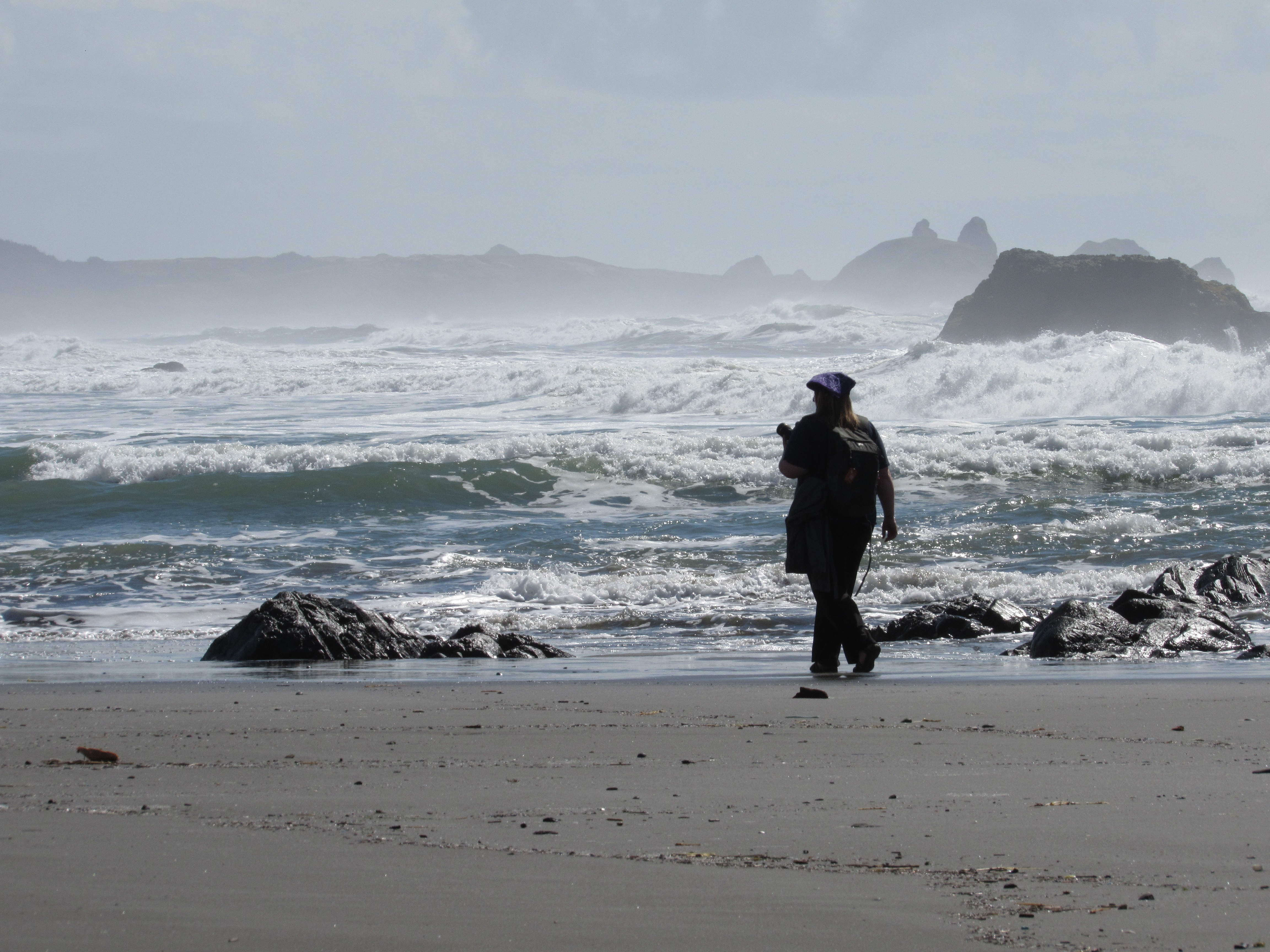
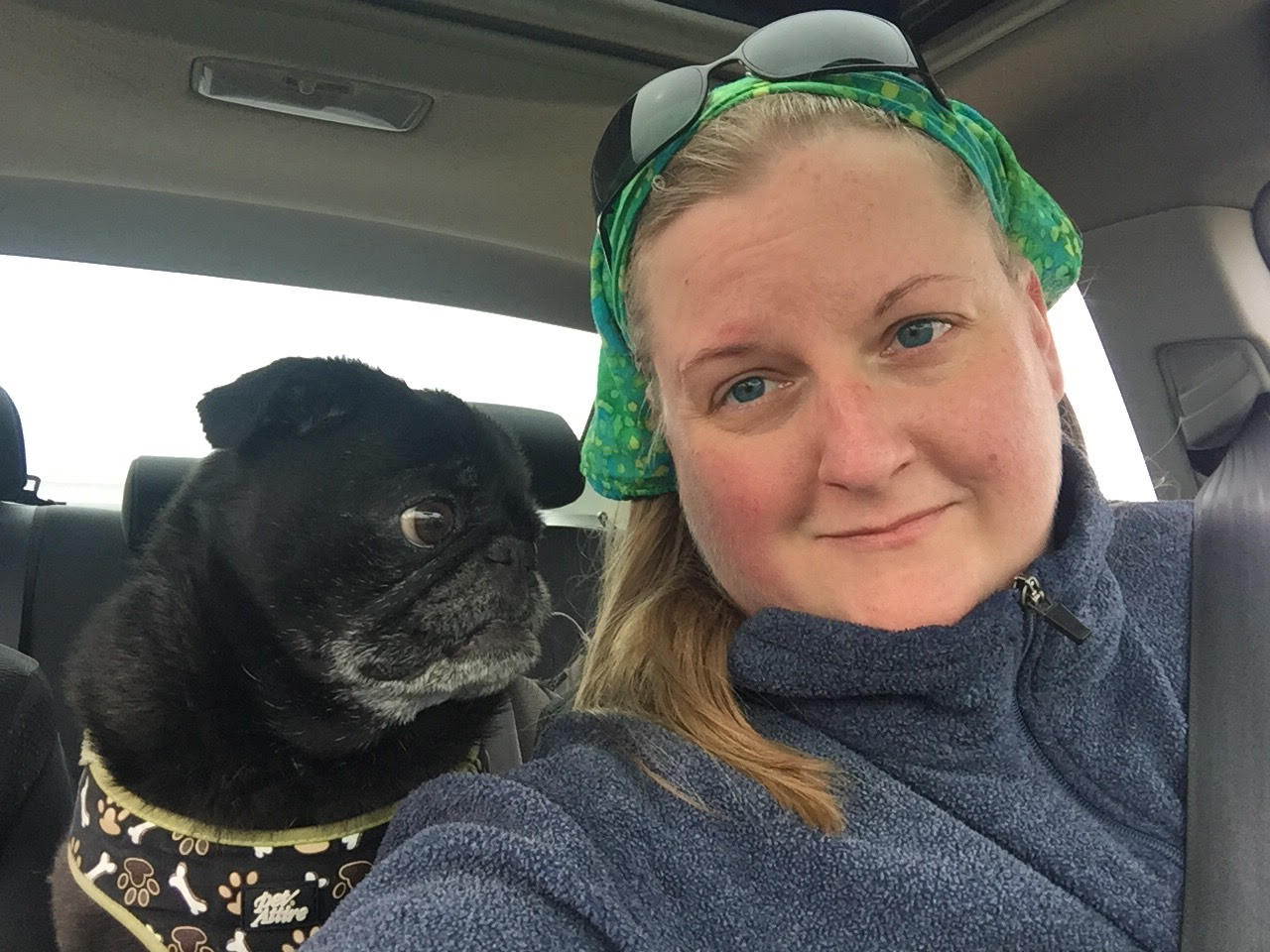
Kristin and her pug on the road
I can’t help but wonder when I’m gone, what my life will have meant, if anything at all? I hope that I am remembered as someone who was passionate and who unapologetically lived her dreams. I’d like to be known as the kind of person who wasn’t afraid to take chances, who lived boldly but was also compassionate and honest.
I hope that I will be remembered as someone who inspired others to explore, create, and follow their own curiosities down whatever path they took them on. I would like my life to have been one of authenticity and that it be known that my most valuable gift was the time I gave others. I hope that my photography and writing will help carry my legacy forward. I don’t know if any of these hopes will come to be known after I’m gone, but one thing I do know for certain is that whatever my legacy will be it will never be carried on through my children, for I am someone who chooses to remain childless.
Choosing not to have kids is often considered selfish in our society, and I suppose that is true in the literal interpretation of the word, but we only get one life, after all, and who else do we owe to live it for other than ourselves? Doesn’t it make the most sense to live it in our own way on our own terms? And so, I have.
I have purposefully kept myself free of long-term commitments such as owning a home or having children. I try to keep my debts and possessions minimal. Doing so has given me the freedom to take risks in my career and the ability to live wherever I want. It’s how I find myself living in Oregon right now.
I fell in love with the area when on vacation eight years ago. A few years after that vacation, I found my life in an interesting place. I was still living in Wisconsin but losing the passion I once had for the work I had been doing for a farm animal sanctuary. A romantic relationship that I thought was going to last a long time ended unexpectedly. Shortly after that, my grandfather lost his battle with Alzheimer’s. It became painfully clear to me, as I stared at a photo at his funeral of his younger self in front of some mountains in Colorado, that life is all too short. I remember saying to myself, “What are you waiting for?!?” Before long, I found myself saying farewell to Wisconsin and moving across the country to Oregon to pursue my passion for photography.
I’ve been living in Oregon almost five years now and it has been a truly transformative time. From the places I’ve explored to the people I’ve met, I’ve learned so much about myself and what I’m capable of. I’ve also clarified further what is most important to me as I quickly approach the next phase of my life.
Legacy Project: Jean Rosenbaum
In the past year or so, I’ve been thinking a lot about the variety of ways childless women contribute to the world and what sort of legacies are being born from their journeys. I suspect there are many inspiring and interesting stories of seemingly ordinary women just waiting to be told. That realization leads me to pursue my latest photo essay project, Legacy. I started searching for childless women aged 65 and older who, through interviews and photographs, share their life’s story to show us what a life, despite or because of being childless, can look like when it is well-lived. The essays not only include their reflections on the subject of legacy and childlessness but also on all the events that make up the sum of their lives to date as well as their thoughts about what the future holds.
In our digital age, for better or for worse, it is possible to create something that lasts forever, which is why I believe a photo essay is a perfect medium for this project. Even when I think about my own great-grandmother, I have little understanding of who she was and what her life was like. There is so much we can gain from one another, so I hope this project helps facilitate a more lasting form of legacy. I view it as an opportunity for women, regardless of the reasons behind their childlessness, to tell their stories and let their lives speak.
Through sharing their hopes, failures, accomplishments, regrets, and lessons learned, they can impart wisdom to others. They can assure us that sometimes it’s acceptable to walk away or to change our minds. That we don’t have to have it all figured out all the time. That a meaningful life does not always come in a perfect package or with a happy ending but that above all else, our lives are valuable, and our stories are worth sharing.
Maya Angelou said, “I’ve learned that people will forget what you said, people will forget what you did, but people will never forget how you made them feel.” Let your life not only touch others in a way that is difficult to forget, let your legacy live forever through images and words that will reach countless generations to come.
Kristin Cole is Midwest transplant currently living in Portland, Oregon. She enjoys road tripping with her pug sidekick and sharing the beauty of the Pacific Northwest through her photography and in her blog, Misadventures of a Nature Junkie. More information about her Legacy project can be found at http://www.KristinColePhotography.com.
***
MERRY CHRISTMAS TO ONE AND ALL! DON’T LET THE CRAZINESS GET YOU DOWN.
I lay awake half the night trying to figure out how to write this without seeming totally sorry for myself and bumming you out. How do I put a positive spin on it, show how you and I can make the best of our childless situation? I can offer some suggestions, but you and I know anything we do as a substitute for what we might do with our own children is just a . . . substitute.
Friends had been urging me for months to play at a local open mic that happens on Friday nights in a nearby small town. I finally hauled my guitar down there. It’s in the former cafeteria of a former middle school that got moved up the hill due to tsunami worries. Now a program for the poor uses the building.
When I walked in, a man I knew stood at the mic with his three-year-old son next to him pretending to strum a yellow ukulele with a smiley face on it. I have watched this child, Evan, grow from a swaddled blob to a boy who can walk, talk and sing. His dad, Tom, a banjo player, has brought him to song circles and open mics and always included Evan in the act. Evan still can’t really play, but he knows all the old folk and bluegrass songs that Tom plays.
Shortly after Tom and Evan, Tony, a man my age, took the stage with his grown son. I didn’t even know he had a son, but there he was, handsome, with a good voice, singing in harmony with his dad. That’s what got me.
I have been a solo act forever. My parents didn’t do music, rarely came to hear me perform. I became a musician in spite of them, not because of them. When I hear about families that do singalongs in the car or go caroling at Christmas, I am so jealous. I always thought if I had children, I could share my love of music with them. We would do the singalongs. I’d pay for whatever lessons they wanted, teach them all my songs, and create my own little band.
I had a taste of it when my husband was alive and my youngest stepson spent time with us. Fred and I sang with a vocal ensemble. For our Christmas gigs, Michael would put on a white shirt and a red bow tie and join us, singing next to me, his little-boy voice higher than mine. Oh, that was sweet. I tried to teach him a little piano, but his mother didn’t agree that he needed lessons.
Oh, and there was the Christmas when the step-granddaughters sat with me at the piano to do the “Little Drummer Boy” and other carols. They were as enchanted by the music as I was. It was heaven. I don’t know where either of those girls is now, but I’m lucky we had those moments.
Back at the open mic, watching Tony and his son, I wanted to cry, even though overall I enjoyed the evening and plan to go back this week. I will continue to be the solo act.
I know children don’t always share your interests. They might reject them altogether. And I might not have the patience to deal with little kids spoiling my act, singing off key, and repeating the same phrases over and over while they learn. They might be more interested in their smart phones than in anything I wanted them to do. But how sweet it would be if we could sing in harmony together.
I would also want to share my religion, my politics, and my ways of doing things. But children are their own people. You hope that a little rubs off, but there are no guarantees.
Enough fantasizing, right? We don’t have children, but we can share our talents and our joys with other people’s kids. It might not be music; it might be football, classic cars, art or graphic novels.
For me, it’s music. This school year’s religious education program begins tonight at our church. I will lead the singing and teach the kids some songs that are new to them but were old when I learned them. I didn’t learn them from my parents but from the nuns at St. Martin’s Church.
We can pass what we know to unlimited numbers of children and young adults by teaching, leading, coaching, and being their older friends. They won’t be our own, but it’s still our legacy, and it still counts.
I thank you for being here and welcome your comments.
What is it that makes people feel bad about not having children? That’s what the young man interviewing me over the phone yesterday wanted to know. I struggled to find an answer that he would understand. It became very clear that men and women have different ideas about this stuff, especially when they come from different generations. His questions showed he really didn’t get it.
Is it that everybody else is doing it? Are we looking for a sense of accomplishment? Do we want to leave something behind? Does it help to be around other people’s children?
Well, I could answer that last one. No. When you are hurting over your own lack of children, it does not help to be surrounded by everybody else’s. It just makes you more aware of what you’re missing. I don’t think he understood that either.
I tried to explain that it’s all of the above and more, that we’re missing a major life experience, that we have no younger generation to replace the old ones who are dying, that we have no one to inherit our keepsakes, and that for some people children are their only legacy, but none of that was really getting to the heart of it.
Why does it hurt so bad to realize we may never have children? Is it a deep-down physical need to reproduce? After all, every living thing on earth is designed to reproduce. Some can’t for various physical reasons, but reproduction is the plan. Humans are the only ones who can say, “No, we’d rather not,” the only ones who mate and don’t procreate. So maybe it’s just a basic biological need. But then why don’t some people feel that need?
Almost a quarter of women are not having children these days, and a lot of them don’t feel bad about it. They choose to be childless, preferring the unfettered life. Why do the rest of us grieve the loss of the children we might have had?
The young man segued into a discussion of social media and wouldn’t I like my blogs to be reposted in perpetuity if some company offered that service. No, I don’t think so, and was he actually scamming me to sell a product? I don’t know. But his questions about childlessness linger. What’s the big deal? Why do we feel so bad?
What do you think? Help me find answers? Why do you feel bad about not having children? Please share in the comments.



 Childless by Marriage