Would you rather be childless than single?

Are you terrified of ending up alone?

It’s okay to admit it if you are. Most people feel that way. I’m not as afraid as I used to be because I have been on my own for many years, but I know people who absolutely can’t handle it. No need to feel bad about that. Animals hang together for safety, and we’re hardwired to do the same.

I suspect I married my first husband because I was afraid no other man would want me. As I wrote in 2021, no one asked me out until I was in college. Too nerdy, too fat, not social enough, parents too strict? I don’t know. I was already wondering if I’d ever find anyone, if I’d be like my Barbie doll without a Ken.

I was afraid no man would love me when everything in my world told me a woman needs to get married and have children. So when someone finally wanted to date me, I didn’t ponder whether I liked him; I said yes. And I continued to say yes through a first marriage that failed and a series of unsuitable boyfriends between marriages. When I think of all the garbage I put up with just to hold onto a man . . .

By the time I met Fred, I had come to believe I would be single for the rest of my life. What if he hadn’t come along? I hope I wouldn’t have married another dud just to have someone. I know people who have done that. Don’t you?

When we want and expect to have children, when we are physically able and have no reason not to, and our partner says, “Nope. I don’t want to” or “I’ve already got my kids and don’t need anymore” or “maybe someday, definitely not anytime soon,” why do we stick with them anyway?

Is it love or fear of being alone? I knew my first husband was not a perfect match. I saw red flags all over the place, but I still married him. Because that’s what women my age were supposed to do. I had visions of domestic bliss and babies and a happy family life. None of that happened. What if instead of moving from my parents’ house to the apartment I shared with my husband, I had created my own grownup life first?

My second husband, Fred, was definitely a keeper. Such a good man, so in love with me, dependable, the kind of guy who puts up with your relatives and sits with you at the hospital when you get sick. But he had three kids from his first marriage and wasn’t willing to have any more. Should I have said no to him? I was 31 and fertile. I should have fought harder. Shoulda woulda coulda, right?

By the time Fred came along, I had been single for several years. I could have carried on by myself. But I chose to marry him. I chose to accept his kids as mine and not have my own. This time, the love was enough to make up for the rest.

I never expected Fred to be diagnosed with Alzheimer’s in his 60s and die at 73, leaving me alone, probably for the rest of my life. I did not choose this. But here I am, alone in the house we bought together on the Oregon coast. Even our dog has passed away. It has been 15 years since Fred moved into a nursing home, 13 years this month since he died.

If I made different choices at the beginning when I married the man who seemed to be my only choice, would my life be completely different now? Would I be surrounded by grown children and grandchildren? I’ll never know.

This raises multiple questions for me, and I would love to know what you think.

* Do we commit our lives to someone less than ideal because we’re afraid of being alone?

* Are we willing to leave a partner who won’t give us kids and risk ending up alone if we don’t find someone else who does want to be a parent?

* What if this relationship ends in divorce or widowhood and we are left alone anyway?

Our world is set up for couples and families with children. It’s not easy when your “family photo” is a selfie. But we can do it.

I have started a new Substack series titled “Can I Do It Alone?” The answer to that question is, “Heck yeah.” Apparently, a lot of people are worried about being alone. The subscriptions and comments are flooding my inbox. If you’re interested, take a wander over to suelick.substack.com and see what that’s all about.

Meanwhile, here at Childless by Marriage, let’s talk about it. Did we settle for a childless life out of fear of being alone? What if this relationship ends?

Thank you so much for being here. I treasure you all.

Processing…
Success! You're on the list.

When Childless Grief Knocks You Down, What Do You Do?

Last Thursday was a beautiful day, the snow almost melted, the sun shining. I was walking the dog in the woods when I had this thought: What if when we got home, someone from my family was there waiting for us?

What if my brother, nephew, niece, or cousin were there? What if my grown children were there, ready to spend time with “Mom.” I could almost feel the hugs. They could take me out to dinner, fix the lights that don’t work, and help me figure out what to do about . . . so many things. 

But they aren’t coming. My real-life relatives live far away and have busy lives. I don’t have any children, just the deaf old dog with vertigo who keeps veering across the path, pulling me along with her. With no one around to see me, I let the tears fall. In the movies or on TV, someone always shows up to offer comfort, but not in real life. I went home to my house that’s way too big for one person and buried my feelings in pastry and work. It’s when my mind is open, like when we’re walking, that I hear that voice saying, “You are alone; you’re not supposed to be alone.” 

When I married Fred, I gave up the chance to have children. I don’t know if another man would have come around if I waited. I don’t think so. I have never met anyone else I wanted to spend my life with. I chose Fred, along with his kids from his previous marriage, because he was wonderful. I had no idea he would get Alzheimer’s disease and die or that his children would break the connection with me right after the funeral. I did not expect to end up alone. But here I am. 

I suffer from depression. I know the grief attack will pass. But in the moment, it hurts like hell. I’m jealous of everyone who still has a partner. I hate that I’m alone while they’re surrounded by children and grandchildren. I know I’m not the only person in this situation. I know I have wonderful friends. All I have to do is call them, but when I’m depressed, I can’t make myself do that.

The rest of the world really doesn’t understand childlessness. They advise us to get involved with other people’s children. Become a teacher, work in daycare, be a mentor, cozy up to the offspring of your friends and family. Be a super aunt or uncle. But that is not and never will be the same. When it’s time to go home, the children go with someone else.

Choosing a partner who will not give you children means giving up the family you might have had. You lose the safety net that would keep you from being alone if for some reason he or she left you behind. I hope it never happens. I hope you have a lifetime of love together. If you end up alone, you will find your own way, but you might be doing it with tears streaming down your face.

I’m on my way to a writing conference in Seattle, where I will be surrounded by people who love words as much as I do. It will not be family, but I will not be alone and I will not be thinking about the children I never had. Last night I visited with my cousin, who lives in Washington. Her life is filled with children, but we have so much in common beyond children that it doesn’t matter. Today I am anxious–big city, crowds, commotion–but I am not depressed. I pushed myself out of my hermitage in the woods to seek out other people because I need them.

What about you? Does the grief knock you down sometimes? How do you get back up? Do you feel a wall between you and your family because you are the one without children? Please share in the comments. 

Photo by Pixabay on Pexels.com

Processing…
Success! You're on the list.

Childless, Alone? What’s Your Emergency Plan?

3d cartoon woman falling from height, illustration isolated on white background

Last Thursday, when I walked out on my deck to take some pictures of the trees in the fog, a rotting board collapsed underneath my foot. My leg went through, and I fell backwards across the edge of the deck onto the wet lawn with my leg still stuck between the boards. I live alone. There were no neighbors within shouting distance, the young ones at work and the older ones too far away to hear me. I had been holding my phone, but it flew out of my hand and onto the grass when I fell. I had no choice but to push myself up and pull my leg out. I’m grateful I had the strength to do that. Maybe all that yoga I have done over the years helped. If I couldn’t push myself out, I don’t know what I would have done.

Thank God the leg was not broken, but it hurt, and I had this weird pain in my back. I told myself I’d go to Urgent Care the next day if it wasn’t better. I had work to do.

I was watching TV that night when I turned slightly and something in my side popped. Uh-oh. A minute later, I sneezed, felt agonizing pain, and couldn’t catch my breath. I have to go to the hospital, I thought. Something is really wrong. Carefully I put on my shoes.

Unlike the time when I drove to the ER at midnight with chest pains, which was stupid, I knew I should not drive myself. I was shaking all over and couldn’t stand up straight. I called a neighbor. She was out of town and so sorry she couldn’t help. Screw it, I thought, and dialed 911. After my first-ever ambulance ride to the hospital, X-rays showed a broken rib and contusions from hip to ankle. All they could really offer was painkillers. Everything will heal in time.

“Do you have anyone to be with you?” the nurse asked as I lay on the hospital bed in my green gown and yellow Covid mask.

“No,” I said, holding back tears.

“Do you have anyone to drive you home?”

“I thought I’d take a taxi,” I said.

She shook her head. “Since Covid, taxis are hard to get around here.” We live in a small town with no Ubers and sparse bus runs. “You’d better try to find a friend or family member to come get you.” She handed me my phone.

I wanted to cry so hard, but I held it in. I had already wept after the fall, and I would do it again, but I had to find a ride. It was midnight. Most people I knew were asleep. I called a church friend who stays up late. It was a bit of drive, but she said she was happy to do it. I waited by the door in a wheelchair. I was so glad to see her.

Then I was alone with my dog again. I couldn’t sleep, my brain reliving the fall, thinking about what could have happened. I couldn’t find a comfortable position in the bed. I’m not a fan of recliner chairs, but I wished I had one. I wished I had someone to bring me my pills. I wondered how I would change the Lidocaine patch over my ribs by myself (turns out it’s not that difficult).

The next couple days brought me a lot of attention as the word spread. Friends brought medicine, dog food, flowers and dinner. They prayed over me and assured me I am not alone, that they care. My family lives too far away to be of any immediate help, but I am blessed with great friends.

Now I’m taking care of myself. Some things are difficult, but I’m managing. The pain has been severe, but it is easing. I am so grateful that this was not the event that would send me out of my independent life and into a nursing home.

If I had children and grandchildren, like most 70-year-olds, one would expect them to rally around, sitting with me at the hospital, giving me rides, picking up my prescriptions, and dealing with my dog, who has problems of her own. But I don’t. Maybe they wouldn’t anyway. But I hope they would.

My handyman has already replaced the rotting boards in my deck and assures me it should be secure for a few more years. After days of fog, the sun is finally shining, and I will sit on my deck later.

And yes, I’m looking into those emergency-alert devices, even though I hate the whole idea of wearing one.

Meanwhile, this incident has shown me that I need a better emergency plan. I need a team of friends who are ready to go if I need help. The people are there. We just need to make it more formal, so I have names and numbers ready for me—and the hospital—if/when this happens again. In return, I will do the same for them.

I’m terrible about asking for help. Yesterday, I bought my own groceries, and I probably should not have done that. It was harder than I expected. If we create a plan, then we can feel comfortable calling on our friends when we need them. I’m going to work on that. Did you know that 27 percent of American households are occupied by people living alone? Some have kids; some don’t. We all need a plan.

Most of you are nowhere near my age, but it’s something to consider in this childless life. If you never have children and your partner is gone—even if they’re just gone for a week or a day—who will you call? How will you manage your own care, especially if you are severely injured or unconscious?

We can do this childless thing, even survive old age alone, but we need to be ready for the unexpected. I certainly never dreamed the deck would break under me. It must have been the weight of that extra chocolate chip cookie I ate the night before.

Ilustration copyright: 3dmask

***

We have received some great comments lately on recent posts. Please scroll through and take a look. Add your two cents.

***

Processing…
Success! You're on the list.

Are you destined for the childless path in life?

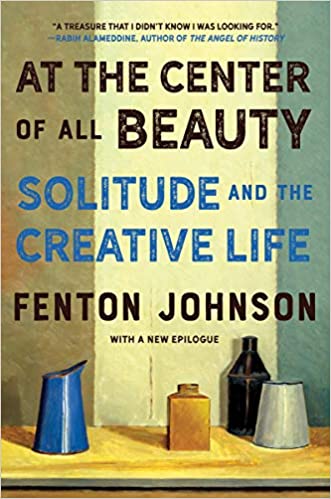
Johnson, Fenton. At the Center of All Beauty: Solitude and the Creative Life. New York: W.W. Norton & Co., 2020.

Growing up, Fenton Johnson saw three paths for his future: marriage, the priesthood, or a solitary life. He chose the third option because he felt he was always destined to be alone and that the solitary life would allow him the time and quiet to pursue his writing and become his best self.

In this book, he looks at famous people who made the same choice. Some were married but still chose to be “solitaries.” Among them are writers Walt Whitman, Emily Dickinson, Eudora Welty, Zora Neale Hurston, Henry David Thoreau and Rabindranath Tagore, artist Paul Cezanne, photographer Bill Cunningham, and singer Nina Simone. Each believed they needed to be alone to follow their destiny. Given the choice of love or work, they chose work.

Fenton, who as a solitary gay man has always felt like an outsider, explores solitude in depth. This is a dense, slow-reading book which takes a few too many side trips for my taste, but it makes a good point: We are not all destined for the family life.

Johnson talks about how sometimes people feel sorry for him because he’s alone, when he’s eating at a restaurant by himself, for example. They don’t understand that he is actually happy to be on his own, that he feels he is living his best life. I, too, really enjoy sitting alone reading a good book and being served a great meal. I also enjoy having lunch with friends, but that’s a completely different experience.

Johnson notes that while the church preaches family as the only way to go, most saints are solitaries.

It’s not always easy. He quotes Zora Neale Hurston: “Oh, how I cried out to be just as everyone else! Even as I hoped, I knew that the cup meant for my lips would not pass. I must drink the bitter drink.”

Sometimes I feel that I too was meant to be alone. Where Johnson calls it his destiny, I call it my default position. Even when I was married, I spent a lot of time alone, and now I’m back to where I was between marriages. Perhaps I was meant to be mostly alone to focus on my work, which I do most of my waking hours. When I’m not writing, I am reading, attending classes and readings, networking, and researching.

I would love to eat, sleep, and have fun with other people, but they’re not here, so I work, and I have no plans to “retire.” I have mentioned before on this blog that while I sacrificed children in my marriages, I would never give up my work for anyone. So perhaps things have turned out the way they’re supposed to, and I’m where I’m meant to be. Like Nina Simone, I cry out to be like everyone else, but I suspect the solitary path is the one I’m meant to walk.

I have interviewed artists, writers, musicians, priests, and medical professionals who sacrificed family for their work or their art. I have known of others who had the family and either neglected them horribly or eventually gave up their work to take care of them.

What is your default setting? Are you a born mom or dad destined to be surrounded by family, or do you have another calling that being childless would make easier to follow? Can you have both? What is most important to you to accomplish in this life? Only you can answer these impossible questions.

*****

Tomorrow night I will be reading a piece about childlessness at Coffee and Grief #19 at 7 p.m. PST. You can find the Zoom link on Facebook at https://www.facebook.com/events/883771512396349.

Also . . . I’m putting together a new mailing list via Mail Chimp. I encourage you to sign up in the box below. I promise not to fill your inbox with garbage.

Processing…
Success! You're on the list.