Can Pets Fill the Empty Space Where Children Would Be?

Are dogs and cats a good substitute for children? In some ways yes, in other ways no. But they do fill a gap in our lives. 

Yesterday was Pet Day at World Childless Week. Many people posted stories and pictures about their “fur babies.” Read them all at https://worldchildlessweek.net/the-importance-of-pets

I was particularly taken by a piece written by a woman who calls herself “LabraMummy.” The owner of two labrador retrievers, she writes, “What I know about being unable to have children is that family takes ALL forms and that being part of a family means being able to love and care for someone other than yourself.”

She goes on: “I know there are people who don’t like the term furparents or furkids but I fully embrace being known as a furmumma. Hence, I call them my family members rather than my pets. To each, their own!”

Another contributor, LH writes, “Being a parent is not only about giving birth to a baby you conceived. After all, we have grandparents and godparents also. Being a parent is about loving something and taking care of it, putting its needs before your own, doing what you can to help it have the best life possible which is exactly what us fur parents do.”

The panelists at a World Childless Week webinar titled “Who Rescues Who” agreed with LH and LabraMummy that while cats and dogs are not the same as humans, they do offer an experience of having a family and they provide a great deal of comfort to those who are grieving the loss of the children they might have had. 

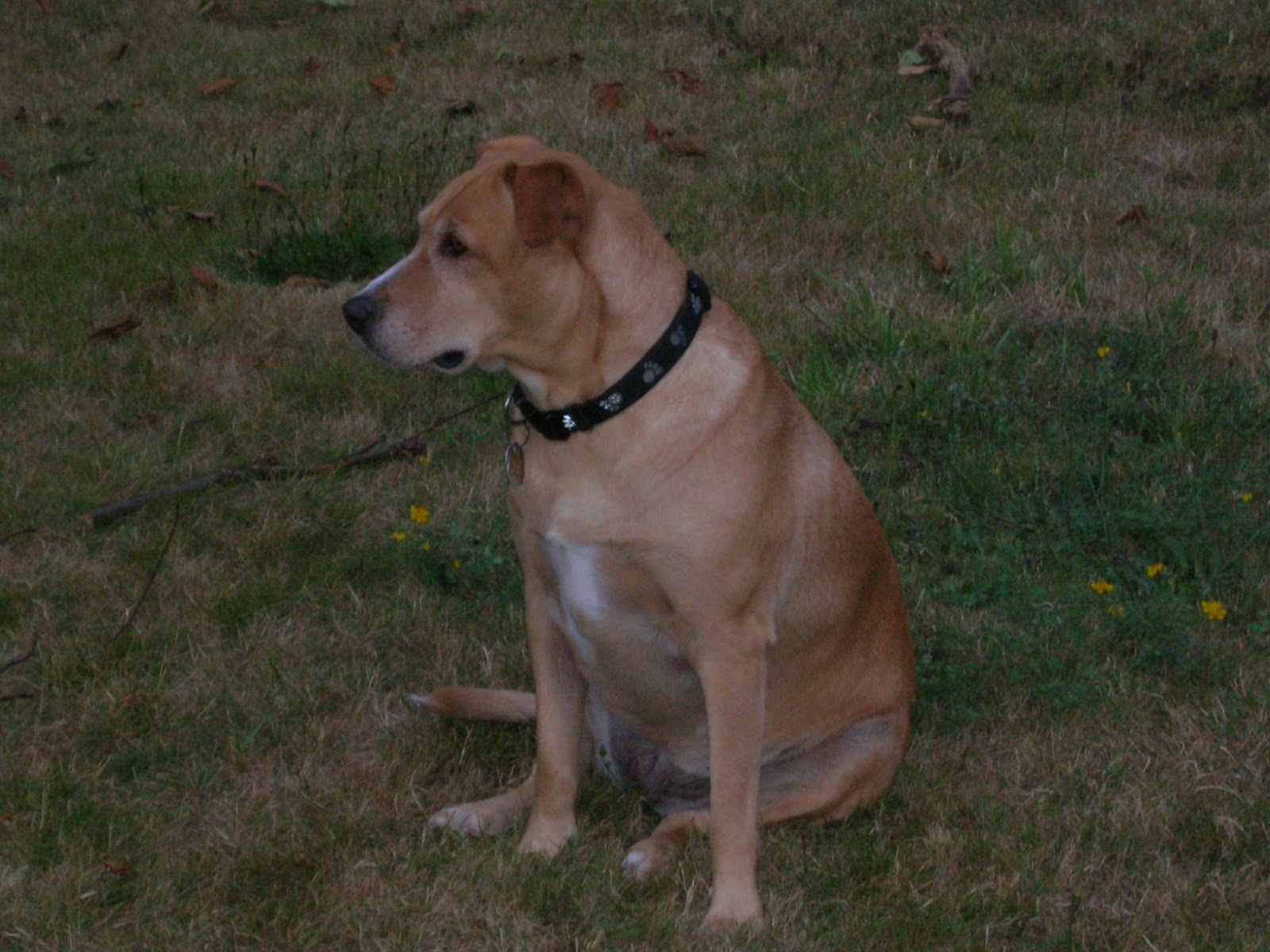
I believe that’s true. It has been sixteen and a half years since my late husband Fred and I adopted Chico and Annie, the puppies in the photo. It was 2008. Fred had Alzheimer’s disease. It had advanced to the point that we had aides coming in because I couldn’t leave him alone. In less than a year, he would move into a nursing home, but we didn’t know that then. 

The puppies brought us a lot of joy at a difficult time. 

Here’s a little of what I posted then:

Fred and I adopted two 7-week-old puppies last week, and it really feels as if I have two babies. They’re the same weight as babies, have the same needs, and fill the same needs in my heart. 

Last night, my church choir surprised me with a puppy shower. There were two baby blankets, but of course no little onesies. I did get dog treats, chew toys galore, balls, weewee pads, and lots of advice. There was a gorgeous, white-frosted cake with big red flowers on it. This may sound totally nuts, but it felt as if I had received something I’d been waiting for all my life. I sat on the floor of the chapel opening presents and soaking it all in.

Puppies are certainly not the same as humans. They won’t take care of you in your old age. Conversations are rather one-sided. And they poop and piddle on the floor. But for the childless person who wanted children and didn’t have them, they’re one way of filling that emptiness.

And the following week, I wrote:

Almost three weeks into it, I feel much more relaxed about the whole puppy business. We’re falling into a routine. I feed them breakfast, take them out, stash them in the laundry room while I shower and have my breakfast, then we all dash down the hall to my office, where they munch their rawhide chews and fall asleep.

Every hour or so we have to go out because their bladders are small. I still pack one under each arm to carry them out because I don’t trust them not to pee in the house, especially when they just woke up, but that’s 27 pounds of dog now. It’s a race between housetraining and dog growth.

Eventually they have lunch, they potty, Fred and I have lunch, and we all go back to work, stopping every hour or so for a potty break and playtime. We repeat the routine until they fall asleep for the night and peace finally reigns over the kingdom.

As for training, it’s coming along, most of the time. They sit, they come, they bite less, although they’re still better paper shredders than the machine in Fred’s office. When they’re not eating, excreting or sleeping, they’re usually wrestling. It drives me nuts. But I think I had a breakthrough this morning. I actually got them to separate and sit perfectly still for at least a minute.

What has all this got to do with childlessness? Lots of things, actually. These are my baby substitutes. There is no denying it. At 56, this is the first time I have ever cared for a baby anything longer than a couple hours. I am learning lessons that mothers of human babies learn much earlier in life, especially this: the child’s needs come first. I’m struggling to spread my attention among the pups, my husband, and my work. I’m losing work time and spending tons of money on these little guys. These are all experiences that are familiar to women with children, but they’re new to me.

Dogs are not children. But I call myself “Mom.” And God help me, every friend who calls or visits gets called Auntie or Uncle so-and-so. I can’t help myself.

Those who follow the blog know that I lost Chico just shy of two years old, and Annie passed away a year ago at age 15. I am just beginning to look for a new dog. Not a puppy. I don’t think I can do that again, but a grownup dog friend who will become my family. 

What do you think? Can pets fill in the gaps where don’t have children and make us a family? Tell us about your furbabies–or if the term makes you cringe, tell us why it does? I welcome your comments. 

World Childless Week continues for a few more days. Check the schedule at https://worldchildlessweek.net. As part of the “Childless Elderwomen,” I joined a panel discussion today on friendships and how we have them when our friends are busy with their children. I’ll let you know when the recording is available.

Processing…
Success! You're on the list.

Can a Dog or Cat Take the Place of a Human Baby?

One black puppy, one tan one shown in a crate with blue toys and a rose-colored blanket.

My Annie is gone. A month ago, she made her final visit to the vet, and I held her as she passed on to the next life. She was 15 ½, deaf and arthritic, always in pain, and she had cancer. I had to let her go. I am broken, still grieving hard. This loss compounds with the losses I experienced before: my husband, my mother and father, aunts, uncles, friends, Annie’s brother Chico and Sadie, the dog that came before them.

People talk about childless people adopting “fur babies” as baby substitutes. For me, I always knew it was not the same. Dogs will never grow into adult people who can expand your family over the years with spouses, children, grandchildren and even great-grandchildren. They will not carry on your genes or your name. You can never have a two-way conversation with a pup. Dogs are not children. Neither are cats. But they do fill a hole in the childless life.

Were Chico and Annie, shown in the photo, my baby substitutes? Sort of. They slept in a cage much like a playpen, with little blankets, tiny bowls, squeaky toys, and pee pads. As you may have read in my Childless by Marriage book, my church friends threw us a surprise puppy shower, complete with gifts and cake. The pups, who, at 6 and 7 pounds, were the size of human babies, came at a time when we really shouldn’t have been adding puppies to the challenges we already faced. My husband, Fred, had Alzheimer’s disease, and it was getting pretty bad. He couldn’t handle the dogs.

I was the one dealing with their messes, their chewing, and their need for attention at all hours of day and night. I was the one who took them to obedience classes and the vet. I frequently felt as frazzled as a new mother. But I also felt happy. I knew they were not the same as human babies, but they were fun in the middle of a whole lot of sad.

A year after Fred moved to a nursing home, I had to give Chico, the black dog, away. He kept jumping the fence and running off, frequently going after other people’s pets. By then, he was fully grown, almost two years old. That last day together before I took him to a shelter in Salem, he bit me while I was trying to save another dog from him. I still have a scar on my leg. It broke my heart, but he had to go. He was a dog, not a human being, and he was too much for me.

As Annie aged, she was not my baby anymore. She was a big dog, 75 pounds of love. She was my friend, my sister, and my partner. Perhaps if she were a little dog, it might have been different. I have friends who take their small dogs everywhere, who cuddle them in their laps during Zoom meetings, strap them into their cars when they leave the house, and sleep with them in their beds. Annie was too big for all of that. She was also independent. She liked a good snuggle, but then we each attended to our own business. I liked it that way.

Little dogs are vulnerable, baby-like. People dress them in sweaters and put them in strollers. They talk baby-talk to them. Are they a baby substitute or a breathing version of the dolls we had as kids? Is that crazy or a good thing?

Cats are small, too, the perfect size to cuddle like a baby—if they’ll let you. My neighbor cuddles her chickens. You can love all animals, but do they make up for not having children?

Whatever their size, a pet gives you another name to sign on your Christmas cards, someone to talk about and take pictures of, someone to walk with, eat with, and yes, sleep with. Someone to say good night and good morning to. Someone to notice if you cry and someone who misses you when you go away.

My writer friends on Zoom grew used to seeing Annie in our meetings. I wove Annie into all of my writing. In my bios, I called myself a writer/musician/dog mom. Am I still a “dog mom” if my “baby” has moved on? I am still drawn to dogs the way other women are drawn to babies.

There’s freedom in not having a pet. I can just take off now. I can stay out late or travel overnight. I can tell myself my “baby” has moved on and it’s time for me to have an empty nest.

Will I get another dog? I can’t see myself living forever without one. But at my age, I have to consider how long I might be able to stay in this house where I have a big fenced yard and how long I’ll be able to care for a dog. A new dog would have to be smaller.  I need a dog I can carry if need be. Annie’s size was a problem toward the end. But I want a companion, not a baby. I’m too old for babies.

Enough about me. What do you think? Are pets a good baby substitute for you? In what ways do you include them as part of the family? How will you deal with their much shorter lifespans? To love animals is to say good bye over and over again. Unless you get a parrot. They can live up to 50 years.  

If you have a partner who does not want the responsibility and cost of children, is he or she willing to commit to the responsibility and cost of pets? Annie’s care cost a fortune, especially in the last few years. To me, she was worth every penny, but some people might not see it that way or might not be able to afford it.

Annie wasn’t perfect. She’s the dog who chewed up one of my hearing aids, who ate pens, paper clips, reading glasses, and important mail, who could chew up an “indestructible” Kong in an hour (I got a refund). She loved people but shunned other dogs. Cats confused her. She chased robins and rabbits, picked blackberries, and “helped” visiting workmen by stealing their tools.

She ran to help when I spilled food in the kitchen and stared at me until I moved out of her spot on the love seat. She thought dried-out crab shells on the beach were a delicacy and could sniff out a burrito or French fries in the bushes all the way across the street. She shed so much it took three days to blow her fur out of the old Honda when I traded it in last month. Fur will be embedded in this house forever. But that’s okay. She was Annie, the best dog in the world.

Was she my baby? She was my Annie.

Read more about Annie the blog-famous dog:

Many more posts can be found at my Unleashed in Oregon blog. Stories of Sadie, Chico and Annie are also included in my forthcoming memoir No Way Out of This: Loving a Partner with Alzheimer’s, to be published in June 2024. It is available for pre-orders now.

Processing…
Success! You're on the list.

Our pets are not baby substitutes, but . . .

Are our pets baby substitutes? We have talked about this before, and my answer to anyone who says, “Well, at least you have your dog,” is that it’s not the same, but recent events have made me think about this more deeply than ever.

My dog Annie has been in the veterinary hospital since Christmas. Because nothing local was open during the Christmas weekend, I took her to Corvallis, 55 mountain-road miles from where I live. The Willamette Veterinary hospital is incredibly busy. Due to Covid, people can’t go inside with their pets. I have now waited in my car in the parking lot for 12 hours spread over three different occasions and waited for phone calls every minute of every day and night. I constantly wonder if the vet will tell me it’s hopeless and recommend that she be euthanized. I constantly fantasize that the vet will tell me Annie is up and walking, hallelujah.

Day after day, they say she’s “about the same.”

Until Christmas afternoon, she was having a great time with me and “Auntie Pat.” She shared our Christmas food, went for a walk, and lay between us enjoying our company. Then she went to get up and collapsed. Got up, collapsed again. Somehow, falling again and again, she made it to the back yard, where she lay soaked in the rain and refusing to move until my neighbors helped me get her into the car. Christmas was so over as I sped in the dark to Corvallis.

At almost 13, after two knee surgeries, Annie has severe arthritis, but her main problem is something called Vestibular Disease, a sort of doggy vertigo that makes it impossible for her to find her balance. At first, she looked like she’d had a stroke, her face scrunched up on one side, her body falling to the left. She wouldn’t eat or drink, just kept whining and crying. Now she’s eating and drinking and acting much like herself, but she still can’t walk on her own. She has worn a catheter to urinate, which led to a urinary tract infection. She has bed sores from lying on her left side so much. Are we just putting off the inevitable?

The doctor asked me to buy a “Help ‘em Up” harness that lifts under her shoulders and hips When I brought it, I could visit. Wonderful. I would be able to see for myself whether Annie was still Annie. I got up early and drove to Corvallis, then called from the car to say I was there. An aide whisked the harness away, saying she wasn’t sure about a visit. But I could wait. I waited. All morning.

I watched the woman in the next car be reunited with her little dog. The dog licked her face, sniffed her all over, and settled on her shoulder, much like a baby, finally going to sleep, safe and content with “Mom.” But not Mom. His mother was a dog. The woman is his human, the person he trusts to take care of him. Watching them, I sobbed. I hadn’t seen my dog in 12 days and the way things were going, I wouldn’t see her that day either. They kept telling me they were too busy to arrange a socially-distanced visit.

At 12:30, I got them to let me in to use the restroom and broke their Covid protocol to accost the receptionist and beg to see my dog. She went into a back room to check. Maybe later today, no promises, she said. I went back to my car and cried some more. I felt cold, hungry, and hopeless.

In late afternoon, I was thinking I’d have to drive home without a visit when they told me to come in. Annie and I met in a little sitting room where the workers put blankets on the floor and brought her dinner. It took two of them to get her there, using the harness. Three hours of driving and five hours of waiting were all worth it just to hug my Annie and tell her I loved her, to stare into those big brown eyes. She looked better than when I brought her in, but she was not ready to go home. Maybe a few more days with the harness . . . God knows how much money this is costing me, but I don’t care.

This morning while I was in the shower, the doctor left a message that Annie is about as good as she’s going to get and is ready to go home. I have appointments and work to do today, and I don’t know how I would get my dog out of the car or into the house. The folks at the veterinary hospital don’t seem to understand that it’s just me here. No husband, no kids, no roommate. The four other people who live on this street are gone during the day. My friends, mostly older, are hiding from Covid. I don’t know what to do.

She’s just a dog, some might say. But she’s my Annie, my person, my partner, and my dependent. Because I am a childless widow with no family nearby, Annie is the only flesh and blood mammal I can hug freely and with whom I can be completely myself. I have cared for her from 7 weeks to old age. We have been through so much together.

Last night, I thought about what our pets are to us, what Annie is to me. I had watched an old episode of the TV show “Parenthood.” Talk about triggers—everybody is dealing with their parent-child relationships, and it just made me cry. Somehow I felt like a worried-sick parent as I watched. I am not Annie’s mother. But I have been responsible for her care since she was a puppy. She depends on me. She loves me, but she does not take care of me. She is my companion, but not an equal one. I control the keys, the leash, and the can opener. “Mother” may be the wrong word, but it’s something like parenting.

Whatever you call it, she’s an integral part of my life, the one I greet in the morning and say good night to when I go to bed. Child. Best friend. Partner. Roommate. Old Auntie. Pet. Pride and joy. A human is not supposed to be all these things wrapped into one body. You’re either a child or a best friend, a partner or a pet. But a dog can be all these things. Annie is.

The vet hospital “hold” recording that I have heard over and over refers to us as “pet parents.” The receptionist has asked if I’m “Annie’s person.” They don’t say “owner,” which I suppose would be accurate, too, although I hate the sound of it. I did pay for Annie, just like I paid for my car, but it’s a lot different.

Whatever we are to be called, a dozen of us sat for hours in that parking lot in the rain waiting to have our dogs taken care of or waiting to be reunited. Sitting there, I remembered my mother coming to get us after school on rainy days, the safe feeling when my brother, the neighbor kids, and I were in the car heading home.

If I bring Annie home tomorrow, I will have to cancel my few outings for the foreseeable future. I don’t know how I will manage by myself, but at least she will be on this side of the mountain and we’ll be together.

I have gone on too long about my own problems. The country is going crazy this week, and that is very frightening. But the subject of the day is our pets. Mine is a dog, but cats, rats, gerbils and llamas count, too. What are our pets to us and what are we to them? I still say they are not a baby substitute. For many, many reasons, it’s not the same. So, how do they fit into the picture for you? I welcome your comments.

Are Your Pets Your Fur Babies?


Fur babies. A lot of childless women are tossing this term around these days. For some reason, it makes me cringe. God knows I love my dog, but is she my baby? I sure feel like it when I’m taking her to the vet or standing on the deck at dawn saying “Go potty. Come on, please go potty.” I am responsible for the care and feeding of this creature. But I’m not her mother. Her mother was a Staffordshire bull terrier. I’m quite aware that at 5 ½, Annie is a mature dog who will soon pass me in the life cycle, get old and ultimately die while I’m still hoping for many more years of life.
My dog is my dog, my companion, my responsibility, but not my child.


I see a lot of people treating their animals as their children. An article called “Fur Babies—An Alternative to Having Kids?” on The ‘How-To’ Dog Blog addresses this fur baby situation quite well. Writer Amanda Huggett Hofland admits that she and her husband might be using their two cats and dog as practice children while they decide whether or not they want to have human children. She talks about people who throw parties for their pets, dress them up in little clothes, tell them stories, and call themselves “mom and dad.” Although it seems crazy, she finds herself doing these things, too. But are pets a valid alternative to having children?

The blog post quotes experts who raise some interesting questions about the pet-human relationship as a substitute for having babies. Ultimately it’s not the same, they conclude, although there are many benefits to be had from owning pets.

I agree. I don’t know what I’d do without Annie. But I also know that I can shut the door and go about my life without her whenever I choose, something I couldn’t do with an actual baby. I also know that right now we’re both covered with flea bites, thanks to her thick fur. Dogs are great, but dogs are not kids.

Somehow in my mind, the folks who dress dogs and cats in baby clothes are doing exactly what we did as children; they’re playing with dolls. Except these dolls are living breathing animals. What do you think? Do you treat your pets as substitute children? Is it crazy or a good way to fill the void?