Your Childless by Marriage Survival Guide

Survival guide? I can hear the naysayers now. “What’s so hard about not having children? You’ve got nothing to worry about but yourself.”

Wrong! In a world where most people become parents, those of us who don’t procreate face a few special challenges, including feeling shut out by your friends with kids, getting dumped on at work because everyone assumes you have nothing else to do, and the mother-in-law who keeps buying stuffed animals for her unborn grandchildren.

In this second to last new post at the Childless by Marriage blog, I offer a few suggestions.

1) The question: Do you have children? For most people, it’s just a conversation starter, but answering “no” may start the conversation in a direction you’d rather not travel. So have a reply ready. I used to tell people I had three stepchildren, which usually satisfied folks, but since I no longer see the steps and I’m considerably older, I just say, “No, I never had any children.” My friend Jill replies, “I have dogs.” Another friend just looks them in the eye and asks, “Why?”

2) The next question: Why don’t you have children? Telling folks you hate kids will not win you many friends. If you wanted children but your partner was unwilling or unable, it’s not cool to put all the blame on them. This is a person you love, right? You’re in this together. (If you’re not on the same page, you need to figure out whether you should stay together). For a few years, you can say you’re not quite ready yet, but after that, you need a better excuse. You could say, “We decided children were not for us,” “Our lives were already so full,” or “We tried, but it didn’t work out, so we got a dog.” If you have fertility issues, talking about them may earn pity, but who needs that? I just say, “God had other plans for me.” Then I change the subject. You can always turn it around and ask, “Why do you have children?”

3) Baby showers: Men don’t have to worry as much about this, but it can be a nightmare for childless women. The longer your friends live with babies, the more you wonder if they have lost their minds. At baby showers, women who have given birth terrify the guest of honor by telling harrowing labor stories. They play obstetric word puzzles and hold timed doll-diapering contests before enjoying a long orgy of unwrapping gifts. You will be the only woman who puts the diaper on backwards, who has nothing to contribute to the conversation, and who buys a doll-sized lace dress the child will be too big for at birth. You have two choices: tell someone else’s birth stories and sip as much fortified punch as you can, or decline the invitation, pleading work, a funeral, or some other obligation you can’t get out of. Send a card with money tucked inside. Cash always works.

4) Baby lust: No matter how comfortable you may be most of the time with your status as a childless person, once in a while you are going to want to cuddle an infant and talk baby talk. Borrow a baby. A sibling, co-worker or friend will be delighted to pass her child to you for a while so she can take a break. Borrowing an infant is like renting that Lexus you could never afford to buy. In both cases, when they need servicing, you give them back.

5) Baby talk: In their reproductive years, your friends and co-workers will spend hours discussing their children’s schools, illnesses, and annoying or endearing habits. Later, they will talk about their grandchildren’s schools, illnesses, and annoying or endearing habits. When you mention your puppy’s new chew toy, they just stare at you. Find a child you can talk about. Stepchildren work well, also nieces and nephews, students or the neighbor’s kid down the street. Collect stories you can share when the talk is all about kids. Worst case, reminisce about your own childhood.

6) Acting like a child: Ever pass an arcade and want to drop in a few quarters but everyone there is either a child or a parent? Ever miss playing marbles, jacks or Barbies? Play them alone, and people think you’re nuts. Play them with a child and you are helping, teaching, interacting. So, borrow a kid—with his parents’ permission—and have fun. You’ll get a reputation for being great with children, and their parents will be grateful because they’re sick of playing video games and searching for Barbie’s itty-bitty high heels.

7) The empty nest syndrome: Everyone has an empty nest eventually. Kids grow up and move away, and parents suddenly wonder what happened to their lives. You’re way ahead of them because your nest was never full. If you need something to feed and clean up after, get a dog. The dog will never learn to drive, never get married, never tell you she’s embarrassed to be seen with you. Dogs never ask for money or bring home bags of dirty clothes for you to wash. Overall, dogs are more fun than kids. And I’ll bet most of your friends who are raising tiny humans would agree.

8) You are not alone: With more and more people opting not to have children (or get married), you are not the only person without offspring. When you find someone else who is childless, talk to them, invite them to a meal, do things together. Eventually, the parent-people will look up and see you again when their kids no longer need constant supervision. Meanwhile, you don’t have to be alone. If you look around, you’ll find that people without kids are part of the new normal.

Dear friends, what would you add to this list? What is your best advice for childless by marriage readers?


One more post to go before I stop posting regularly here at the Childless by Marriage blog. What would you like to read here? I will keep up the website, with its reference list and an index of the 900 posts I have published over the years. You can still comment. I will read your comments and respond.

The Childless by Marriage Facebook page will continue. If you haven’t visited there, give it a try.

If you want to know what I’m up to these days, visit my “Can I Do It Alone?” Substack at https://suelick.substack.com or friend me on Facebook at https://www.facebook.com/suelick

Thanks for reading Childless by Marriage!

Four simple words that can end a conversation

“I don’t have children.”

At the reception after my father’s funeral a few years ago, I was sitting with dad’s neighbors. Such nice people. We were exchanging the usual pleasantries—nice service, he was a good man, etc.

Then they asked about my children. The Mrs. pointed to my niece. “Is that your daughter?”

I wish.

“No, she’s my brother’s daughter,” I said.

“Where are your children?”

“I don’t have any children.”

Thud.

They didn’t know what to say after that. I don’t remember what I said. Did I talk about my work, boast about my niece and nephew, or discuss the music at the funeral? I excused myself soon after and threaded through the crowd to the company of cousins who already knew I was widowed and childless.

The next day, after I sobbed through the process of settling Dad’s ashes into place next to my mother’s at the mausoleum, the adults gathered their kids and drove away. They were too busy wrangling the little ones to realize I had no one to be with.

The question and the conversation-exploding answer of “I don’t have kids” happens all the time, especially among women. Generally men chat more about work and sports, but not always. They ask, too. It’s understandable. When your life revolves around raising children, and most of the people you know are also parents, kids are the one thing everyone has in common.

Folks skip right past “Do you have children?” to “How many children do you have? “How old are your children?” “Do your children go to X school?” or “Do your adult children live nearby?”

If I have a choice, I usually don’t mention my childless situation. Why set off that bomb if you don’t have to?  

The question comes most often during those years when you’re of an age when you would be raising children if you had them, but it still comes up in later years. Substitute “grandchildren.” You can’t have grandchildren if you never had children.  

Saying you never had children confuses people. It leads conversations to dead ends. It leads to one of you suddenly needing to get another drink, use the restroom, or go talk to someone on the other side of the room.

People respond in funny ways. Oh, I didn’t realize. Oh, there’s still time. Lucky you. I’ll give you mine. I just assumed . . . They rarely ask why—unless they are also without children. Those who are childless by choice may answer, “I never wanted any either,” leaving you to protest, “I wanted them, but . . .” Or maybe you just smile.

It depends on where you are, of course. In a gathering of writers, “What do you write?” is the big question. Classic car collectors will ask, “Are you driving that blue Chevy over there?” Gardeners may ask, “How are your tomatoes doing?”

But in the general public, especially among families, you’re going to get the kid question.

Mother’s Day is coming, a day when our lack of children may make us want to stay in bed with pillows over our heads. The advertisements have already begun: gifts for “Mom,” brunch for “Mom,” special Mother’s Day concerts. Schoolchildren are making craft projects to honor their moms.

For those of us without children, it’s just another Sunday, but one where we’re even more likely to hear those questions. How many kids do you have? How many grandkids?  Are they taking you out today? Here’s a carnation, MOM.

Until you’re forced to say, “I don’t have any children. I’m not a mom.”

Then you get the look: slacker, freak, cold-hearted selfish person. No flower for you.

Let’s talk about this. Where and how do you face questions about offspring? What happens when you say, “I don’t have children”? Why does it feel like a confession when we haven’t done anything wrong?

I look forward to your comments.

Processing…
Success! You're on the list.

The Question: So When are You Going to Have Kids?

That’s a question many of us have heard a lot. Even if we answer “We’re not having children,” no one believes us and we keep meeting other people who can’t resist asking the question, especially if you’re married and under 40 years old.

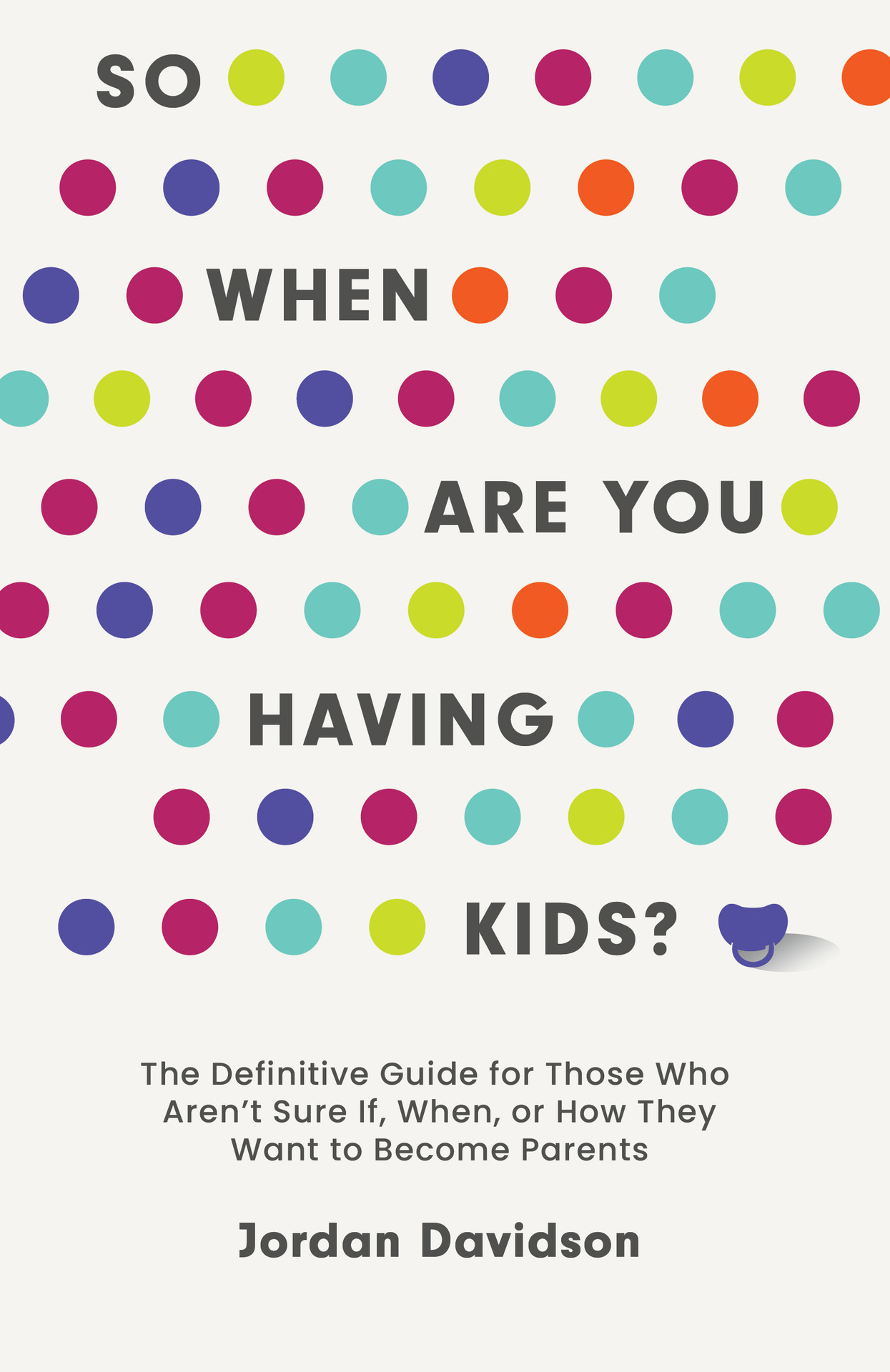
When I found this book, titled So When are You Having Kids? by Jordan Davidson on the new-books shelf at my local library, I had to bring it home. I thought people might giggle if they saw an old lady like me reading this book. That ship has sailed, hasn’t it? Yes. I’m not contemplating getting pregnant, but the book is still full of information that everybody should have, whether or not they ever plan to procreate.

With the subtitle “The Definitive Guide for Those Who Aren’t Sure If, When, or How They Want to Become Parents,” it provides answers to every question a person could have about the making of babies. It’s the only book I have read on the subject that includes LGBTQ readers every step of the way. Davidson offers the reasons why people decide to have children or not, details on how sperm meets egg and what happens then, the straight facts on fertility treatments and odds of success, the inside story on surrogacy and adoption, details on contraception and sterilization, and so much more. All this, and it is not boring. Davidson intersperses personal stories of people with and without children throughout. Even though I’m well past menopause way past menopause, I found it fascinating. Here is everything you did not get in The Talk with your parents or in sex education classes.

“When are you going to have kids?” God, I hated that question. When I was with my first husband, everyone assumed as I attended my cousins’ baby showers, that “Susie” would be next. I would mumble something like, “maybe,” even though I knew my husband wasn’t up for it, not then, maybe never. When I married Fred, I was a little older, but they still assumed babies were coming, and if they didn’t, well, at least I had Fred’s kids and could be a stepmom. I tried to avoid the question as much as possible because another question always followed: Why not?

Well, we’ve got the other three, there are health problems (his vasectomy), I’m prone to diabetes, etc. I never just said, “Fred doesn’t want to have any more kids.” I didn’t quite believe myself that it would never happen, plus I didn’t want to make my husband look bad. So, I just mumbled something and changed the subject.

The author shares an interesting quote from Ethicist Christine Overall, author of Why Have Children: The Ethical Debate: “In contemporary Western culture, it ironically appears that one needs to have reasons not to have children, but no reasons are required to have them.”

She is so right.

I will be returning to this book in future posts because it’s so packed with relevant topics, but this week, I’d like to hear your comments. What do you say when someone asks, “Hey, when are you going to have kids?”

Happy Easter, dear readers. Don’t let all the child-oriented Easter Bunny stuff get you down.

Processing…
Success! You're on the list.

When you don’t have kids and they ask . . .

Why don’t you have children? Sometimes you want to scream, “F-off! It’s none of your business.” I totally get it. But wait. For today’s post, I offer some responses for those times when people come at you with those questions.

Photo by Pixabay on Pexels.com

1. How many kids do you have?

DIPLOMATIC: I don’t have any children. How about you?

SMART ALECK: Kids? I knew I forgot to do something.

CAN’T DO THIS AGAIN: Why do you assume I have children?

2. So you don’t like kids?

DIPLOMATIC: I love kids. I just don’t have any of my own.

SMART ALECK: That’s irrelevant, isn’t it?

CAN’T DO THIS AGAIN: Why do you assume I don’t like kids?

3. Why don’t you have children?

DIPLOMATIC: Things just didn’t work out for us.

SMART ALECK: Why did you have them? Did you stop and think before you did it or just let it happen?

CAN’T DO THIS AGAIN: That is personal and private, and it hurts to talk about it.

4. Why don’t you just adopt?

DIPLOMATIC: Adoption is difficult, expensive, and not what we wanted to do.

SMART ALECK: Why don’t you?

CAN’T DO THIS AGAIN: If he/she didn’t want kids of our own, why would he/she agree to adopt? Why do people assume that’s an option for everyone?

5. Won’t you regret growing old without children and grandchildren?

DIPLOMATIC: Probably, but there will be times when I’m relieved, too.

SMART ALECK: I don’t know. Will you regret having them?

CAN’T DO THIS AGAIN: I regret having to have this conversation again. Why do you assume I’ll have more regrets than you will?

6. Who will take care of you in your old age?

DIPLOMATIC: I worry about that, but I believe my family and friends will be there for me.

SMART ALECK: I don’t know. Do you want to take care of me? We can start the paperwork right now.

CAN’T DO THIS AGAIN: Why do you assume your kids will be around when you need them?  

Your turn: Does this stir up some of your own ideas about how to answer these questions or other questions that drive you crazy? Please share in the comments. Let’s get a good list going.

This is post #800 at the Childless by Marriage blog. Good Lord, that’s a lot of posts. If you keep coming, I’ll keep writing. If you feel the urge to write a guest post, please see the instructions to the right on this page and do it.

Processing…
Success! You're on the list.

What Do the Childless and Childfree Have in Common?

A friend who never wanted to have children said the other night that she knew I wrote about childlessness, but that had nothing to do with her because she chose not to have children. But we actually have quite a lot in common, I said. When I started naming some of those things, she responded, “I never thought of that.” 

Let’s think about it today. How do the childfree and the childless differ and what do we have in common? 

The obvious difference is that the “childfree” have chosen not to be parents. Their reasons vary. They want their freedom, they don’t think they’d be good parents, they can’t afford it, they’re giving their all to their career, or they’re doing their part to save the planet from overpopulation. They reject the term “childless” because they don’t feel “less” anything. 

The childless also come to their state in different ways, from infertility to disability to lack of a willing partner. Some spend years trying and failing to give birth. Some agonize over whether to leave their partner and try on their own or with someone new. They grieve the loss of the life they might have had. They dream about having babies and ache when they see families with children. They do feel “less” a great deal.

These two groups sound very different. But there is a gray area. Some of us chose partners we knew would not give us children. Consciously or not, we made a choice. In some cases, we may even come to feel “childfree.”

What do we have in common? More than you might think. 

  • Most of us do not hate children. We may or may not want to be raising them, but we find them lovable and entertaining and don’t mind hanging out with them.
  • We get bombarded with questions and comments, particularly in our fertile years. “When are you going to have children?” “Why don’t you have children?” “You’ll change your mind.” “Who’s going to take care of you in old age?” “You’re not getting any younger.”
  • We find that our old friends are so preoccupied with their children and later their grandchildren that they don’t have time for us. Besides, they have new friends they met at their children’s schools, soccer team, ballet classes, etc., friends with whom they have more in common now. 
  • We have more freedom because our lives are not tied to the school schedule unless we work in the schools. We never need a babysitter, although we may need a pet-sitter.
  • People ask us how many children we have because it doesn’t occur to them we might not have any. 
  • We worry about who will care for us in old age. My friend is in the process of setting up her will and advance directives. Single and childfree, she is not sure whom to entrust with her health-care and financial decisions when she is incapacitated. She has half-siblings whom she does not feel close to. I have a brother I love dearly, and I have given him the power on all my documents, but I know we think differently about some things. Will he do what I want in the end? What happens if he dies first? 
  • We all hate Mother’s Day. 

A few years ago, I attended the NotMom Summit in Cleveland. NotMom founder Karen Malone Wright had the radical idea that women who are not mothers, whether by choice or by chance, could congregate in an atmosphere of mutual love and acceptance. It worked beautifully. By the end, I had made new friends, some of whom never wanted to be moms. I sat with one of these new friends on the plane ride home and we talked all the way back to the West Coast about everything but motherhood. It was a joy, and we are still friends. The fact that we came to be NotMoms in different ways doesn’t matter. 

I don’t want to downplay the horrible pain of infertility or the rudeness of some people who are militantly anti-parenting, but we do have quite a bit in common, whether we’re childless by choice or not. As for those of us who are childless by marriage, aren’t we making a choice not to have children every day we stay with a partner who can’t or doesn’t want to give us children?

Let’s talk about it in the comments. What do the childless and childfree have in common? What is different?

Processing…
Success! You're on the list.

A Safe Place for the Childless Not by Choice

Dear friends,

Lately in the comments, a few people have been sniping at each other. That’s not good. We get enough of that in the rest of the world. As childless people, we face questions, disapproval, accusations, and folks who can’t resist giving you unwanted advice. Right? Let’s not do that here.

Last week we talked about how some of us—maybe all of us—sometimes keep quiet about our childless status because we don’t want to deal with the reactions. We’d rather blend in and let the parent people think we’re just like them. We don’t want them coming at us with why, what’s wrong with you, etc. Most of us don’t know how  to explain or justify our situation because we’re not sure how it happened or what to do about it. We’re still trying to figure it out. There aren’t any easy answers.

Of course, I’m talking about those of us who have not chosen to be childless, who are hurting over their childless status. The childless-by-choice crowd sometimes gets pretty militant about their choice: Never wanted kids, happy about the situation, feel sorry for you breeders who want to waste your bodies, money and time adding to the world’s overpopulation. Get over it, and enjoy your childfree life. But how can you when you feel a gaping emptiness inside?

In an ideal world, we would all accept each other’s choices, but the world is not ideal. We feel left out, guilty, ashamed, angry, and hurt. We need a safe place. Let this be one. If someone asks for advice—and many readers do—chime in, but we need to support each other’s decisions once they’re made. Don’t add to the hurt. And if a certain gentleman wants to leave his childless older wife for a young, fertile woman who will give him a family, ease up on him. We women might resent some of his sexist comments, but we don’t know what it’s like for him. He’s aching for children just like we are. And sir, don’t be knocking older women. Some of us take that personally. 🙂

Let’s try to be kind here. I am grateful for every one of you. Hang in there.

P.S. Easter was brutal for me. All those kids in Easter outfits. All those happy families while I was alone. Luckily I spent so much time playing music at church that I was too tired to care by Sunday afternoon. How was it for you?

Check out these childless/childfree links

Having written myself down to my last syllable this week, today I am sharing some interesting links about having or not having children.

Get tired of people asking when you’re going to have kids or failing to understand that the decision has been made and you’re not? This fun article in Jezebel by Karyn Polewaczyk may give you some ideas on how to counter those nosy nellies. Thanks to Beth Follini for sharing this in her “Have Children or Not”  blog.

From a book called Why Have Kids by Jessica Valenti comes this excerpt reprinted in The Atlantic, titled “Not Wanting Kids is Entirely Normal.” 

For a perspective on babymaking vs. careers, check out “I am More Than Just a Uterus” on the Road Less Traveled blog.

Finally, visit my friend Jody Day’s Gateway Women blog to read “Healing the Friendship Gap Between Mothers and The Childless.” 

Have a great weekend, dear friends.