Will You Ever Find Peace with Your Childlessness? 

Facing a future with no children used to drive me crazy. Back when I was fertile and married to a man who was not, I cried a lot, mostly where he couldn’t see me. I resented my friends whose lives revolved around their kids. I did not want to hear their happy stories or look at their pictures. Baby showers? What do I know about babies? Count me out.

As far as I knew, there was nothing wrong with my baby-making parts, but they were being wasted, evidenced by painful periods every month, reminders I was running out of time. 

Now I’m 72, childless and widowed. Although being alone can be difficult, I have to tell you that I don’t think about childlessness all the time anymore. If you are in your 20s, 30s, or early 40s, feeling bad because you wanted children and might never have even one baby, know that it does get easier. Like any loss, it doesn’t go away, but you do learn to live with it. 

Yes, you will feel breakthrough grief and anger. You’ll see a family at play or hold someone else’s baby and think I could have had that, but as you get older, it will become a less important feature in your life. You will wonder who will care for you in old age, but know that even if you had children, they might not be available to help.

When you’re surrounded by people getting married and having babies, you feel excluded, jealous, and angry at whatever keeps you from having the children you always wanted. Or you resent the people who keep pushing you to have the children you never wanted. You’ll regret it, they warn. What if they’re right? It can be a brutal time. 

The night before my 40th birthday, I had a meltdown that I describe in my Childless by Marriage book. At a Catholic women’s retreat, everyone was talking about their kids. Our guided meditation put me face to face with what I had lost, and it felt unbearable. As the women running the retreat held me, I sobbed in front of everyone. I felt broken. It didn’t help that I really wanted a drink, and there was no alcohol around.

But as I approached menopause, so many other things took my attention. My writing career was taking off. I was performing music almost every weekend. I earned my long-delayed master’s degree. We moved from San Jose, California to Oregon and experienced a very different life in a small coastal town.

My mother died, my husband was diagnosed with Alzheimer’s disease, and my father needed lots of help before he passed away. You hear about the “sandwich generation,” about people caught between caring for their children and caring for their parents. Without children, we can be open-faced sandwiches, helping our older relatives without neglecting our children. 

By my 50s, people stopped bugging me about having kids, and my friends were free to do non-kid activities again. Yes, the grandchildren came, but that was an off and on thing. We could still be friends.

Do I wish I was a grandmother? Sometimes. but childlessness is not at the front of my mind anymore. I took a different path, and it’s too late to turn back.

With every choice, you lose the chance to pursue the other option. By moving to Oregon, we lost the chance to grow old in San Jose, closer to family and so many resources that don’t exist here. If I had married someone else or not married at all, my story would be different. You choose one road and let the other one go.

I can torture myself by imagining what it would be like to have children, how they would look, what we would do together, how I would hold my grandbabies in my arms. But my life didn’t go that way, and I suspect that’s how it was meant to be. 

Not having children has given me the gift of great gobs of time that mothers don’t always have. Time and freedom. I don’t have to find a babysitter or take a kid with me if I decide I want to go to lunch, take a walk on the beach, or spend the night elsewhere. I just go. 

Would I trade my freedom for a walk on the beach with my son or daughter, maybe with their children splashing in the surf or building sandcastles? In a heartbeat. But that’s not on the menu for me. And I’m 80 percent okay with it.  

Maybe you’re at that age when becoming a parent would still be possible under other current circumstances and you’re driving yourself crazy trying to decide what to do: Leave your partner in the hope of finding someone who will give you kids? Try IVF? Hire a surrogate? Adopt? You may fight with your partner over it and cry a lot.

I know how bad it hurts. I’m saying that later it will be easier. Childlessness will not be the center of your life, and that makes room for other things, wonderful things. 

That’s not nothing.

How about you? Are you going crazy over being childless? Do you regret the choices that led you to be without children? Did you have a choice? Do you think you will ever be okay with it? Or are you fine with it now? Have you found peace with your situation? How?

I’m great-grandmother old. Tell me how it is for you at whatever age you are.

I welcome your comments.

***************************

If you enjoy this blog, you may want to visit my Substack, Can I Do It Alone?
Processing…
Success! You're on the list.

Childless Marriage: Would I Do It Again?

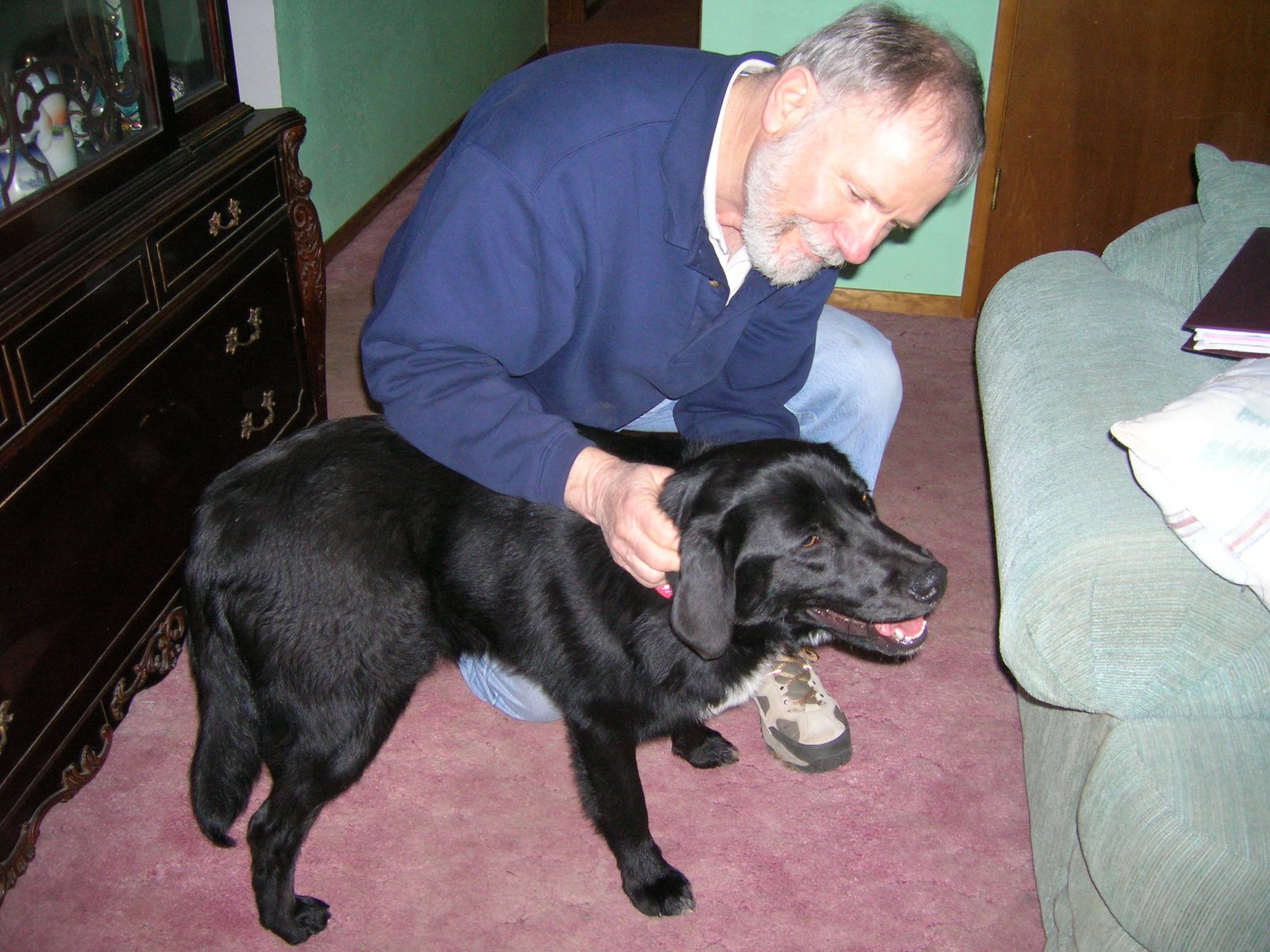
Bearded white man petting shiny black Lab dog between green sofa and antique china cabinet. The man is the author's late husband Fred.

A reader wrote to me last week with a tough question. If I had it to do over, would I stay with the husband who wouldn’t/couldn’t make me a mother? She is currently married to a man who has never wanted children and has had a vasectomy to make sure it wouldn’t happen. They are very happy together now. They have a good life without children. But she is worried that she will regret her decision in later years.

I suspect a lot of us worry about that.

My initial response to whether I would do it over again was I don’t know. But after thinking about it for a minute, I said, “Yes, yes I would.” When Fred and I were married beside a pond on a beautiful spring day with all our loved ones nearby, we had no doubts, no worries, just joy. Out of our loneliness, we had found each other. It felt like a gift from God.

As for children, I thought his three would help fill the gap. I was a workaholic anyway, obsessed with my writing and music. Being a part-time mom might be perfect.

We could not know that Fred would suffer and die from Alzheimer’s disease or that his adult kids would pull away once he was gone. We could not know that I would end up alone in the woods in Oregon while most of my family was back in California.

Life is full of unknowns. Couples discover they can’t get pregnant. Or they break up. Or one of them dies. A new job requires a move across the country. You get sick. You win the lottery. Or you lose everything in an investment that goes wrong.

We don’t know what’s going to happen. The friend who fell off the camper step and broke her pelvis last month surely did not expect to spend the rest of her vacation in the hospital. Fred’s first wife had a stroke this year, catapulting the family into a life of caregiving and nursing home visits. We just don’t know.

All we know is what we have right now. Are you happy together? Is life good? Do you want this to last forever, or are you itching to run out the door? Can you love him or her wholeheartedly? Are they enough? All you can do is put your faith in your love, and in God, if you’re a believer.

Will you regret a life without children? The honest answer is yes, sometimes you might. I do. Most days I’m fine, but I hate not having a big family to gather with on the holidays and to help each other year-round. But would I marry Fred again? Yes, I would. I never met anyone else I could love as much as I loved him. Can you say the same?

I so appreciate you being here. Thank you for your emails and comments. Keep them coming. I don’t have all the answers. Together, we can figure it out.

******

You will be able to read much more about me and Fred in my forthcoming memoir, No Way Out of This: Loving a Partner with Alzheimer’s disease, coming out next June from She Writes Press. It tells our love story from beginning to end, including the hard parts and the joyful ones. That’s Fred in the photo with our puppy Chico, who also plays a big part in the book. Stay tuned for more information.

Processing…
Success! You're on the list.

Younger Self Asks: What if I Never Use My Womb?

The picture shows an open notebook and a woman's hand holding a pen poised over the page. The blurred background appears to be in a wilderness area with lots of fall-color trees.

“I am a woman without children. I’m a fertile woman who can’t have children. It’s more painful than physical inability.”

I’ve been cleaning cupboards. Lots of stuff going into the recycle bin. But these words scrawled on the inside back cover of a yellow notebook from a college European Literature class in 1989 caught my attention. At that time, I was four years into my marriage with Fred. I was 37 years old and making my second attempt at grad school while working as a full-time newspaper reporter. I struggled to take care of home, husband, and my youngest stepson, who had recently moved in with us. It wouldn’t be long before I dropped out of school again because it was too much.

But that note written in tiny cursive where no one else would see it reminds me of how terrible I felt in those days about not having children. All around me, friends and relatives, including my stepdaughter, were having babies. My period every month reminded me that I was not and would never be a mother if I didn’t change my situation ASAP. I was angry and sad and certain that life was NOT FAIR.

Many years later, I have become part of a childless community where most of the people speaking out about it have had fertility problems. They suffered through surgeries, IVF treatments, and miscarriages. They went through hell trying to conceive and bear a child. How can I grieve or complain when I didn’t go through all that? As far as I know, I could have had a baby with no problem—if I had a different husband.

The first husband was never ready, and the second was done with children. He had had a vasectomy and was not going to reverse it. Nor was he willing to adopt. So, no babies for me.

It hurts that I never had a chance to try. Well, there were a couple times without birth control over the years with men who still had sperm, but nothing happened. It’s probably for the best. Those men were scum. But when I imagine lying in bed with a man who says, “Let’s make a baby,” I want to cry.

Yes, I watch too many movies.

People are all too eager to tell me it’s my own damned fault. I should have demanded babies, even if I had to find a different partner. Do I have any right to grieve? If you’re in the same situation, do you?

My former neighbor, a pretty young woman named Brittney, turned up with a newborn the other day. Her third boy. This girl clearly has no problem having babies. Me, I just have an ancient dog who can’t hear and can barely walk.

Not fair? Or just the way life is?

1989 was a long time ago. I’m not 37 anymore. But I feel for that curly-haired woman looking away from her notes about Aristotle’s poetics in literature class, thinking about the babies she was never going to have and writing that tiny heartfelt note.

What do you think? If we accept a life with a partner who can’t or won’t give us children, are we entitled to feel bad about it, as bad as someone who has struggled with infertility? If you left a note to your future self about your childless situation, what would it say?

Photo by ROMAN ODINTSOV on Pexels.com

Processing…
Success! You're on the list.

Other Than Mother: Choosing Childlessness with Life in Mind

Other Than Mother: Choosing Childlessness with Life in Mind by Kamalamani/Emma Palmer, UK, Earth Books, 2017

Kamalamani is a Buddhist priest from the UK who has chosen not to have children. In this book, she looks at the reasons why one might choose a childfree life and how one makes that decision. There is a lot of brilliance here about the childfree life. There is also a lot about Buddhism that is interesting but has minimal connection to the topic. This book is well-written, heavily referenced, and adds new ideas to the discussion, especially about whether our troubled planet needs any more people and whether remaining childfree might be the best response. Women trying to decide whether or not to become mothers may find it helpful.

If this book is about being childless by choice, why should we care about it? Those who are childless by marriage or infertility do have a lot in common with the childfree crowd. Childless by choice or by chance, we are different from people who have children, and we experience many of the same challenges.

For example, we get asked why we don’t have children and have to deal with suggestions from people who do not understand our situation.

Says Kamalamani, “Women are still primarily defined in relationship to motherhood (or non-motherhood). . . I do not question a person or couple’s decision to have children—unless they are close friends seeking advice or a therapy client, and then I tread carefully—so I am intrigued as to the social rules that apply when a stranger feels free to question my decision not to bear children or to tell me with certainty that I shall live to regret my decision.”

In other words, how dare they?

She goes on: “Friends caution that you are missing out on life’s most exhilarating pleasure or reason that your partner will not feel any ties to a childless relationship.”

This statement caught my interest. Is it possible that some men (or women) don’t want to have kids because they don’t want to be tied down, because they see children as the glue that will create a permanent commitment to their spouse or partner? Think about your own situation. Might your partner’s refusal to have children be a way of keeping the door open so that he or she can leave at any time? It’s a worrisome thought, but what do you think? Is that what’s happening in some cases?

Kamalamani is worried about the effect of having so many people on the planet. Maybe we should put as much energy into saving the earth as we put into raising children, she suggests. “After all, whether or not we are parents to children we have ourselves borne, we are all stewards in handing on the legacy of our time on earth to the next generation of earth dwellers, human and other than human.

She looks at other aspects of non-motherhood, including the effects of our childhood and the examples set by our parents; couples who try to fix a broken marriage by having a child, and fear of regrets later in life;

Most people without children seem to feel less regret, not more, as they get older, she says. “In my forties, I think infrequently about motherhood and what I have missed. I am more focused on many other fruitful things: My work as an aunties, therapist, writer, lover, and gardener. Not being a mother is no longer a huge part of my self-identity, although, of course it is a factual reality.”

Instead of having children, Kamalamani suggests, we can tackle “baby-sized projects”. “Many of you are likely to have your own baby-sized projects gestating, well under way, or complete. For those of you who are childless and who have perhaps felt a bit rootless or meandering for the past few years, particularly if this meandering has been due to not knowing whether to try for children, do bear in mind opportunities arising for the emergence of a baby-sized project. This might be re-training in the line of work you have always longed to do, following a vocational calling, going travelling, moving house, or creating a home . . . . There are many ways to create without creating babies . . . deciding not to have children is not an ending, it is a beginning, and the chance to decide to do something other than procreate. It is not necessarily about loss and doom and gloom–as it is sometimes portrayed or maybe misunderstood through others’ projected sympathy—but a potential gain and a different expression of creativity and nurturing.”

This is a fascinating book, but it is loaded with Buddhist philosophy. If that’s a turnoff, you might want to read something else. But I recommend this book. It will get you thinking.

For more information, visit https://www.kamalamani.co.uk/about

I welcome your comments.

***

Earlier this week, I experienced a “sleep study” at the local hospital. How they expect anyone to sleep with dozens of wire attached and someone watching, I don’t know. I felt as I didn’t sleep at all, but the technician said I was “snoring away.” You can read more about this at my Unleashed in Oregon blog.

Not having children never came up during this experience, but I sure wished I had a partner to care for the dog, drive me back and forth, and make breakfast when I got home.

Happy spring, dear friends.

Processing…
Success! You're on the list.

Having children is not the antidote to depression: looking at the suicides of Robin Williams and others we loved


Like so many other people, I can’t stop thinking about Robin Williams, the beloved actor and comedian who committed suicide on Monday. Like so many other people, I felt a bond with him, loved him like family. We were about the same age, both performers, and both from the San Francisco Bay Area. Beyond that, did we have anything in common? Maybe not. But now I do share something with his family: suicide. Many years ago, my great-grandfather killed himself with a shotgun. More recently, my uncle hung himself in his garage. Robin’s death by hanging brings it all back to me. Why couldn’t these men go on?
They all had wives and children who loved them. They had good homes and enough money. They had work and hobbies they loved. It would seem they had so many reasons to live. So, what happened? What demons overpowered them and made them take their own lives?
These men left children and grandchildren to pick up the pieces, not just to do the practical things like arranging funerals and sorting their possessions but to remember and share their memories forever. If they can’t go on, how can we, who may never have children or grandchildren?
We can. We must. I have dealt with depression and anxiety throughout my life. I have been in counseling for years. For most of that time, I resisted taking any kind of medication for it. No, I don’t need drugs, I said. After my uncle died, I changed my mind. Give me the drugs. I do not want to follow in his footsteps. I take a small dose of a mild drug, but it helps.  
You know what? It makes no difference whether or not I have children. Depression is an illness, and it can come to anybody. And you know what’s more important? My life is not just about the children I had or didn’t have. There’s so much more to life. I am a complete person all by myself, and I have been given many gifts that God wants me to use in this life. I hope to use them until I die a natural death and maybe beat my grandfather’s record of living to age 98.
Many people who comment at this blog worry about how they will feel later if they don’t have children. Will they regret it? Will they be overwhelmed by grief that never goes away? Will their lives not be worth living? I have to tell you the hardest part is when you’re still trying to figure out what to do. Have children or not? Stay with this partner or not? Once it’s a done deal, it gets so much easier. There are moments of regret and sadness. It’s a loss, just like when someone dies. You will always wonder “what if?” I’m not going to pretend that I don’t wonder who will pick up the pieces when I die. But even if you never have kids, you will still have a life worth living, one full of gifts and possibilities. You will also have freedom to do things you might not have been able to do if you had children.
If you can’t imagine life without children, find a way to have them. Change partners, do IVF, adopt, volunteer. But if you are certain you have found your one true love, and that love will not give you children, accept that this is your life. Whatever happens, live the life you’re given, and for God’s sake, don’t give up. I know from personal experience that the hardest thing in the world is to reach out when the despair is so heavy all you want to do is disappear. But do reach out. Call a friend. Send an email. Tell someone how you feel. Grab a lifeline that will get you through today and into tomorrow when it will be easier. And if someone you love seems to be struggling, don’t wait to be asked; reach out to them.
We will get through this together. RIP, Robin, Uncle Don and Grandpa Joe.
Have you had a connection with suicide? What qualities give your life value in spite of not having children? Please share in the comments. 

Followup: If I had it to do over again . . .

Years have passed since I interviewed the childless women who are quoted in my Childless by Marriage book. I have begun contacting them to find out what happened after we talked. Are they still with the same guy? Did they have children after all? How do they feel now about not having children? Most recently I caught up with “Aline,” who went by another name in the book but prefers to keep her identify private.
When we talked in 2004, Aline, a journalist, told me that her ex-boyfriend had insisted she abort the pregnancy she had at age 30. She had always planned to have children but had not found the right partner to do it with. At age 34, she said she would go ahead and have a child on her own if it didn’t happen within the next six months. As you’ll see, that didn’t happen.
If you were with a guy when we talked, are you still with him?
I’ve been single for the past year.
Did you wind up having children after all? Is there any chance you still might?
Unfortunately not. Considering my age, I think it’s unlikely. I suppose I can still get pregnant, but no man I know wants a baby with a 42-year-old, regardless of how attractive she may be.
When people ask you now why you don’t have children, what do you tell them?
I want to tell them it’s none of their business, but I just smile and change the subject.
Do you regret the choices that led to you not having children?
Yes. It’s eating me up. I feel like I’ve missed out in life. I feel inadequate and everyone makes me feel so.
If you could go back and change things, would you?
Absolutely. I would listen to my mom and be less picky about men. I would also have kept the baby I was expecting at age 30 and wouldn’t take into consideration the father’s (who incidentally is now married with two children) demands that I get an abortion.
Are there stepchildren or other children in your life that fill the gap?
I wish! I have a 13-year-old niece though who often asks why she doesn’t have a cousin from me.
11. Are you worried about being alone in old age?
All the time. It upsets me that no one will be there for me in my old age. It’s a source of anxiety.
What are you proudest of doing in your life so far? Could you have done this if you had children?
I had an exciting career as a journalist and film critic, traveling all over the world. And I live much of the year in Paris. It upsets me that I have no one to share these with. My friends juggle kids and career, so it wouldn’t have been impossible to raise kids at the same time. It just takes organization and discipline.
What would you say to others who are dealing with partners or spouses who can’t/don’t want to have children?
If you really want children and your partner doesn’t or can’t, then you need to re-evaluate your relationship. Do you love the person enough to make this compromise? You may wake up in ten years’ time full of regret. It’s a big and important issue and if you can’t change his/her mind, then it’s time to move on. Never compromise your happiness for a partner. I should know—I did and it kills me a bit each year.