“I Chose to Be Childfree. I didn’t think I was choosing isolation, too” 

When writer Cassidy Randall’s friend announced that she was pregnant, Randall felt betrayed. The friend she counted on to join her for spontaneous trips, hikes, concerts, or whatever struck their fancy, would soon join the circle of parents whose lives revolved around their families. 

It wasn’t the first time this had happened. One by one, everyone seemed to be leaving her for the mommy track.

When she chose her childfree life, Randall writes in a Jan. 9 article at The Guardian, “I never consciously chose the tradeoff of categorical exclusion from conversations, gatherings and entire friend circles.” 

For those of us who are also single, I think we feel the same kind of loss when our partnerless friends find someone and become unavailable. Suddenly, it’s “Sorry, X and I have plans” or “Sorry, his kids are coming over.” While we’re glad they’re happy, we feel abandoned. You thought you were partners in non-parenting, and suddenly you’re on the outside looking in. 

Randall suffered from endometriosis. When she had surgery for it, the doctor asked if she’d like him to remove her fallopian tubes, too, since she didn’t plan to have children. She told him to go ahead, not realizing this choice would set her apart for the rest of her life. 

Parents are linked by school and after-school events. They meet for playdates, birthday parties, or just to chat about mutual concerns.  I remember the years when most of our church choir had young kids. I often found myself left out of the conversations as they discussed soccer or swim events, shared rides, frustrations with particular teachers, religious education, etc. They were not even aware of me loitering nearby, not sure whether to butt in or just go home. 

Now, we have more in common because their kids are grown. I only feel left out when they start sharing the grandbaby photos. I try to fit in with pictures of my great nieces and nephews, but it’s not the same.

Randall did not want to lose her friends, so she tried to keep in touch. When a friend who usually turned down her invitations was finally able to go skiing with her, the friend thanked her for the invitation and for not giving up. She was glad to know there was still life outside of parenting. 

Years ago, I published an essay in an anthology called My Other Ex, about women’s friendships breaking up. I had lost a friend who became so obsessed with her kids she didn’t seem to see me, even when I was in the same room. Before she had children, we worked together, turning out articles for a local newspaper, and had lots of fun outside of work. She was a bridesmaid for my second wedding. But then the babies came. After one too many times being ignored, I gave up.

Many years later, I don’t know where she is or what she’s doing. The boys must be grown by now. With the maturity of age and having been a caregiver for my parents and my husband, I understand she had no choice back then. Caring for little kids takes all of your attention, time, and energy. You can’t just put them in the yard like a puppy. But when the kids go to school and get old enough to look away for a while, your friends have more time for you, if you stick around. 

Parenting is often said to be the most important job there is. I don’t have to be a parent to see that. But how do we fit into the picture without feeling completely isolated? 

I have no perfect answers. When my friends and family were having babies, I mostly shied away. But I do have some suggestions:

  • Don’t take offense because they’re too busy to socialize with you. They just can’t right now. 
  • Instead of focusing on your own lack of children, take an interest in theirs. Join their activities when you can. Cheer at their soccer games, go with them to Chuck E. Cheese, or watch a child-friendly movie together. You can bring the popcorn. 
  • Offer to help, even to babysit if you’re comfortable with that.
  • Keep in touch. Invite them out or ask if you can come over. If they say no, try to understand. Someday, they might say yes.
  • A “how are you doing?” text or a bouquet of flowers might make their day.
  • Help them buy gifts for their kids. Sit with them at the hospital if a child is hurt or take care of the healthy siblings. Help pick up the Legos. Bring food so they don’t have to cook.
  • Instead of feeling betrayed and left out, expand your friendship into honorary aunthood. Expand your two-some to include the mate and kids.  

If you can’t beat ’em, join ’em, the saying goes.

I know it’s hard. It might be too painful to be around children when you can’t have any of your own. A good friend will understand that. Maybe you can Facetime while the kids are napping or arrange a “playdate” for just you and your friend. Sometimes you are going to be left out, no matter what you do or say, because you don’t have children. Our lives are different; it can’t be helped. We may have to make new friends. But we can at least be open to staying connected. 

Enough from me. When do you feel most isolated, especially among people who have children? How do you react? Do you have any advice for how to deal with this?

Feel free to share stories of times when you felt especially left out or to disagree with my suggestions. 


Anything that makes us different, including childlessness, age, disability, ethnicity, sexual orientation, and so many other things, can divide us. I feel that way not only because I’m childless but because I’m widowed and live alone. I write about it at my Substack “Can I Do It Alone?” My main goal there, as for everything I write, is to build community and to shine a light on what our lives are like.  
Processing…
Success! You're on the list.

Childless Travel Robert Frost’s ‘Road Less Traveled By’

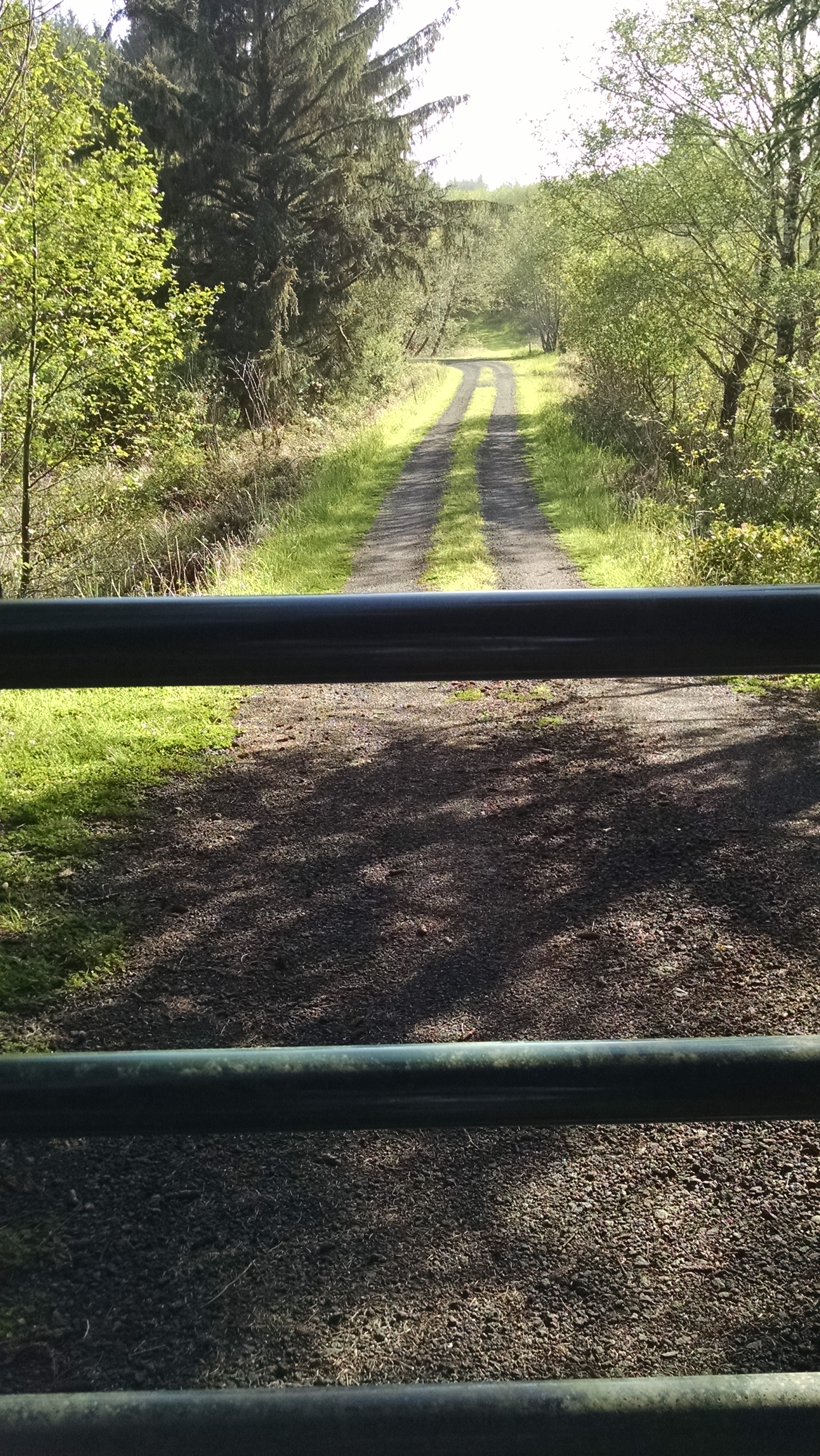
Metal gate in foreground blocks access to rutted road surrounded by trees going off into the distance.

Yesterday was Halloween. I imagine it was a busy day for people with children. Moms and dads would be dealing with costumes, candy, parties and trick-or-treating while their excited kids drove them crazy. Me, I put on my orange sweatshirt and pumpkin earrings and settled in for an ordinary day. I have no children, and we don’t get trick-or-treaters out here in the woods.

Halloween is just one example of how parents and non-parents live in different worlds. The differences are small at first, but they grow exponentially over the years.

We all start out as young people whose lives revolve around family, school, hobbies, friends, sports, jobs, and maybe church. But we grow up. We pair off. When your friends, siblings, and cousins have children, suddenly their lives revolve around their offspring because the little ones need constant attention. Hobbies, social life, and friends fall away.

Meanwhile, you’re still busy with school, work, hobbies, and relationships. Instead of caring for children, maybe you travel, build or remodel a house, or study for a master’s degree or PhD. You try to socialize with your old friends, but they’re busy with their kids. They have new friends, friends who are also parents.

You get older. At your high school reunions, the others talk about their children and grandchildren. They brag about their kids’ marriages and their jobs and commiserate about their problems. You talk about your work, hobbies, and travel. All you have in common is fading memories of your school days and worries about your aging parents.

In old age, your parents are gone. No younger generation is coming up behind you. Your family is shrinking. Your parent friends send Christmas cards filled with news about their growing tribe of children, grandchildren, and great-grandchildren. You send a photo of your dog or cat. If you meet these friends at a reunion or a funeral, you have nothing to talk about.

Yes, there comes a time when the kids are grown and you can come together with the parent people again, but their family will always be their top priority. At times, you will envy them and grieve for what you have missed. At other times, you will relish the freedom that allows you to be more than “Grandma” or “Nana.” You are still a full-fledged person with your own name and dreams that you are still chasing. Do they envy you? Sometimes I’m sure they do.

You live in different realities now. You can visit, but the bridge between worlds is a shaky one.

If you are still deciding whether or not to have children, consider how your life will take a different path. It’s not necessarily better or worse, but it is different, and the distance between the two ways your life could have gone will get wider and wider.  

Robert Frost’s poem “The Road Not Taken” ends with these lines:

Two roads diverged in a wood, and I--
I took the one less traveled by,
And that has made all the difference.

Have you seen the divide happening in your own life as friends and family become parents and you don’t? What do you think about all this? I welcome your comments.

Photo taken on Thiel Creek Road, South Beach, Oregon, copyright Sue Fagalde Lick 2015

Processing…
Success! You're on the list.

Have you lost friends because you don’t have children?

Yesterday I received the welcome news that an essay I wrote about losing a close friend when she became obsessed with her babies will be published in an upcoming anthology about women and lost friendships. They’re calling it My Other Ex: Women’s True Stories of Leaving and Losing Friends. I like the title. For me and I suspect for many other women, my best friend growing up was like a spouse. We did everything together, spent all our time together, called each other on the phone five minutes after we got home. In many ways, our relationship was as intimate as a marriage. But sometimes when we grow up, life takes us in other directions.

Actually, my childhood best friend, Sherri, is still my best friend, even though she had the audacity to move to Texas. Whenever we call, we pick up right where we left off. The fact that she has a daughter has done nothing to interrupt that friendship.

It was different with the woman I wrote about for the anthology. We met as young adults. We worked together and we hung out together in our spare time. We looked so much alike people thought we were sisters. When we met, she was married but didn’t have any children. I was recently divorced. We were so close that I asked her to be my matron of honor for my second wedding. But then she started having babies. She quit her job to become a full-time mommy. Suddenly we didn’t speak the same language. We tried for a while, but our friendship faded away. I hate that.

These days I have other friends who have children. On Memorial Day, a friend invited me to her house for a potluck. All afternoon, the center of attention was a six-month-old baby girl, and much of the conversation focused on the other women’s children. I didn’t have much to say. Nobody asked about my children, which is good because then I’d have to say I didn’t have any and there’d be that awkward thud in the conversation. Luckily we also talked about a lot of other things, but it always came back to that baby. And why not? She was fascinating. I like all these people and I plan to continue hanging out with them, sharing our love of music, dogs, and life in Oregon. But I’m older and wiser than I was when my lost friend was having her baby boys. I know that sometimes we are not going to connect because I don’t have any experience with babies, and we just have to work around it.

Interestingly, another woman wrote an essay for the anthology from the other point of view. She was the one who had a baby and lost her friend because of it. I’m looking forward to reading what she wrote.

The book is coming out in September. For information, visit http://www.herstoriesproject.com.

Meanwhile, I have a question for you. Have you lost friends because one of you had children and the other didn’t? Please share your stories in the comments.