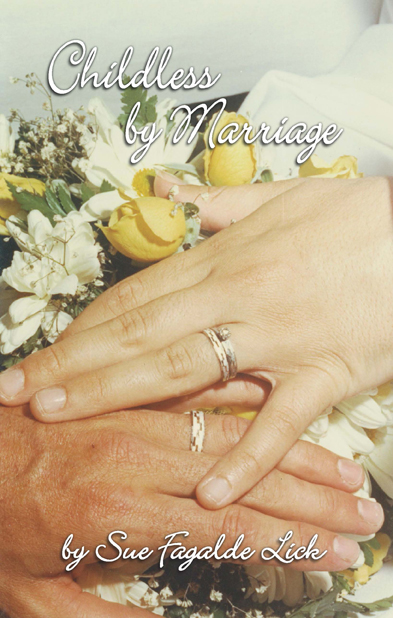
Childless by Marriage is all grown up–and we have an audiobook now

Childless by Marriage the book is a teenager. Published in 2012, it’s not the bestseller I had hoped it would be, but it’s a good book, and I hope it has helped people understand what it’s like to not have children because your partner is unable or unwilling to make babies with you.

It has lots of siblings now, including Love or Children: When You Can’t Have Both, which includes some of the most popular posts and comments from the blog between 2007 and 2020. There have been many new posts since then, and they are all archived on this site.

When Amazon offered a chance to create an audiobook version of Childless by Marriage, I went for it. The voice is computer-generated, not mine, but I like the way she sounds. This makes the book accessible to people who are visually impaired or who simply prefer to listen to books while they do other things.

While I was listening to the audio version, following along with a printed copy of the book, I discovered typos and words left out or misspelled. I was horrified. Typos in books drive me crazy, so I had to fix them. I spent many hours doing that last month. I am happy to report that I have now corrected and updated all versions, print, Kindle ebook, and audio. You can buy them at Amazon.com, or your favorite bookstore can order the print book through Ingram.

One good thing about producing books instead of children, especially in the computer age, is that you can go back and fix your mistakes. You can’t do that with most things in life. If for some reason you can’t have the children you wanted, you can’t go back to the original Word file and change the story of your life. Instead, you’re forced to make a tough decision. Do you accept the situation as it is, find a new partner, adopt, or try IVF? Do you settle for fur-babies or open a daycare? Do you grieve the loss or embrace the childfree life, or a little of both?

As I mentioned a couple weeks ago, I will soon stop blogging here. By the end of August, I will have shared 900 posts. If the book is a teenager, the blog is old enough to move out and live on its own. It’s time to let it go.

All of the posts will remain online for you to read, along with my resource page, bibliography, and updates on all things childless. I plan to create an index, but meanwhile, you can search right here on this page for whatever interests you.

I will also continue my Childless by Marriage Facebook page and would love to see some of you there.

At this point, my life is so far past the question of whether or not to have children that it’s time to let younger writers take the stage. There are many of them with so many more books, blogs, podcasts and support groups for people who are childless not by choice.

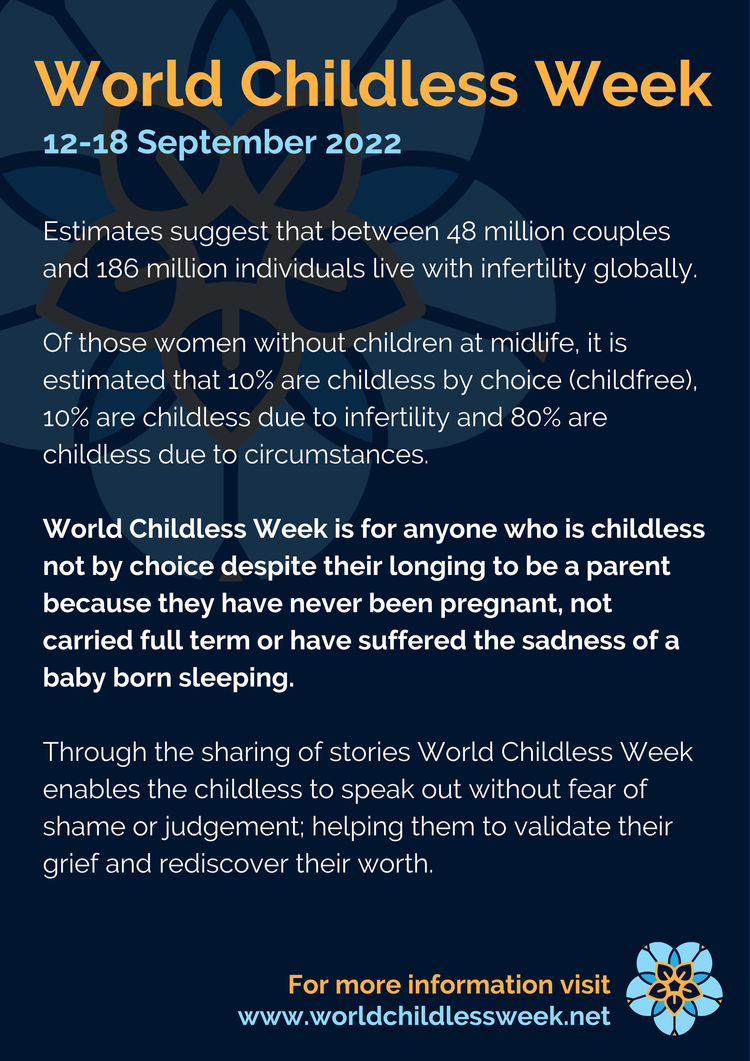
We even have a World Childless Week, hosted by Stephanie Joy Phillips, which offers tons of talks and workshops, readings, and resources, all online. This year it will be Sept. 15-21. Visit https://worldchildlessweek.net for more information.

One of the strongest voices in the no-kids community is Jody Day, founder of Gateway Women and author of Living the Life Unexpected. She has passed her own torch to Katy Seppi, who continues the work as The Childless Collective. Meanwhile, Jody has turned her attention to childless older women and is doing wonderful work there. Read her newsletter and subscribe to her Substack, https://jodyday.substack.com.

Not so long ago, people didn’t talk about childlessness. If someone didn’t have children, there were whispers about possible infertility—poor thing—but no one said anything out loud about it. But times have changed, and our numbers have risen. We can share our stories without shame so people can know and understand. No more secrets.

Question: As I prepare my last few posts, what do you wish someone had told you as you faced the possibility of life without children?


Nomo Crones meet next week

Jody Day hosts quarterly “Childless Elderwomen Fireside Chats” with women from all over the world. I have been lucky to participate in most of them. We have discussed everything from aging alone to how to deal with obnoxious questions about our parenting status. On Saturday, June 28, at 11 a.m. Pacific time, we “NomoCrones,” as Jody calls us, will discuss the often-buried subject of menopause and life beyond our fertile years. As always, it will be lively, with plenty of laughter and probably some tears. You can register to join us anonymously at bit.ly/gwe-meno. You will not be seen or heard, but the chat is always a big part of the festivities. The session will be recorded, so you can listen live or whenever you want to.

Meanwhile, Jody has published a terrific post about menopause and aging without children. You can read it here.


If you want to know what I’m up to these days, visit my “Can I Do It Alone?” Substack at https://suelick.substack.com or on Facebook at https://www.facebook.com/suelick

Childless, childfree: Does Either Word Really Fit?

Childless. How does that word feel to you? Comfortable or not quite right, like the dress I ordered online and might have to return because it doesn’t allow enough room for my bust?

Do you call yourself childless? I use it in the name of this blog, but there are a lot of people who bristle at the term.

Child-less. It implies we’re missing something. Our life is less than it might otherwise be. But can’t our lives be full of wonderful things without children?

People who have chosen not to have children often call themselves childfree. They emphasize the freedom of a life without children to care for, as if kids were a heavy load they don’t have to carry.

I could claim the childfree term, too. I mean, even if I expected to have children and grieve that I didn’t, I don’t have the obligations of parenting. I am therefore free. Right?

I don’t know. The whole concept makes me squirm.

Here’s another question: if you are still young enough and fertile enough that having a child is possible, albeit unlikely, when do you declare that you are childless or childfree? If you have had a hysterectomy or had your tubes tied, you have a definite answer. No kids. But what if it’s still a possibility? How do you classify yourself when you’re not certain if this is forever?

What if your partner is happily childfree but you feel childless?

Neither of these terms is comfortable for everyone. Other terms have been suggested: not-mom, nonparent, or nomo (not mother). But they’re all “not” something.

In medical terms, a woman who has not given birth is nulliparous. I don’t know what doctors call a man who has not fathered a child. Just a man, I suppose. This article in Psychology Today calls them “non-dads.”

For men, sometimes there’s the snide addition “as far as we know,” implying one or more of their sperm might have hit home during their various sexual liaisons.

Wikipedia defines childlessness as the state of not having children. They break down the reasons for childlessness: infertility, ob-gyn problems, mental health difficulties, chronic illness/disability, lack of a partner or same-sex partner, social or legal barriers, economic or social pressure to pursue career before children, lack of resources, insufficient money, lack of access to medical care, jobs commitments, unwillingness of one’s partner to conceive or raise children, and death of one’s conceived children before birth or after.

Childfree, says Wikipedia, refers to people who choose not to have children.

Rachel Chrastil, author of the book How to Be Childless: A History and Philosophy of Life Without Children, wrote in another Psychology Today article, “I define someone as childless if they never had a biological child and have never been deeply involved in raising a child, whether through legal adoption or otherwise.”

She says she calls herself childless “with the caveat that I don’t view the absence of children as a deficit to be overcome.”

In an article at She Defined.com, Donna Carlton defines childfree as making a conscious decision not to have children and childless as a situation where the person wanted to have children but was not able to and thus “the decision is out of their hands.”

That sounds pretty black and white, but it’s not. Judy Graham, counselor and founder of WomenHood, a support service for childless Australian women, says that sometimes women move from defining themselves as childless to childfree as they get older and realize they prefer life without children.

I call myself childless in my writing, but when people in real life broach the subject, I don’t say, “I’m childless.” I say, “I never had any children.” Or “I don’t have any kids.” Then, as we have all experienced, the conversation stalls out, or the other person says something dumb, like, “I wish I never did” or “You can have mine” or “You’re lucky.” If you’re younger, you probably hear, “There’s still time” or “Don’t wait too long.”

I don’t know about you, but I often feel driven to explain how I really did want children but was not able to have them. Sometimes I say, “God had other plans.” Although the real reason is that both my husbands were unwilling, I never put the blame on them. Usually, I just change the subject.

To be one hundred percent honest, sometimes it hurts like hell that I don’t have children and grandchildren, and other times, it’s okay. Where’s the term for that?

I started thinking about this during the recent World Childless Week, where, of course, “childness” is part of the name. Many of those involved are childless due to infertility, which was not my situation. But I attend because however you got to not having children, the bottom line is you don’t have them.

Childless. How does that word feel to you? Comfortable or not right, like the dress that didn’t allow enough room for my bust?

Photo by Leeloo The First on Pexels.com

Processing…
Success! You're on the list.

Can Pets Fill the Empty Space Where Children Would Be?

Are dogs and cats a good substitute for children? In some ways yes, in other ways no. But they do fill a gap in our lives. 

Yesterday was Pet Day at World Childless Week. Many people posted stories and pictures about their “fur babies.” Read them all at https://worldchildlessweek.net/the-importance-of-pets

I was particularly taken by a piece written by a woman who calls herself “LabraMummy.” The owner of two labrador retrievers, she writes, “What I know about being unable to have children is that family takes ALL forms and that being part of a family means being able to love and care for someone other than yourself.”

She goes on: “I know there are people who don’t like the term furparents or furkids but I fully embrace being known as a furmumma. Hence, I call them my family members rather than my pets. To each, their own!”

Another contributor, LH writes, “Being a parent is not only about giving birth to a baby you conceived. After all, we have grandparents and godparents also. Being a parent is about loving something and taking care of it, putting its needs before your own, doing what you can to help it have the best life possible which is exactly what us fur parents do.”

The panelists at a World Childless Week webinar titled “Who Rescues Who” agreed with LH and LabraMummy that while cats and dogs are not the same as humans, they do offer an experience of having a family and they provide a great deal of comfort to those who are grieving the loss of the children they might have had. 

I believe that’s true. It has been sixteen and a half years since my late husband Fred and I adopted Chico and Annie, the puppies in the photo. It was 2008. Fred had Alzheimer’s disease. It had advanced to the point that we had aides coming in because I couldn’t leave him alone. In less than a year, he would move into a nursing home, but we didn’t know that then. 

The puppies brought us a lot of joy at a difficult time. 

Here’s a little of what I posted then:

Fred and I adopted two 7-week-old puppies last week, and it really feels as if I have two babies. They’re the same weight as babies, have the same needs, and fill the same needs in my heart. 

Last night, my church choir surprised me with a puppy shower. There were two baby blankets, but of course no little onesies. I did get dog treats, chew toys galore, balls, weewee pads, and lots of advice. There was a gorgeous, white-frosted cake with big red flowers on it. This may sound totally nuts, but it felt as if I had received something I’d been waiting for all my life. I sat on the floor of the chapel opening presents and soaking it all in.

Puppies are certainly not the same as humans. They won’t take care of you in your old age. Conversations are rather one-sided. And they poop and piddle on the floor. But for the childless person who wanted children and didn’t have them, they’re one way of filling that emptiness.

And the following week, I wrote:

Almost three weeks into it, I feel much more relaxed about the whole puppy business. We’re falling into a routine. I feed them breakfast, take them out, stash them in the laundry room while I shower and have my breakfast, then we all dash down the hall to my office, where they munch their rawhide chews and fall asleep.

Every hour or so we have to go out because their bladders are small. I still pack one under each arm to carry them out because I don’t trust them not to pee in the house, especially when they just woke up, but that’s 27 pounds of dog now. It’s a race between housetraining and dog growth.

Eventually they have lunch, they potty, Fred and I have lunch, and we all go back to work, stopping every hour or so for a potty break and playtime. We repeat the routine until they fall asleep for the night and peace finally reigns over the kingdom.

As for training, it’s coming along, most of the time. They sit, they come, they bite less, although they’re still better paper shredders than the machine in Fred’s office. When they’re not eating, excreting or sleeping, they’re usually wrestling. It drives me nuts. But I think I had a breakthrough this morning. I actually got them to separate and sit perfectly still for at least a minute.

What has all this got to do with childlessness? Lots of things, actually. These are my baby substitutes. There is no denying it. At 56, this is the first time I have ever cared for a baby anything longer than a couple hours. I am learning lessons that mothers of human babies learn much earlier in life, especially this: the child’s needs come first. I’m struggling to spread my attention among the pups, my husband, and my work. I’m losing work time and spending tons of money on these little guys. These are all experiences that are familiar to women with children, but they’re new to me.

Dogs are not children. But I call myself “Mom.” And God help me, every friend who calls or visits gets called Auntie or Uncle so-and-so. I can’t help myself.

Those who follow the blog know that I lost Chico just shy of two years old, and Annie passed away a year ago at age 15. I am just beginning to look for a new dog. Not a puppy. I don’t think I can do that again, but a grownup dog friend who will become my family. 

What do you think? Can pets fill in the gaps where don’t have children and make us a family? Tell us about your furbabies–or if the term makes you cringe, tell us why it does? I welcome your comments. 

World Childless Week continues for a few more days. Check the schedule at https://worldchildlessweek.net. As part of the “Childless Elderwomen,” I joined a panel discussion today on friendships and how we have them when our friends are busy with their children. I’ll let you know when the recording is available.

Processing…
Success! You're on the list.

Media depictions of childlessness miss the mark

Cartoon image of Cruella de Vil from 1,001 Dalmations. She has gray skin, wears a fur coat, a red glove and is holding a green cigarette holder. She has an evil grin.

When was the last time you saw our lives without children accurately portrayed in a book, movie, or TV show? Can’t think of anything? That’s because you probably didn’t see anything like that. 

Childless in the Media was the subject of a panel discussion I joined on Zoom last Thursday as part of World Childless Week. Gateway-women founder Jody Day led the discussion. Joining us were author Annie Kirby, counselor and author Meriel Whale, journalism professor Cristina Archetti, and Rosalyn Scott, an editor who runs the NoMo book club featuring books by and about childless women. You can watch the webinar here.

We all agreed that true-to-life images of people without children are hard to find. The childfree are depicted as career-obsessed, hard-hearted, and possibly crazy. Remember Alex in “Fatal Attraction”? Or the countless female characters who were forced to go back to their small-town families for some reason and discovered a handsome hunky flannel-shirted stranger who brought out their feminine mothering side? 

The childless, unable to have children due to infertility and other reasons, are shown as pitiful–until, tada!-a baby magically falls into their hands through adoption or a miraculous conception. The partner who didn’t want kids has done a complete 180 and is delighted to become a parent.

Even those who seem to be set in a childless marriage because one partner doesn’t want to have children–Penny in “The Big Bang Theory”–change their minds. Penny is pregnant and happy about it at the end of the show.

Cristina Archetti, attending from Norway, did a study of 50 films from Norway, Italy, and the United States. The stereotypes hold across cultures, she said. The childless characters either die by suicide or murder, become mothers–thus “normalizing” their lives, or become psychopaths. The exceptions: men and superheroes. Superwoman is apparently okay with not having kids. She’s too busy saving the world. 

Her conclusion: The childless, especially women, are seen as unnatural, broken and needing to be fixed, or as monsters. Yikes. I don’t think that describes most of us. But people often believe what they see in the media. We need truer images of what it’s like to be childless.  

Jody Day asked people who registered for the webinar to list their most loved and hated childless characters. Carrie Bradshaw of “Sex and the City” came out high on both lists. She married Mr. Big relatively late and he didn’t want children. She accepted that with little protest. In the new series, taking place many years later, the widowed Carrie is dating again and children seem to be the last thing on her mind. 

Some of the beloved childless characters include Mary Poppins, Miss Marple, and Jessica Fletcher of the “Murder, She Wrote” series. 

During our discussion, Annie Kirby read from her book The Hollow Sea, and I read portions of my Up Beaver Creek novels  that include childless characters. Meriel Whale shared from her forthcoming book The Unreal City. We believe there is a market for stories about women like us who don’t have children and are not crazy, mean (Nurse Ratched?, Snow White’s wicked stepmother? Cruella de Ville), or likely to end up with a baby at the end (“Mike and Molly,” “Friends”). 

Who would you name as childless characters you admire or hate? 

Is it hard for you to watch shows or read books that are filled with parents and children or that offer magical solutions to childlessness? Can you name any movies, TV shows or books that get it right? 

What do you think? I would love to read your comments. 

  Meanwhile, check out @Nomobookclub on Instagram. 

Little by little, by telling our own stories and sharing the ones that show childlessness as it really is, we can help change the way the world looks at us. 

Processing…
Success! You're on the list.

‘You’re so lucky you don’t have kids’–Are we?

“You’re so lucky you don’t have kids” is one of the themes for next week’s World Childless Week. On Friday, Sept. 15, the Childless Elderwomen, including me, will discuss old age without children, a topic that scares the heck out of most of us. 

Are we lucky? Let’s be honest. Sometimes we are. We’re not crawling out of bed early to make lunches and drive the kids to daycare or school, spending all our money on children’s clothes and school supplies, or having every attempt at an adult conversation disrupted by a kid who demands our attention. Mom! Mom! Mom! Dad! Dad! I’m bored! 

But we’re also not having a little one snuggle with us and say, “I love you.” We’re not seeing our family traits reproduced in our children. We’re not saying “my son” or “my daughter” with pride.

We’re not worried every minute that our children might be sick, hurt, scared, or in trouble. 

But we’ll never have adult children who worry that WE might be sick, hurt, scared, or in trouble. I know some kids leave the nest and never look back. But there’s a good chance they’ll be around.

Lucky? Yes, I have time to work from dawn to bedtime without interruption. I only have to take care of myself and my dog. But that feels more like a consolation prize. 

We offered our lives to a partner who couldn’t/wouldn’t give us children. If that partner is still with us, they will take care of us, and we will take care of them. But what if they’re gone, or what if we never had a life partner? What if we are what some call an elder orphan? Parents gone, no spouse, no kids.

My brother visited me last week. He has a wife, two kids, and three grandchildren. The chain of people looking out for “Papa” is clear. Not so much for Aunt Sue. We huddled in the den and talked about aging and death. I handed him an envelope with all of my financial information, my wishes if I die, and a draft of my obituary. We talked about wills, powers of attorney, and health care representatives. If I’m suddenly unconscious, who will be legally allowed to take care of things? It needs to be clear and official because my nearest family member lives 700 miles away. 

We talked about who I would leave my money to, about stepchildren and his children and charities I could fund. We talked about setting up a trust. With no obvious heirs, I’m free to do what I want with whatever’s left. Lucky? Maybe.

We talked, too, about who will handle things if he dies first. The possibility breaks my heart, but I may have to pay a professional, someone who doesn’t even know me. 

Enough doom and gloom. But I want you to consider this visual image. A photo of my brother’s family has seven people in it. There will be more as the young ones marry and have their own kids. The photo of my family has just one person: me. 

Lucky? An old Janis Joplin song says, “Freedom’s just another word for nothing left to lose.” 

There are advantages and disadvantages to not having children. I’m heading out of town today. I’m not taking a rambunctious three-year-old. Lucky. No one will ever call me “Mom” or “Grandma.” Not so lucky. 

What do you say when someone says “You’re so lucky not to have kids.” 

Are there words for that? Or do we just stare at them with a look that says, “You have no idea.” 

Join us next Friday for the Childless Elderwomen talk, hosted by Jody Day. It’s at noon Pacific time. The website will help you find your time. Register at https://gateway-women.com/gateway-elderwomen/. Attendees are not visible on the screen, so you can be totally anonymous. 

Visit https://www.worldchildlessweek.net for the full schedule of events. 

Processing…
Success! You're on the list.

Don’t Hide Your Childless Story; Share It

Image is mostly text listing categories for stories to be submitted for World Childless Week. Small images on left, white words on blue on right.

Writing about being childless is not always easy. Sometimes just talking about it is a challenge. Even though I am a writer, sometimes I just want to shut up about the whole not-having-children thing. It’s easier to try to blend in. Dwelling on it hurts, and people often react in ways that make it worse.

You shouldn’t have married him. You shouldn’t have let him deny you children. You should have seen another doctor. You should have adopted. You’re lucky you don’t have children. You’re lucky to have so much freedom. Look at all the money you’re saving. Are you still whining about not having kids? Etc.

But we need to say it out loud so that others in the same situation know they are not alone and so that people who do have children begin to understand what it’s like for us.

It’s not our fault. Or maybe it’s a little our fault, but it’s a done deal now. Adoption is hard and not the same and we decided not to do it. Some days, we do enjoy our freedom and the extra money, but other days we cry our guts out when we see a woman playing with her grandchild or hear about a friend having a baby. And no, marrying a person who already has kids is not the same, not even close.

I’m just riffing here, but does any of that sound familiar? Well, here’s a chance to speak up in a safe space without those negative responses.

World Childless Week, Sept. 11-17, is coming up. Organizer Stephanie Joy Phillips has been gathering personal stories to share on the website. Each day has a different theme.

Sept. 11: Your Story

Sept. 12: Being a Stepparent

Sept. 13: A Letter to the Person Who Hurt Me the Most

Sept. 14: Childless in the Media

Sept. 15: You’re So Lucky to Not Have Kids

Sept. 16: I am Me

Sept. 17: Moving Forward

Stephanie is looking for 800 to 1,000 words, but the stories can be longer or shorter if that’s how it works out. For full guidelines, click here.

I submitted a piece on being a stepmother. It felt good to say it out loud, the good and the bad, in a place where my stepchildren will never see it. It might feel good for you, too. The deadline is Sunday, Aug. 27. I know that’s not much time. But try writing something about your childless experience. The only people reading it will be other childless people like you and I, so you won’t get all those garbage responses from people who don’t understand. You don’t have to use your real name.

If you miss the deadline or find you have more to say, send something to publish here at Childless by Marriage. Guest posts are always welcome. You can use a false name to tell your real truth. Use the guidelines on this page.

Or maybe just try writing something for yourself that you will never show to anyone. Spelling and grammar don’t matter. Just let the words flow. Sometimes writing out your thoughts and feelings helps to make sense of things. If you’re worried about someone reading it, you can delete the file or burn the pages when you’re done.

Even if you don’t get anything written, do plan to attend some or all of the World Childless Week discussions. They’re all on Zoom and free. Every session may not apply to your situation. Choose the ones that do. Your face and name will not appear on the screen.

I will be one of the panelists for the Sept. 14 talk on how childlessness is portrayed in the media and again on Sept. 15 for the Nomo Crones’ fireside chat about aging without children. Both should be a lot of fun and very interesting.

As always, I welcome your comments and thank you for being here.

Processing…
Success! You're on the list.

Childless by marriage vs. childless by infertility

Being childless through infertility and being childless by marriage, when the issue is not lack of eggs or sperm, are two very different things. With infertility, couples try hard to conceive and deliver a child. They undergo all kinds of invasive treatments, spend huge amounts of money, and ride a rollercoaster of hope and disappointment, only to end up still childless. Some suffer multiple miscarriages and a grief those of us who have never been pregnant can only imagine.

They have no choice in this outcome. They did everything they could. Adopt? It’s not so easy, especially if you have already used up all the time, money, and energy you can spare.

When a couple is infertile, whether the problem is from his sperm or a problem with her reproductive system, their only choices are to accept their fate, try whatever they can, and ultimately to stop trying. They do it together because they both long to be parents.

It is possible to be childless by marriage because your spouse is infertile. You may not know that in advance. When you find out, you have a choice: stay and face the same choices as other infertile couples or split up and look for someone who can give you children.

Is that your story? I know some of you reading this are in that situation.

What if you knew going into the marriage that children would be impossible with this person? So many men, especially those who were married before, have had vasectomies. Is it possible to get them reversed? Yes, but the surgery doesn’t always work. The longer it has been, the less likely the man will be able to provide healthy sperm.

What if there’s no physical reason you can’t have children together? What if it’s just that your mate does not want kids? That’s quite different. I wonder about relationships where couples disagree on something so huge. What else will they clash on? Money? Career? Where to live? But you love each other. So maybe you can accept a marriage without children. Or maybe you can’t. You do have a choice. You can take your healthy sperm or your fertile ovaries elsewhere.

What if you never find anyone else? Ah, that’s the risk. It’s a gamble. But unlike those struggling with infertility, at least you get to roll the dice.

Last week’s webinars at World Childless Week got me thinking. A majority of the speakers were childless due to fertility problems. They are grieving and trying to build new lives after years of fertility treatments and disappointment. As I sat here with my healthy never-used uterus, I could identify with much of what they said because we are all lacking children. We all deal with insensitive comments, feel left out at family gatherings, and grieve the children we might have had, but suddenly it came at me with big flashing lights: I had a choice. They did not.

What do you think about this? How is it different being childless due to infertility and being childless because you chose a person who doesn’t want kids? I’d love to hear your thoughts.

If you missed any or all of the sessions at World Childless Week, you can still watch the recordings at worldchildlessweek.net.

Thank you all for being here.

Processing…
Success! You're on the list.

World Childless Week, Sept. 12-18, is Your Chance to Feel Less Alone

poster for World Childless Week, white type of blue background

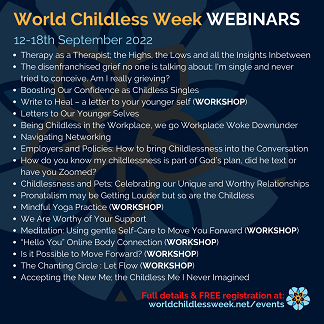
Next week is World Childless Week. Founder Stephanie Joy Phillips offers seven days of webinars, workshops, and access to resources for those of us who are childless not by choice. Some of the sessions focus on those who have struggled with infertility. If that is not your issue, you might want to skip those, but there is still a lot to be gleaned from these free online sessions. See the poster below for a list and register for the sessions that interest you. They will be recorded, so if you can’t make it at the time they’re aired live, sign up anyway. Many of the speakers are in the UK and their time is many hours different for people like me on the U.S. west coast.  

Each day has a theme. On Wednesday, Sept. 14, the “Nomo Crones” group, which includes me, will read letters to our younger selves. What would you say at 40, 60, or 80 to 20-year-old you? I will share mine in a Zoom session with the other crones at noon Pacific time and publish it here in the blog next week. I would love for you to try that exercise yourselves. It doesn’t have to be long, just a page or two. If you are willing, I can share them with the readers here at Childless by Marriage.

Here are Stephanie’s instructions:

Picture of Stephanie Joy Phillips, multi-colored dress, short red hair, big smile
Stephanie Joy Phillips

“Do you wish you could send your younger self the strength, confidence and love to face the future you’ve already lived? Let them know they are worthy and perfect just as they are, no matter what decisions they make and what life throws at them? Write that letter and share with them everything you can to help them realize how important they are, how much they matter and what positives they bring to the world and those around them.”

I would add: Knowing what you know now, what is your advice for your younger self?

White on blue, webinar schedule for World Childless Week

An alternative: If you feel like you’re too young to write to your younger self, try writing to your older self. What would you say to 60-year-old you?

I usually write more in this space, but you have your assignments, should you choose to accept them: Sign up for at least one event at World Childless Week and write that letter to your younger self.

***

Brief side note: Did you watch the Bachelorette episode where Gabby booted a guy she really liked because she wasn’t ready to become a stepmother? I welcome comments on that, too. It’s a dumb show, but I’m hooked on it.

Processing…
Success! You're on the list.

Infertility vs. Childlessness by Circumstance

Did you attend World Childless Week last week? I missed most of it due to health problems and other complications, but as things calm down, I’m enjoying the recorded sessions and the written testimonies submitted by many childless men and women, including me. I encourage you to give it a look at https://www.worldchildlessweek.net.

You can also watch me and other childless elderwomen gab about what our legacy will be as people without children. I love those ladies. I suspect that if we met out in the world, we would not spend all our time talking about childlessness; we’re all too busy with other things.

Most of the speakers at World Childless week and other online childless gatherings are dealing with infertility. Some spent years trying to get pregnant or to carry a pregnancy to delivery. They suffered multiple miscarriages. They tried IVF, vasectomy reversals, surgeries for endometriosis and other maladies, and none of it worked. In some cases, the speaker’s partner was the one with fertility challenges, but they faced them as a couple, both wanting children.

Only a few talk about being childless by marriage, or lack of marriage in some cases, situations where there is no physical problem, where if both parties were willing, they would have babies. Although we have many challenges in common—the stupid questions people ask, feeling left out among our mothering friends, grieving the life we thought we would have—it is quite different in other ways.

Some of the programs at World Childless Week address learning to love bodies that have failed to procreate, ovaries that don’t offer eggs, uteruses that don’t welcome fetuses, cervixes that release the baby too soon. But for many of us who are childless by marriage, our bodies are just fine. There’s no physical reason we can’t have children.

It’s our situation that doesn’t allow us to have the family we had planned on. We hooked up with a partner who never wanted children, who had a vasectomy, who has already had children and does not want any more. With infertility, we can seek medical intervention, find a sperm or egg donor, adopt, or take in a foster child, but without a cooperative partner, we’re stuck. It’s very different from a couple facing infertility together, both desperately wanting a baby.

Have any of you ever answered the ever-present questions about when you’re going to have children or why you don’t have them with “We can’t.” I admit that I have. Technically, because of my husband’s vasectomy, that was true. But there were ways around if it he was willing. He was not. It was so much easier to say “We can’t” and change the subject than to try to explain the real reasons we did not have children together.

There are always going to be people who won’t understand, who will blame us for bad choices, even if it was really just unfortunate timing.

When someone says they tried to have children, but they couldn’t, it’s as if they get a free pass. People may pity them. But it is an acceptable reason. Of course, then they may have to explain why they didn’t “just adopt.” As if it were as easy as going to Costco and picking up a baby.

I can see how those who have suffered miscarriages, endometriosis, early hysterectomies and other medical problems may have difficulty loving their bodies, but how do we feel about ours? Do we crave the scars and stretch marks we never had or love our bodies for the perfect creations they are?

Let’s talk about it. How is being childless by marriage different from being childless by infertility? Face to face with someone who physically could not become a parent, how do you feel? Is your grief as valid as theirs? Do they respect your challenges? Do you feel like you’re both going through the same thing or do you feel somehow guilty?

Does this all make you really angry at your partner or your situation?

I look forward to your comments.

Processing…
Success! You're on the list.

What is Your Legacy If You Don’t Have Children?

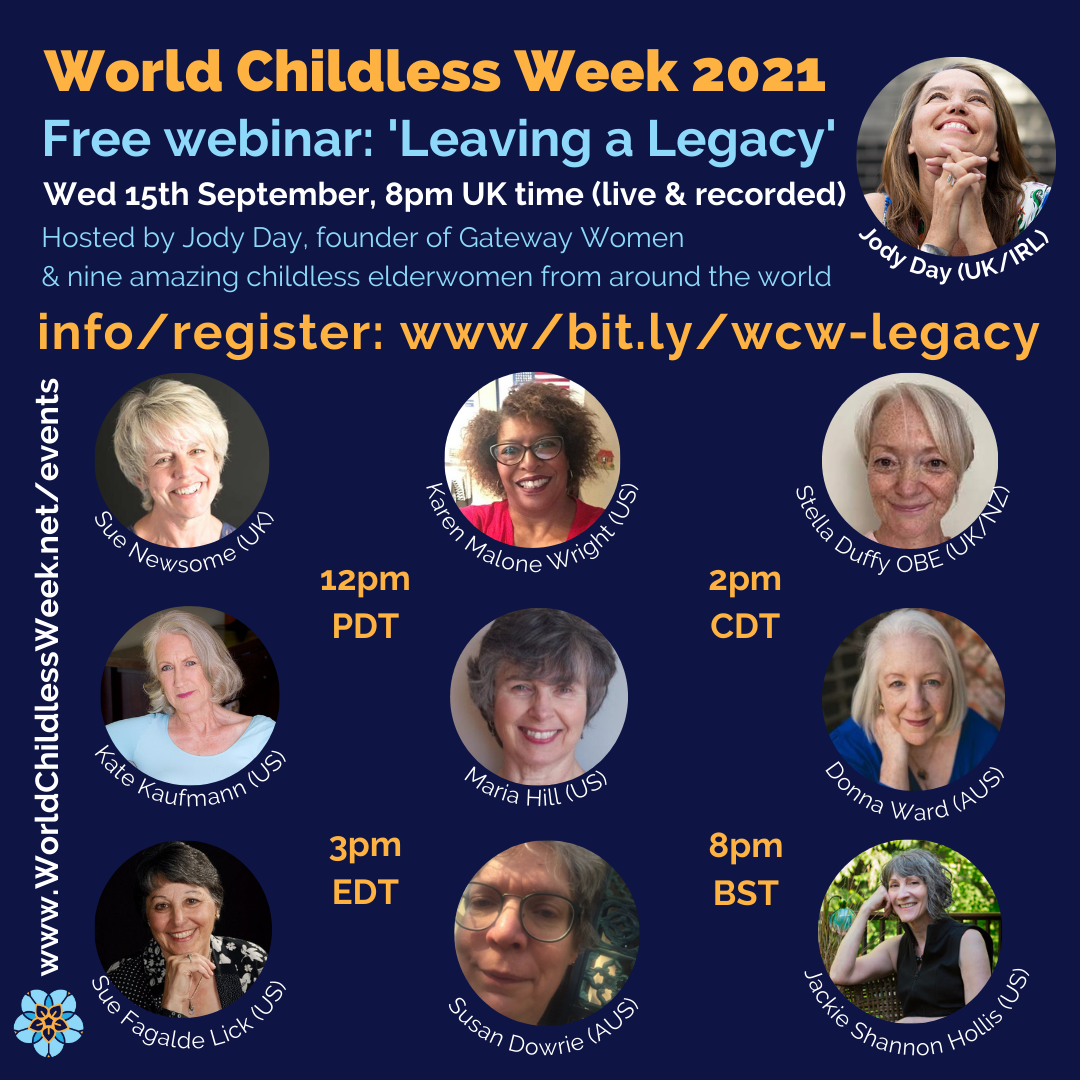
Register here to attend.

My mother always said the most important thing she did in her life was to raise my brother and me and help raise my cousins who lived with us for a while during a tough time. She never worked a paid job after becoming pregnant with me, her oldest child. She was brilliant and could have done anything, but my father didn’t like the idea of her going out on her own, so she put all of her efforts into home and family and an endless stream of needlework projects. This was an earlier time when things were different than they are today.

I was raised to be a mom and housewife like my mother, but things didn’t turn out that way. After two marriages, I find myself widowed and childless. Oh, I am married to a house right now, with a never-ending to-do list. But you mow the lawn and it grows back. You wash the clothes and they get dirty again. You bake a cake and it gets eaten. None of that is a legacy; it’s just maintenance.

Unlike my mother, I have always been driven to do more. I’m a musician and a writer, and I volunteer for far too many things. I think I’d do the same if I had children. I can’t see wasting a minute of my life. But if nothing else, I would know I had added these people to the world.

At today’s webinar “Leaving a Legacy,” part of World Childless Week, I will join other women over 60 to talk about what we leave behind if we don’t have children and grandchildren to guarantee we make a lasting mark on the world. For me, I hope my writing will live on in my books and other projects, that my blogs will survive until the Internet changes so much that no one can read them. I hope someone will include me in the family memories, but I am aware that my branch of the family tree ends with me. Maybe I shouldn’t look for anything large. Perhaps something I did or said made a difference in someone’s life. Maybe someone learned something from me that helped make their life better. Maybe it’s enough that I occupied this portion of the earth for a while and took care of it the best I could.

There’s also the question of keepsakes and photo albums that most of us have collected. Who will get them if we don’t have kids? Who will take Grandma’s rocking chair? That’s another kind of legacy. I know, it’s all “things.” Most will end up going to charity or a dumpster. Do things really matter in the end?

I suppose we can’t really know what our legacy will be.

You may be 27 years old and thinking you have decades ahead of you before you have to think about this stuff. What’s this got to do with having babies? Maybe you still haven’t figured out whether or not you’ll have children. But it’s interesting to ponder. What do you think your legacy will be after you’re gone, hopefully after a long and happy life? Do you worry about what you will leave behind?

If you can, please register for the webinar right away, if you haven’t already, and join us tomorrow. This is a fun group of fascinating women, and I guarantee an interesting chat. It will be recorded. If you are registered, you will receive an email with the link to the recording.

Please share your thoughts in the comments.

Processing…
Success! You're on the list.