Are You Giving Up or Have You Had Enough?

What’s the difference between giving up and deciding you’ve had enough? Sheri Johnson addressed that question at her “Awakening Worth” podcast recently. Johnson, a Canadian mindfulness coach who struggled with infertility, offers an extensive program for people trying to figure out life without children. Many of her points in this podcast can be applied to our childless-by-marriage situation.

The main difference between giving up and deciding you’ve had enough comes down to fear, she says. You give up out of fear, fear of regret for not doing more, fear that if you did have a baby you would regret it, fear of judgment from other people—why did she stay with him? Why didn’t he stick with her?

We may give up out of fear that we’ll end up alone. What if you leave him and never find anyone else? What if you try to have a baby on your own and it doesn’t work? What if the adoption falls through? What if you push too hard and he/she leaves you? What will people say if you never have children or grandchildren?

“Giving up is quitting because of fear. It’s quitting before you can fail.” It’s an act of self-preservation, Johnson says.

Deciding you’ve “had enough” is the other side of the coin. It’s an act of self-care. You have reached your end point. In her case, it was stopping fertility treatments. For someone else, it might be deciding that you need to end your relationship or that you will choose childlessness because your relationship is too precious to give up. It takes courage, tons of courage to say, “This is what I need to do for myself,” no matter what anyone else thinks.

What do you think? Are you giving up or deciding you’ve had enough? Is the question even valid in your situation? Are you not ready to make a permanent decision either way? Let’s talk about it.

You can read Johnson’s views on the subject at her website, https://sherijohnson.ca/54/. You can find more podcasts and writings about childlessness and “worth,” along with various services and things to buy. She offers a free “worthiness” quiz you can take. You can also find her on Instagram at awakening.worth.

****
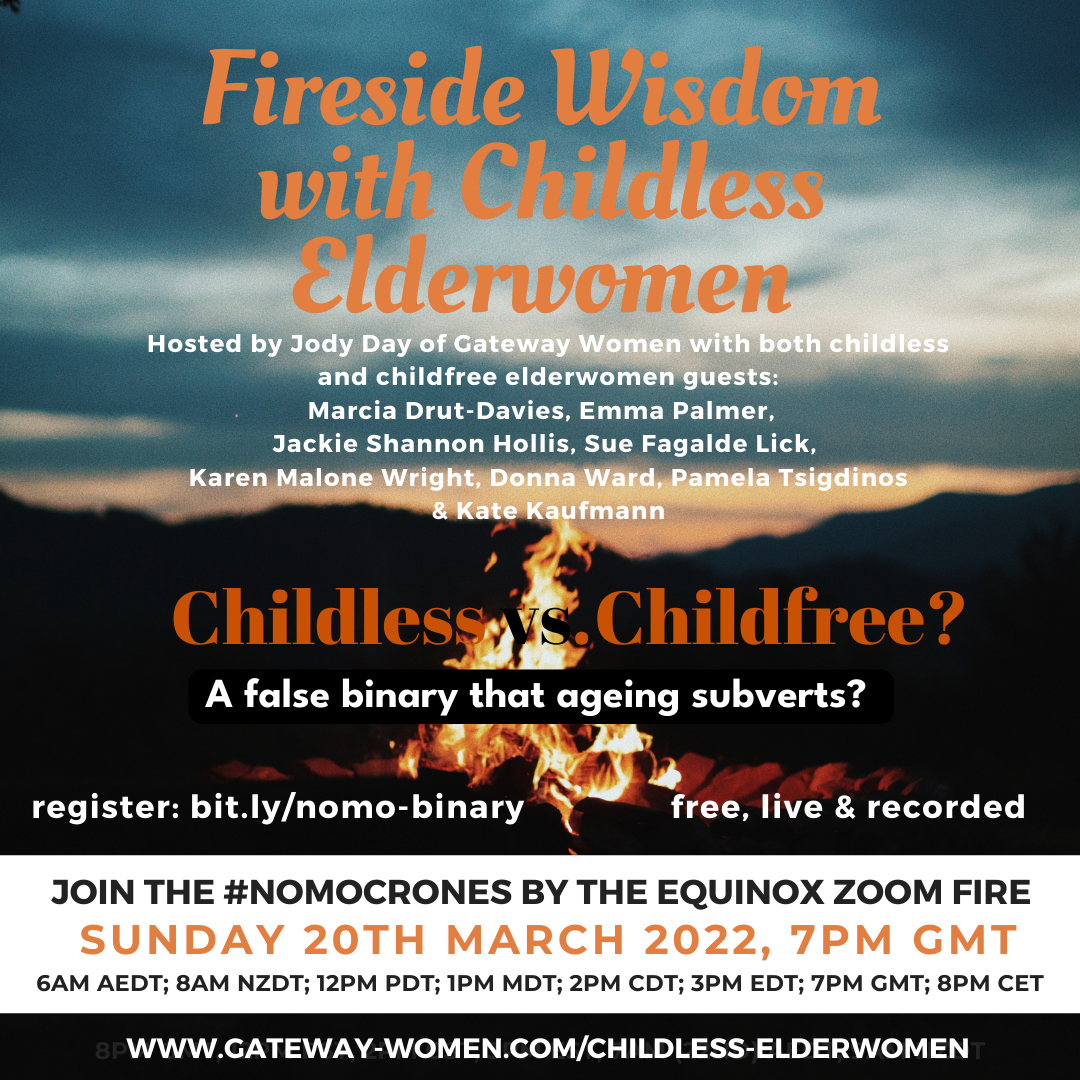
The “Nomo Crones” are meeting again. This international group of childless elderwomen led by Gateway Women’s Jody Day will meet via Zoom on Sunday to talk about being childless vs. childfree. It’s a subject we discussed here in January, but there’s so much more to say. For those of us who are childless by marriage, I think the line between choice and non-choice is always a little hazy. If we had chosen another partner, we might not be childless. Register at bit.ly/nomo-binary, and tune in at whatever time fits your zone. It’s noon Oregon time, 8 p.m. in the UK. I would love to “see” you there. You will not be on camera, so don’t worry about blowing your anonymity, if that’s a concern. You will be able to talk to us in the “chat.” Join us, and let us know what you think. If you’re not a “crone” yet, even better. We need to hear from all ages.


Processing…
Success! You're on the list.

Does Not Having Children Make Us Younger Than Our Years?

Today is my birthday. I’m 70 years old. OMG, right? What can I possibly share with readers so much younger than I am? But I don’t think or feel as old as that number seems to signify. I know I’m not young. I know I have lived many lives, but in my heart I start fresh every day.

My younger brother talks like he’s minutes from the nursing home and the grave. I adore my brother, but I want to smack him and say, “You’re too young to be so old!” Does he feel older because he has adult children and grandchildren? I have seen this in other parents, too. Are the rumors that childless people are immature true?

When I was researching my Childless by Marriage book, I asked people if they thought not having children made us less mature than parents. The answers varied from “They’re the immature ones” to “I refuse to grow up.” Having children is certainly not the only way to learn the lessons of life. By my age, most of us have experienced caregiving and loss with their parents and other family members. That stuff grows you up in a hurry. The grief of the growing list of losses, including the children we never had, can eat you up if you let it. All we can do is have a good cry and move on.

My childless friends seem more youthful and more active. Why? Is it that we have missed the milestones of graduations, weddings (and divorces), and grandbabies being born? Maybe we have simply had more time to take care of ourselves. Maybe we don’t have anyone to remind us that we’re the older generation and the kids are the new and improved model. What do you think? Does not having children make us less mature?

Another aspect of having a milestone birthday with no children or grandchildren is you may not have any family around to help you celebrate. When my aunt turned 70, her children threw her a huge party. I knew that wouldn’t happen for me this year. Even with kids, COVID might have prevented it. I have spent some sad birthdays alone, and I was determined not to do that this year. I stewed about this a lot, then woke up one day with a plan. 

I went to church this morning, Catholics offering Mass almost every day. I thought it was good to bring God into the celebration. Then I went on a hike on a section of the Oregon Coast Trail that’s known around here as the 804 Trail. It follows a rocky coastline with wild waves and stunning views. The path was muddy and the air was drizzly, but I enjoyed it, happily greeting the people and dogs I passed, feeling strong and free. 

Afterward, I parked by the Alsea River outside Waldport and played my recorder, badly, just because I wanted to. I followed that by having a 2 ½-hour lunch with friends whom I invited to the restaurant of my choice, the Salty Dawg. It’s downhome and friendly, and I like it. The waitress sang happy birthday, a friend gave me flowers, and I pigged out on a Reuben sandwich, fries, and chocolate lava cake. I had so much sugar and caffeine I may never sleep. But it’s my birthday, and I did it my way.

Back at home, I took the dog on a long walk, talked on the phone with family and friends and enjoyed an online poetry reading. You do you, the obnoxious saying goes. I did me. As a childless woman with no one taking over my day, I was free to do that. 

Do I feel 70? No. Well, my knees do, and my hair is graying very quickly now. But otherwise, no, I feel the same as I did at 40, 50, 60, and yesterday. 

Not having offspring to celebrate your special days is both sad and wonderful at the same time. Yes, it would be nice having a daughter bake me a birthday cake, maybe have grandchildren singing to me in their squeaky voices or helping me blow out the candles. But I was able to take charge of my own birthday and do it my way. I choose to be happy about that.

I welcome your comments. Know that I treasure your presence. 

Processing…
Success! You're on the list.

Stranger in the Strange Land of the Parent-People

Do you ever think about talking to mothers and fathers as a journey to another country where you don’t speak the same language? 

I was tilted back in the dentist chair yesterday while the hygienist scraped my teeth, and she started talking about kids. She’s a new hygienist, but her predecessors all talked about their kids, too. I don’t think I ever met one who wasn’t a mom. The mom-talk used to annoy me, but this time it didn’t.

One of the patients who passed by our cubicle was a girl, Izzy, whose basketball team was playing that night against the hygienist’s daughter’s team. She has known this girl since she was so little she couldn’t get the ball up high enough to go through the hoop, but now she’s four years older and a skilled player. Izzy’s team was likely to trounce her daughter’s team, but she was looking forward to attending the game and cheering both girls on. 

Hmm, I thought as she moved from inside my bottom teeth to outside, where they’re extra close together. This is interesting stuff that I know nothing about. When she paused to let me rinse, I asked how many kids she had. She has three, two girls, ages 10 and 12, and a four-year-old boy. The girls play a lot of sports. From basketball, they will go into volleyball and softball, and my hygienist and her husband will spend most of their off-work time going to games. They want to get the boy into T-ball but don’t know how they will find the extra time. 

Clearly their children dominate their lives. My parents weren’t like that. If we wanted to do something that required their time, they said no. They had their own things to do.

But for a lot of parents these days, it’s all about the kids, and everybody at the dentist’s office seemed to have them. As the scraping moved on to my upper teeth, I heard the word Mom a lot from another room. I overheard the dentist talking a boy through his first Novocaine shot. A dad himself, he told me later that he wants to make sure kids aren’t traumatized by their early dentist visits. 

Surrounded by parent-people, I felt like an anthropologist who had come upon a civilization completely distinct from her own. It was so intriguing, I was surprised to realize the hygienist had finished scraping and was polishing my teeth with minty toothpaste. We were almost done.

I didn’t feel any personal lack or grief or annoyance, just a welcome distraction from the assault on my teeth. My life has no children in it, especially in these COVID days when I rarely go places where children might be. I spend my weekends with church, house-cleaning, yard work, movies, and dog walks. I was an alien asking, “Tell me about your people, who seem very different from mine.”

It took me years to get past the anger, grief, and resentment that dogged me in my 40s and 50s,  but these days, I find children and parents fascinating. I’m not aching to join them anymore, but I watch with interest. 

Do I feel left out sometimes? Sure. Do I wish I had grown children to help me with things I can’t do alone and to put on my forms as emergency contacts? Definitely. But that’s not how it turned out, so I’ll pay the occasional visit to the land of children and parents then return to my own land, where we take care of dogs and cats and maybe write books or play the piano. It’s not the place I expected to live, but it’s a very good place.

The best part of this visit? Nobody asked me how many children I had. I was dreading that question. 

How do you feel when others talk about their child-filled lives? Do you think you will ever reach a point where it doesn’t bother you? If not, is there still time to change your situation?

Processing…
Success! You're on the list.

Is It Possible We’re Childless by Ambivalence?

Photo by Olya Kobruseva on Pexels.com

Katherine Baldwin says she is childless by ambivalence. A former journalist turned relationship coach and author of the book How to Fall in Love, she says she was always of two minds about having children. Growing up, she got a negative view of motherhood. For her single mother, having children seemed to be a terrible burden that took away all her dreams. 

Baldwin chose her career instead. “For the first, say, 34 years of my life, I wasn’t in the slightest bit interested in having children. I didn’t feel a yearning. I didn’t make a space in my life to think about them or plan for them. I was too busy traveling and focusing on my career.” 

It wasn’t until she found herself in a good relationship with a man that she began to think about settling down with a husband and children. That relationship ended, but she was now ambivalent about motherhood. Some days she wanted it, other days not so much. Does that sound familiar to any of you?. 

Ambivalence is a big word. My Merriam-Webster’s dictionary defines it as “simultaneous and contradictory attitudes or feelings” or “continual fluctuation between one thing and its opposite.” In plain English, you keep changing your mind. You have two choices and don’t want to let go of either one.

In her book, Baldwin describes how she was ambivalent about everything in life, and that’s one of the reasons she was in her 40s before she found a relationship she could stick with. She broke up with that man several times before making a commitment to live with him and then to marry him. What was scaring her away? He did not want to have children. And she was . . . ambivalent.They kept coming back together. At 42, she decided to set aside her baby dreams. She was getting a bit old and had never been certain about motherhood anyway. She chose the relationship, knowing it meant remaining childless. And they are happy together.

That’s that, right? No. In a recent interview on the One in Five podcast, she said she still grieves the loss of children. “When in my stages of grief, I wish that we had tried.” She wonders if they might have had kids if they had met 10 years earlier. But most days, she accepts things as they are. “I try to live by the idea that I want what I have.” She urges her clients to do the same. Make a choice and learn to accept what we have, knowing that we did the best we could at the time. 

Baldwin goes into her story in more detail in her book and in a post at her blog, From Forty with Love. The post is quite long, but I encourage you to read it. 

At this blog, we talk about being childless by marriage, but I wonder if many of us are, like  Baldwin, childless by ambivalence. If I’m being totally honest, I know that I am. I was fairly broody during my first marriage, back when I had this idyllic picture of being a stay-at-home mom who writes books. But by the time I met Fred, work had become a major factor in my life. Asked to give up my writing or my music, I would have responded with a solid “Hell no.” But asked to give up babies? I was never directly asked, but my answer would have been, “I don’t know.” Maybe I assumed the step-children would be enough. But instead of devoting myself to them, I kept working, kept singing and playing,  and enrolled in graduate school. When would I have had time to raise children? Yet I wept and ranted about the unfairness of not being a mother. I was, and still am, ambivalent.

It would seem that if a person was absolutely sure they wanted children, they wouldn’t commit to a partner who refuses to have them or who won’t give a straight answer about it, who keeps them hoping they will change their mind. The kids/no kids question would be a deal-breaker. And yet, who wants to be alone? Who wants to leave an otherwise perfect relationship because of this one thing?  

Maybe we’re all ambivalent. 

What do you think? Are you of two minds about motherhood or fatherhood? What is keeping you from making one definite choice? Please comment. I’d love to know what you think.

Processing…
Success! You're on the list.

Tickle Your Ears with These Podcasts About Childlessness

Dear readers,

Podcasts abound on just about every subject, including childlessness. I often use them as sources for this blog, and today I’m going to share a few. I find most of them via https://www.listennotes.com, which is an inexpensive service that allows you to plug in any topic and get a list of podcasts on the subject. You can also go to Apple or Spotify for similar results.

Geeta Pendse: 1in5 Podcast

Most recently, I listened to the brand new 1in5 Podcast. It covers all sides of leading a life without children, whether by choice or by circumstance.” Host Geeta Pendse plans to explore a range of subjects, including the pressures of social expectations, the biological clock, infertility, ambivalence around parenthood and embracing a life without kids, in whatever shape that comes.

Civilla Morgan: Childless Not by Choice

I can testify that I find Civilla’s voice soothing and her interviews enlightening.

“The Childless not by Choice Podcast is the story of an entire segment of society that goes largely ignored and misunderstood as we live and sometimes hide, in plain sight. I lived that story. I am living the story. Childless not by Choice is a podcast about the woman and man who wanted but could not have children. Of course, I invite everyone to listen. Because this is also a podcast that was created to bring awareness and conversation. It is a message for everyone: we are all walking the journey called life. But our paths are not the same. When we realize this, our minds will open up to the realization that we can treat each other with understanding, empathy, and grace, regardless of our journey, our paths.”

Jody Day: Gateway Women podcasts

Jody Day, who is frequently interviewed on other people’s podcasts, also conducts her own podcast interviews of other people, as well as hosting the quarterly Nomo Crones Childless Elderwomen chats that I have participated in. Find a wealth of listening pleasure at her Gateway-Women site.

********************

Robin Hadley: podcasts about childless men

Remember our discussion last week about childless men? Robin Hadley, who sparked that post, has a great list of podcasts on his website at https://www.robinhadley.co.uk/podcasts/ to give us the male point of view.

******************************

That should keep you busy while I do a little more research for my next post. I didn’t want to give it to you half-baked. A hint to what it’s about: ambivalence.

If you know of other podcasts we might be interested in, please share in the comments.

*********************

My sweet Annie celebrated her 14th birthday yesterday. That’s 98 in dog years. She has weathered her tumor surgery quite well. The lab decreed that it was not cancerous, to our great relief. Today the vet will probably remove the last of her stitches, and she will soon be free of the plastic cone around her head.

Processing…
Success! You're on the list.

Men’s Feelings about Childlessness Often Overlooked

Dear readers,

We don’t talk enough here about the men’s point of view. There are reasons for that. I’m female and so are most of our readers. Also, most attention in books and studies about childlessness is on the women. We are the ones with the wombs. But that doesn’t mean men who are childless not by choice don’t feel the lack of children, too.

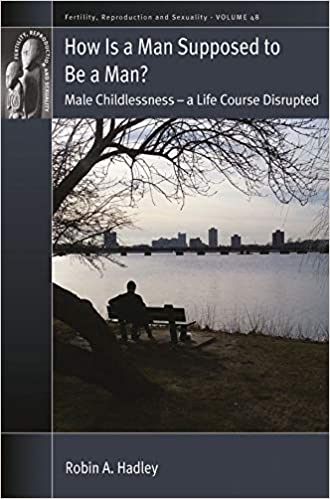
Dr. Robin A. Hadley of the UK has done a study and written a book, How is a Man Supposed to Be a Man?, about involuntarily childless men that offers some insights into the male point of view. Hadley himself is childless by marriage. After a couple of failed relationships, he met his wife when she was in her early 40s. She felt she was too old to start trying to have children. Men can be just as “broody” as women, he contends. Socialized to keep their feelings to themselves, they may not talk about it as much as women, but he knows from personal experience that they do feel the loss of the family they might have had.

A few other points gathered from Hadley’s research (links below):

* Fertility statistics in most countries count only the experiences of women, not men, probably because the women are the ones who give birth.

* When you see a woman talking to a toddler on the playground, do you worry that she’s a predator or a pedophile? Probably not. You assume she’s a mom or at least motherly. With a man, however, the warning bells clang. You see a man prowling where children hang out and think uh-oh, better watch him, be ready to call 911. Maybe he just likes kids in a perfectly harmless way, but the suspicion is there.

* For most men, the lack of children damages their image of virility and masculinity. They feel less manly than other men.

* If they’re not fathers, who are they? Like women, they need to figure out their place in the world when they have no offspring.

* In work situations, the presence of wife and children verifies men’s status as adults and their dependability as workers. Like women, they can feel left out when the conversations turn to family matters.

* Like women, they deal with nosy questions about why they don’t have children, as well as rude jokes about their sperm, which are not at all funny to them.

* Hadley found that many men do not understand the impact of age and other factors regarding infertility. Like women, they may see assisted reproductive technology, IVF and such, as a magic solution that makes age irrelevant, although the success rates are not good.

* Most people are unaware that men’s fertility declines with age. The male hormones slowly decline after age 40. Also, babies born to older fathers have more risk of genetic issues.

* Like women, men suffer what Jody Day calls “disenfranchised grief,” a sorrow that is not always recognized as valid. People don’t see it in the same way as a death in the family, although losing the children you thought you were going to have is a huge loss.

Man or woman, I would love to read your comments on these points. Guys, what challenges do you face by not having children? Please share. Invite your childless friends to join in.

Everyone counts here at Childless by Marriage.

How is a Man Supposed to Be a Man? Male Childlessness—a Life Course Disrupted   The book is quite expensive, but you might want to sample a bit of it.

Involuntarily Childless Men and the Desire for Fatherhood

Hadley’s interview with Civilla Morgan at the Childless Not by Choice podcast

Hadley’s wonderful resource list for childless men: https://www.robinhadley.co.uk/childlessness/

If We Don’t Have Kids, What Else Can We Give Our Parents?

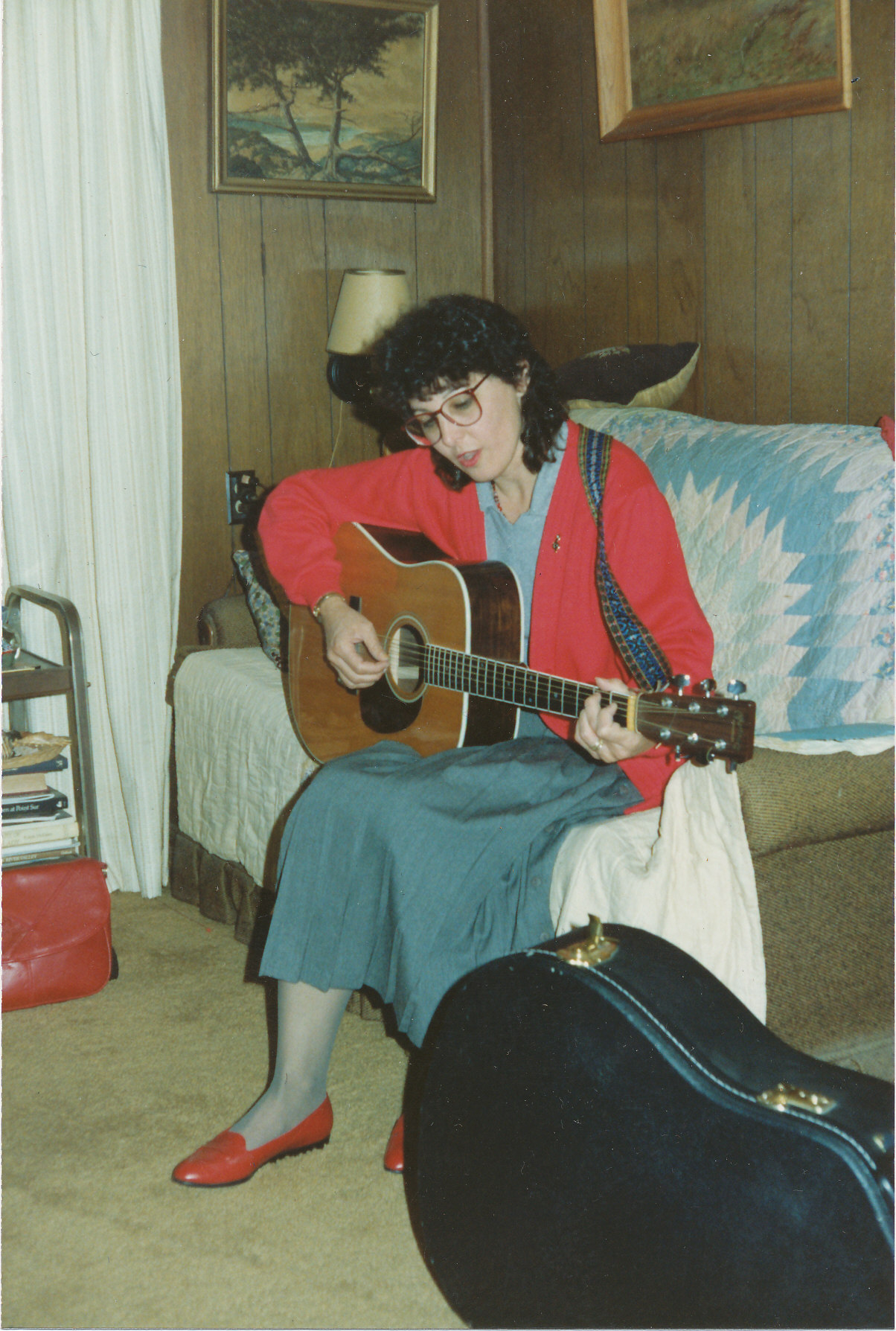
Playing for my grandparents in 1990

I’m going to share an embarrassing part of my past today. Maybe you’ll identify with my younger self.

I used to write a lot of songs. I performed and recorded many of them, some for public consumption, some just for me. I was listening to one of my old tapes (yes, cassette tape) from the mid-1980s and came across this song called “Mama Be Proud.” It’s a terrible song. I hope I didn’t play it for anybody else back then.

I wrote it in my early years with Fred, when I was still trying to accept that by marrying him, I would never have children.

My mother was the best. She never nagged me about having grandchildren. She never said, “Why don’t you find someone else?” or “Why don’t you adopt?” or “How could you not give me any grandchildren?” She may have thought those things, but she never said them. She and my dad loved Fred and were happy I had found someone good after the first marriage blew up.

As for Fred’s parents, they already had more grandchildren than they could keep track of, so it was fine with them.

But still, I felt guilty. Raised when I was, I knew the two things I could do to make my parents proud were 1. Find a good husband and 2. Have children. I suppose keeping a clean and orderly house might be number 3. I was trained to be a clone of my mom. I needed to keep the family line going. As for all the other things I was interested in doing, they didn’t really count as much in my family. But those other things were all I had to offer.

Thus I came to write this song in which I begged my mother to accept my music as a replacement for grandchildren.

Here’s the chorus:

I could write you a ballad to comfort your old age,

I could write you a jig to make your heart dance.

I could pass on your name in a hundred sweet songs.

Mama, please love me. Mama, be proud.

Gag, right? Actually the tune is pretty good, but the words make me cringe, both because they’re so smarmy and because I was so needy of my parents’ approval. They didn’t support my music and writing much, but I have to say that on my 50th birthday, my mother made the most beautiful speech about how proud she was of my accomplishments.  

A while later, my cousin dropped my birthday cake in the parking lot. Splat. Isn’t real life fun?

Mom died of cancer three months later. In the end, I think it wasn’t so much that I was letting her down as that she was worried I might end up alone. That’s why she and Dad were so glad when I married Fred. But you can’t know what’s going to happen in the future.

I tell you all this to suggest that maybe I’m not the only one who feels like we’re letting our parents down, like we’re failing to live up to their expectations. The ultimate decision about having children is between us and our partner–and our bodies, but do you sometimes think that if you don’t have kids, you’re blowing it and nothing else you do will be good enough?

Or is it a good thing that I’m about to start seeing a new shrink? 🙂

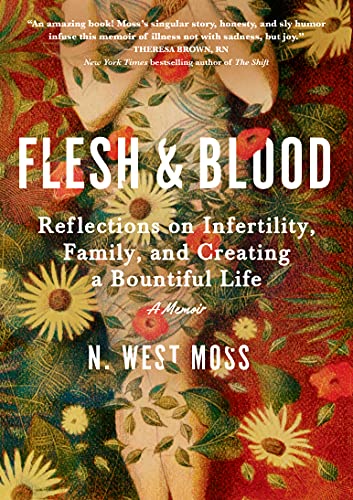
Let me close with some thoughts from a book that was so gripping I read the whole thing last Saturday. In Flesh & Blood, a memoir about childlessness and a troublesome uterus, author N. West Moss writes on p. 229, “I’ve always felt that I let Grandma Hastings down (in particular) by not having kids because it is the end of not just my own story but of her hard-fought story as well, and of her mother’s and her mother’s . . . . My hope is that writing them down here will cast her line into the future, will be my attempt at securing her story, and possibly mine as well.”

But she concludes toward the end, “I know I’m not technically fertile or anything, but shit, I feel fertile, feel overflowing with ideas and love for the world. I stick a sprig of mint in a glass by the sink and two days later, there are roots reaching an inch into the water. I do the same with a branch of basil from the grocery store. Same thing. Having kids is one kind of fertility, but it’s dawning on me that there’s more than one way to be fruitful.” p. 245

[Trigger warning about this book. If you are planning to have a hysterectomy in the near future, you might not want to read this yet.]

What do you think? Are we letting the family down by not having children? Do we struggle to make up for it in other ways? Please share your comments.

Processing…
Success! You're on the list.

What Do the Childless and Childfree Have in Common?

A friend who never wanted to have children said the other night that she knew I wrote about childlessness, but that had nothing to do with her because she chose not to have children. But we actually have quite a lot in common, I said. When I started naming some of those things, she responded, “I never thought of that.” 

Let’s think about it today. How do the childfree and the childless differ and what do we have in common? 

The obvious difference is that the “childfree” have chosen not to be parents. Their reasons vary. They want their freedom, they don’t think they’d be good parents, they can’t afford it, they’re giving their all to their career, or they’re doing their part to save the planet from overpopulation. They reject the term “childless” because they don’t feel “less” anything. 

The childless also come to their state in different ways, from infertility to disability to lack of a willing partner. Some spend years trying and failing to give birth. Some agonize over whether to leave their partner and try on their own or with someone new. They grieve the loss of the life they might have had. They dream about having babies and ache when they see families with children. They do feel “less” a great deal.

These two groups sound very different. But there is a gray area. Some of us chose partners we knew would not give us children. Consciously or not, we made a choice. In some cases, we may even come to feel “childfree.”

What do we have in common? More than you might think. 

  • Most of us do not hate children. We may or may not want to be raising them, but we find them lovable and entertaining and don’t mind hanging out with them.
  • We get bombarded with questions and comments, particularly in our fertile years. “When are you going to have children?” “Why don’t you have children?” “You’ll change your mind.” “Who’s going to take care of you in old age?” “You’re not getting any younger.”
  • We find that our old friends are so preoccupied with their children and later their grandchildren that they don’t have time for us. Besides, they have new friends they met at their children’s schools, soccer team, ballet classes, etc., friends with whom they have more in common now. 
  • We have more freedom because our lives are not tied to the school schedule unless we work in the schools. We never need a babysitter, although we may need a pet-sitter.
  • People ask us how many children we have because it doesn’t occur to them we might not have any. 
  • We worry about who will care for us in old age. My friend is in the process of setting up her will and advance directives. Single and childfree, she is not sure whom to entrust with her health-care and financial decisions when she is incapacitated. She has half-siblings whom she does not feel close to. I have a brother I love dearly, and I have given him the power on all my documents, but I know we think differently about some things. Will he do what I want in the end? What happens if he dies first? 
  • We all hate Mother’s Day. 

A few years ago, I attended the NotMom Summit in Cleveland. NotMom founder Karen Malone Wright had the radical idea that women who are not mothers, whether by choice or by chance, could congregate in an atmosphere of mutual love and acceptance. It worked beautifully. By the end, I had made new friends, some of whom never wanted to be moms. I sat with one of these new friends on the plane ride home and we talked all the way back to the West Coast about everything but motherhood. It was a joy, and we are still friends. The fact that we came to be NotMoms in different ways doesn’t matter. 

I don’t want to downplay the horrible pain of infertility or the rudeness of some people who are militantly anti-parenting, but we do have quite a bit in common, whether we’re childless by choice or not. As for those of us who are childless by marriage, aren’t we making a choice not to have children every day we stay with a partner who can’t or doesn’t want to give us children?

Let’s talk about it in the comments. What do the childless and childfree have in common? What is different?

Processing…
Success! You're on the list.

Your Man’s Extra X Chromosome Can Make You Infertile by Marriage

Way back in 2015, I posted about Klinefelter Syndrome, a condition in which a male baby is born with an extra X chromosome, sometimes more than one extra. That results in a serious shortage of testosterone. In some cases, the issues are obvious, while in other cases, they might not find out they have it until they try to father a child and discover they can’t. 

KS occurs in approximately one in 500 male births. That’s quite a few. Usually males have one X and one Y chromosome. Females have two X’s. That extra X wreaks havoc with the boy’s system. The sexual characteristics that usually come with puberty come late, if at all. They have small testicles, sometimes grow breasts, sometimes have higher voices and don’t grow facial hair. They may seem more feminine than other boys. There are other aspects of the syndrome, such as emotional and cognitive delays, personality problems, weak muscles and a tendency to develop osteoporosis and bad teeth. The symptoms can be treated to a certain extent with high doses of testosterone, but hormone treatment does not restore the ability to produce sperm.

That six-year-old post is still receiving comments. This week, Denise wrote that she and her husband had no idea he had KS until he went in for hernia surgery. The doctor asked if they were planning to have children. When they said yes, he told them it was highly unlikely because the husband had Klinefelter’s. The husband began taking large doses of testosterone to combat the KS. They adopted two kids, but the hormones turned him into such a moody, angry person that their marriage did not survive. 

I had no idea this post would inspire so many comments. KS is tough. I couldn’t say so at the time, but I was in a relationship with a man who had this syndrome. From our first lunch together, I knew he was different. He had never been married, claimed to have never had sex, and he often acted like a child, even though he was a few years old than me. I kept trying to end the relationship, but he claimed he loved me and wouldn’t back off. It was only after a neighbor who often took care of him explained about the KS that I began to understand.

Over the years, my friend often called to chat, tell lame jokes, and ask how I was. We shared meals, watched movies, and played Monopoly together. When my father was dying, this man offered soothing comfort over the phone. I told him honestly that I didn’t feel the same way he felt about me, but I treasured his innocent love, even though he called too often at all hours of day and night and even though I had to tell him he was pushing too hard. 

My friend had persistent heart problems. He had moved into an assisted living facility in a city north of here, but he was always “crying wolf.” One day he’d tell me he was dying; the next day, he’d claim to be absolutely fine. I felt a guilty relief when COVID made it impossible for him to have visitors. Too many times, I had been suckered into rushing to his side only to find out nothing was really wrong. He just wanted to see me. But the last time he told me he was very ill, I should have believed him.

The calls stopped coming before Christmas 2020. I called him repeatedly, but he never answered, and his voicemail was always full. When I phoned the place where he lived, they could only tell me that he didn’t live there anymore. I joined the people asking on his Facebook page: “Where are you? We miss you?” Eventually his sister called me from California to tell me my friend had died of heart disease.  

It is not easy to love a man with Klinefelter Syndrome. Some seem perfectly normal while others have behavioral issues and don’t do well with relationships. They will never father your children. It’s terribly sad, especially when it comes as a surprise. 

My heart goes out to Denise, Jessica, Melissa, and all the women and men dealing with this. I hadn’t expected to write about this today, but clearly there’s a need to talk about it.

Have you had any experience with Klinefelter Syndrome? Would you marry a man who had it? Let’s continue the conversation.  

Processing…
Success! You're on the list.

When Your Friends Talk Nonstop About Their Kids . . .

In the Jan. 6 episode of the new Sex and the City series on HBO Max, Miranda’s professor, Nya, and her husband have been struggling to have a baby. Their attempts at IVF have failed and they are taking a break. It’s a painful subject. The last thing they want to talk about is babies. But when they go out to dinner with another couple, their friends can’t stop talking about their children. Every time the professor tries to steer the conversation to other subjects, it always comes right back to the kids. It turns out their friends are pregnant with yet another child. More baby talk. This parent couple, totally clueless about what the professor and her husband have been going through, keep bugging them about why they don’t have kids yet and how they won’t know real love until they have them.

At The Childless Life Facebook group recently, a long discussion centered on the problem of not being able to talk to your friends once they have children. Suddenly, former best friends have nothing to say to each other.

Ah, the mom club. Their lives are wrapped around their kids, and yours isn’t, so it becomes difficult to have a conversation about anything else. You feel abandoned and left out. Dads do it, too, but not as much.

I still remember when the moms in the church choir would gather to talk about their kids and school stuff and I was suddenly outside the circle with nothing to do but sort sheet music. Some of these moms are now obsessed with their grandchildren, so it’s still not a good fit, but others have come out of the mommy cloud.

Not long ago, I had a great exchange with a female friend about football. Did you see the game yesterday? How could he have missed that kick? Etc. Yes, girls can talk about football. This friend has children, and she’s about to move away from here to go live with them, but they’re all grown up, and she has plenty else to talk about, especially when her Kansas teams are playing. Maybe the key is just to wait it out. Someday the kids will be gone, and your friends will rediscover that there are other things in the world.

But that’s a long time to wait. Meanwhile, what can you do?

  • You can just try to be interested in your friends’ families and join the conversation as much as you are able, even though you don’t have your own children to talk about. Talk about your nieces and nephews or other kids in your life. Remember your own childhood. Smile. Pet the dog. Excuse yourself to go home early.
  • You can seek out other childless people with whom you share other interests, whether it’s a book club, yoga class, softball team, writers group, or whatever. They might have children, but you have this other thing in common.
  • You can keep trying to direct your parent friends’ attention to things other than babies, to remind them that they need to hold onto the person they were before the little ones took over their lives.

I understand how children can become the main thing parents think and talk about and how they would gravitate toward other parents. I was that way about my puppies when Annie and her brother were small. Annie s still a central concern, and I enjoy a good conversation about dogs. But the best way to be a friend is to take a genuine interest in your friend’s concerns, whether it be babies, cooking, or working out at the gym.

If you’re at the age where most of your friends are having babies, try to be interested in their families, but also insist that they listen to you when you talk about what’s on your mind. Maybe they don’t even realize they’re obsessing until you point it out. Or maybe you’ll need to find other friends until the kids are at least in kindergarten.

How do you deal with friends who can’t talk about anything but their children? Do you have any advice on how to handle it? I welcome your comments.

***

Good news. The pathology report on my dog Annie’s tumor said she does not have cancer. It’s a bloody ugly thing and we’re still dealing with the big collar, but after the vet cuts out the tumor, we should be able to go on with our lives. Thank you for all your loving comments of concern last week.

Processing…
Success! You're on the list.