What Would You Change If You Could?

I have been watching a show on Amazon Prime called “Being Erica.” It’s about a young woman who meets this charismatic therapist who makes her write a list of all the things she regrets in her life and then sends her back in time to redo those parts of her life. Most of the time it doesn’t work out the way she thought it would, but it’s always fun to watch.

Erica is 32 years old, single and childless, and not doing well with her career. In the episode I watched last night, she throws a baby shower for her best friend but finds she is clueless about babies, and her friends don’t include her in that part of their lives. She does not get chosen to be godmother, which she really wanted, because she has never been a mom. Her friends think she should be happy being “wacky Aunt Erica.” Sound familiar?

In that same episode, Erica is sent back to her bat mizvah, a Jewish coming-of-age rite. Although she looks 13, she knows she’s 32, single and childless, but nobody else does. Her mother sits her down to talk about her future, which will of course include marriage and children. What if that doesn’t happen, Erica asks. What if I’m 32 and still single without children? Oh, don’t think such terrible thoughts. That will never happen, says her clueless mom. But we know it did. As it did for many of us

Of course, this is part of the stereotype of Jewish mothers, but in my generation, it was really all mothers. Of course you’re going to get married and have children. You might work a while, but your family will be the most important thing in your life.

Then there’s the book I’m reading by a much older woman, Sue William Silverman. In How to Survive Death and Other Inconveniences, a memoir that takes us back to her early years—more time travel—she has no plan to have children. As for husbands, well, she’s had two so far, and I have quite a few pages left to read. But she never saw herself as the motherly type.

Here are two views of women without children and trips into the past to rethink their choices. So far, neither Erica nor Sue has changed the ultimate outcome for anything, only her attitude about it.

What about you? If Erica’s therapist, Dr. Tom, demanded you write a list of regrets, what would be on it? What would you want to go back and change? What would you do differently? Would it be worth it? Something to think about.

For me, everything I think about changing in my past leads to thoughts of what I would have missed, and I don’t think I want to risk that. How about you?

****

IMPORTANT NOTICE: As I have mentioned before, I’m putting together a “Best of Childless by Marriage” book from the blog. I am including many of your comments, all anonymous or by first names only. Many of you are better writers than I am. If you have any objection to having those comments in a book, both print and online, please let me know at sufalick@gmail.com, and I will remove them. I don’t want this to be an issue later, so please speak up by the end of June. Thank you. 

Is COVID Lockdown Easier Without Kids?

I just listened to a UK radio show in which the speakers were enjoying their time at home during the COVID-19 lockdown because they did not have husbands or children. The main speaker, Sinead Kennedy, is writing a book about living alone (Flying Solo, not published yet), so the situation is perfect. She is using the time to “sit with herself,” to think, walk, and be creative. She feels sorry for those who are having to deal with husbands and children 24/7. On the rare occasions when she gets lonely, she knows her friends with kids are too busy to talk, so she seeks out her childless friends.

Click here to hear the show. The hostess and another caller were also childless and making the best of their time at home. Maybe this will cheer you up. Maybe not.

As you know, I’m at home alone, too. Well, my dog is here, but she’s old, and she sleeps most of the time. I attend Zoom meetings and “watch parties.” I go out for groceries and once a week to do music for the videotaped Sunday Mass at our little church, but I’m mostly here by myself. To be honest, it’s not that much different from pre-COVID times.

Last week, I met with three other women for a “socially distanced” chat session in one of their back yards. The others are all grandmothers who have been separated from their children and grandchildren since the pandemic began. They are hurting because they can’t see their families, especially the little ones. Another friend’s first grandbaby was born in March, and she hasn’t been able to hold her yet. How sad. Children grow and change so quickly. It’s hard not having children, but it’s also difficult having them and not being able to see them except on telephone or computer screen.

On the other hand, I panic at the thought of trying to home-school children. I’m a good teacher of college-age adults, but kids, oy. I suspect they would rebel at Mom or Dad trying to impose a school schedule on them. I’d be going crazy trying to work, too. I’m relieved I don’t have to do that.

Then there’s the husband part of it. God knows I miss Fred, but let’s face it. He was not good at sitting still. With no sports to watch, he’d be unbearable. He’d be like, I’ve got to get out of here. Let’s go do something. I can’t stand it, while I’m okay reading, writing, baking, walking, or watching ‘chic flicks” on my tablet.

So yes, maybe at this time, it’s easier not having children. Whether it’s comfortable sheltering in place with a partner depends on the partner. It’s certainly a test of how compatible you really are. Can you find things to do together or can you agree to do things separately? I wonder how many relationships will implode during this time. As for having children, is this the perfect time to start a family or the worst?

This is my 700th post. I had hoped to do something special today, a video or such. The “Best of Childless by Marriage” book is coming along well. But we’re panicking around here this week. Up to last weekend, our county of 50,000 on the Oregon Coast only had 10 positive cases of COVID-19. No one had been hospitalized or died. We were doing incredibly well. Lincoln County moved into Oregon’s Phase I of reopening just before Memorial Day. Restaurants, hotels and many businesses reopened, with lots of restrictions—masks, distancing, sanitizing, etc. Tourists rushed in. The number of COVID cases went up to 30, but okay, that was still not so bad.

Then on Sunday, authorities announced that we had 124 new cases of the coronavirus, all employees at Pacific Seafood on the Bayfront in Newport, the city closest to me. This being a fishing town, the company processes and packages what our fishermen catch. They tested 376 employees, and 124 had the virus. As of this morning, we now have 157 positive cases, two in the hospital. Most of those who tested positive did not have any symptoms yet.

You might say that’s still not such a big number, compared to places like New York, but these are small towns–Newport, with 10,000, is the biggest–and these people all have families and friends who have been exposed. They have shopped in our stores, eaten in our restaurants, and visited our parks. They’ve been to the gas station, the bank, the doctor’s office, and all the other places people go.

We’re officially staying in Phase I for now, but one business after another has announced that’s it’s closing back down to be safe.

Suddenly I’m dying to go out, to socialize, shop, travel, do things that were normal four months ago. I feel like I’m living the movie “Groundhog Day,” in which the characters relive the same day over and over. Will things ever be “normal” again?

Is it easier without children? Probably. Is it better? I don’t know.

How are you doing in this crazy COVID world? Are you more or less eager to have children? Are you talking about it? Is your partner driving you crazy? Are you able to see your family, including the little ones? Please share.

****

I’m thinking about doing a Facebook Live broadcast where I can talk to you all, and you can ask me questions or chat among yourselves. What do you think? Would a Zoom meeting or another format be better? Let me know.

****

IMPORTANT NOTICE: As I mentioned above, I’m putting together a “Best of Childless by Marriage” book from the blog. i am including many of your comments, all anonymous or by first names only. If you have any objection to have those comments in a book, both print and online, please let me know at sufalick@gmail.com, and I will remove them. I don’t want this to be an issue later, so please speak up. Thank you. Many of you are better writers than I am.

Socially distanced hugs to one and all.


Who can you talk to about being childless?

Worry about whether or not you will ever have children is eating you alive. Your spouse/partner refuses to talk about it or gets angry when you mention it. I suppose that’s why so readers seek refuge here. You say: Finally, someone I can talk to. I can’t say these things to anyone else.

I’m glad to provide a place where you can say whatever you need to say and get responses from people who understand, but are you sure there’s no one else in your life whom you can talk to about being childless by marriage?

Looking back on my own life, I didn’t share my concerns. I didn’t want to worry my parents. I didn’t have a sister. While I was married to my first husband, my brother was working full-time and going to law school; kids weren’t on his agenda yet. And my second husband, Fred, was my brother’s friend long before I met him.

I didn’t have the kind of intimate friends I could share this with. In my 20s, I wasn’t that worried about it. There was so much time ahead of us. We were all busy with college and careers.

When I was married to Fred and the prospect of never having children was becoming a certainty, who did I talk to? Not my parents. Not my new sister-in-law, who didn’t understand. Not my brother, who had two children now. I didn’t discuss it with my friends. I could have. Some of them didn’t have children either, but I didn’t share my pain with them. I gave them terse comments: we can’t, I can’t, I have three stepchildren, I hate Mother’s Day . . . I didn’t let them into my grief and worry or my desire to hold a baby and watch it grow into a person.

I have been in counseling off and on throughout my life for depression and anxiety. But honestly none of my therapists have understood what it’s like. They blew off my concerns with easy answers: enjoy other people’s kids, embrace your stepchildren, find other outlets for your energy.

Talk to a priest? Priests are programmed to promote parenthood. Anything less is a sin.

Of course, the person we most need to talk with about this, our partner, is often the most difficult. You tiptoe into the subject, trying not to make him/her angry, trying not to put a kink in your relationship. Nagging doesn’t help (I really, really, really want to have a baby). Neither does silent anger or crying in the bathroom (What’s wrong? Nothing!)

I think we’re embarrassed sometimes to admit that we have this problem with our relationship. We’re afraid of glib answers and misunderstandings. We’re afraid our friends and family will start to hate the person we love. They might urge us to leave him or her. They might start to treat our partner badly. Or they might take his/her side when there shouldn’t be sides, just everyone loving and trying to work things out.

I have a best friend now with whom I can discuss my childlessness, even though she’s a mother and grandmother. She knows how touchy I am about babies, knows I wish I had a family like she does. She has her own family issues, which we discuss freely. But where was she when I was in the thick of it?

I look back now at friends I used to have. I could have talked to them. I should have talked to them. This is an awfully big burden to carry alone, especially if you’ve reached the point where you’re thinking about leaving the relationship because you don’t want to live a life without children.

I have said way more about me than I intended to. What about you? Who in your life can you be totally honest with and talk about your no-baby situation? Do your parents or siblings know how you feel? Is there a friend, an aunt, or a co-worker with whom you can talk it out?

I was just thinking about soap operas. I haven’t watched them for a long time, but it seems the characters have all the heavy conversations that we never have in real life. Sipping wine, their hair perfectly coiffed, they let it all out, weep big TV tears, and hug as the scene fades to a commercial.

Can we do that? What do you think? Is there someone you can talk to, someone you can trust to not blab your secrets or stomp all over your feelings? It’s so important to let it out. The dog is good, but she’s spayed, and she doesn’t speak English.

Let’s talk about talking about it. I welcome your comments.

**************

Next week’s post will be number 700! I’m thinking we should have a party. Details to follow.

30-somethings in no hurry for parenthood?

I’m old, at least compared to women of childbearing age. If I had children, they would give me a window into the lives and the thinking of people decades younger than me, but I don’t, so I’ve been eavesdropping on podcasts.

The other day, I listened to a chat on “Authentically BeYOUtiful” titled “Being Unmarried and Childless in Your 30s.”

Here’s how they introduced the subject:

Throughout our 20s, we found it to be socially acceptable to not quite settle down yet and focus on bettering ourselves. Some might call it selfishness; others might call it just making the best of our youth and freedom while we had the opportunities to. The decisions to get married and bear children are the biggest life decisions we will ever have to make. And, these critical life decisions should not be taken lightly. Before we get married and are forever linked to another person, we must first be happy with ourselves. Before we bring a new life into this world, we must truly want to be parents.

As we shift into our early 30s, we are feeling increasingly more pressure to settle down by those around us. Listen to this latest episode to see how our perspectives about marriage and children have changed from our 20s to our 30s. With so many females in the same situation as we are, we have been so anxious to open up about this topic to help normalize this new societal norm for millennials and future generations. 

The three women, Melly, Sadie and Camille, all in their early 30s and single, seemed to be in no hurry to become mothers. Times have changed, they said. Although they are getting pressure from their families, friends, co-workers, and strangers, all agreed that they were not ready yet. Education, career, and travel were higher priorities, plus they want to be sure they pick the right husbands. As Mollie said, “When I do get married, I want it to be done right.”

All three are Asian American. They cited statistics that showed Asians are more likely than other groups to delay marriage and kids. In their age group, one-third of college-educated women did not yet have children, they said. Mollie said she would consider having children before marriage if necessary to make sure she isn’t too old to get pregnant.

Their closing message to women who in their mid-30s are still single and childless: “It’s okay. Just do you.”

“You do you” is becoming one of my most disliked popular sayings.

As an older woman with more life experience and 13 years of reading your comments here at the blog, I was struck by how sure these 30-somethings were that they could have everything they wanted in life. When they’re ready to marry, the man will be there. When they’re ready for children, they’ll simply get pregnant and have as many children as they decide they want.

There was no consideration of the possibility that they might have fertility problems or fall in love with someone who already has kids and doesn’t want more. What if they become stepmothers and never have biological children? What if menopause sets in early? I know we worry about all this stuff here at Childless by Marriage. They’re real fears.

But I wonder how many people out there are still seeing the world through rose-colored glasses, certain they can have everything they want when they want it. God knows, I hope it all turns out well for these women and all the young people who are waiting for the “right time.” But sitting here twice their age, I’m thinking, I don’t know . . .

Here’s the link if you want to listen for yourselves. There’s a lot of extraneous chit-chat before they get to the subject, but they’re pretty fun to listen to.

What do you think, especially if you’re in that 30-something group, too? Do you feel like there’s still plenty of time?


Childless by Marriage Blog Book Coming

Dear friends,

This is the 697th post since I started this blog in 2007. Why didn’t I wait for 700? Impatient. Plus, I have finally gotten the first draft of “the Best of the Childless by Marriage blog” put together. It’s 700 pages! Serious editing will be needed to cut it to a reasonable 300. I don’t care so much about my posts as about the wonderful comments you all have contributed over the years. I just can’t include them all, so I’ll be pruning heavily.

Meanwhile, I have some questions for you.

* What should I title this thing? I can’t call it Childless by Marriage because I have already published a book by that name. I was going to title it “Stay or Go” because so much of the discussion here is about whether to leave a partner who won’t do parenthood with you, but that has been used recently by someone else (and it sounds like a good book). I assume whatever the title is, there will be a subtitle identifying it as the best of the Childless by Marriage blog. But I welcome your suggestions.

* I was thinking I would use the puppy picture on the cover to match the blog. Is that dumb or a good idea?

* Judging by the number of comments, the posts about whether or not to leave your partner and the ones about step-parenting draw the most heat, but what topics do you most want to read about? Which ones just don’t do it for you?

* Do you mind if I use your comments with no full real names, just whatever you called yourself, whether it’s Anonymous or R2D2? If you object, please let me know at sufalick@gmail.com.

* If you commented before, could you look back and see if you can give us an update so we know how things turned out? I suppose if you’re now busy with your babies, you won’t be reading this anymore, but if you are, is there any news to share?

A lot has certainly changed in our lives and in the world since I started this blog. I suspect the 2020 census will show that more and more people are delaying marriage and children well into their 30s and 40s and that more are not having children at all.

When I started this blog, very few people were publishing anything about childlessness, and most of the books were about infertility. Now we’ve got numerous wonderful authors with books and blogs on childlessness [see my resource list], and the conversation is opening up. But we have been having this conversation here for years. Do you realize that if we had had babies the year I started the Childless by Marriage blog, they would be teenagers now?

As I approach 700 posts, rest assured that I have no plans to stop blogging. The blog was originally designed to promote my book, but it has taken on a life of its own. Whenever I think everything has been said, something else comes along. So stick around. See you next Wednesday. Thank you for being here.

I welcome your comments.


Sometimes you’re just the ‘girlfriend mom’

BOOK REVIEW: The Girlfriend Mom by Dani Alpert, 2020.


Dani Alpert was childless by choice, but when she partnered with Julian, she became a de  facto step-mom to his son and daughter. She wasn’t married to their dad, but she was caring for these kids, so what was she really? She decided to call herself “the girlfriend mom.” This new book tells the story of how that turned out.

Asked in an interview how she felt when she discovered Julian had children, she says, “I didn’t care because it was lust at first sight. All I was thinking about was getting into his pants, not starting a long-term relationship. The possibility of meeting his kids, let alone getting involved with them (in any way) was not on my radar. I continued on my child-free life way. There was also a part of me that thought dating a dad was sexy — I’d never had a dad before. That sounds creepy.

“In the beginning, Julian almost made it seem like he didn’t have kids — by that, I mean, because he didn’t have full custody, there were plenty of “between-the-sheets” days. As time went on, he’d cancel our plans more frequently. It didn’t truly hit me over the head until we moved in together. I’d get the side-eye from Julian if I preferred not to partake in the weekend activities with the kids. My feeling was, they were his kids and his time with them — I was just the girlfriend. When I started to feel my autonomy slipping away, I knew this might be an issue.”

Have you felt that loss of autonomy and that change in the relationship when the kids enter the picture? I sure have. But Alpert tells it in a way that lets us laugh through our tears.

Alpert experienced many of the challenges all childless stepmothers face. When the kids are around, her man acts differently. Suddenly it’s all about his children, right? When there’s a conflict, guess who loses? How do you interact with their mom? What happens on holidays and birthdays? How do you respond when the kids say, “You’re not my mom”? When do you get to have sex? How much of your life do you have to give up for these children who aren’t even yours?

All those awkward times are here, as is a growing love for Julian’s son and daughter that lasts longer than the relationship with their dad. Alpert’s tone is light-hearted, often funny, but the love is real, so real we have to add another question: Can you ditch the guy and keep the kids?

Alpert is not only an accomplished writer but has had a long career in film and theater, working as a screenwriter, performer, producer and director. She has an easy writing style that makes this book a joy to read, and childless stepparents will be nodding their heads in recognition as Alpert negotiates the all-too-familiar pitfalls of being a girlfriend mom.

For more about Dani Alpert, visit her website.

So, dear friends, I know many of you are in relationships with people who have children. Can you love these kids? How does not having children of your own make it easier or more difficult? Are they getting between you and your partner? What is it like being the “girlfriend mom”?

Please comment. And do read The Girlfriend Mom.

Disclaimer: I was given an advance copy of the book to review.

Hide. It’s Almost Mother’s Day Again

Help! The Mother’s Day advertisements have already started. I thought maybe with the COVID-19 crisis shutting everything down, we could skip the whole thing. No brunches, no special sales, no mother-honoring rituals at church. Everything is closed, and we’re supposed to stay home. We could finally have a respite from the whole mess. But no, here it comes again this Sunday. Have Mother’s Day brunch delivered, send her flowers, set up a family Zoom meeting, show her how much you care. Yada yada yada.

Last night on a sitcom, just in time for Mother’s Day, one of the main characters found out she was pregnant, and I cried. For Pete’s sake, does it never end?

Time to duck and cover again.

In the UK, they celebrate “Mothering Sunday” in March. It’s much like our own U.S. Mother’s Day. Some people who survived it offered their advice on the Full Stop podcast recently.

Civilla Morgan and Allie Anderson both had fertility problems and frequently write and speak about being childless not by choice. Like the rest of us, they grit their teeth through the day honoring moms.

Morgan, a “preacher’s kid,” used to go to church every Sunday. On Mothering Sunday, the mums were asked to stand and receive a gift. We all know how that feels. It sucks. An older woman suggested she simply not go to church on that day. Instead, she started talking to people about how painful it is, and she got several churches to change how they approached the day.

“It’s not okay for mothers to stand while non-mothers remain seated,” Morgan said. While she understands that mothering is a most important job, “We’re still women and we’re still human. People need to realize there’s a whole community existing in plain sight.”

She has come to accept that God has his reasons for why her life is the way it is, but she strives to make other people understand how the childless feel when they’re left out.

Anderson also struggles with Mothering Sunday. She can feel relatively fine the rest of the year, and then comes the holiday. “It can put you right back at your very lowest.” Mothering Sunday/Mother’s Day just emphasizes the feeling of “otherness,” she said.

For Anderson, it’s not just the grief of not having children but the pregnancies she lost, the deaths of the children she might have had.

We all know this is a “Hallmark holiday,” blown out of proportion by companies trying to sell their merchandise. We know we should honor our own mothers every day, not just Mother’s Day. But it still hurts. So how do we survive?

  • Avoid social media (Facebook, Instagram, etc.). You know it’s going to be full of mom celebrations.
  • We do need to honor our own mothers and grandmothers if they’re still around, but it does not have to be on that actual day, Anderson says. Why not celebrate the weekend before or after and make other plans for Mother’s Day?
  • Morgan suggests journaling to release the thoughts and feelings you don’t feel you can say out loud.
  • Don’t go to restaurants where the servers will be wishing every woman Happy Mother’s Day.
  • Don’t go to church if they traditionally single out moms with a special ritual.
  • Don’t expect your stepchildren to do anything special; they will be busy honoring their bio mom.

This year, the celebrations may all be online, but the same advice applies. Instead of moping, do something fun. Take a hike, go to the beach, watch a movie, read a book, clean the garage, or stay in bed and make love all day. Do whatever makes you happy, and if anyone complains, explain that while you love and honor the mothers in your life, the day is too painful for you, so you’ll see them another time.

For male readers, the same applies to Father’s Day. Go fishing or something till it’s over.

The Full Stop Podcast for folks who are childless not by choice is a good resource. There are enough posts to keep you busy all through Mother’s Day.

I wish you all health and peace on Mother’s Day and every day.


Salt Water & Honey: A Childless Story

Lowrie, Lizzie. Salt Water & Honey: Lost Dreams, Good Grief and a Better Story. UK: Authentic Media, 2020.

All the childless bloggers seemed to be recommending this new memoir about childlessness, so I ordered Salt Water & Honey and started reading it as soon as it arrived.

Lowrie, whose pregnancies all ended with miscarriages, is a terrific writer. I gulped down the first 160 pages the first day. She takes us through one dramatic miscarriage after another. At the same time, she and her husband lose their coffee shop business, and he starts training to become a Church of England vicar. Lizzie is surrounded by vicars’ wives with lots of children and finds it difficult to fit in. We can all identify with her feelings when all the women are talking about their children and she feels left out.

Halfway through the book, the story bogs down as Lowrie gets closer to God and finds other women struggling with infertility. They form a support group, and life is so much better because she’s not alone and she has God. I consider myself religious, but there’s a bit too much of it for me here, and I don’t know where she finds these women who immediately become best friends. I don’t have a posse like that. Worse, I don’t know the end of the story. I kept waiting for Lowrie or her doctors to decide she had to stop trying, that it was too hard on her body, but the book ends without telling us whether she had more miscarriages, gave up, tried to adopt, or what.

Lowrie gives us the answer in her March 4 blog post at saltwaterandhoney.org. Apparently she has decided to focus on other things besides trying to become a mother.

When do you stop trying to have kids, she asks in that blog post. It’s a good question that we need to talk more about here. When is it time to move on? I hate to use the words “give up.” That sounds so negative. Maybe we could just put parenting on the back burner and slowly turn down the flame. That sounds like what Lowrie is doing.

Meanwhile, do I recommend Salt Water & Honey to you, my Childless by Marriage readers? It’s a beautiful book, but I’m older than most of you and not in the thick of trying to conceive or trying to decide what to do about a mate who doesn’t want children. Lowrie and her husband were both fully committed to becoming parents. Their problems were all physical. I’m afraid the gory miscarriage stories will upset readers who are having trouble getting pregnant or carrying a baby to term. Or will they make you feel less alone? I don’t know.

Maybe the readers who have no physical problems, just husbands who don’t want to have children, will not be interested. Although I was fascinated.

The religious part will be a turnoff for some and an attraction for others. I suppose I’ll leave it up to you. Meanwhile, I’m grateful for another woman who has put her story of childlessness out into the world.

Your comments are welcome.

Childless? “Here’s What You Should Do”

Dear friends,

I have been working on the “best of the blog” book I’m putting together and decided to put together a section titled, “Why Don’t You . . .” with posts about the various things people suggest we do to ease our childless angst. For example:

  • Who hasn’t heard, “Why don’t you just adopt?” Or “You could become a foster parent.” We all have. Of course, that totally ignores the fact that if your partner doesn’t want your own children, why would he want someone else’s. Also, adoption and fostering are not easy, and not everyone can meet the requirements. Sure, we have all heard beautiful adoption stories where everything worked well, but we have also known people who waited years through one disappointment after another or who got turned down flat for some reason.
  • Most childless women with reluctant husbands have also been urged to accidentally-on-purpose forget to use their birth control and surprise their mates with, “Oops, I’m pregnant.” I don’t think that’s a fair thing to do to someone you love, but well-meaning people told me that, and I know others have heard it, too.
  • “You should look into IVF, donor eggs or sperm, or fertility treatments of some sort.” As if you never thought of that. Maybe you’re already doing it and prefer not to talk about it. Unfortunately, all the science in the world cannot guarantee a baby, and it costs a fortune. Think one Mercedes for each procedure.
  • “Oh, he can just get that vasectomy reversed.” Well, sometimes. It doesn’t always work, especially if the original surgery was performed years earlier, and if he doesn’t want to get the vasectomy reversed, you’re stuck.
  • “Just relax. God will send you a baby in due time. Look at Abraham and Sarah in the Bible.” Yeah, they were a bazillion years old, and there was an angel involved.
  • “Volunteer to work with kids. Become a Big Brother or Big Sister. Tutor, mentor, babysit.” Not the same. Sometimes it just makes you feel worse.
  • “Just enjoy your stepchildren. That’s all the kids you need.” Um, no.

That’s what I have come up with so far. I welcome you to add to the list of “Why don’t you . . .” comments you have gotten from friends, family, and well-meaning strangers.


Who are we saving our COVID-19 stories for?

A writer friend, Grace Elting Castle wrote a column in the local paper last week about how we ought to document our experiences during this COVID-19 crisis for our children, grandchildren and the generations that follow. Journal, write letters, and save newspaper articles, she says. Your children’s children’s children will want to know what it was like. She says she wishes she had asked her grandparents more about their lives.

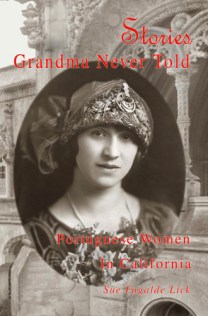
Stories Grandma Never Told_justified text.pmdWell, I have been thinking the same thing about my own grandparents. In fact I wrote a whole book called Stories Grandma Never Told sparked by what I didn’t know about my grandmother’s experiences growing up Portuguese-American in California. I interviewed a whole bunch of Portuguese women to get their stories, and I’m glad I did. Many of them have since passed away. But own grandmother’s stories died with her.

Not only did I not ask about her Portugueseness. It never occurred to me to ask about the 1918-19 Spanish Flu pandemic that was so like the COVID-19 crisis we’re living through now. All four of my grandparents were teens or young adults at that time, and they could have told me. They could have told all of us. Maybe we would have learned something. But they never talked about it, and we didn’t ask. We all assumed it would never happen again.

What does this have to do with childlessness? Those of us who don’t have children have no one to save all this information for. Do we? Certainly no children, grandchildren, or great-grandchildren. Maybe descendants of our siblings’ kids will be interested later on. Maybe not. So what do we do with our stories, just let them die with us?

I’m a writer. I can’t do that. I feel compelled to keep a record. I’m writing, I’m saving information, I’m documenting the whole thing. I’m not planning to write a book about it. God knows we’ll be drowning in coronavirus books in a year or two. But I’m taking notes.

I grieve the loss of descendants. I want there to be someone down the genealogical line with my name and my genes who wants to know what it was like, who will treasure every scrap of information she can get about what it was like for me and others during this time. I want that so bad, but I can’t have it. And yes, I know that if I had children and grandchildren, they might not be interested at all.

Going through a box of my parents’ things the other night, I came upon a tiny prayer book published in 1922. I think it was my grandmother’s. It’s a beautiful thing with lovely illustrations. Who will want it when I go? I placed it with my other keepsakes from dead loved ones, including a Portuguese prayer book that my childless great-aunt left behind. It’s so old I wonder if one of her parents brought it from Portugal in the 1800s. Maybe that little Portuguese book offers an answer. Aunt Edna’s book made its way to me, and I love it. Where it goes from here is not up to me.

I’m not sure who I’m saving my coronavirus stories for. My niece and nephew? Friends? Strangers? My fans (hah)? Maybe they will go to a museum or be archived online. Maybe a researcher or another writer will be overjoyed someday to find my accounts of this time. All I can do it write it. What happens after I die is not up to me.

God help us, whatever we leave behind will go where it goes and we have no control over that.

Grace Castle is the author of A Time to Wail, a Native American novel set here in Oregon. It captures some of her family history. I wish her column had included a paragraph or two that might begin, “And if you don’t have children . . .” but I guess we have to fill that part in for ourselves.

***********************************************************************************

How are you doing during this time of fear and isolation? My neighbor and her daughter are coming outside every night at 8 p.m. and howling like wolves. They are joining a growing group of howlers across the country expressing their frustration as well as their support for healthcare workers and first responders. I have joined them a couple times and plan to do it tonight. What the heck. Go out and howl. See if anyone howls back. Awwwoooooooo!

I welcome your comments.