Is the Declining Birth Rate a Real Problem?

Simone and Malcolm Collins have six kids and are hoping for ten, each produced by in vitro fertilization and delivered by C-section, because they believe the U.S. is heading for a crisis if people don’t start having more kids. 

A Washington Post article on the couple reports that the average fertility rate in the United States has not been above the 2.1 children per couple replacement rate since 2007, according to World Bank data. “Currently, no country in the developed world, barring Israel, has a fertility rate above replacement level, and, based on U.N. projections, by the end of the century, almost every country will have a shrinking population.”

They are not the only ones concerned that in the not-too-distant future, we will have empty schools and overflowing nursing homes with not enough people to do the work needed to run the world. The Collinses join a growing group of people, mostly firmly on the red side of politics, who decry the tendency to have fewer children as selfish and wrong. Today’s young people just want sex with no responsibilities, they cry. They play around until they’re too old to have babies. 

This, of course, ignores the many reasons people may not have children, including infertility, illness, lack of a willing or able partner, choice, and a wide range of situations that fall somewhere in-between.

Those favoring more baby-making include Vice President J.D. Vance, famous for his comments about childless cat ladies. “I want more babies in the United States of America,” Vance said at the March for Life on Jan. 24, in his first public speech as vice president. The Collinses are hoping to become part of a national “pronatalist task force.”

It’s a big change from the 20th century cry that our growing population would lead to disaster. Having too many people would destroy the land, and overcrowding would make life unlivable. Paul Erlich’s The Population Bomb was required reading when I was in school. Now, people are reading Empty Planet, about how our shrinking population is going to lead to big trouble.

Population growth has always been a cyclical thing.

One of my great grandmothers had 13 children. Another had seven. It was what people did back when most women saw few life choices beyond motherhood or the convent. Birth control and abortion were not easily accessible. If you had sex, you had children. 

Before the advances of modern medicine with its vaccines and antibiotics, many babies didn’t survive to adulthood, so it made sense to have more. I don’t know if any of my ancestors’ children died young. Everyone who knew them is gone now. But it seems likely.

My grandmothers each had two, plus one miscarriage each. Don’t ask me how they limited it. Who thinks about grandparents having sex?

My own parents married right after World War II, the height of the baby boom. With the war over, the world looked bright and shiny, the men had VA loans and GI bill money, and jobs were plentiful. It only took one income to buy a house and raise a family. So, they did. Two kids, sometimes three. My parents used condoms; my brother found them when he was snooping around. 

Values were different in those days. While married couples were expected to procreate and the only ones who didn’t were physically unable to, my parents made it clear pregnancy outside of marriage would RUIN YOUR LIFE. Girls who got themselves “in trouble” were shuffled off to a distant aunt or a home for unwed mothers to have their babies and give them up for adoption. Now, nearly half of babies are born to single mothers, and nobody cares. 

You’d think that would lead to more babies, but there are other factors. About the time I lost my virginity, birth control and abortion were becoming legal and obtainable. Women were moving into the workforce, demanding equal opportunities with men. Divorce became more common, sometimes leading to people marrying people who had already had their children and didn’t want anymore. 

It became quite possible for women to survive on their own without marriage and for couples to decide maybe they wouldn’t have kids. 

Fast forward to the grandchildren of the baby boomers. The birth rate has plummeted for many reasons. Young people are so busy finishing their education and building their careers they don’t get around to considering children until it’s too late. It costs so much to purchase a home they don’t know how they can possibly afford to raise families. Marriages may not last, the economy may implode, wars are happening, people are shooting children in the schools, and the climate is going nuts. Plus, no one can afford daycare.

In view of recent events, when so many people working at what seemed to be long-lasting government jobs are suddenly fired without notice, severance pay, or options for future employment, a lot of people are worried. If you’re not even sure you can support yourself, how can you support children? 

All of this leads me to wonder what will happen with today’s young people. How many will never have children because it just seems impossible? Will we see a new baby boom as the Maga wave washes away abortion rights and maybe goes after birth control next, as women and non-traditional couples see their equality fading away?

Or will the trend keep heading downward? Will people without children stop being the exception, the odd ones in the room who don’t have baby pictures to show? 

Is this all a lot of stewing about nothing? People will always have sex. Sex leads to babies, except when the body says no or we use some form of birth control. Contraception might become more expensive or more complicated to get, but it will be there. If you’re in a partnership where one wants to have children and the other doesn’t, changes in laws and availability may lead to more arguments but probably not to more babies. 

Nor will couples go back to the “Leave it to Beaver” lifestyle where the woman tends the home and children while the man earns the money. Nobody can afford it, and most women want their lives to include more than motherhood.

What do you think? Have you seen the attitude toward having children change? In what way? Do concerns about world population affect your decision in any way? What do you think it will be like twenty years from now?

Additional Reading

https://www.cdc.gov/nchs/pressroom/nchs_press_releases/2024/20240525.htm

Simone and Malcolm Collins want to make America procreate again – The Washington Post

Falling birth rates, why it is happening and how governments are trying to reverse the trend – Michigan Journal of Economics

Why birth rates are falling, and why that’s not a bad thing | Popular Science

**************************

The Childless Elderwomen are having another online Fireside Chat on Saturday, March 29 at 1 p.m. PDT. The topic this time: “Eldering in a Time of Collapse.” I have to miss this one, but the rowdy “Nomo Crones” (nomo for Not-Mother) are sure to have some interesting things to say on this topic. Find out more and register at https://gateway-women.com/gateway-elderwomen.

If you enjoy the Childless by Marriage blog, you might want to visit my Substack, “Can I Do It Alone?” at https://suelick.substack.com. Many of the readers there have never had children. 

Processing…
Success! You're on the list.

Will Abortion Bans Mean Fewer Childless Couples?

Since a June 2022 Supreme Court decision allowed U.S. states to ban or severely restrict abortion rights, the birth rate has gone up, particularly where it’s most difficult to get an abortion. Not a surprise, right?

Dubbed the Dobbs decision, the Supreme Court ruling said there is no constitutional right to an abortion. The ruling ended nearly 50 years of legal abortion under Roe v. Wade and opened the doors for the individual states to make their own laws about abortion.

The Center for Reproductive Rights, which offers a state by state analysis of the abortion situation, says fourteen states have outright bans on abortion. Abortion is protected by state law in twenty-one states and the District of Columbia and is at risk of being severely limited or prohibited in twenty-six states and three territories.

In an NPR interview, Caitlin Myers, a professor at Middlebury College, discussed a study by Middlebury and Georgia Tech that showed a 2.3 percent increase in births. They also see people flooding from abortion-banning states to other states for abortions. These options are not available to everyone. In a large state like Texas, for example, where births increased 5.3 percent, they might have to drive hundreds of miles to find a state where abortion is still allowed. Travel to access abortion requires money, time off work, and sometimes access to child care. Aborting via medication by mail is another option, but it may not be the best option for everyone, and it’s not easy to get a prescription.

While people are still having abortions, some feel trapped in unwanted pregnancies and are having babies they might not otherwise have had, Myers said.

In an article for NBC News, writer Suzanne Gamboa said a study by the University of Houston’s Institute for Research on Women, Gender, and Sexuality showed the Texas teen birthrate for Latinos has risen dramatically since the abortion ban. “Texas women delivered 16,147 more babies in 2022 than in 2021. Of those, 84 percent were delivered by Latinas. In addition, the average fertility rate rose 5.1 percent among Latinas while the overall fertility rate for Texas rose by 2 percent.”

Another factor: For many, abortion is something done quietly, often in secret. How do you keep it secret when you have to go to such efforts to find someone willing to do the procedure? It might be easier to just have the baby.

What has this got to do with being childless by marriage? When I was researching my Childless by Marriage book, I was astonished by the number of women who had had abortions, sometimes more than one. Many were encouraged or even ordered to do so by partners who did not want any children. For some, the aborted pregnancy turned out to be their only chance to become mothers. If abortion had not been legal and relatively easy to obtain, would they have had children? Would they be raising them alone after their men dumped them?

I have more questions than answers about all of this. I am Catholic and not a big fan of abortion, but I hate to see people’s rights so restricted. I have not had an abortion, nor have I helped anyone else through the process, so you readers may know more about it than I do. What do you think? How will the abortion ban affect people in situations where one partner is unwilling to have children? If you have personal experience in this area, would you be willing to tell us about it? Have you considered what you would do if you fell pregnant and didn’t feel able to have the child? If you live in another country, what is the abortion situation there?

(photo by Ashley Jones, Pexels.com)

****************

The marvelous Jody Day interviewed me on June 29 about my new book No Way Out of This: Loving a Partner with Alzheimer’s. If you missed it, you can watch it here.

Processing…
Success! You're on the list.

New Book Shows Us Childlessness is Nothing New

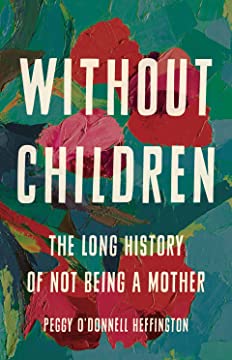
Without Children: The Long History of Not Being a Mother by Peggy O’Donnell Heffington, Seal Press, coming out April 18, 2023. [pre-publication copy sent by publicist]

Women didn’t start choosing not to have children in the late 20th century with the advent of legal abortion and The Pill. As historian Peggy O’Donnell Heffington describes in this book, it has been happening throughout history. Women were using a variety of herbal concoctions and crazy methods to keep sperm from meeting egg long before birth control pills became widely available in the 1970s. What is new is the way families have separated themselves up into mom-dad-children units, each living in their own separate homes instead of the multi-generational communal living of earlier eras. In those times, mothers had aunts, grandparents and siblings to help. Now they’re expected to do all the childcare AND work outside the home, giving most of their income to daycare.

Other things have changed, too. Couples worry more about overpopulation, climate change, and the financial challenges of parenting. Women delay parenting to pursue education and careers, then struggle with infertility when it’s almost too late. It’s much less of a scandal these days if a couple decides not to reproduce, but there is still a strong belief that having children is the norm and if we’re not doing that we need to explain ourselves.

This book looks at the various reasons for not having children, including wanting more out of life, concerns about our overcrowded planet, the frustrations of infertility, and simply choosing not to have them. Heffington goes into great depth on each subject. We learn about early birth control, family organization, activists who fought for women’s right to control their own bodies, how fertility treatments work and the statistics on their effectiveness, and much more. The level of detail is incredible, but the facts never bog down the narrative. Don’t let the footnotes scare you away. I highly recommend it for anyone trying to decide whether or not to have children or dealing with the decision after it’s a done deal, as well as for the people who love them.

My only quibble is that she doesn’t say much about being childless by marriage. It’s sort of buried in the many ways we can wind up without children. I wish she had said more about that. Still, it’s full of fascinating facts. For example:

*Nearly half of millennial women have no children and an increasing number don’t ever plan to.

* Births have dropped dramatically since the 2008 recession because couples feel they just can’t afford it. Add in the pandemic, and even fewer are willing to jump into the parenting pool. The same thing happened during the Great Depression early in the 20th century.

* Contraception has only been legal in the United States for married women since 1965 and for all American women since 1972. (That’s the year I lost my virginity. That blows my mind. If I had started having sex one year earlier, I would not have been able to get The Pill. I would probably have been pregnant on my wedding day.)

* People have been using all kinds of methods to prevent or to end pregnancies throughout history. Among the possibilities: mixing a spermicide made of hydrated sodium carbonate with crocodile droppings, blocking the cervix with a disk made of acacia gum, and rubbing crushed juniper berries on the man’s penis. Some of the things described here actually worked.

* There’s a theory that humans live far beyond their reproductive years so they can care for their extended families and the children in their communities rather than having more or any children of their own.

* The choice not to have children may not feel like much of a choice at all when you factor in the challenges of establishing a career, finding the right partner, saving for a home, paying off student loans, or working multiple jobs to make ends meet. (I would add dealing with physical or emotional problems, marrying partners who already have children, who have had vasectomies or hysterectomies, or who just plain don’t want them. Is it really a choice when you can have this person you love OR children and might end up with neither?)

Heffington, who claims a husband and two pugs as family, writes from the point of view of a historian. A professor at the University of Chicago, she writes and teaches on the histories of gender, rights, and the environment. It all comes together in Without Children.

The book comes out next month, but you can preorder it now.

Processing…
Success! You're on the list.

Childlessness is Not a New Thing

Childlessness is not a 21st-century aberration. It turns out couples and single women have gone without children for as long as anyone has been keeping track. The Baby Boom was an anomaly that made us all think the way our parents did it was the standard by which all things should be judged.

Oh Lord, you’re thinking. Sue has lost it now. Big words, history lessons. Bear with me. I am reading a new book titled How to Be Childless: A History and Philosophy of Life Without Children by historian Rachel Chrastil. As you might guess, it’s the kind of book that’s slow reading, with lots of charts, footnotes and a source list that goes on for days. But I am learning so much.

As early as the 1500s, Chrastil writes, women delayed marriage for varying reasons. Some were trying to save up for a sufficient dowry to attract a husband. By putting off marriage and childbirth, women then, like now, could work, save money, and claim a place in society. Of course, if they waited too long, they might end up childless. Some decided they did not ever want the constraints of marriage. In those days, married women gave up all their rights to own property or manage their finances to their husbands. So-called “singlewomen” had more independence.

In the early 20th century, wars, the great flu epidemic, depressions, and other problems also caused couples to bear fewer children. Couples who suffered from infertility did not have the options available now. But those were not the only reasons. Women were claiming more rights, more autonomy. Remember, the suffragettes were marching for the right to vote.

Chrastil charts a drop in the late 1800s and early 1900s. Like now, one in five women did not have children. Why have we not heard about this? The answer is simple: They had no children or grandchildren to pass on their stories. “They fade out of our family history,” she says.

Even those who did have children were having fewer because they wanted more out of life than motherhood. But people didn’t discuss any of this in public. Even as recently as the 1960s, when I hit puberty, folks didn’t talk about pregnancy or periods or why “Aunt Jo” never had any children.

What about being childless by marriage? I’m halfway through the book. In the parts I have read so far, Chrastil doesn’t address the subject head-on, but she does note that there are “many gradations of voluntary childlessness.” Among fertile couples, she classifies couples as those who agree to have children, who agree to postpone having children, or who do not agree on the subject. I assume most of us here fall into that third category. I hope she writes more directly about this in the later pages.

Meanwhile, did you know birth control did not start with “the pill?” It might not have been as easy, but people had ways to prevent conception–besides pulling out before ejaculation or the ever-popular “Sorry, not tonight.” In the early times, women also used various herbs and prolonged breastfeeding to space out their children.

In the 1800s, couples used soapy douches, dried gut condoms, diaphragms, vaginal sponges and pessaries (a device that blocks access to the cervix). They were illegal in some places, but people used them and didn’t talk about it. Check out this website for more on early birth control. 

None of these methods were as reliable as today’s birth control pills, but they did slow the process, especially when combined with the “rhythm” method of timing intercourse with the woman’s least fertile periods. If those failed, there was abortion, not legal but definitely done. Chrastil writes, “In the United States in the early twentieth century, estimates range between 250,000 and 1 million illegal abortions a year.”

The baby boom, which happened in a period of economic growth and post-war happiness, was not the norm.  Looking back on those “Leave It to Beaver” years, we’re likely to think that’s how it always was. June and Ward got married young, bore their standard two children, and raised them in a big house with a white picket fence. Ward never said, “I don’t think I want children,” and June certainly didn’t rip off her apron and declare she’d rather have a career than bake cookies for their sons. But that’s not the way it always was, and it’s certainly not the way it is now.

We have more factors to consider these days. We have reliable birth control, and abortion is legal. Far more couples divorce and remarry, creating blended families and situations where one spouse has children and the other does not. Women have more career options. Both men and women are inclined to delay marriage and childbirth until they have finished their education and gotten their careers established. It’s a new world, but it’s also an old one.

We’re not the first childless generation after all.

So, what do you think about that? Your comments are welcome.


Motherhood didn’t used to be a choice

Prescribing birth control for unmarried women was not legal in the United States until 1972, the year I lost my virginity and started taking birth control pills. It only became legal for married couples as I was entering high school in 1965. When Roe V. Wade legalized abortion in 1973, I was 21.

A lot of things were different when I was growing up. In 1974, the year I married my first husband, Congress passed the Equal Credit Opportunity Act. Before that, it was difficult for women to secure credit cards or loans or buy their own homes. Can you imagine that now? What do you mean I can’t have a credit card in my own name?

I know most readers here are considerably younger than I am. In your lives, birth control and abortion have always been legal. As for women being able to run their own financial lives, how could it be any other way? But it was. Consider this: We weren’t even allowed to wear slacks or jeans when I was in school, only skirts. With pantyhose.

I’m reading a new book titled All the Single Ladies. Author Rebecca Traister takes us through the history of the women’s movement and the stories of a persistent percentage of women who choose independence rather than be bound by marriage. It’s heavy reading but fascinating. I will tell you more about it when I finish the book. I want to talk about people who prefer independent lives over married life, but what I have read so far sure makes me think about how things have changed.

Through most of history, women have not been considered equal to men, and they have not had the same rights as men. Traister quotes so-called experts from the 19th century who maintained our brains were not as big as men’s brains and who also said that if we stressed our brains doing jobs not suited to women we would damage our reproductive organs. Craziness, right? But women as recently as my mother’s generation truly saw few other choices in life besides being wives and mothers. Even when I came of age, I expected every relationship to turn into marriage and that would lead to having children. That’s what everybody did. I just wanted to be a writer, too. I’d do it while the kids were at school.

When women found themselves pregnant before marriage, it was a scandal. They had to get married in a hurry or go off somewhere to give birth in secret and give the baby up for adoption. Abortion was rare, dangerous and illegal until 1974, four years after I graduated from high school, four years after several of my classmates found themselves “in trouble.” Being a nerd with no social life and hyper-protective parents probably saved me from that.

I got married two weeks after I graduated from college. If my ex hadn’t put a monkey-wrench into the baby plan, I’d be a grandmother now. Early in our dating life, he hustled me to the student medical center for birth control pills. Those pills were a disaster. They made me sick, fat and depressed. I tried various types of pills. On some, I bled almost all month long. Others caused giant painful bumps to break out on my legs. I experienced the mother of all yeast infections because I didn’t know what to do and I didn’t dare tell anyone I was having sex before marriage. But I didn’t get pregnant. What if I had been born just a few years earlier?

Shortly before the wedding, I switched to a diaphragm. Every time I bought the contraceptive jelly for it, I felt like everyone in the store was looking and judging. Even after I got married.

And yet, I had so many more options than my mother did. I don’t know if she had sex before marriage. I don’t want to know. I do know she and my dad used condoms to stop having children after they had my brother and me. My snoopy brother found them in a drawer, but we never discussed it. God no. For us, The Talk about sex consisted of one word: Don’t.

Birth control took away the fear of pregnancy, both in and out of marriage. Plus, because the times were changing, I was able to work as a newspaper reporter, doing work that men used to do. I was always in debt, but I could manage my own affairs. My mother, perhaps your grandmother, did not have that freedom. She lived in a world where men controlled women’s lives and women’s destiny was motherhood.

Things have changed so much. It’s good, right?

We have so many choices now. Sometimes that makes it more difficult, especially when we find partners who don’t feel the same way as we do about having children. It used to take some doing to prevent the babies from coming. Now we have to fight for the right to have them. It doesn’t seem fair. Or is it more fair than it ever was before?

What do you think about all this? How have things changed in your lifetime? How has the availability of birth control and abortion affected your situation? Let’s talk about it in the comments.


What’s God got to do with childlessness?

Since I tiptoed into a tricky topic by writing about abortion last week, let’s take it a step farther and talk about religion. I know you all have different beliefs, and that’s good. This post will not challenge what you believe, just perhaps how we all apply our beliefs.

We know that Catholics believe abortion is a mortal sin, grounds for excommunication. But do you also know that when couples get married in the Catholic Church they promise to accept the gift of children from God? To refuse could mean not being allowed to marry in the church.

The church maintains that sex should only happen between people who are married and that its only purpose is procreation—making babies. Birth control is not allowed. Do millions of Catholics break these rules? All the time. So did I. It’s hard to ignore the fact that if I had followed the rules of the church back when I could have gotten pregnant, I would probably have children now. And grandchildren. My whole life would have been different. I would still have gotten divorced from my first husband and God knows how I would have supported myself and the kids, but I would be a mom.

So you could say religion, or ignoring my religion, is a factor in why I’m childless. But when people ask me why I don’t have kids, I rarely mention my religion or God or the church. And neither do most of the people I talk to, even though most religions see children as a blessing if not a requirement. I can’t name one faith that suggests we don’t have babies. Not one. And yet, it doesn’t seem to be part of the decision.

With all the people I interviewed for my Childless by Marriage book and the countless folks who have joined the discussion here at the blog, any mention of religion is rare. Why is that? Is it that our culture seems to make fun of people who are visibly religious? Try bringing it up with somebody you meet today and watch for the uncomfortable reaction.

Or is it that our faith doesn’t factor at all into our decisions about having children? I get comments every day about what he wants and what she wants, what I need and what he needs, will I regret it in my old age, and who will take care of me, but not a word about what God wants us to do. If you don’t believe in God, that makes sense. But a July 2016 Gallup poll shows that 89 percent of Americans claim to believe in God or a higher power. So where does God fit into our decisions about children? Do we consult Him/Her/It at all? If we don’t, why not? And if we do, why don’t we talk about it?

Are we afraid of being mocked? Afraid we don’t want what God wants? Do we figure it’s none of God’s business, part of our right to free will? When I was using birth control with my first husband or the men who followed; when I married a man who had a vasectomy and didn’t want more children; when I was feeling bad because I didn’t get to be a mom, did I think about God? Not much. Oh, I’d shake my fist and ask how He could let this happen to me, but that’s  not the same thing.

How about you? I know religion is an itchy uncomfortable subject for lots of people, but let’s try to talk about it. How does/did your belief in God or a higher power fit into your decisions about having children?

I promise to write about something easy, like puppies, next week. Tomorrow’s my dog Annie’s ninth birthday! But we need to look at the big issues sometimes. And maybe sending up a prayer will help someone who’s trying to figure things out.

Book tells stories of ‘missed motherhood’

Let’s talk about books on this snowy morning. Yes, it’s snowing on the beach in Oregon. So pretty. So not going to my dentist appointment. 🙂

Comstock, Kani with Barbara Comstock. Honoring Missed Motherhood: Loss, Choice and Creativity. Ashland, OR: Willow Press, 2013.

In a world where having children seems to be the default setting for most women, Comstock acknowledges that large numbers of women do not become mothers for physical or circumstantial reasons. Even if they do have children, they may have lost other babies to abortion, miscarriage or stillbirth. The book includes the Comstocks’ personal stories of non-motherhood, followed by a series of first-person narratives from other women. It concludes with a series of resources to help deal with grief and the loss of children.

Aside from some grammar glitches, the book is well-written and the stories are engrossing. I was shocked at the number of women here who had abortions, sometimes multiple, and others who had one miscarriage after another. The situation I address in my own Childless by Marriage book and blog, the partner who is unwilling or unable to make babies, is glossed over with one story that ends happily with a great relationship with the woman’s stepchildren. Believe me, it doesn’t always work that way.

I was also bothered by the frequent mentions of something called The Hoffman Process, a personal growth program in which both women are deeply involved. For approximately $5,000, you can spend a week at one of their retreats and release all your trapped feelings. Some online writers call it a cult. Are the Comstocks trying to sell us the course? Are they qualified to offer the psychological information they include? They are probably right that most of us do not fully express our feelings or acknowledge our losses, but I don’t know if we need the “process.”

Those concerns aside, the resources included at the back of the book are a boon for any childless woman trying to figure out how to grieve her loss and move on. They include rituals one can perform alone or with friends and a wonderful Mother’s Day ceremony I would love to try. You can also find these rituals at their website, http://www.missedmotherhood.com.

The emphasis really is on physical loss of a baby. If your problem is with your partner, well, you have already found us right here.

Kani Comstock and I will both be presenting at the NotMom Summit in Cleveland, Ohio October 6 and 7.

Michele Longo Eder, Salt in our Blood. Newport, OR: Dancing Moon Press, 2008

Right after I read the Comstocks’ book, I launched into this memoir by a local woman about the loss of her stepson at sea. I’m still deeply engrossed in this 430-page paperback, but wanted to share part of her story that applies here. The author, an attorney with no children, married a fisherman with two sons. He had custody of the boys, and their mother was not involved at all. Michele immediately became their mother. They call her “Mom,” and she calls them her sons throughout. There is no “step” between them at all. There is also no mention of wanting her own biological children or regretting not having them. Of course, it’s not a happy story. One of the sons dies. She grieves him like her own. Is it possible for a woman to step into a family and bond so completely that someone else’s children become her own? Is this only possible if the bio mom is not around? Something to ponder.

Meanwhile, there’s snow blowing past my window. I’m calling the dentist’s office. Not coming. Have a good day, wherever you are and whatever your weather.