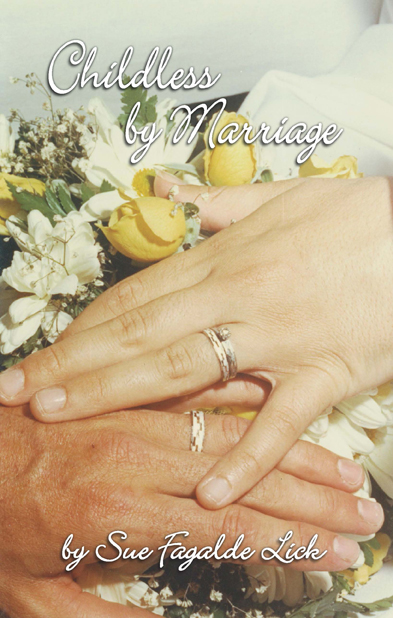
Childless by Marriage is all grown up–and we have an audiobook now

Childless by Marriage the book is a teenager. Published in 2012, it’s not the bestseller I had hoped it would be, but it’s a good book, and I hope it has helped people understand what it’s like to not have children because your partner is unable or unwilling to make babies with you.

It has lots of siblings now, including Love or Children: When You Can’t Have Both, which includes some of the most popular posts and comments from the blog between 2007 and 2020. There have been many new posts since then, and they are all archived on this site.

When Amazon offered a chance to create an audiobook version of Childless by Marriage, I went for it. The voice is computer-generated, not mine, but I like the way she sounds. This makes the book accessible to people who are visually impaired or who simply prefer to listen to books while they do other things.

While I was listening to the audio version, following along with a printed copy of the book, I discovered typos and words left out or misspelled. I was horrified. Typos in books drive me crazy, so I had to fix them. I spent many hours doing that last month. I am happy to report that I have now corrected and updated all versions, print, Kindle ebook, and audio. You can buy them at Amazon.com, or your favorite bookstore can order the print book through Ingram.

One good thing about producing books instead of children, especially in the computer age, is that you can go back and fix your mistakes. You can’t do that with most things in life. If for some reason you can’t have the children you wanted, you can’t go back to the original Word file and change the story of your life. Instead, you’re forced to make a tough decision. Do you accept the situation as it is, find a new partner, adopt, or try IVF? Do you settle for fur-babies or open a daycare? Do you grieve the loss or embrace the childfree life, or a little of both?

As I mentioned a couple weeks ago, I will soon stop blogging here. By the end of August, I will have shared 900 posts. If the book is a teenager, the blog is old enough to move out and live on its own. It’s time to let it go.

All of the posts will remain online for you to read, along with my resource page, bibliography, and updates on all things childless. I plan to create an index, but meanwhile, you can search right here on this page for whatever interests you.

I will also continue my Childless by Marriage Facebook page and would love to see some of you there.

At this point, my life is so far past the question of whether or not to have children that it’s time to let younger writers take the stage. There are many of them with so many more books, blogs, podcasts and support groups for people who are childless not by choice.

We even have a World Childless Week, hosted by Stephanie Joy Phillips, which offers tons of talks and workshops, readings, and resources, all online. This year it will be Sept. 15-21. Visit https://worldchildlessweek.net for more information.

One of the strongest voices in the no-kids community is Jody Day, founder of Gateway Women and author of Living the Life Unexpected. She has passed her own torch to Katy Seppi, who continues the work as The Childless Collective. Meanwhile, Jody has turned her attention to childless older women and is doing wonderful work there. Read her newsletter and subscribe to her Substack, https://jodyday.substack.com.

Not so long ago, people didn’t talk about childlessness. If someone didn’t have children, there were whispers about possible infertility—poor thing—but no one said anything out loud about it. But times have changed, and our numbers have risen. We can share our stories without shame so people can know and understand. No more secrets.

Question: As I prepare my last few posts, what do you wish someone had told you as you faced the possibility of life without children?


Nomo Crones meet next week

Jody Day hosts quarterly “Childless Elderwomen Fireside Chats” with women from all over the world. I have been lucky to participate in most of them. We have discussed everything from aging alone to how to deal with obnoxious questions about our parenting status. On Saturday, June 28, at 11 a.m. Pacific time, we “NomoCrones,” as Jody calls us, will discuss the often-buried subject of menopause and life beyond our fertile years. As always, it will be lively, with plenty of laughter and probably some tears. You can register to join us anonymously at bit.ly/gwe-meno. You will not be seen or heard, but the chat is always a big part of the festivities. The session will be recorded, so you can listen live or whenever you want to.

Meanwhile, Jody has published a terrific post about menopause and aging without children. You can read it here.


If you want to know what I’m up to these days, visit my “Can I Do It Alone?” Substack at https://suelick.substack.com or on Facebook at https://www.facebook.com/suelick

Without Kids, Will You Spend Your Holidays Alone?

Dear friends,

Today, I’m sharing a revised version of a post I wrote for my “Can I Do It Alone?” Substack on Easter. I don’t dwell on childlessness there, but the sad truth is that if you don’t have kids, you may wind up alone in old age.

I’m watching “American Idol” on TV and crying. All those weepy moms in the audience remind me that I will never have a child to love and support like that.

It’s Easter. I have been trying hard to be Zen about not having a family to spend the holiday with, but now the reality is sinking in.

This afternoon, a niece posted a photo of my sister-in-law surrounded by her grandchildren in front of a homemade birthday cake. They had gathered for a combined Easter/birthday celebration. The kids didn’t have to be reminded and cajoled to do something for their mother. They just did it. I am happy for her. She works hard taking care of those kids and my brother.

On my last birthday, which was better than average, I went to my weekly open mic, where my fellow musicians sang to me and made me feel loved. At church, having read my posts about my upcoming birthday, our videographer brought me flowers. My neighbors invited me over for supper. It was a little uncomfortable because there were four of them and one of me. But it was kind of them, and we had fun.

I couldn’t help thinking people felt sorry for me because I was alone. Hell, I felt sorry for me.

If I didn’t say a word, who would think to do anything? And when was the last time someone baked a cake for me?

Back to the moms in the “American Idol” audience. I started wondering what my kids would be like. Would I have a pretty daughter like my niece or a tall son who would adore me and take care of me? Would they add in-laws and grandchildren so my family could be as big as my brother’s? Would I never spend a birthday or holiday alone? Would I bake cakes for their birthdays?

Excuse me while I fetch some Kleenex.

Yes, I know. I could have children who would not show up for me. Several of my parent friends spent the holiday alone because their kids were busy, lived far away, or they weren’t getting along. Some people’s children have died; surely that pain is worse than anything we might feel about never having them. Babies don’t come with guarantees.

I had three stepchildren. When my husband died, they slipped away. What little I know about them these days is posted on Facebook. What if I had tried harder to keep in touch, to be part of their lives? Would they have let me? I don’t know. I didn’t know how to be a mom, especially when my husband wasn’t enthusiastic about being a dad, but I think I blew it.

By choosing Fred, I chose a life without children of my own. He was a wonderful husband. We were so in love. Who knew he’d have early-onset Alzheimer’s and die at the age I am now? I thought he would be with me for at least another ten years.

At the top of my to-do pile is my health care advanced directive form, which specifies what I want done in a medical emergency if I can’t speak for myself. It has spaces to list the people who will speak for me. It has been on that pile for months. Besides my brother, who lives 700 miles away, I still don’t know who to choose as my alternate representative. If I had children, I’d put their names down and expect them to do it.

Who else would care enough to hang around a hospital making life and death decisions for me? I have friends, but do I have the right to put that kind of responsibility on them? Should I recruit one of my cousins, the cousins I only see at funerals? What if I put out a call for volunteers? Would anyone respond? I’m stuck.

I will figure it out. I will find someone, even if I have to pay a professional. I just learned there are “nurse advocates” who will step in if you don’t have family to speak for you. But I’m jealous of those people who can call on their grown children for everything from Easter parties to rides to the doctor to managing their affairs when they can’t do it anymore.

When a couple has children, it starts with one baby but grows into a family, with young ones to replace the older ones who pass on to the next life. If you give that up for the love of one man or woman and they leave or die, you will be alone. On Easter. Christmas. Your birthday. The anniversary of your husband’s death. The day you win a prize. The day the doctor says you have cancer.

Many people happily choose not to have children and are confident they can deal with their childfree future. Others are physically unable to get pregnant or carry a pregnancy to term, and they will feel the loss all their lives.

For those of us who are childless by marriage, who have choices, we need to think very hard before we put all our eggs in the no-kids basket. If your partner is able but unwilling, talk to them about what will happen if they are gone, and you’re left alone. If they really love you, maybe they’ll change their minds.

I know this is a weird post, but it’s what I’m thinking about this week.

How was your Easter? Was not having children an issue for you? Have you thought about what will happen when you’re older?

Image generated by AI

***************************************************************************************************************

At my “Can I Do It Alone?” Substack, we talk about all sorts of things related to living alone. Come join us at https://suelick.substack.com.

Processing…
Success! You're on the list.

Will You Ever Find Peace with Your Childlessness? 

Facing a future with no children used to drive me crazy. Back when I was fertile and married to a man who was not, I cried a lot, mostly where he couldn’t see me. I resented my friends whose lives revolved around their kids. I did not want to hear their happy stories or look at their pictures. Baby showers? What do I know about babies? Count me out.

As far as I knew, there was nothing wrong with my baby-making parts, but they were being wasted, evidenced by painful periods every month, reminders I was running out of time. 

Now I’m 72, childless and widowed. Although being alone can be difficult, I have to tell you that I don’t think about childlessness all the time anymore. If you are in your 20s, 30s, or early 40s, feeling bad because you wanted children and might never have even one baby, know that it does get easier. Like any loss, it doesn’t go away, but you do learn to live with it. 

Yes, you will feel breakthrough grief and anger. You’ll see a family at play or hold someone else’s baby and think I could have had that, but as you get older, it will become a less important feature in your life. You will wonder who will care for you in old age, but know that even if you had children, they might not be available to help.

When you’re surrounded by people getting married and having babies, you feel excluded, jealous, and angry at whatever keeps you from having the children you always wanted. Or you resent the people who keep pushing you to have the children you never wanted. You’ll regret it, they warn. What if they’re right? It can be a brutal time. 

The night before my 40th birthday, I had a meltdown that I describe in my Childless by Marriage book. At a Catholic women’s retreat, everyone was talking about their kids. Our guided meditation put me face to face with what I had lost, and it felt unbearable. As the women running the retreat held me, I sobbed in front of everyone. I felt broken. It didn’t help that I really wanted a drink, and there was no alcohol around.

But as I approached menopause, so many other things took my attention. My writing career was taking off. I was performing music almost every weekend. I earned my long-delayed master’s degree. We moved from San Jose, California to Oregon and experienced a very different life in a small coastal town.

My mother died, my husband was diagnosed with Alzheimer’s disease, and my father needed lots of help before he passed away. You hear about the “sandwich generation,” about people caught between caring for their children and caring for their parents. Without children, we can be open-faced sandwiches, helping our older relatives without neglecting our children. 

By my 50s, people stopped bugging me about having kids, and my friends were free to do non-kid activities again. Yes, the grandchildren came, but that was an off and on thing. We could still be friends.

Do I wish I was a grandmother? Sometimes. but childlessness is not at the front of my mind anymore. I took a different path, and it’s too late to turn back.

With every choice, you lose the chance to pursue the other option. By moving to Oregon, we lost the chance to grow old in San Jose, closer to family and so many resources that don’t exist here. If I had married someone else or not married at all, my story would be different. You choose one road and let the other one go.

I can torture myself by imagining what it would be like to have children, how they would look, what we would do together, how I would hold my grandbabies in my arms. But my life didn’t go that way, and I suspect that’s how it was meant to be. 

Not having children has given me the gift of great gobs of time that mothers don’t always have. Time and freedom. I don’t have to find a babysitter or take a kid with me if I decide I want to go to lunch, take a walk on the beach, or spend the night elsewhere. I just go. 

Would I trade my freedom for a walk on the beach with my son or daughter, maybe with their children splashing in the surf or building sandcastles? In a heartbeat. But that’s not on the menu for me. And I’m 80 percent okay with it.  

Maybe you’re at that age when becoming a parent would still be possible under other current circumstances and you’re driving yourself crazy trying to decide what to do: Leave your partner in the hope of finding someone who will give you kids? Try IVF? Hire a surrogate? Adopt? You may fight with your partner over it and cry a lot.

I know how bad it hurts. I’m saying that later it will be easier. Childlessness will not be the center of your life, and that makes room for other things, wonderful things. 

That’s not nothing.

How about you? Are you going crazy over being childless? Do you regret the choices that led you to be without children? Did you have a choice? Do you think you will ever be okay with it? Or are you fine with it now? Have you found peace with your situation? How?

I’m great-grandmother old. Tell me how it is for you at whatever age you are.

I welcome your comments.

***************************

If you enjoy this blog, you may want to visit my Substack, Can I Do It Alone?

Processing…
Success! You're on the list.

Accepting a Childless Life Should Not Be a Crime

It’s illegal now in Russia to advocate a childfree life. Anyone who spreads “propaganda against childbearing” can be fined. Any content in films, advertising, media, and other online platforms that shines a favorable light on life without children is prohibited.

Russian President Vladimir Putin signed these provisions into law in November.

Russia is one of many countries where the birthrate has dropped, causing fears that soon there will lots of old people with no young people to care for them or to keep the country going.

Other nations, including the United States, are experiencing the same problem but haven’t done anything as drastic as Russia’s new law. They lay the blame on the childless by choice, but let’s be real. Far more nonparents are childless by circumstance than by choice. We don’t have kids due to infertility, physical or emotional health problems, lack of a willing partner, or lack of the financial means to support a child. We would like to have children but, for whatever reason, we can’t.

Is it wrong that after grieving our loss, we seek to put a positive spin on the situation? Even some of the posts I have written here suggesting ways to enjoy life without children might be illegal under Russia’s new law. Would it be a crime to name the many highly successful people who never had kids?

Thank God we don’t live in Russia.

And yet, we can detect the same attitude in our own countries, can’t we?

Remember U.S. Vice-President-elect J.D. Vance and his comments about how “childless cat ladies” don’t have a stake in the country’s future?

Entrepreneur/Trump advisor Elon Musk recently wrote on Twitter in regard to dropping birth rates: “Instead of teaching fear of pregnancy, we should teach fear of childlessness.” He suggested the low fertility rates stem from a cultural hostility toward pregnancy and child-rearing. “We need to stop scaring women that having a kid destroys your life.”

Well, let’s put some context on that last bit. When I was young, yes, our parents told us the worst thing that could happen, short of dying, was to get pregnant outside of marriage. It was the sixties, when unwed mothers were still being hidden away and forced to give up their babies for adoption. And yes, having a baby when you’re young, with no education and no husband, can throw a monkey wrench into your plans, but that’s not what Musk is talking about. He’s buying into the common myth that all of us without children are simply selfish.

This attitude isn’t new. Churches, families, friends, co-workers, and clueless strangers have been after us forever with questions about why we don’t have kids and when we’re going to get with the program. They imply that we’re immature and thinking only of ourselves, defying God’s will and depriving our parents of grandchildren. And now, we’re also unbalancing the population. Most of us feel bad enough without all this guilt and misunderstanding.

Birthrates are falling around the world, and many countries, including the U.S., are doing what they can to encourage more babies by offering tax credits, increased parental leave, and better daycare options. That’s all good, but it’s important to acknowledge that some people don’t have a choice and are grieving the loss of the children they might have had. If, like many of us here, we choose childlessness by partnering with people who are unable or unwilling to have babies with us, that should be no one’s business but our own.

Nor should it be a crime to come through the hard decisions and declare that life without children can be happy and fulfilling. Or that we make valuable contributions because we are not busy raising kids. Look at all the famous writers, artists, scientists, and government leaders who never had children.

I sense a growing belief that nonparents have been preaching to the younger generation that kids are a pain and they’re better off without them. That’s not true for most of us, but there’s nothing wrong with letting kids know they have choices, and that parenthood is not required for a good life.

Russia’s reaction is extreme. I don’t expect any other countries to pass similar laws, but the anti-childless attitude is spreading. All we can do is tell our truths and hope people listen.

I hope you are all off to a good start for the new year. Has your childless situation or your feelings about it changed with the coming of 2025? Please share in the comments.

You may also want to take a look at my Substack, “Can I Do It Alone?” which explores how those of us without partners or children can live our best lives.

If you feel inspired to write a guest post, please get in touch.

Processing…
Success! You're on the list.

Childlessness by Marriage Gets Little Press

I have been racking my brain trying to find a subject for today’s blog, and I’m coming up dry. Plus I’m distracted. Why?

  • Four friends have died this month, and another is on his way out. Every phone call or text makes me jump.
  • I have been spending hours working on the “best of Childless by Marriage” book, which is getting close to finished. It feels like we have covered everything already, but I know there are more stories out there. (See below)
  • I’m getting ready for a writer’s conference I’m working at this weekend—all online, which requires multiple training sessions. My writerly Zoom schedule is busier than my pre-COVID schedule, and the hours, designed to accommodate all time zones, are worse.
  • I’m going crazy with something called Restless Legs Syndrome. I don’t usually talk about this, but it’s running my life these days. Do any of you have it? Basically, it’s an irresistible urge to move one’s legs, caused by a neurological problem. It’s not fatal but totally crazy-making. I finally tried medication for it; it made it worse instead of better. The doc kept raising the dose until I was too dizzy and nauseated to function. Now I’m tapering off because it’s so addictive you can’t just stop. For hours at a time, usually in the evening, I cannot sit still. Not for five minutes. This thing, also known as Willis-Ekbom Disease, can be hereditary, so thank God I didn’t pass it down to my children.

In searching for good things to share with you, this podcast at “Remotely Relatable” sounded promising: “How Many Goldfish Equal a Child?” Once we get past the chit-chat and into the topic, we learn that neither Julie nor Stephanie, both in their 30s, ever wanted children. Julie had her tubes tied at age 30 to make sure she never got pregnant. Yes, her mother is still saving her stuffed animals for future grandchildren, but it’s not going to happen. Stephanie still has intact tubes, but she has never wanted children ever. So, these are not our people.

They did talk about how hard it is for millennials to fit children into their lives, what with student loans, careers, and the major events that have happened in their lifetimes—9/11, Recession, natural disasters, the COVID-19 pandemic . . . We need a village to raise children, they said, but they can’t seem to find that village. Lots of us can identify with all that, but still, they didn’t want kids.

Oh, here’s an article about writer dealing with the decision. Nope, this won’t work either. Another woman with no urge to be a mother, she cites childfree actress Kim Cattrall of Sex and the City as her role model. She says all these people who think women have to have children to be happy should just back off.

Where does that leave those of us who are childless by marriage, who actually wanted children? Those of us who are childless because our partners wouldn’t or couldn’t are still in that rarely-talked-about but oh-so-common situation that nobody seems to acknowledge except those of us who are in it. Do you see your situation mirrored anywhere in the media besides here? Who are our role models? Where is our podcast?

*****

Would you like to write a guest post for this blog? I’m looking for personal stories, 500-750 words long, that fit our childless-by-marriage theme. You could write about infertility, second marriages, partners who don’t want children, stepchildren, feeling left out when everyone around you has kids, fear of being childless in old age, birth control, and other related issues. Tell us how you how you came to be childless “by marriage” and how it has affected your life. We love stories about successful childless women. We do not want to hear about your lovely relationship with your children or how happy you are to be childfree. Nor will I accept posts that advertise a service or product. Not all submissions will be accepted, and all are subject to editing, but those that are published will receive a loving reception from our CBM readers. If interested, email me at sufalick@gmail.com.


Sometimes you’re just the ‘girlfriend mom’

BOOK REVIEW: The Girlfriend Mom by Dani Alpert, 2020.


Dani Alpert was childless by choice, but when she partnered with Julian, she became a de  facto step-mom to his son and daughter. She wasn’t married to their dad, but she was caring for these kids, so what was she really? She decided to call herself “the girlfriend mom.” This new book tells the story of how that turned out.

Asked in an interview how she felt when she discovered Julian had children, she says, “I didn’t care because it was lust at first sight. All I was thinking about was getting into his pants, not starting a long-term relationship. The possibility of meeting his kids, let alone getting involved with them (in any way) was not on my radar. I continued on my child-free life way. There was also a part of me that thought dating a dad was sexy — I’d never had a dad before. That sounds creepy.

“In the beginning, Julian almost made it seem like he didn’t have kids — by that, I mean, because he didn’t have full custody, there were plenty of “between-the-sheets” days. As time went on, he’d cancel our plans more frequently. It didn’t truly hit me over the head until we moved in together. I’d get the side-eye from Julian if I preferred not to partake in the weekend activities with the kids. My feeling was, they were his kids and his time with them — I was just the girlfriend. When I started to feel my autonomy slipping away, I knew this might be an issue.”

Have you felt that loss of autonomy and that change in the relationship when the kids enter the picture? I sure have. But Alpert tells it in a way that lets us laugh through our tears.

Alpert experienced many of the challenges all childless stepmothers face. When the kids are around, her man acts differently. Suddenly it’s all about his children, right? When there’s a conflict, guess who loses? How do you interact with their mom? What happens on holidays and birthdays? How do you respond when the kids say, “You’re not my mom”? When do you get to have sex? How much of your life do you have to give up for these children who aren’t even yours?

All those awkward times are here, as is a growing love for Julian’s son and daughter that lasts longer than the relationship with their dad. Alpert’s tone is light-hearted, often funny, but the love is real, so real we have to add another question: Can you ditch the guy and keep the kids?

Alpert is not only an accomplished writer but has had a long career in film and theater, working as a screenwriter, performer, producer and director. She has an easy writing style that makes this book a joy to read, and childless stepparents will be nodding their heads in recognition as Alpert negotiates the all-too-familiar pitfalls of being a girlfriend mom.

For more about Dani Alpert, visit her website.

So, dear friends, I know many of you are in relationships with people who have children. Can you love these kids? How does not having children of your own make it easier or more difficult? Are they getting between you and your partner? What is it like being the “girlfriend mom”?

Please comment. And do read The Girlfriend Mom.

Disclaimer: I was given an advance copy of the book to review.

Put These Childless Books on Your Christmas List

Dear friends,

This week I offer two new books that you might want to put on your Christmas list. Both look at the challenges of not having children in a world where everyone else seems to be obsessing over their babies.

The Childfree Society Club by Jaclyn Jaeger.

I resisted this novel because I’m not part of the happily “childfree” gang. I wanted kids and feel bad about not having them, but the author, who requested that I review it here at Childless by Marriage, insisted it would be all right because one of the characters is dealing with infertility. Well, okay. Actually, there’s plenty of anguishing about the baby-or-no baby decision in this story.

It begins with two 30ish women deciding to form a club for childfree women because their other friends are so busy with their children. The club consists of five women: Samantha, an unmarried divorce lawyer; Ellie, who is married to Phillip, an older man; Sabrina, married to Raj, whose Indian parents are very upset that they have chosen not to have children; Maddie, a gay woman who never wanted kids, and Hannah, who has been trying to get pregnant for five years and would do anything to have a baby.

As the story progresses, Samantha acquires a boyfriend with a child, Phillip suddenly gets the urge to adopt a child, Sabrina and Raj are having marital problems over the baby issue, Maddie finds a new girlfriend, and Hannah gets offered donor eggs.

It’s hard to know what to say about this book. The grammar errors and clichés drove me nuts, the text was nearly all dialogue, and I had trouble keeping the characters straight, BUT I read the whole thing in two days and seriously wish there was more to read. It has kind of a Sex and The City vibe–if you add a younger gay woman to the mix. Great literature it’s not, but it is entertaining, and if you’re struggling over the parenting decision, especially if you and your partner disagree, you might want to read it. Or you might want to start your own club.

Motherhood Missed by Lois Tonkin, Jessica Kingsley Publishers, London and Philadelphia.

You definitely want to find this book in your Christmas stocking. Finally, finally, finally, someone besides me has written about the many complex ways of being childless “by circumstance,” including being childless by marriage. Tonkin is not childless herself, but she gets it. In this book, after a brilliant overview of the situation, she offers the stories of women in their 30s, 40s, and 50s who for one reason or another do not have children. You are bound to find stories you can identify with here. We have women partnered with men who already have children and don’t want more, women who had abortions when they were young and later could not get pregnant again, women for whom the fertile years simply slipped away, and so many more. They tell their stories in their own words, gently edited. This book is beautifully done. It includes a foreward by Jody Day, founder of Gateway-Women and author of her own book, Living the Life Unexpected.

If these books don’t send you, I still have copies of my own Childless by Marriage book. 🙂

Remember, books are easy to wrap and easy to mail.

I’m working my way into Christmas very slowly this year, not feeling the motivation to go nuts with cards, presents, decorations and the rest. I’m not depressed, just not feeling the need to do it all. Maybe if I had children, I’d feel differently. Or maybe I’d let them do it all. How are you doing this holiday season?

Book Review: The Female Assumption

The Female Assumption: A Mother’s Story: Freeing Women from the View that Motherhood is a Mandate by Melanie Holmes. CreateSpace, 2014.

I started out feeling that everyone who reads the Childless by Marriage blog must read this book. It’s loaded with information we all need to know while deciding whether or not to have children. Now I’m not so sure. Despite the fact that Holmes has three children, it leans heavily toward the childfree viewpoint and doesn’t much address situations where women who want children are unable to have them. Still, there’s a lot to gain from reading this book. I’ll let you decide.

The Female Assumption includes:

  • Convincing testimony that motherhood is hard. Holmes writes about the lack of personal time and space, the financial cost, and the opportunities lost while providing full-time care. Even though she tries to reassure her own children that she’s very glad to have them, I’d be wondering about that if I were them.
  • Clear information on birth control, including the various methods and myths about how they work. She also goes into abortion and “morning after” options.
  • A list of questions women should ask themselves before considering motherhood. If nothing else, read this section and think about how you would answer these questions, things like: why do you want to be a mother, how much are your feelings about this being influenced by other people, and how would you manage childcare and career if you did have a baby?
  • A discussion of how even in the 21st century, women still do most of the childcare and housekeeping. Until partnerships can become equal, women will still bear more of the burdens of motherhood.
  • “Dirty Little Secrets,” things mothers don’t admit out loud for fear their peers will hate them and their children will feel unwanted. Two examples: “Mothers yearn for time alone,” and “Your ‘stuff’ will never be your own again.”
  • How women are held to a different standard than men. Who questions the validity of male leaders or achievers who don’t have children, yet it happens with women all the time. Holmes suggests women are given an impossible choice: give up everything else to be mothers or live alone, childless, with work as sole consolation.
  • How the American workplace is behind the times, offering lower wages for women and failing to offer paid family leave.
  • The often-negative effects of parenthood on marriages.
  • Examples of successful women who never had children.

As I said, Holmes does not spend much time on infertility or women whose partners are unable or unwilling to have children. She seems to be encouraging readers to remain happily childfree. However, this book does contain a lot of useful information. Holmes really did her research. Read it and use what you need. Skim the rest.

As always, I cherish your comments. Go back and read some of the comments from last week’s post, “Are You Delaying Parenthood Until Conditions are Perfect?” We got some great ones. You can still join the discussion.

Childfree or Childless, We’re All NotMoms

“Are you childless by choice or by chance?” That was the question women asked each other at the NotMom Summit last weekend in Cleveland, Ohio. For once, no one was asking how many children we had or when we were going to start having babies. We already knew that the answers to those questions were none and probably never.

A vast gray area exists between women who have never wanted to have children and women who would give anything to have them, between women who rage about how difficult it is to get a doctor to tie their tubes for permanent sterilization and women who spend thousands of dollars on fertility treatments in the hope of getting pregnant. Keynote speaker Jody Day, founder of Gateway-Women, has published a list of “Fifty Ways Not to Be a Mother”  and says she could probably list another 50.

We shared stories of troubled childhoods; physical problems such as fibroid tumors, endometriosis and cancer; spouses who did not want to have children; choosing art over motherhood, and women who just plain didn’t want to have any babies. We laughed and cried at different places depending on where we were in our childless “journey.” When you desperately want a child, it’s difficult to applaud someone who just got her tubes tied or who boasts about being happily childfree.

In her talk, Day told us about an abortion she had early in life when she truly didn’t want to have a child. Later, when she wanted to conceive, she was never able to get pregnant again. Over the years, she said she has worked through her grief and come to a place where she can embrace being childfree.

The other keynote speaker, Marcia Drut-Davis, a bit older than most of us, told us about how she was vilified when she admitted on television that she did not want to have children. Her presentation was hysterically funny, and yet I knew that we had opposite views. Not only do I still wish I had children, but I’m oh-my-God Catholic and actually agree with Pope Francis and his views on family life. And yet, I loved her, and she was sweet to me when we met.

I heard later that Drut-Davis was criticized by some as not really being childfree because she had stepchildren. That’s nuts. Stepchildren are not the same. I expected criticism to come from the childless side. I keep thinking about the woman from Montreal who froze her eggs before having surgery for cancer and has never been able to get pregnant. I see her tears and think, hold on Marcia, do you know how hard it is for her to hear what you’re saying?

We had a pajama party Friday night to view a rough cut of a film titled “To Kid or Not to Kid,” produced by and starring Maxine Trump (no relation!). In the opening scene, she lifts her shirt to show us the scars from surgeries in her teens on her Fallopian tubes and uterus. She is not even sure she can get pregnant, but she wants to make sure she never does because she does not want to be a mother. In the film, she tells her husband and her mother how she feels about having children. We watch as her husband has a vasectomy. She meets with a young woman who has seen one doctor after another trying to have sterilization surgery. No one will do it.

The film is very pro-childfree. I considered going to bed instead of watching the whole thing. After all, so much of it clashes with my religious beliefs and my personal desires. And yet, I was mesmerized and sympathetic. Maxine, sitting there with us in her pajamas, has clearly suffered over this issue and knows how risky it is to open herself up to how the world at large might react in our pro-motherhood society. Her film uncovers many issues that nobody ever talks about.

By choice or by chance? Once we have made our choice or accepted that we will never have children, we have a lot in common. People say stupid things to us: “Why don’t you just adopt?” “You’ll change your mind.” “Women without children are immature and selfish.” We all feel left out when our parent friends are too busy with their kids to spend time with us. We all get sick of looking at other people’s baby pictures. We all worry about ending up old and alone. We’re all minorities in a world full of mothers.

There was considerable talk about the journey from “childless” to “childfree,” about reaching a place where one can celebrate the freedom that comes with not being a parent. I don’t expect to ever declare myself “childfree.” I wanted children and I still feel bad about not having them. The best outcome for me is simply to be at peace with how life turned out and enjoy the many blessings that I have.

At the end of the conference, motivational speaker DeLores Pressley, childless by early hysterectomy, got us dancing and shouting affirmations along the lines of “I am wonderful.” Then she had us form two circles facing each other. Oh boy, one of those touchy-feely exercises, right? We were to look directly into the eyes of the woman across from us for 10 seconds, until DeLores rang a bell, then move to the next woman. At first we giggled and squirmed, but then tears appeared in many of the women’s eyes and we started hugging each other before we moved on. As instructed, I tried to send a silent message. “It’s okay. It’s okay.” My eyes filled with tears, too. It’s okay to cry. It’s also okay to dance.

I will be posting thoughts from the conference for weeks to come. There’s so much to talk about. I gave a general overview of my trip on this week’s Unleashed in Oregon blog post. Read it here.

Let me know in the comments what you think about this childfree/childless situation. Can you be friends with someone who is happy to never have kids? Or does it hurt too much? Could you ever reach a place where you declare yourself happy to not have children? Let’s talk about it.