Being an aunt is not the same, but it’s pretty darned good

Illustrating the fun aunts can have with nieces and nephews. Photo shows a little girl riding piggyback on a woman's shoulders in a park. Both wear pale blue jeans and pink jackets.

You know how people get to talking about their kids and we have nothing to say because we don’t have any? Being an aunt or uncle can get you into the conversation with more fun and less angst. 

I suppose it’s like being grandparents, except you’re still young enough to be fun. 

I spent Thanksgiving with great-nieces and nephews who gave me plenty to talk about. Especially the oldest one. R. and I dressed for Thanksgiving dinner together, exchanging fashion tips. We played games. I was a customer at her pretend restaurant and a student in her pretend school. I let her try my guitar, and I listened to the song she made up. I was not the one telling her to brush her teeth, get dressed, or quiet down. We exchanged confidences and terrific hugs. Last summer, we were the ones who went swimming together while the grownups watched. I’m not ready to be one of the grownups. I’m the aunt. A long-distance one who doesn’t get to see them often enough, but an aunt nonetheless.

This trip, the younger kids were so busy playing with each other it was hard to get their attention, but still I could love and admire them and be amazed at all they had learned since the last time I saw them. I could brag about them. And soon I will go Christmas shopping for them because these kids give me a place in the world of children that I would otherwise miss.

When people talk about their grandchildren, I can talk about the nieces and nephews instead of just reverting to my own childhood or talking about dogs and cats. It feels good.

I told my brother how lucky he was to have this beautiful family. Bless his heart, he said, “Well, you’re part of it.”  

We are not all lucky enough to have siblings and nieces and nephews, biological or honorary. Sometimes being around other people’s kids painfully reminds us of the children we will never have. We may also feel awkward because we don’t have experience with young people unless we work with them as teachers, coaches or caregivers. It’s easier to avoid them, along with the adults who ask why, if you like kids so much, aren’t you having any?

You may not be able to relate to kids at this point in your childless life. The wound is too tender. Or maybe they just drive you nuts with their noise and unleashed energy. On my trip, I saw a family with three boys and a girl who jumped out of their car like they were shot out of a canon. As they headed into Applebee’s for lunch, I thought thank God I don’t have to deal with that

As the aunt, I can give them all a big hug and go off on my free adult way. But as they grow, they will become real people I can talk to and love and brag about as part of my family. Maybe they’ll even help me when I get old. Maybe not, but it’s possible. 

If you don’t have any siblings with children, it’s still possible to be an honorary aunt to your friends’ kids. You just have to show up with arms ready for hugging, ears ready for listening, and a heart ready to play. For the parents, you can be an extra set of hands, respite when they need a break, backup they can count on. 

If you’re not up to it, that’s okay. But if you are, grab the chance.  

Have you heard of The Savvy Auntie? Back in 2009, Melanie Notkin started an organization called The Savvy Auntie that has blossomed into books, blogs, merchandise, and all kinds of support for women without kids who embrace their aunt status. Check it out at SavvyAuntie.com.

Aunthood (and unclehood) is what you make it. You can have a close relationship, none at all, or something in-between. But at least it gives you something to talk about when people are going on about their children and grandchildren or when you’re Christmas shopping and want an excuse to hang out in the toy department. 

In literature, as in real life, there are good aunts and bad aunts (ditto for uncles). Auntie Em in “The Wizard of Oz” was nice enough. Who wouldn’t love Aunt Bea from the old “Andy Griffith Show?” But the aunt in Anne of Green Gables? She was mean. Let’s hope we’re the good kind, the aunts who love their nieces and nephews and can match any proud grandma’s stories with stories of their own. 

Further reading

Great Aunts of Literature | Book Riot

Aunts and Uncles in Literature: The Good, the Bad, and the Downright Evil

How about you? Are you an aunt or uncle? Do you enjoy it? Why or why not? I look forward to your comments. 

Photo by Gustavo Fring on Pexels.com

*************************************************************************************************************

I will be participating in another Childless Elderwomen’s chat on Zoom on Sunday, Dec. 15, at noon Pacific time. Our topic is solo aging, and we have a bang-up panel of women you will love. If you register here, you can join us live or receive the recording afterward. This is a webinar, so you will not be seen or heard on screen.

I highly recommend Jody Day’s Substack post “The 3am bag lady blues.” She addresses that fear of growing old alone that many of us share.

Processing…
Success! You're on the list.

As non-parents, are we still kids at heart?

I was dressing my Chatty Cathy doll the other night when—

What? Are you surprised a 72-year-old woman is dressing a doll from the 1960s? Well, I was. She’s more of a vintage artifact these days, but she’s still with me, watching over my office from atop a tall storage cabinet. This was the doll who spoke when you pulled the string behind her neck, saying things like “I’m hungry” or “I love you.” Now she just says “aaaaarrrrgh.”

Unlike most of the dolls my family bought me, she wasn’t brown-eyed and black-haired like me. This girl’s a blue-eyed blonde, about eighteen inches tall, pudgy-kneed and rosy-cheeked. She’s one of the few my mother didn’t give away when she decided I was too old to play with dolls.

I have an authentic Chatty Cathy storage chest loaded with clothing for all seasons and all occasions. We bought some official Chatty Cathy outfits, but my mother made most of her extensive wardrobe one summer while I was away visiting my grandparents on the coast. She must have sewed night and day on my grandmother’s old treadle-powered machine to make so many little dresses, pants, aprons, hats, and coats in such a short time. It was the nicest thing anyone had ever done for me, and I still treasure them, along with the letter she wrote to me, talking about what she and Dad were up to and how much she missed me.

Photo shows a vintage Chatty Cathy doll, blonde and blue-eyed, wearing a red and black plaid coat and a matching cap.

Back to 2024. Here on the Oregon coast, the rainy season has begun, and Chatty Cathy was wearing only a thin summer dress. As I put on her red flannel coat and hat, slipping them over her plastic arms, I thought about how this was like dressing a child, the child I never had. I thought about how my mother would never get to make little dresses for a real daughter of mine. That daughter might play with my old dolls and destroy them. Or she might shun them for the newer dolls that are softer and do more things. Maybe she wouldn’t play with dolls at all.

My brother does have a daughter, but they lived at a distance, and Mom never got to spend much time with her. Cancer took my mother too soon for her to enjoy my brother’s three beautiful grandchildren.

If I had given birth on what was the expected schedule back in the 1970s, so much would have been different. By now, I might be the grandmother or even great-grandmother making or buying little garments and slipping them over pudgy arms and legs, talking to the little ones as I did it.

Did I talk to Chatty Cathy as I dressed her? Of course. I talk to tea kettles and slugs, pine trees and blue jays. I probably wouldn’t be talking to everything like a crazy person if I didn’t live alone, but as it turns out, I didn’t have children, and Chatty Cathy outlasted ten homes, two marriages, a divorce and widowhood. Tough doll, that one. So, I told her about how the weather folks were forecasting a cold, wet winter and she needed to dress warmly. She just blinked her eyes at me.

I often think I’m still able to play like a child because I didn’t have a child. I didn’t age through the generations the way mothers and fathers do. I’m a motherless and fatherless daughter with no one coming up behind me, just great-nieces and nephews off to the side. When I have the chance, not often enough, I’m happy to get down and play with them as if I weren’t the aged aunt.

Meanwhile, Halloween is this week. It can be difficult watching parents dress their little ones in costumes and take them out trick-or-treating. If we can’t hitch on to someone else’s kids, we don’t get to play this time.

Social media will be filled with pictures of children, babies, and maybe a few dogs and cats dressed as ghosts, witches, superheroes, or something else I don’t know about. If you can join in the fun somehow, go for it. If it hurts too much, stay off the Internet and go to the movies until all the kids are snug in their beds.

This week at my Substack, I talk about comparing our lives to other people’s lives. That certainly applies here, too. When we look at others having babies and doing things with their growing kids, we can feel left out and sad, even when we feel all right most of the time. It’s normal. Allow yourself to feel jealous for a little while, then shake it off and move on. Everyone has both hardships and blessings, whether they have children or don’t.

Meanwhile, if you still have your old dolls or other toys, you don’t have to share them. But don’t play with them in front of other grown-ups. They might not understand.

Do you feel younger than your peers because you don’t have children? Have you saved remnants of your childhood that you take out from time to time?

How are you dealing with Halloween?

Button up; it’s getting colder, and next week’s U.S. election is coming like a hurricane.

Processing…
Success! You're on the list.

The Mother of All Dilemmas: Have a Baby Alone or Not?

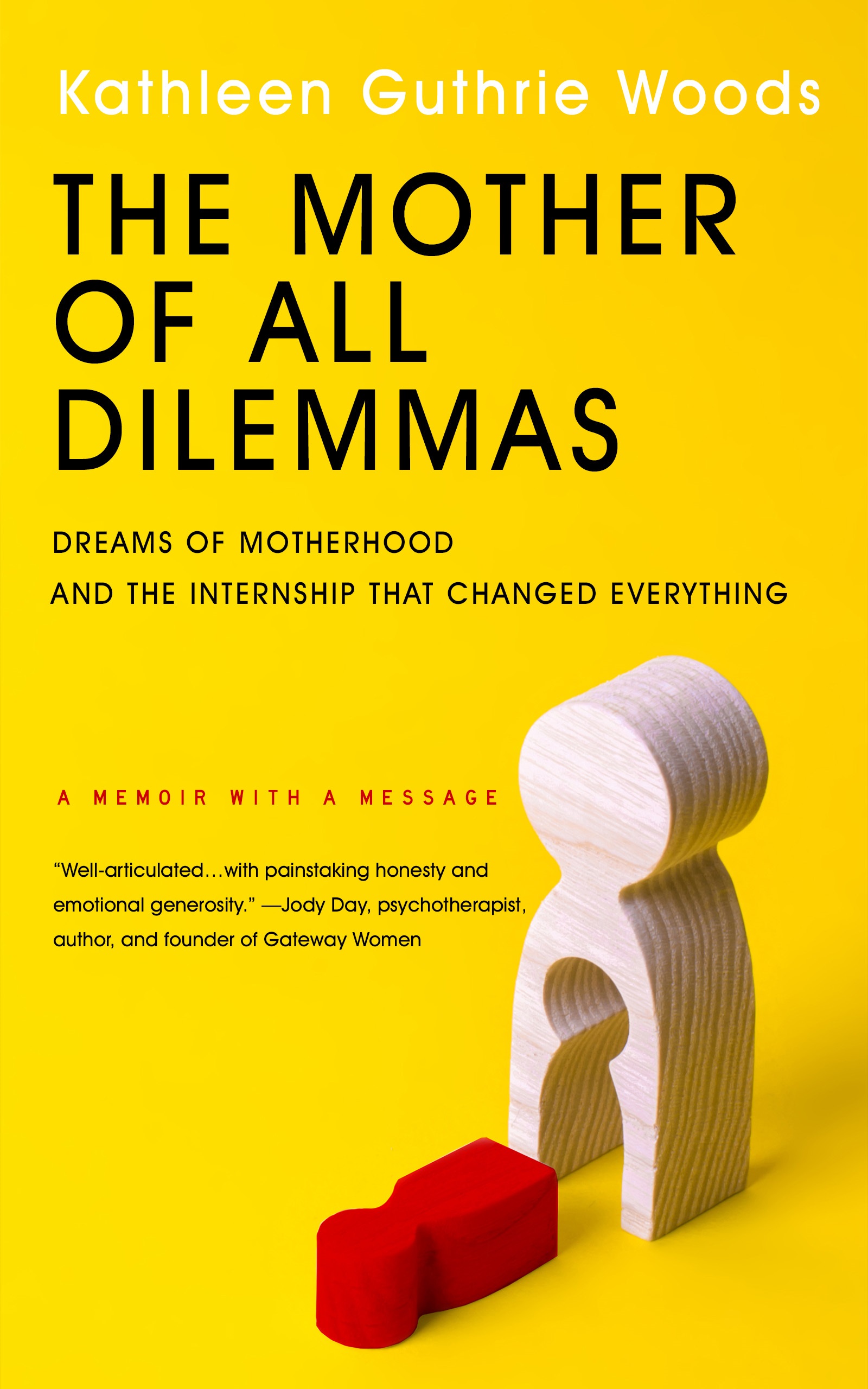
The Mother of All Dilemmas: Dreams of Motherhood and the Internship That Changed Everything by Kathleen Guthrie Woods, Steel Rose Press, 2021. Woods is approaching 40 with no husband in sight. She wants to be a mother, but it will soon be too late. Should she get herself pregnant with donor sperm and become a single parent? In her quest to answer that question, Woods undertakes a two-week “internship,” caring full-time for her nephew Jake while his parents go on vacation. She comes out of it with more questions than answers. Can she bear to NOT have a child? What will happen to her career if she does? How does any woman work and care for young children at the same time? As Woods works it out, the reader learns a great deal about what it’s like to be childless when one in five women reach menopause without children, but motherhood is still the norm.

Dear readers, I posed some questions to Kathleen Guthrie Woods last week, and here are her answers.

SFL: At the beginning of the book, you are 40 years old. Clearly you need to move quickly if you are going to get pregnant before you run out of viable eggs. You don’t say much about your 20s and 30s. What was happening in those years? Were there really no suitable partners to be found? Did you worry, especially in your 30s, about your fertility passing by?  

KGW: For me, one of the most challenging parts of writing the book was the editing. In early drafts I had a lot more backstory, which covered those decades—which I then had to cut because they didn’t serve the final story. Painful!

In brief, I spent my 20s and 30s dating far too many Mr. Wrongs. I didn’t really feel the ticking of my biological clock, as I was so certain becoming a mother was something that would happen in my life. I was more frustrated that I hadn’t met someone who wanted to marry me, and who I wanted to marry. I spent that time building great friendships and an interesting career (one I thought of as temporary, because I assumed I would stop working to be a stay-at-home wife and mother). Around the age of 38 is when the clock started working against me. I knew I wanted a solid marriage, and that would take time. But if I really wanted kids, I maybe needed to bypass marriage and pursue motherhood on my own. And there began the journey that began the book.

SFL: How did you get to be such a good aunt? Have you always been great with children?

KGW: Nature plus one amazing role model. I started babysitting when I was around 11. I was the person who could pick up a fussy baby at a gathering and soothe them to sleep. Into adulthood, I was the neighbor who became friends with the kids next door. Loving and enjoying all those kids came—and still comes—easily to me.

My parents and their friends were really great about including the kids when they got together. We didn’t have a “kids’ table” at most dinner parties, and the grownups engaged in conversations with us; we all ate together then played games that could be enjoyed by all ages, like Charades. But the big influence in my life was my Gram. She listened and she valued what we had to say. She acted like a kid with us. For example, we would interview her (using a cassette tape recorder) and she’d make up characters with silly names and funny voices. I’m smiling just thinking about this. With her, we felt seen, loved, and never judged. I hope I do the same for the kids in my life today.

SFL: You were able to try out full-time motherhood for two weeks with 15-month-old Jake while your sister and her wife went to Europe. You seemed to know Jake quite well already, yet you seemed to be very anxious about it. Why were you so apprehensive? Have you considered how it would have been different if Jake were younger or older? Have you had any more extended babysitting experiences with Jake and his baby brother or with your nieces? How old is Jake now? Are you still close?

At the time, I was living in Los Angeles, and Jake and his moms were living in the San Francisco Bay Area. We got together several times a year, so I’d gotten to know him a bit, though with a child that young, it takes a few hours for them to remember you and re-warm up to you. Heading into the “mommy internship,” I was mostly worried that I wouldn’t be able to take care of him on my own, that I would be overwhelmed – or worse, that he would get hurt on my watch. I mean, I wasn’t borrowing a car or something that could be repaired if I damaged it by accident! I felt like he was completely dependent upon me, and this was a big shift from just being responsible for my own well-being. If he had been a little older, a little more independent, I would have felt somewhat differently, but I still would have been very cautious.

I’ll give an example: A few years ago I stayed with Jake and his brother while their moms were on vacation. The boys were pretty self-sufficient, but I still took my responsibilities as the grownup seriously. Jake came to me one afternoon and said oh-so-casually, “I’m going outside to play with the blowtorch!” Um, HECK NO! “But my moms let me!” No to the never, no way! He did know how to use it, he probably would have been fine, but I didn’t want to be the person “in charge” the one time he accidently burned down the garage.

Since the events of the book, I’ve had several kid-sitting adventures with the nephews or nieces for weekends or over a few days. Nothing to compare to the two weeks I had with Jake. The two older nieces are now college students, so our visits are more like friends reconnecting, and I am thoroughly enjoying this chapter with them too.

I should mention that this book took a long time to write because I had to live it all first. Many years and countless drafts passed before I knew what my message and my ending would be. That said, Jake, as of our last in-person get-together, is almost my height. He’ll be getting his driving permit soon! He’s handsome, smart, engaging, kind, and funny, and I’m grateful for how our relationship has evolved.

SFL: While you were Jake’s temporary mom, you seemed to enjoy those occasions when people assumed he was your child. I have experienced that with other people’s kids, too. What is that all about? Why do we want so badly to be seen as mothers?

KGW: Ego? Pride? Social conditioning? I don’t have a satisfactory answer, but I do know my heart swells when it happens. I longed to have a mini me, to have people compliment me with “S/he looks just like you!” Recently I was looking at family photos with my aunt and we were identifying traits passed through the generations: a grandmother’s high cheekbones, a great-aunt’s red hair, my father’s green eyes now mirrored in one of my nieces. Maybe seeing these traits is how we keep some of those loved ones alive for us, long after they’ve passed. 

SFL: Your comment about Fourth of July and how, as the childless one, you attended other people’s celebrations but were never the host hit home for me. Like you, I’m the one who either travels or spends the holidays alone. Now that you live close to your siblings and their children, do they spend the holidays at your place sometimes?

KGW: My husband and I are still the ones who travel for family holiday gatherings. In all fairness, he has a big job and we both usually work through December, so sometimes it’s nice to have some quiet times to ourselves. (Or, at least that’s what I tell myself.)

SFL: I don’t know if you want to spoil the suspense by sharing what you finally decided to do about having children. If so, feel free to tell us how you came to your decision. Do you want to talk about Braden? Surely having this man in your life eased a great deal of your need for human companionship. He sounds wonderful. Have you considered what your life would have been like if Braden hadn’t come along?

KGW: I’ve been writing about being childless for over a decade, so sharing my final decision won’t be too big of a spoiler. The story, I think, is more about how I came to it. It wasn’t easy, and it wasn’t linear. Time passed. I often felt like the decision was made for me because I aged out of being able to become a mother with my own eggs, and I knew I couldn’t adopt, use a surrogate, or pursue any of the other “fixes” people threw at me. I really beat myself up for maybe not wanting it “enough” to do whatever was necessary to make it happen. At the same time, as I weighed the pros and cons and considered what I would need to make a decent life for myself and a child, I knew I couldn’t do it – and I ultimately decided I didn’t want to do it. I still have moments of total baby lust, by the way. The desire to be a mom doesn’t just switch off because your brain has told you it’s not the best choice for your life.

What I got instead is a great marriage to a great man. He was worth the wait. Had we met 10 years earlier, I wouldn’t have been ready for him and he—well—he was married to someone else. I am incredibly grateful for him and the life we share.

There is a pivotal scene in the book when I wrestle with my role in possibly making him childless by marriage. I was prepared to sacrifice my happiness had he had his own dreams of being a father, something I couldn’t promise him at that time.

Your question about what my life might have been like had I not met him is interesting, and one I hadn’t really considered. As I think about it now, I might have hung on to the possibility of having a child on my own longer—probably longer than would have been healthy. I suspect I would have become bitter before I allowed myself to grieve my losses around not becoming a mother. Eventually I would have moved to be closer to my siblings and their families, though I would have missed out on a lot of fun years with them. I want to say that I would have pulled myself up by the bootstraps and made a good life for myself, but I’m not entirely convinced I would have succeeded. There was a real chance I would have grown lonelier and more isolated over time while silently licking my wounds and envying my friends. Or…maybe I would have gone on the road as a backup singer and written a book about those adventures!

SFL: Most readers of the Childless by Marriage blog are childless because their partners are unable or unwilling to have children. Many are struggling to decide whether to stay in that relationship or seek motherhood/fatherhood on their own. What is your advice for people in that situation?

KGW: My heart goes out to you. While this is part of my story (my husband never wanted kids), I was able to make the decision to remain childless for myself before we had the Big Talk. In the book, I share that I had reached the point where I was willing to let him go if having children was something he really wanted; I didn’t want to deny him that dream.

This is going to sound like such a cliché, but I think there’s truth to the saying “If you love someone, set them free.” I wanted Braden to live his best life, and if I couldn’t give him that, I was willing to let him go find it with someone else. (It still hurts to think about that happening, but I never wanted to him to have regrets and grow to resent me.)

The same holds for our dreams. Sometimes the best, healthiest way for us to love ourselves is to let go of those big dreams we’ve been carrying around for so long when they no longer serve us. Gosh, it’s hard. But we have to release and open up space in our hearts for new love to grow. Be true to yourself. If having children is what you want most, you have to open yourself up to the opportunity, and that may mean leaving the relationship you’re in to find the one that helps you create the life you want. You will be making hard choices, and you have to move forward with the one that will leave you with the least possibility for regrets, for those eat away at you.

My marriage did not replace my longing for children. Let’s be clear on that. But I will say that having a childless marriage has its advantages. We take care of each other. We enjoy each other’s company. We have a ridiculous amount of fun running errands together on weekends (versus going in different directions to attend to the needs of children). Our vacations and meals and cars and movies are all age-appropriate, and we get to choose how we spend our time. Every day I give thanks that I get to share my life with someone who respects, appreciates, and loves me. What a gift!

SFL: What would you like to share that I have not asked about?

KGW: I was incredibly fortunate to find lifelines in my journey toward healing. Writers and bloggers—including Sue—provided safe places for me to explore my feelings, discover that I was not in fact the only woman on the planet grieving the loss of my mommy dreams, and develop friendships with phenomenally compassionate woman. Find and build your community. Reach out to others through comments, chats, and forums. Let’s continue to lift each other up.

***

Kathleen Guthrie Woods wrote the “It Got Me Thinking…” and “Our Stories” columns for Life Without Baby, and she co-authored Life Without Baby: Holiday Companion with Lisa Manterfield. The Mother of All Dilemmas is available in Kindle ebook and paperback on Amazon.

Processing…
Success! You're on the list.

Do some people just not ‘do’ children?

Thanksgiving had barely started when my sister-in-law told her grandchildren, “Don’t bother Aunt Sue. She doesn’t do kids.”
What?
I couldn’t let that ride, especially when I really wanted to get to know my great-niece and nephew better. I responded, “Just because I don’t have any of my own doesn’t mean I don’t like them.”
No reply.
But as much as I hate to admit it, she might be right. The little ones, ages 1 and 2, are a handful. Add four dogs, one of them a tiny pup that got attacked by one of the bigger dogs early on, and my late father’s gaping absence, and things were a little hectic.
While I was there for Thanksgiving, I had a project: going through boxes of photos and memorabilia taken from my father’s house. Try doing that when a two-year-old thinks it’s fun to grab papers and rip them up. I was not amused when he tore a notebook with some of my grandfather’s writing. Or when he insisted I pick him up and kept launching himself at my back. It reminded me of the overgrown puppy my husband and I kept for only a few weeks before we took him back to the animal shelter. Too much energy! When I discovered the boy had a cold, I was even less appreciative. Dang it, I don’t want to get sick.
With the dogs, however, I felt comfortable. I could talk to them, pet them, hug them, slip them snacks, and take them out for walks. Even when I discovered one of them sleeping in my bed because that’s where she usually sleeps, and even though I knew her long fur would stir up my allergies, I was fine with it.
But the children. That was like trying to jump into a conversation in a language for which I only know a few words. I winced every time I heard something crash, begged off the third time the boy tried to climb on me because I have a bad back, and did not even think to offer to change a diaper or give them food. I’m not sure I know how.
I got scolded when I got my grandfather’s accordion out of the case, just to see what it looked like and maybe figure out how to play a few notes. “We have sleeping babies!” Oh yeah,  naptime. Now that everyone’s awake, I don’t know why the grownups still don’t want to hear me figure out “La Tarantella” on the old accordion that has been sitting in my dad’s closet for at least 25 years.
Maybe some of you have lots of experience with children, but I just don’t. I was terrible at babysitting, which I only did for a little bit. When my brother was a baby, I was too, and I have not had much to do with my stepchildren or their children. I never worked hands-on with kids—singing at them doesn’t count. I wanted to be a mother, and I think I could have learned to be a very good one, but all these years after I was fertile, maybe my sister-in-law is right; Aunt Sue doesn’t do kids. She does dogs. Parallel universes.
Why do I feel so guilty about it?
Eventually my niece took her kids home. My sister-in-law’s brother took their elderly mom home, and it felt like midnight when it was not even prime time yet. Holidays get my time clock all messed up. But the food was good, and we got to hang out together for a while. I’m sure my headache will fade eventually.
In the stacks of photos, I found a woman who apparently was my paternal grandmother’s aunt, whose name was Aunt Sue, and boy, she was ugly. I wonder if she had any children.
Who will spend Thanksgiving figuring out what to do with my old photos when I die?
I can’t worry about that today, but I am inspired to make sure my pictures have names on them. We have bags of photos of people whom we can’t identify. The last person who might have known who they were is gone. We’ll probably end up throwing them away. Label your photos, my friends.
How was your Thanksgiving? Please share. You are welcome to be as ungrateful as you want in the comments.

Childless and buying gifts for kids

I wandered through the toy section, completely bewildered. Thanks to my nephew marrying a woman with two little girls and then having a new baby, this Christmas I found myself shopping for children, but I didn’t have a clue what to buy because I have no experience with children. What do they like? What do they hate? What would make them shriek with delight and send them running to show their gifts to their friends? I don’t know. The toy section of the store is even more foreign to me than the automotive section. I feel like any second I’ll be outed as an imposter. It doesn’t help that I have only met these girls once and I’m sure they have no clue who I am. But their parents know, so I feel obligated. Besides, it could be fun.

I wound up with an odd conglomeration of stuff that reminded me of the crazy gift boxes “Grandma Rachel,” my dad’s childless stepmother, would send us, miscellaneous stuff  she’d picked up over the year. Now I understand that she really didn’t get the mom thing either, but I thought she rocked.

For the baby, I went with clothes, making a wild guess at the size. It’s like buying doll clothes, only more expensive. Everything is so tiny and so cute, and I feel bad that I don’t belong in this section like the other women. At the check stand, the older woman in line in front of me admired my choices and said she bet the baby who’d wear them was just as cute. “Oh, she’s adorable,” I gushed, as if I were a genuine member of the mom/grandma club. Nope.

It wasn’t much different years ago when I was buying gifts for my niece and nephew when they were little. Or for my stepdaughter’s children whom I rarely saw once we moved to Oregon. When you don’t live with children or see them very often, you don’t know what they need or want. Their mothers know. They can shop for children with the expertise I employ shopping for groceries or office supplies. But me, I feel like an idiot.

I won’t be receiving anything from these children in return. And I can’t afford any of the gifts I’m buying this year. So why do it? Because I think I should, because I want a connection with these children, and because I don’t want my sister-in-law saying, “Jeez, she didn’t buy them anything.”

When my brother and I got older, my maternal grandmother sent us $20 every Christmas. That $20 used to buy a lot back then. We loved it. My dad’s father always sent a check, but Grandma Rachel kept sending her packages of odds and ends, books, beads, shells, secondhand jewelry, newspaper clippings, and stuff she picked up at church bazaars and rummage sales, all smelling of the cigarettes she smoked in the kitchen when no one was looking. I loved that, too. The kids are too young for checks. I guess the new nieces are just going to have to deal with crazy Great-Aunt Sue. Crazy is all I’ve got.

How about you? Are you shopping for babies and kids this Christmas? Is it hard? How does it make you feel? Let’s talk about it in the comments.


Pondering sons, aunts, and untold stories

How are you? I’m struggling a bit. So I offer a few random thoughts today.

1) Last week we were talking about workplace conflicts between moms and employees without children. (Why is it never about dads?) You might be interested in this article, “Four Things Your Childless Co-Workers Think About You as a Working Mom.”  I’d love to hear your thoughts on this.

2) Two of the three readings for this Sunday’s Mass in the Catholic Church are about widows whose apparently dead sons have been brought back to life, one by Elijah and one by Jesus. Religious considerations aside, in those days, when the husband died, the sons were expected to step in and take care of the widowed mothers for the rest of their lives. In fact, before Jesus died, he asked one of his friends to take care of Mary. I don’t have a son. My stepsons have stepped far, far away. While I’m a full-fledged adult and far from helpless, there are sure times when the idea that I could have had a son who cared about me and was available to help me just makes me want to sob because I’ll never have that. Know what I mean?

3) I’m an aunt, but I live far from my niece and nephew and don’t feel included in their lives. I don’t even know my late husband’s nieces and nephews. He didn’t know them either. We read a lot about how being an aunt can be almost as good as being a parent. Maybe in some families, but not in mine. Sure, we saw them at family gatherings and got presents from them. We were friendly enough, but extended hanging out or confiding in them? It didn’t happen. Are you close to your aunts? Or uncles? To your nieces and nephews?

4) I have just published new editions of one of my older books, Stories Grandma Never Told. The print version has a new cover, and the book is now available as a Kindle e-book for the first time. Read more about it at my Unleashed in Oregon blog. Working on this book again made me think about those stories Grandma never told. The book is oral history, with lots of Portuguese American women talking about immigration, education, work, family, ethnic traditions, and more. I never heard these stories from my own grandmother. She died before it occurred to me to ask. I frequently preach that we should not let our family stories die, that we should ask our elders to tell us what it was like when they were young because when they’re gone, who will be left to ask? I’m always coming up with questions I wish I could ask my mother, but she passed away 14 years ago. I grill my dad regularly.

But here’s the thing. For those of us who never have children, who will never be grandmas, who will we tell our stories to? Being a writer, I can share everything in my books, essays and poems, but what about people who are not writers? Where will their memories go? Suggestions? Maybe we could make a list of possible ways to leave something behind.

5) Enough depressing thoughts. Have any of you had trouble commenting here? What happens when you click “comment?” Are there too many steps to take to get in? Please me know. Sometimes I get emails (sufalick@gmail.com) from people who have trouble with the comment function, and I don’t know whether the problem is them or the settings. I don’t want anything to get in the way of our conversations. If you can’t get in, email me.

Keep reading and commenting. I’m so glad you’re here.