Women Without Kids: Making a Choice That Society May Not Accept

Women Without Kids: The Revolutionary Rise of an Unsung Sisterhood by Ruby Warrington, published by Sounds True, 2023.

I had a hard time reading this book. The author never wanted to be a mother and that bias pervades the pages. At first, she seems to think motherhood is a dirty trick foisted upon women to take away their freedom. Once pregnant, all choices will be taken away. You will be saddled with childcare 24/7, and the father will not help. 

Yes, but . . . 

I think babies are a miracle, one not all of us get to experience. A PERSON is formed and grows inside our bodies. How could we not want to take care of them and love them forever after? That’s just my opinion. And yes, I’m Catholic, a religion that is very pro-baby.

As I read on, Warrington is not as hard-hearted as I thought. She writes extensively about how children should not be born to parents who are not ready to support them and into a society that offers minimal support to parents. No one should be forced to procreate if they would rather devote their lives to something else. 

Toward the end, she writes, “. . . accepting that you may never be ready to be a mother in this life might lead to a period of intense grieving. Not that experiencing sadness about not having kids means you can’t also be confident in the choice not to pursue parenthood. It’s okay to grieve something you will never have and to feel empowered in your decision to prioritize other things.” 

Amen. We have choices, and who is to say one is better than the other?

Warrington is much younger than I am and proof that women from different generations have grown up in very different cultures when it comes to women’s roles.

For my mother, raising children in the 1950s and 60s, mothering was her job. Full-time, no days off. If you asked her, she’d say that was exactly what she wanted to do. Her mother and grandmother did the same. There weren’t many opportunities for women outside the home anyway. We could be secretaries, nurses, or teachers, not much else. 

Of course in those post WWII baby boom days, a family could buy a home and survive on one income. Not that it was ideal. My mother often said she thought she would lose her mind in the years she was stuck at home with two toddlers all day while my father was at work. She was responsible for all childcare, cleaning, cooking, and laundry. I know she envied my “career-girl” life when I was a young woman, when I thought motherhood was just around the bend.

We baby boomers were a mix of mothers who stayed home and mothers with jobs. In the wake of the Women’s Movement, as I graduated from college and got married two weeks later, we had the ability to do a lot more different things, but that also meant trying to juggle work and family, not an easy task. And yes, the bulk of the child-related responsibilities still fell on the women. Divorce also became a lot more common, leaving single mothers trying to do everything by themselves.

My plan was to be a stay-at-home mother-writer. I would do both, writing best-selling novels while the babies were napping or at school. Easy-peasy. Instead, I worked as a journalist, supporting my first husband, supporting myself between marriages, and still working full-time during my second marriage. And yes, most of the chores fell on me.

Now, fewer couples are getting married, and fewer are having children. If you’re reading this, you are likely among them. The economy has made it nearly impossible for young people to afford a place to live, even when both partners work at well-paying full-time jobs. How can they add children to the mix? Should we bring more people into an overpopulated world that seems to be self-destructing? Plus, young women like Warrington see the responsibilities of parenting as prison and hold onto their freedom with both hands. “Just the two of us will be fine. We’ll get a dog” is a common refrain.

In the last century, couples got pregnant and figured out the financial part later. Babies were expected as the natural thing that comes after marriage. Birth control and abortion were not readily available. If parents were exhausted and wished they could shake free of their kids now and then, well, too bad. If the husbands skipped off to their jobs and left their wives doing the bulk of the work at home, so be it. In time, the kids would grow up and leave the home, and the parents could enjoy their empty nest. 

But now, we have so many choices. Birth control. Education. Living together without getting married. Careers of all kinds open to both women and men, careers that require the biggest investment of time and energy at the same age women are most able to have babies. Couples are putting off parenthood, sometimes until it’s too late. And some, like Warrington, are just saying, “No!”

My generation and those that followed have learned that you really can’t do everything at once. Choices must be made, and few of us have the luxury of devoting all our time to parenting, even if that’s what we want to do. Warrington argues that without more support for parents–flexible work schedules, affordable childcare, and maternity leave–parenting is just too difficult. 

Maybe in the childless-by-marriage situation, when it’s not a matter of biological complications, at least one of you feels like Warrington. They look at how hard it seems to be and say no, I don’t want to do that.

Dear readers, I’m grandmother-old. I have very little connection with people who are raising children. Tell me how it looks these days. Among the couples you know, do mothers still do all the childcare and home chores, or do the partners, male or female, share the load? Do you see parenting fitting into their existing lives or taking over? Is that one of the reasons you don’t have kids? Would you be happy to make whatever sacrifices were required if you could have a baby? Or is that too much to ask these days? 
Processing…
Success! You're on the list.

Different Generations Have Different Ideas about Having Children

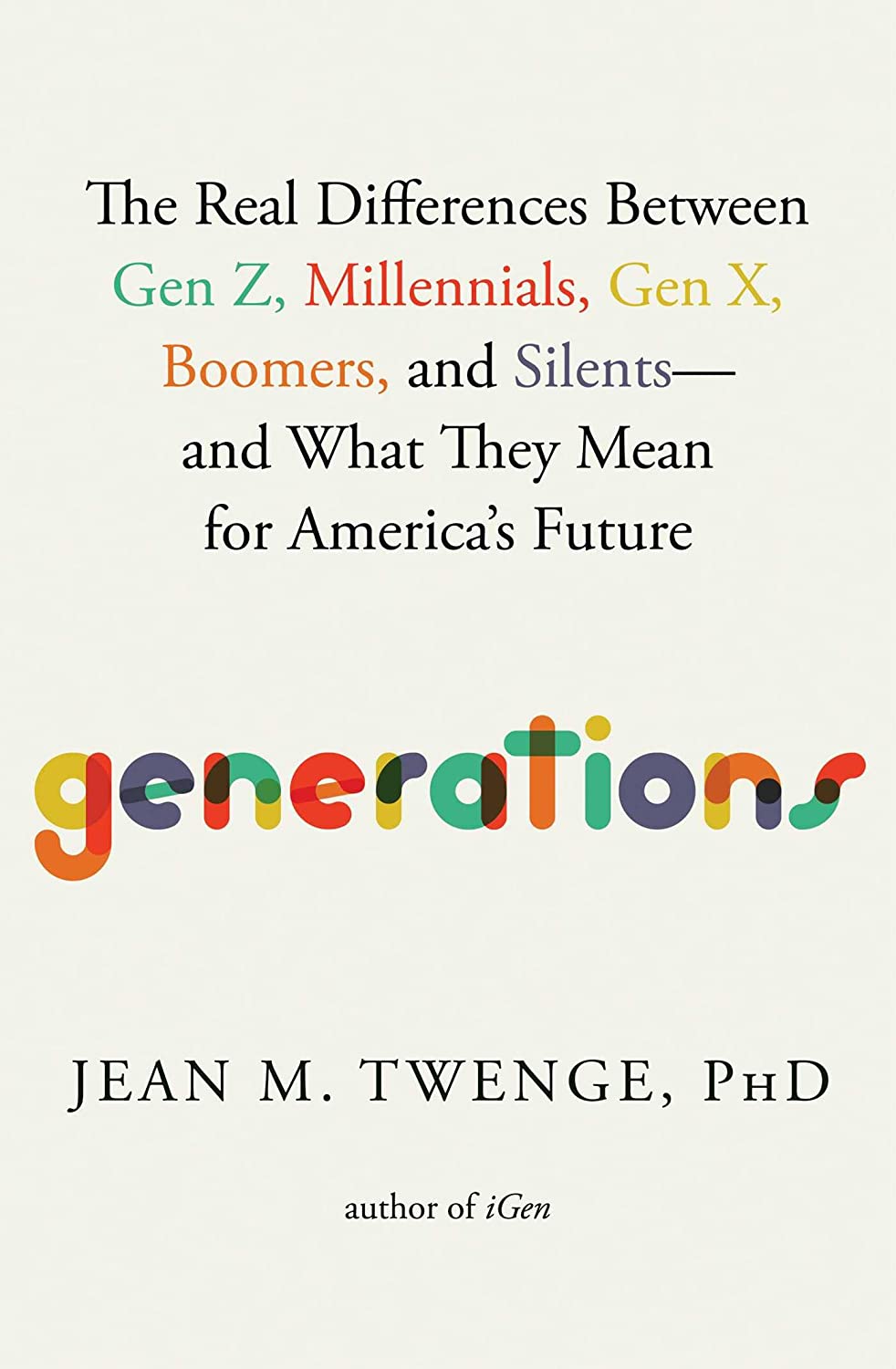
When you were born has a huge effect on how you feel about marriage and having children (and a whole lot of other things). I knew this in a vague sort of way, but the book Generations by Jean M. Twenge really opened my eyes. Gen X, Millennial, and Gen Z readers, I see you more clearly now.

The world is so different from when I was growing up as a baby boomer in the 1950s and ‘60s. Yes, I’m old, at least on the outside. On the inside, I’m still that long-haired hippie wannabe wearing mini-skirts and panti-hose and certain I would fall in love, get married and have children, just like all the other women in my family. Okay, not all. There were a few who didn’t have kids, but people didn’t talk about that stuff.

So much has changed. Birth control, legal abortion (until lately), women working outside the home as much as men, more people living into their 80s, 90s, and past 100, more young people going to college, student loan debt, the cost of living, LGBTQ folks going public and getting married, Internet, social media, smart phones . . . It’s not an Ozzie and Harriet world anymore.

A what? Exactly. Ozzie and Harriet Nelson were a real couple who had a black and white sitcom on TV featuring their lives with their two sons, Ricky and David. They were all musicians, and their problems were always resolved in less than a half hour, with time for a song at the end.

In her book, Twenge looks at each generation, from the Silent Generation (1925-1945) that was alive during World War II and their boomer children (1946-1964) through Gen X (1965-1979), Millennials (1980-1994), Gen Z (1995-2012), and what she calls Polars (2013-2029), the youngest generation. The changes are striking.

With each generation, people are waiting longer to get married, from late teens/early 20s in my day to an average of 28 for women and 30 for men now. And that’s just the average. Twenge writes: “Millennials are the first generation in American history in which the majority of 25- to 39-year-olds are not married.” They may or may not be living with a romantic partner, but marriage is pushed way down the road.

The trend continues with Gen Z, the oldest of whom are now at the height of their fertile years. The average age of women having their first child is 30, much later than earlier generations. But many millennials are choosing not to have children at all. It’s just not “required” the way it felt when I first married in 1974 at age 22. Couples are waiting longer, and many are deciding they don’t really want to be parents. They want to be free to work, travel, or do whatever they enjoy. Thanks to reliable birth control, it is easier to make that choice these days.

Even people who want children don’t see how they can do it, considering their student loan debt, the impossible cost of buying a home, and the equally impossible cost of childcare. They also look at the state of the world and think, really? I’m going to subject a child to that?

By the time they decide to get pregnant, they may be dealing with fertility problems, which leads to the whole world of fertility treatments, surrogates, and adoption, all difficult and crazy expensive.

How does this factor into being childless by marriage? In an era when more people are putting off having children or declaring they don’t want them, it’s more likely that one’s partner will be unable or unwilling to have babies. Of course, things get even more complicated when one partner has already had children and doesn’t want any more.

Twenge blames most of the changes over the generations on technology, including social media, birth control, and all the gadgets that dominate our attention. What do you think?

Generations is over 500 pages long and not a quick read, but it is fascinating, and I highly recommend it. If you’re much younger than I am, it could help you understand your parents and grandparents just as it helps me understand those born generations later than I was.

When I was young there was a saying: Never trust anyone over 30. We talked about the “generation gap.” Surely the generations have always disagreed on things. Do you think the differences are more pronounced now? Or is all this Gen X, Gen Z, etc. stuff nonsense?

Let me know what you think in the comments.

****************

During World Childless Week, I spoke on two panels, one about the image of childless people in the media and the other about aging without children. If you missed them or anything from World Childless Week, you can still watch the videos at https://worldchildlessweek.net.

Processing…
Success! You're on the list.

Are you delaying parenthood until conditions are perfect?

I have heard that in nature animals will not reproduce if conditions are not right, if there’s not enough food or a safe place to nest. Plants don’t grow and reproduce without the right mix of nutrients, sun and water. What about people?

During the Great Depression (1929-1939), birth rates dropped to 1.9 per woman in the U.S. Couples could barely feed themselves; how could they feed their children? The birth rate went up to over 3.5 during the baby boom that followed World War II. At that time, the economy was booming. People could get good jobs. They could afford to buy homes and raise children.

During the “Great Recession” that started in 2007, birth rates dived again, back to 1.9, and they have not come back up.

I got to thinking all this after reading an article at Jezebel by Madeleine Davies titled “With Environmental Disasters Looming, Many are Choosing Childless Futures.” She discusses how some people are deciding not to have children because they worry about the environment and the world into which these babies would be born. That world includes the wildfires, floods and hurricanes that devastated much of the U.S. last year. I would add mass shootings like the one yesterday at a school in Florida, terrorist attacks, political upheaval, wars, and families living far from each other.

Workers in my dad’s day were reasonably confident that they could stay in the same job and live in the same house until they chose to retire. Now, who can count on that? In Silicon Valley, high tech companies pay high wages, but they also lay people off by the thousands. The cost of living is ridiculous. It feels like we have to keep changing jobs and keep moving just to keep up with the bills. How can we add a child to this situation?

But let’s go beyond the big-picture issues. How many of us with reluctant-to-parent mates have heard variations of “conditions are not right”? We need to finish school, get better jobs, save more money, buy a house, etc. In other words, we need to make everything perfect. But time is passing, and perfection is impossible. Maybe we can have it for a moment, but then the job goes away, a tree falls on the house, or someone gets sick. Maybe we should try for “good enough.”

I could be wrong, but I think men generally worry about the money part more than women do. They feel the burden of supporting a family, even when their partners provide half the income. Women, full of hormones and watching the biological clock, are more likely to say, “We’ll figure it out.” Am I totally wrong on this?

Let’s talk about it. Are one or both of you putting off having children until conditions are right? What would need to change? Do you worry about the world into which they would be born? Do you know others who are having these feelings? I await your comments.

Are we defying nature by not making babies?

Women’s bodies are baby factories. It’s not all we are, of course, but if you look at our bodies, they are definitely designed to produce babies. Our breasts give milk, our vagina is designed to take in sperm, the ovaries to produce eggs which unite with the sperm, and the uterus to provide a nest for the resulting embryo to grow into a baby. Somehow, when it’s time, the body knows how to send the baby out through wide hips and a cervix that expands tremendously. Women carry extra fat reserves to help nourish the babies they carry. Hormones flood our bodies to keep the process going.

Every month of our fertile years, our uteruses prepare a cushy space for a baby then flush it away through our periods. That monthly flow of blood is the reminder of what’s not happening in our bodies, that we’re not making babies. I had periods for 40 years. Mostly it was a nuisance, messy, painful, and embarrassing. I didn’t think much about how it meant I was not pregnant because I wasn’t trying to get pregnant. I was using birth control with my first husband, and my second husband had had a vasectomy. Between marriages, I was trying NOT to get pregnant, so the arrival of my period was a relief. But think about how amazing this whole system is and how different from men’s bodies, for whom it’s all about sex.

Of course, we’re not JUST baby machines. We think, we love, we create, we dance. We’re CEOs, doctors, lawyers, teachers, ministers, artists, actors, bakers, gardeners, and so much more. But we do it all with bodies designed for motherhood. In modern times, we can decide we don’t want to be mothers. Sometimes our partners make the choice for us. Sometimes something goes wrong and we can’t get pregnant or carry a baby to term. But four out of five women still have children. Why not us?

Every other animal reproduces without questioning whether or not to do it. But we humans with our fancy brains sometimes say, “No, I’d rather do something else.” Not to get all Catholic on you, but is this right? I would love to know what you think about all this. Women’s bodies are designed to have babies. What does it mean when we choose not to use those parts or let someone make that choice for us?