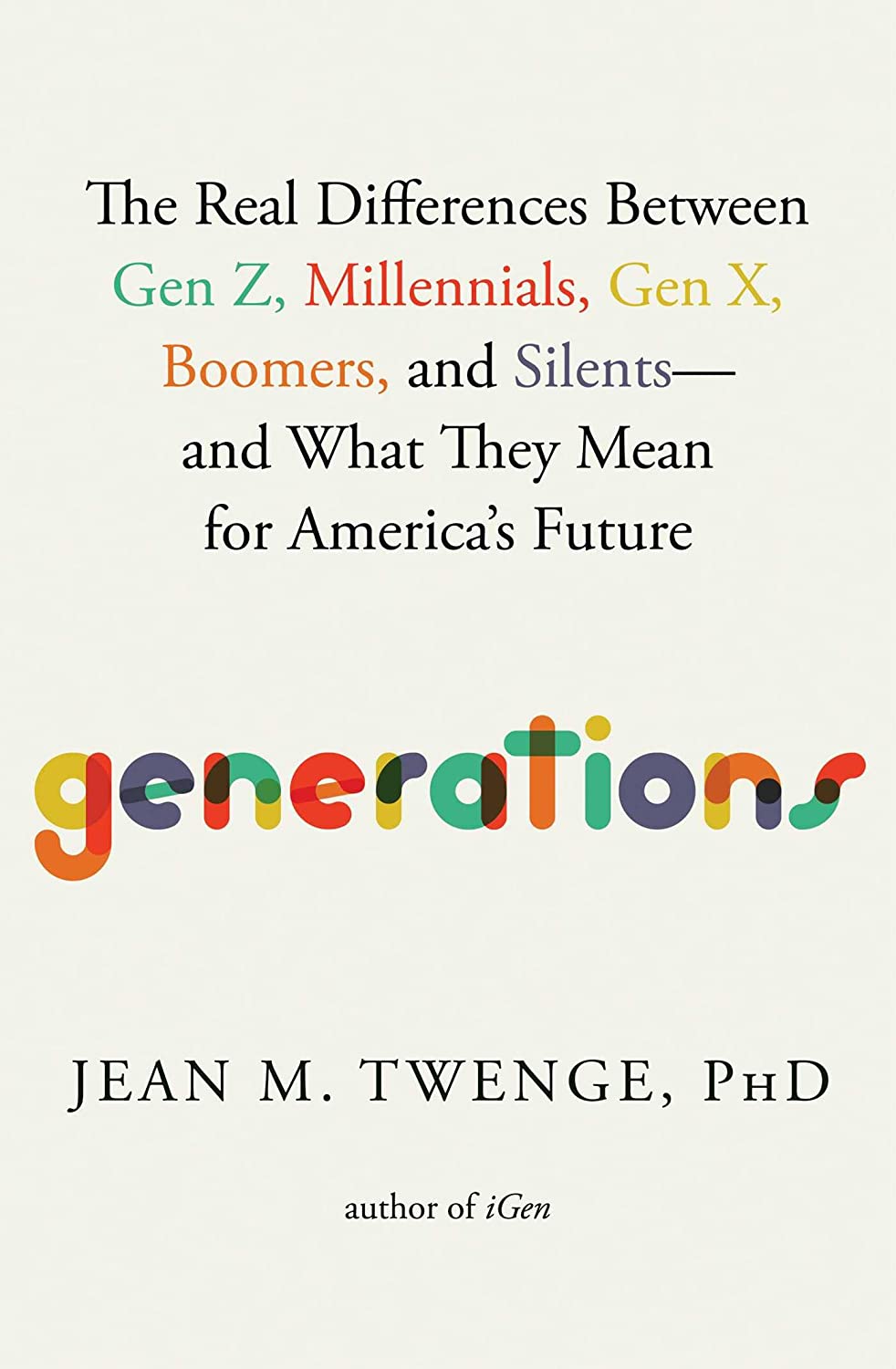
When you were born has a huge effect on how you feel about marriage and having children (and a whole lot of other things). I knew this in a vague sort of way, but the book Generations by Jean M. Twenge really opened my eyes. Gen X, Millennial, and Gen Z readers, I see you more clearly now.
The world is so different from when I was growing up as a baby boomer in the 1950s and ‘60s. Yes, I’m old, at least on the outside. On the inside, I’m still that long-haired hippie wannabe wearing mini-skirts and panti-hose and certain I would fall in love, get married and have children, just like all the other women in my family. Okay, not all. There were a few who didn’t have kids, but people didn’t talk about that stuff.
So much has changed. Birth control, legal abortion (until lately), women working outside the home as much as men, more people living into their 80s, 90s, and past 100, more young people going to college, student loan debt, the cost of living, LGBTQ folks going public and getting married, Internet, social media, smart phones . . . It’s not an Ozzie and Harriet world anymore.
A what? Exactly. Ozzie and Harriet Nelson were a real couple who had a black and white sitcom on TV featuring their lives with their two sons, Ricky and David. They were all musicians, and their problems were always resolved in less than a half hour, with time for a song at the end.
In her book, Twenge looks at each generation, from the Silent Generation (1925-1945) that was alive during World War II and their boomer children (1946-1964) through Gen X (1965-1979), Millennials (1980-1994), Gen Z (1995-2012), and what she calls Polars (2013-2029), the youngest generation. The changes are striking.
With each generation, people are waiting longer to get married, from late teens/early 20s in my day to an average of 28 for women and 30 for men now. And that’s just the average. Twenge writes: “Millennials are the first generation in American history in which the majority of 25- to 39-year-olds are not married.” They may or may not be living with a romantic partner, but marriage is pushed way down the road.
The trend continues with Gen Z, the oldest of whom are now at the height of their fertile years. The average age of women having their first child is 30, much later than earlier generations. But many millennials are choosing not to have children at all. It’s just not “required” the way it felt when I first married in 1974 at age 22. Couples are waiting longer, and many are deciding they don’t really want to be parents. They want to be free to work, travel, or do whatever they enjoy. Thanks to reliable birth control, it is easier to make that choice these days.
Even people who want children don’t see how they can do it, considering their student loan debt, the impossible cost of buying a home, and the equally impossible cost of childcare. They also look at the state of the world and think, really? I’m going to subject a child to that?
By the time they decide to get pregnant, they may be dealing with fertility problems, which leads to the whole world of fertility treatments, surrogates, and adoption, all difficult and crazy expensive.
How does this factor into being childless by marriage? In an era when more people are putting off having children or declaring they don’t want them, it’s more likely that one’s partner will be unable or unwilling to have babies. Of course, things get even more complicated when one partner has already had children and doesn’t want any more.
Twenge blames most of the changes over the generations on technology, including social media, birth control, and all the gadgets that dominate our attention. What do you think?
Generations is over 500 pages long and not a quick read, but it is fascinating, and I highly recommend it. If you’re much younger than I am, it could help you understand your parents and grandparents just as it helps me understand those born generations later than I was.
When I was young there was a saying: Never trust anyone over 30. We talked about the “generation gap.” Surely the generations have always disagreed on things. Do you think the differences are more pronounced now? Or is all this Gen X, Gen Z, etc. stuff nonsense?
Let me know what you think in the comments.
****************
During World Childless Week, I spoke on two panels, one about the image of childless people in the media and the other about aging without children. If you missed them or anything from World Childless Week, you can still watch the videos at https://worldchildlessweek.net.
 Childless by Marriage