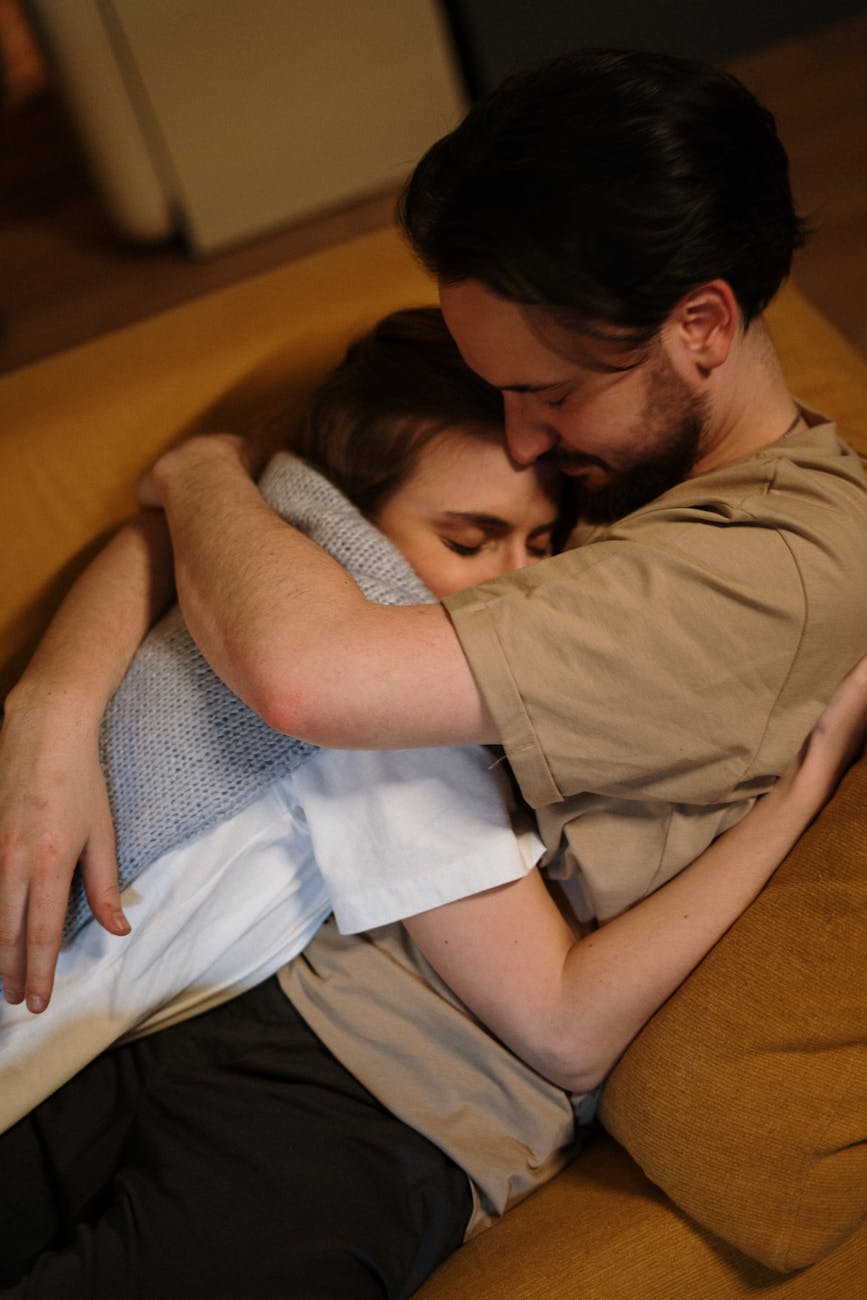
The Birth at the End of The Novel Made Me Cry

. . . and not because I never had my own

The novel I just finished ended with the birth of a baby. 

Of course it did. In this type of feel-good fiction, even the people who think they can’t have children end up having them, and everyone is delighted. Just as people fall in love, overcome various obstacles, and end up happily ever after, surrounded by friends and family who adore them. 

To be honest, I want that. Don’t you?

Too bad it’s fiction. I won’t name this novel for fear of spoiling it for you.  

I will give credit to the author for bringing a childless woman into the picture. The new mom tells her childless sister-in-law, “My daughter needs a guardian angel, mentor, teacher, friend, a role model. Someone who is her strength. Someone she can always depend on and look up to. . . . Will you be Elizabeth’s godmother?”

Of course she will.

As I savored the ending through my tears, I cursed the author for making me cry. Baby-happy though she may be, at least she recognized the pain of those of us who don’t have children.

I suspect this “childless” godmother will marry her true love and miraculously become a mom in the sequel.

Moms and non-moms don’t always get along that well in real life. So often, they make wrong assumptions. A mother friend I’ll call Jo and I were talking about how misunderstandings arise between friends over having or not having children. One of her close friends assumed that when Jo became a mom, she would not have time for their friendship because moms’ lives are all about their kids.

“There was so much more to my life,” Jo protested. “I was still me.” 

At the same time, mothers make the mistake of assuming those of us without kids hate children and don’t want to be around them. That’s not true. I would love to be a godmother.

Kids are magical in the way they see everything with fresh eyes. Their excitement and their honesty are refreshing. Sure, they’re messy, noisy, tactless, and sometimes a pain, but so are we. Yes, seeing yours might remind me that I’ll never have my own, but does that mean I have to be kept apart from ALL children? Let me in.

It’s not only parents and non-parents who fail to communicate. People who are at different stages of life also misunderstand each other.   

That’s one of the reasons I’m planning to stop writing new posts for this blog after a couple more. My 900 posts will remain here for you to read whenever you want. I’m even going to create an index.

As a baby boomer who came of age in the late 1960s and early 1970s, I’m just not in the same place as young women struggling with the realities of childlessness now. I’m way past the possibility of having children. I’m not married or dating. My peers aren’t having babies; they’re welcoming grandchildren.

With menopause 20 years in the past, I feel as if I have already shared all I had to share about my childless journey. There are other, younger writers doing a better job of it now. 

That does not mean I don’t feel sad when I see families doing things together and know I’ll never have that. It does not mean I don’t feel grief and a bit of regret for how things turned out. It doesn’t mean I don’t see other women making the same choices I made and want to scream, “No! Don’t give up your chance to have children so easily.” 

It doesn’t mean I don’t feel like a slacker sometimes because I was physically able to reproduce, unlike women who are unable to conceive or carry a pregnancy to term. Unlike couples who go through hell trying to have a baby and still come out with empty arms. Compared to someone who bought a crib, chose a name and felt a baby kick, then lost that child, what have I got to complain about? 

I chose men who didn’t give me children, that’s all. I should have known better than to marry my first husband, but I was young and naive. My second husband, Fred, was too wonderful to give up. I believed his three children would give me all the motherhood I wanted. They didn’t.

Still, there is pain. There will always be pain.

When a friend brings her daughter to open mic to sing a duet and I know I will never do that, when a daughter rushes to the hospital to help her ailing mother or father and I don’t know who will come for me, or when couples post pictures of their kids and grandkids while I’m posting selfies, I grieve my situation. 

But do I think about it every day? 

Not anymore. Nor will you eventually. Age makes it easier to accept how life has gone. It really does.

As for the blog, you need someone who is dealing with it now in today’s world. So much has changed since I lost my virginity in 1972. I will offer you a list of other blogs and Substacks that will more than fill whatever vacancy is left by my lack of new posts. I will also beef up my resource page so you can find whatever you need in one place.  

Back to the novel: I wish I had played a bigger role in the lives of my stepchildren, nieces, nephews, and young cousins. I lived far away, and I was always working. Care for my in-laws, my parents and my husband in their final years took all of my energy. Now, these young family members barely know who I am. 

I regret that as much as I regret not having children. 

I appreciate the new mother in the novel making the childless aunt feel welcome and included.  

This is fiction, but I hope we can be more understanding of each other in real life. 

How do you feel when you read books where people are having babies?

Additional reading

Bridging the Gap Between Parents, the Childfree and the Childless

How Moms and Non-Moms Can Come Together | Psychology Today

To find books where people aren’t all having babies, visit the NoMo Book Club, https://www.instagram.com/thenomobookclub


If you want to know what I’m up to these days, visit my “Can I Do It Alone?” Substack at https://suelick.substack.com or friend me on Facebook at https://www.facebook.com/suelick

Thanks for reading Childless by Marriage!

What does the current pro-baby push mean for you?

Would $5,000 change your mind about having a baby?

Fertility rates are falling all over the world. Leaders of many countries, from the U.S. to Europe and Asia, worry that we will soon have too few workers and too many old people needing care. As a result, the pronatalism movement, which promotes childbearing, is growing.

Anyone who has found themselves surrounded by people who keep asking when you’re going to have a baby has met the babies-are-great-and-everyone-has-to-have-some crowd, but now we’re hearing it from our governments, too.

In the U.S., the birthrate has fallen to 1.6 births per woman, below the 2.1 needed to sustain a stable population. Many countries are offering incentives to encourage couples to have more babies. Here in the U.S. under the Trump administration, we’re hearing similar conversations.

In April, President Trump said, “I want to be the fertilization president.” Father of five himself, he has done his part.

Vice President J.D. Vance, father of three, and famous for his childless cat lady comments, said at a March for Life in January, “I want more babies in the United States of America.”

Elon Musk, said to have fathered 14 children, has called low birth rates “a much bigger risk to civilization than global warming.”

The Trump administration has talked about awarding $5,000 for each baby born. His administration has discussed tax breaks for parents, financial help with IVF, and even a medal for mothers of six or more children. No mention of the fathers. No mention of people who might not be equipped to be good parents.

As a baby boomer who grew up hearing that we needed to stop having so many babies because overpopulation was killing the world, this blows my mind.

I’m not in the baby game anymore, but I’m pretty sure none of these so-called incentives or the words of our current leaders would have made any difference for me. It was the circumstances of my own personal life that made me childless, not anything Uncle Sam might do or say. I’m sure it’s the same for other non-parents.

Over and over, I’m hearing that young couples can’t afford to have children, due to the estimated $300,000 it costs to raise a child, the daunting cost of childcare, and the high cost of owning a home suitable for raising children. It takes two incomes to support a family these days, but if both parents work full-time, who has time to take care of the kids?

The pronatalists seem unaware of the umpteen legitimate and often sad reasons why someone might not have children. What about people struggling with infertility, people whose partners are unable or unwilling, people who don’t have partners, or people who are dealing with physical or emotional illnesses that force them to abandon their plans to have children?

What about people who are working so hard to stay financially afloat that they can’t even think about babies? What about people who are giving everything to their careers and just don’t have the time or energy to raise children? What about those who look at our world and don’t want to subject children to what’s coming, whether it’s wars, climate change, or a civilization run by AI?

Some conservatives blame feminism and women in the workplace for the decreasing birth rate. They recommend a return to the old model of Dad at work and Mom at home taking care of the family. Is that even financially possible anymore? Do we really want women who enjoy their careers to step back into the 1950s when they had no rights and few opportunities?

Oops, my politics are showing. But we do already have a lot of people in this world. Look at the traffic in any major city during commute times. Do we really need to worry that older folks outnumber young ones? It’s a concern, sure, but is having more babies the solution?

Would a $5,000 bonus, tax breaks or a Mommy Medal make any difference in your childless status? What would it take? Is there anything the government can offer that would change your situation?

If your partner has been unwilling to parent, would any of these things make him or her change their mind?

Are your family and friends talking about the need for more babies?

This post seems to be all questions. I don’t have the answers. I only know that I entered the world during the 1950s baby boom, ran into roadblocks with my two husbands, and came out the other side childless. The government had nothing at all to do with it.

What do you think? I welcome your comments.


You might be interested in my recent “Can I Do It Alone?” Substack post about buying a home. How can anyone afford it these days? Are we doomed to rent forever? Check it out at https://suelick.substack.com/p/does-being-alone-mean-you-cant-own.

Processing…
Success! You're on the list.

Childless, childfree: Does Either Word Really Fit?

Childless. How does that word feel to you? Comfortable or not quite right, like the dress I ordered online and might have to return because it doesn’t allow enough room for my bust?

Do you call yourself childless? I use it in the name of this blog, but there are a lot of people who bristle at the term.

Child-less. It implies we’re missing something. Our life is less than it might otherwise be. But can’t our lives be full of wonderful things without children?

People who have chosen not to have children often call themselves childfree. They emphasize the freedom of a life without children to care for, as if kids were a heavy load they don’t have to carry.

I could claim the childfree term, too. I mean, even if I expected to have children and grieve that I didn’t, I don’t have the obligations of parenting. I am therefore free. Right?

I don’t know. The whole concept makes me squirm.

Here’s another question: if you are still young enough and fertile enough that having a child is possible, albeit unlikely, when do you declare that you are childless or childfree? If you have had a hysterectomy or had your tubes tied, you have a definite answer. No kids. But what if it’s still a possibility? How do you classify yourself when you’re not certain if this is forever?

What if your partner is happily childfree but you feel childless?

Neither of these terms is comfortable for everyone. Other terms have been suggested: not-mom, nonparent, or nomo (not mother). But they’re all “not” something.

In medical terms, a woman who has not given birth is nulliparous. I don’t know what doctors call a man who has not fathered a child. Just a man, I suppose. This article in Psychology Today calls them “non-dads.”

For men, sometimes there’s the snide addition “as far as we know,” implying one or more of their sperm might have hit home during their various sexual liaisons.

Wikipedia defines childlessness as the state of not having children. They break down the reasons for childlessness: infertility, ob-gyn problems, mental health difficulties, chronic illness/disability, lack of a partner or same-sex partner, social or legal barriers, economic or social pressure to pursue career before children, lack of resources, insufficient money, lack of access to medical care, jobs commitments, unwillingness of one’s partner to conceive or raise children, and death of one’s conceived children before birth or after.

Childfree, says Wikipedia, refers to people who choose not to have children.

Rachel Chrastil, author of the book How to Be Childless: A History and Philosophy of Life Without Children, wrote in another Psychology Today article, “I define someone as childless if they never had a biological child and have never been deeply involved in raising a child, whether through legal adoption or otherwise.”

She says she calls herself childless “with the caveat that I don’t view the absence of children as a deficit to be overcome.”

In an article at She Defined.com, Donna Carlton defines childfree as making a conscious decision not to have children and childless as a situation where the person wanted to have children but was not able to and thus “the decision is out of their hands.”

That sounds pretty black and white, but it’s not. Judy Graham, counselor and founder of WomenHood, a support service for childless Australian women, says that sometimes women move from defining themselves as childless to childfree as they get older and realize they prefer life without children.

I call myself childless in my writing, but when people in real life broach the subject, I don’t say, “I’m childless.” I say, “I never had any children.” Or “I don’t have any kids.” Then, as we have all experienced, the conversation stalls out, or the other person says something dumb, like, “I wish I never did” or “You can have mine” or “You’re lucky.” If you’re younger, you probably hear, “There’s still time” or “Don’t wait too long.”

I don’t know about you, but I often feel driven to explain how I really did want children but was not able to have them. Sometimes I say, “God had other plans.” Although the real reason is that both my husbands were unwilling, I never put the blame on them. Usually, I just change the subject.

To be one hundred percent honest, sometimes it hurts like hell that I don’t have children and grandchildren, and other times, it’s okay. Where’s the term for that?

I started thinking about this during the recent World Childless Week, where, of course, “childness” is part of the name. Many of those involved are childless due to infertility, which was not my situation. But I attend because however you got to not having children, the bottom line is you don’t have them.

Childless. How does that word feel to you? Comfortable or not right, like the dress that didn’t allow enough room for my bust?

Photo by Leeloo The First on Pexels.com

Processing…
Success! You're on the list.

Women Without Kids: Making a Choice That Society May Not Accept

Women Without Kids: The Revolutionary Rise of an Unsung Sisterhood by Ruby Warrington, published by Sounds True, 2023.

I had a hard time reading this book. The author never wanted to be a mother and that bias pervades the pages. At first, she seems to think motherhood is a dirty trick foisted upon women to take away their freedom. Once pregnant, all choices will be taken away. You will be saddled with childcare 24/7, and the father will not help. 

Yes, but . . . 

I think babies are a miracle, one not all of us get to experience. A PERSON is formed and grows inside our bodies. How could we not want to take care of them and love them forever after? That’s just my opinion. And yes, I’m Catholic, a religion that is very pro-baby.

As I read on, Warrington is not as hard-hearted as I thought. She writes extensively about how children should not be born to parents who are not ready to support them and into a society that offers minimal support to parents. No one should be forced to procreate if they would rather devote their lives to something else. 

Toward the end, she writes, “. . . accepting that you may never be ready to be a mother in this life might lead to a period of intense grieving. Not that experiencing sadness about not having kids means you can’t also be confident in the choice not to pursue parenthood. It’s okay to grieve something you will never have and to feel empowered in your decision to prioritize other things.” 

Amen. We have choices, and who is to say one is better than the other?

Warrington is much younger than I am and proof that women from different generations have grown up in very different cultures when it comes to women’s roles.

For my mother, raising children in the 1950s and 60s, mothering was her job. Full-time, no days off. If you asked her, she’d say that was exactly what she wanted to do. Her mother and grandmother did the same. There weren’t many opportunities for women outside the home anyway. We could be secretaries, nurses, or teachers, not much else. 

Of course in those post WWII baby boom days, a family could buy a home and survive on one income. Not that it was ideal. My mother often said she thought she would lose her mind in the years she was stuck at home with two toddlers all day while my father was at work. She was responsible for all childcare, cleaning, cooking, and laundry. I know she envied my “career-girl” life when I was a young woman, when I thought motherhood was just around the bend.

We baby boomers were a mix of mothers who stayed home and mothers with jobs. In the wake of the Women’s Movement, as I graduated from college and got married two weeks later, we had the ability to do a lot more different things, but that also meant trying to juggle work and family, not an easy task. And yes, the bulk of the child-related responsibilities still fell on the women. Divorce also became a lot more common, leaving single mothers trying to do everything by themselves.

My plan was to be a stay-at-home mother-writer. I would do both, writing best-selling novels while the babies were napping or at school. Easy-peasy. Instead, I worked as a journalist, supporting my first husband, supporting myself between marriages, and still working full-time during my second marriage. And yes, most of the chores fell on me.

Now, fewer couples are getting married, and fewer are having children. If you’re reading this, you are likely among them. The economy has made it nearly impossible for young people to afford a place to live, even when both partners work at well-paying full-time jobs. How can they add children to the mix? Should we bring more people into an overpopulated world that seems to be self-destructing? Plus, young women like Warrington see the responsibilities of parenting as prison and hold onto their freedom with both hands. “Just the two of us will be fine. We’ll get a dog” is a common refrain.

In the last century, couples got pregnant and figured out the financial part later. Babies were expected as the natural thing that comes after marriage. Birth control and abortion were not readily available. If parents were exhausted and wished they could shake free of their kids now and then, well, too bad. If the husbands skipped off to their jobs and left their wives doing the bulk of the work at home, so be it. In time, the kids would grow up and leave the home, and the parents could enjoy their empty nest. 

But now, we have so many choices. Birth control. Education. Living together without getting married. Careers of all kinds open to both women and men, careers that require the biggest investment of time and energy at the same age women are most able to have babies. Couples are putting off parenthood, sometimes until it’s too late. And some, like Warrington, are just saying, “No!”

My generation and those that followed have learned that you really can’t do everything at once. Choices must be made, and few of us have the luxury of devoting all our time to parenting, even if that’s what we want to do. Warrington argues that without more support for parents–flexible work schedules, affordable childcare, and maternity leave–parenting is just too difficult. 

Maybe in the childless-by-marriage situation, when it’s not a matter of biological complications, at least one of you feels like Warrington. They look at how hard it seems to be and say no, I don’t want to do that.

Dear readers, I’m grandmother-old. I have very little connection with people who are raising children. Tell me how it looks these days. Among the couples you know, do mothers still do all the childcare and home chores, or do the partners, male or female, share the load? Do you see parenting fitting into their existing lives or taking over? Is that one of the reasons you don’t have kids? Would you be happy to make whatever sacrifices were required if you could have a baby? Or is that too much to ask these days? 

Processing…
Success! You're on the list.

Does Your Partner Step Up When Childlessness Hurts?

Reminders that we don’t have children are hard to avoid.

  1. Friends and family gathered in a rented hall in Yachats, Oregon at tables laden with flowers under hanging “90” banners.

The seemingly ageless woman who ushers at Saturday Mass was turning 90. Her family had gone all out to surprise her. Friends and cousins had flown across the country. Children, grandchildren and a 14-month-old great grandchild were there.

I sat with friends from church. We chatted and nibbled on cannelloni, fruit, rolls, and crackers until we got the word to hush.

In she came, too shocked to speak for a minute. Her daughter wrapped a beauty queen banner around her and we continued the party. There were pictures, stories, a fancy cake and champagne. Photos under a flowered arch.

I was happy for the guest of honor—and so jealous. Who will throw me a 90th birthday party, if I live to that age? The older people in my life will be dead by then, and I have no children or grandchildren.  

Maybe I shouldn’t assume. Maybe my niece and nephew and their kids, grown up by then, would be thrilled to honor me. Maybe I’ll throw my own party.

2. From the party, I drove to church. It was Mother’s Day weekend. I would hide if I could, but I play the piano at the Saturday Mass, so I can’t avoid the mother mania.

A wonderful woman who volunteers for everything interrupted choir practice with a box of floral corsages. Real flowers, very pretty, all different colors. I said, “I am not a mother.” She pished that away and pinned a yellow corsage on my blue sweater.

By the time Mass started, all the women had corsages. You could not tell the mothers from the non-mothers. Maybe that’s good.

Mass proceeded. I sang, I played, I warmed up and took my sweater off. At the end, Father Joseph invited mothers to stand. I sat. “Stand up,” Martha hissed. I shook my head. No. People need to know that some of us don’t have children. In a Catholic parish full of elderly people, we’re a minority, but we exist, and Mother’s Day is difficult. To pretend to be just like everyone else feels wrong.

I may not be a mother, but I’m keeping that yellow chrysanthemum until it falls apart.

3. As a guest at a book club meeting last night, I answered readers’ questions about my novel Up Beaver Creek, which features a childless woman as the main character. One person was curious as to why PD’s childlessness was emphasized. Did I, the author, have children? No, I said, I don’t. I could have said so much about how not having kids can affect a person’s whole life, but I was busy trying to explain that my character is NOT me, that she is someone I made up. I also noted that it isn’t easy to find fiction featuring people who don’t have children. I’m not sure she understood.

Question: All of this led me to wondering. Do the partners who who deny us children understand how it feels at times like Mother’s Day or any gathering where people are surrounded by their kids?

Are they sympathetic? Do they offer any comfort? That’s a big question. I knew my husband was aware and that he cared. At least once, he gave me one of those, “You’re not my mom, but Happy Mother’s Day” cards, and that was helpful.

This shouldn’t be your problem alone. You need to help each other get through the bumpy times. It might not be Mother’s Day. It could be your niece’s christening or the birth of someone else’s baby. It could be a birthday party or a baby shower. It could be an ordinary day when you see a happy family and suddenly burst into tears.

Your partner could suggest an outing far away from the festivities. A hike instead of brunch. A movie that has nothing to do with the holiday. A just-because-I-love-you gift. You should support each other rather than one of you crying in the bathroom and the other doing whatever he or she usually does on that day. Isn’t that what love is about?

I’m just saying if your partner is the reason you have this hole in your life, he or she needs to help you on the occasions that make it hurt.

It should work both ways. Mother’s Day is over for another year, but Father’s Day is coming. Or as frequent commenter Tony says, “chopped liver day.”

What do you think? Does your partner comfort you when the lack of children gets to you? Is this a sore spot between you? Is there someone else you can go to for comfort?

I look forward to your comments.

Photo by cottonbro studio on Pexels.com

Processing…
Success! You're on the list.

Four simple words that can end a conversation

“I don’t have children.”

At the reception after my father’s funeral a few years ago, I was sitting with dad’s neighbors. Such nice people. We were exchanging the usual pleasantries—nice service, he was a good man, etc.

Then they asked about my children. The Mrs. pointed to my niece. “Is that your daughter?”

I wish.

“No, she’s my brother’s daughter,” I said.

“Where are your children?”

“I don’t have any children.”

Thud.

They didn’t know what to say after that. I don’t remember what I said. Did I talk about my work, boast about my niece and nephew, or discuss the music at the funeral? I excused myself soon after and threaded through the crowd to the company of cousins who already knew I was widowed and childless.

The next day, after I sobbed through the process of settling Dad’s ashes into place next to my mother’s at the mausoleum, the adults gathered their kids and drove away. They were too busy wrangling the little ones to realize I had no one to be with.

The question and the conversation-exploding answer of “I don’t have kids” happens all the time, especially among women. Generally men chat more about work and sports, but not always. They ask, too. It’s understandable. When your life revolves around raising children, and most of the people you know are also parents, kids are the one thing everyone has in common.

Folks skip right past “Do you have children?” to “How many children do you have? “How old are your children?” “Do your children go to X school?” or “Do your adult children live nearby?”

If I have a choice, I usually don’t mention my childless situation. Why set off that bomb if you don’t have to?  

The question comes most often during those years when you’re of an age when you would be raising children if you had them, but it still comes up in later years. Substitute “grandchildren.” You can’t have grandchildren if you never had children.  

Saying you never had children confuses people. It leads conversations to dead ends. It leads to one of you suddenly needing to get another drink, use the restroom, or go talk to someone on the other side of the room.

People respond in funny ways. Oh, I didn’t realize. Oh, there’s still time. Lucky you. I’ll give you mine. I just assumed . . . They rarely ask why—unless they are also without children. Those who are childless by choice may answer, “I never wanted any either,” leaving you to protest, “I wanted them, but . . .” Or maybe you just smile.

It depends on where you are, of course. In a gathering of writers, “What do you write?” is the big question. Classic car collectors will ask, “Are you driving that blue Chevy over there?” Gardeners may ask, “How are your tomatoes doing?”

But in the general public, especially among families, you’re going to get the kid question.

Mother’s Day is coming, a day when our lack of children may make us want to stay in bed with pillows over our heads. The advertisements have already begun: gifts for “Mom,” brunch for “Mom,” special Mother’s Day concerts. Schoolchildren are making craft projects to honor their moms.

For those of us without children, it’s just another Sunday, but one where we’re even more likely to hear those questions. How many kids do you have? How many grandkids?  Are they taking you out today? Here’s a carnation, MOM.

Until you’re forced to say, “I don’t have any children. I’m not a mom.”

Then you get the look: slacker, freak, cold-hearted selfish person. No flower for you.

Let’s talk about this. Where and how do you face questions about offspring? What happens when you say, “I don’t have children”? Why does it feel like a confession when we haven’t done anything wrong?

I look forward to your comments.

Processing…
Success! You're on the list.

Childless Not by Choice: The Grief is Never Completely Gone

Red-haired woman crying. She's wearing wedding rings, has red nail polish and red lipstick, and is holding a tissue. No one is comforting her.

All it took was one word to break my heart again.

That word was “Mama.”

I was down in the dumps anyway as I took my usual walk down Cedar Street. A migraine had dogged me all weekend. I missed a music jam I was looking forward to. I was tired of being alone.

A German shepherd standing in a driveway reminded me of Annie and all the dogs I have lost, including Heidi, the German shepherd I lost along with my first marriage.

Then I passed these two little brown-haired boys, one maybe two years old, the other maybe six.

As the little one stared at me, the big one shouted, “He might call you ‘Mama.’”

And then he did. “Mama!”

Gulp. No one has ever called me Mama.

I smiled and waved. “I don’t mind,” I assured the older boy as tears threatened. “He’s cute.”

What? Like a puppy? It was a dumb thing to say.

I let the tears fall as soon I got out of their sight. The pain of never having children was just as bad 20 years past menopause as it was when I was 35.

That scarred place in my heart breaks every time this happens.

A couple weeks ago at church, I was playing the piano at Mass. The family close to me in the front row included an adorable toddler happily squeezed between her mother and grandmother. Black hair, brown skin, big eyes, dimples. If I had had a little girl, she would have looked a lot like this one, maybe not as brown, but she’d have the same black hair and brown eyes.

Grandma held a big cloth book while the child turned the pages.

Oh my God, I wanted to be one of those women. I wanted to hold that baby. But I never would. I had no claim to her.

All I could do was keep playing the piano.

Back on my walk, I was visiting a neighbor’s dogs a little later when the boys came down the street with an older girl. In trying to keep up, the little guy stumbled and fell. He was not hurt, but he looked at me and cried “Mama!” I kept petting the dogs while the girl scooped up her little brother. She was already a mother-in-training. I missed that class.  

I belong with the dogs, I told myself. I’m a dog person. I’m going to get another dog soon. I will feel better.

Why do I share this today? Because it still hurts. Because I want you to know that while you will feel okay most of the time about not having children and will build a good life without them, it’s still going to hurt when you least expect it. That scar is there, and it’s brittle.

As Jody Day, founder of Gateway Women and author of the book Living the Life Unexpected, likes to say, our pain is an unacknowledged, disenfranchised grief. When someone dies, it’s awful, but everyone sees and understands your loss. They hold you while you cry. They bring casseroles. They know it hurts and give you a break. When you get a divorce, lose a job, or crash your car, everybody sympathizes.

But not having children doesn’t seem to count. How can you grieve what you never had? Besides, they say, unless you were physically unable to bear children, you made the choices that led to this situation. Right? So get over it.

It’s not that easy. It will hurt sometimes. It’s okay. Cry, stomp, curse, whatever you have to do. Talk about it with people who might be sympathetic. Try to explain: When I hear the word Mama, it kills me.

It will pass. You’ll go on with the other wonderful things in your life. But it’s never gone.

Listen to Jody Day’s talk on Disenfranchised grief and know that those of us who experience this kind of grief are aware of your tears and your pain and acknowledge that it is real.

Are there words or situations that trigger your emotions? Do the people around you understand why you’re upset? Let’s talk about it in the comments.

Photo by Karolina Grabowska on Pexels.com

**************

I have a new Substack titled “Can I Do It Alone?” Since my first post on April 1, it has taken off like wildfire. See what all the fuss is about at https://open.substack.com/pub/suelick/p/introducing-can-i-do-it-alone?r=ejjy9&utm_campaign=post&utm_medium=web

Processing…
Success! You're on the list.

Do You Ever Pretend That You Have Children?

I have to confess something: I faked it.

No, not sex. Never.

In journals, essays, and newspaper articles from the ‘80s and ‘90s (yes, I’m that old), I wrote about my life as if I were a mother. I talk about school lunches that I never packed. I wrote about PTA meetings, soccer games, and our teenager driving my car. For years, I wrote for a parenting newspaper, Bay Area Parent, covering all kinds of topics from the cost of having a baby to how to make a kid eat healthy food to juggling work and parenting. When I did interviews, I let my mom and dad interviewees think I was a parent just like them. Sometimes they asked questions about my pregnancies and my kids that forced me to admit I didn’t have any, but most of the time I got away with it.

I was parenting in a way, but it was “parenting lite.” My youngest stepson moved in with us when he was 12. Before that, he had stayed with us on weekends, holidays, and summer vacations. We enjoyed his company; then he went home. His older brother and sister were already off on their own so we saw less of them.

The live-in stepson could pretty much take care of himself. Although I was the one the school called when there was a problem and I was the one baking cookies for his Boy Scout meetings, most of the time I was free to work, sing, and socialize. Yet, when it was to my advantage, I let the world think I was a mom.

Was I really? More like a mom wannabe. We all got along, but it wasn’t exactly warm and fuzzy. It was very clear my husband’s children already had a mother and her name was not Sue. In “family photos,” this short, olive-skinned brunette obviously did not come from the same gene pool as these tall Nordic kids.

What if I had just said, “I don’t have any kids?” Was I afraid to declare my childless state and be kicked out of the mom club? Was I hoping step-parenting was close enough? Did I convince myself I was a mom? What about all those tears I shed as my fertile years dwindled away with no babies for me?

What stories do we tell ourselves? What stories do we tell other people? Why not just be honest?

I don’t have children and I wish I did.

I don’t have children and that’s all right.

I don’t have children. Sometimes I’m sad; sometimes I’m happy.

I have stepchildren, and I love them like my own.

I have stepchildren, and we don’t get along.

I have stepchildren, and I’m trying, but it’s hard.

I wrote those motherly essays and articles years before I started writing about childlessness. I don’t fake it anymore. When my husband died, his children stepped away. I would like to have them in my life, but I’m afraid it’s too late. Maybe I sucked at the whole motherhood thing because I’m obsessed with my work. Maybe they were as confused as I was about how to manage a stepfamily and they had no idea how much I wanted to be a mother.

So the question sits there: Was I pretending? Was it okay? A quick search online shows stepparents do not have the same legal rights as biological parents. Check out this piece, “The Harsh Realities of Stepparenting.” But we’re there, and we care. Doesn’t that count?

How about you? Are there times when you would rather people not know you are childless? Do you ever let the world think you’re a parent to your stepchildren or your pets or . . . ? Is that okay?

I welcome your comments.

Photo by Daria Andrievskaya on Pexels.com

Processing…
Success! You're on the list.

‘Motherhood’explores childless questions

Motherhood by Sheila Heti, Henry Holt & Co., 2018

Should I have a baby or not? That’s the question the narrator asks in this new book which is billed as a novel but reads more like a 300-page essay. The unnamed narrator is divorced and living with a man named Miles, who already has a daughter and is not eager to have more children. But he leaves the decision up to her. If she really wants a child, he says he’ll go along with it.

So many readers here have partners who have stated very clearly that there will be no children with them. What if instead they said, “I don’t want them, but if you do, go ahead.” What should you do?

The woman in the book has always leaned toward not having children, so you and I may not identify with her feelings. But now, as she approaches 40, she asks all the questions the rest of us ask. Once I stopped thirsting for a story, I became interested in the narrator’s musings.

As a childless woman, I have asked these questions of myself. For example: What is a woman’s purpose if she does not have children? Is our work as important as having children? Will our lives be diminished if we never experience motherhood? Should the instinct to procreate overrule everything else? Why do we have uteruses if we’re never going to use them? Do I really want children, or do I just feel left out because my friends and relatives have them? Why is it okay for a man not to have children, but “the woman who doesn’t have a child is looked at with the same aversion and reproach as a grown man who doesn’t have a job. Like she has something to apologize for.”

The narrator seeks answers in dreams, psychic readings, talks with her friends and dialogues with the coins of the I Ching. She finds her answer in the end.

I don’t enjoy unusual book forms. There are places in Motherhood where I’m not sure what’s going on, and I personally hate that. I like my novels straightforward and easy to understand, but you might disagree. Heti has gotten as many five-star reviews as one-star ratings.  If you read it, please share your thoughts on this book.

Meanwhile, let’s consider just one of the questions asked here: What is a woman’s purpose if she doesn’t have children, if she doesn’t connect one generation to the next?

***

Last week’s post, which included the question of whether people who have children should be allowed to participate at Childless by Marriage, drew some heat. No way. Keep those mommies out of here, a few readers indicated. They feel this is our private space where we shouldn’t have to deal with people who don’t understand how we feel. You’re right. I don’t want to mess that up.

But I would counter that the woman who sparked the question was childless for a long time and does understand, that she didn’t forget everything when she gave birth. But I hear you. I approve or disapprove every comment that comes in. I will be very careful and aware of your feelings before I click “approve.” I treasure you all.

Are you ready to accept childlessness?

I don’t live every day thinking about being childless. I know it has a huge effect on my life. While my friends are busy with their children and grandchildren, I spend my days writing, playing music, and maintaining myself, the dog, my home, and my elderly father. They post pictures on Facebook of their family gatherings. I post my latest publication. Come the holidays, most people my age expect to be with their kids. I usually play music at church, then go home to an empty house. But I don’t think about it all the time. I don’t wake up in the morning weeping because I’ll never be a mom. I used to, but not anymore. I promise a time will come when you won’t either.

I pray the first four lines of the Serenity Prayer every morning. My lack of children is definitely one of the things I cannot change that I need to accept. I wanted children, but it’s too late now. I have a good life as a non-mother. I’d love to be one of those grandma ladies, but you know what? I feel much younger and freer than most women my age who have children and grandchildren. I like that.

Then I read this quote from Jessica Lange in the August/September issue of the AARP magazine.

“Having children gives you a perspective you didn’t have before. You are no longer the center of the universe. It opened my heart, made me a different person. Every move you make is with someone else in mind. I loved being a mother more than anything else in the world, and being a grandmother is even more fun. There’s the chance to do it again. It’s in the perfect order of nature: You raise your children, and then the next generation comes along They are the redemptive force in nature. Plus, it’s easier!”

Here’s the thing. I believe what she says. Every word of it. But I don’t dare dwell on it or I’ll go nuts. I tell myself I’m supposed to do other things with my life, and that’s that. I need to accept my situation. That works better some days than others.

How does it make you feel? I apologize if I made you cry, but you don’t have to hide your tears here. What percentage of your life do you think about not having children? Is it something you can change or something you need to accept? Let’s talk about it.