Will You Ever Find Peace with Your Childlessness? 

Facing a future with no children used to drive me crazy. Back when I was fertile and married to a man who was not, I cried a lot, mostly where he couldn’t see me. I resented my friends whose lives revolved around their kids. I did not want to hear their happy stories or look at their pictures. Baby showers? What do I know about babies? Count me out.

As far as I knew, there was nothing wrong with my baby-making parts, but they were being wasted, evidenced by painful periods every month, reminders I was running out of time. 

Now I’m 72, childless and widowed. Although being alone can be difficult, I have to tell you that I don’t think about childlessness all the time anymore. If you are in your 20s, 30s, or early 40s, feeling bad because you wanted children and might never have even one baby, know that it does get easier. Like any loss, it doesn’t go away, but you do learn to live with it. 

Yes, you will feel breakthrough grief and anger. You’ll see a family at play or hold someone else’s baby and think I could have had that, but as you get older, it will become a less important feature in your life. You will wonder who will care for you in old age, but know that even if you had children, they might not be available to help.

When you’re surrounded by people getting married and having babies, you feel excluded, jealous, and angry at whatever keeps you from having the children you always wanted. Or you resent the people who keep pushing you to have the children you never wanted. You’ll regret it, they warn. What if they’re right? It can be a brutal time. 

The night before my 40th birthday, I had a meltdown that I describe in my Childless by Marriage book. At a Catholic women’s retreat, everyone was talking about their kids. Our guided meditation put me face to face with what I had lost, and it felt unbearable. As the women running the retreat held me, I sobbed in front of everyone. I felt broken. It didn’t help that I really wanted a drink, and there was no alcohol around.

But as I approached menopause, so many other things took my attention. My writing career was taking off. I was performing music almost every weekend. I earned my long-delayed master’s degree. We moved from San Jose, California to Oregon and experienced a very different life in a small coastal town.

My mother died, my husband was diagnosed with Alzheimer’s disease, and my father needed lots of help before he passed away. You hear about the “sandwich generation,” about people caught between caring for their children and caring for their parents. Without children, we can be open-faced sandwiches, helping our older relatives without neglecting our children. 

By my 50s, people stopped bugging me about having kids, and my friends were free to do non-kid activities again. Yes, the grandchildren came, but that was an off and on thing. We could still be friends.

Do I wish I was a grandmother? Sometimes. but childlessness is not at the front of my mind anymore. I took a different path, and it’s too late to turn back.

With every choice, you lose the chance to pursue the other option. By moving to Oregon, we lost the chance to grow old in San Jose, closer to family and so many resources that don’t exist here. If I had married someone else or not married at all, my story would be different. You choose one road and let the other one go.

I can torture myself by imagining what it would be like to have children, how they would look, what we would do together, how I would hold my grandbabies in my arms. But my life didn’t go that way, and I suspect that’s how it was meant to be. 

Not having children has given me the gift of great gobs of time that mothers don’t always have. Time and freedom. I don’t have to find a babysitter or take a kid with me if I decide I want to go to lunch, take a walk on the beach, or spend the night elsewhere. I just go. 

Would I trade my freedom for a walk on the beach with my son or daughter, maybe with their children splashing in the surf or building sandcastles? In a heartbeat. But that’s not on the menu for me. And I’m 80 percent okay with it.  

Maybe you’re at that age when becoming a parent would still be possible under other current circumstances and you’re driving yourself crazy trying to decide what to do: Leave your partner in the hope of finding someone who will give you kids? Try IVF? Hire a surrogate? Adopt? You may fight with your partner over it and cry a lot.

I know how bad it hurts. I’m saying that later it will be easier. Childlessness will not be the center of your life, and that makes room for other things, wonderful things. 

That’s not nothing.

How about you? Are you going crazy over being childless? Do you regret the choices that led you to be without children? Did you have a choice? Do you think you will ever be okay with it? Or are you fine with it now? Have you found peace with your situation? How?

I’m great-grandmother old. Tell me how it is for you at whatever age you are.

I welcome your comments.

***************************

If you enjoy this blog, you may want to visit my Substack, Can I Do It Alone?
Processing…
Success! You're on the list.

If We Don’t Have Kids, What Else Can We Give Our Parents?

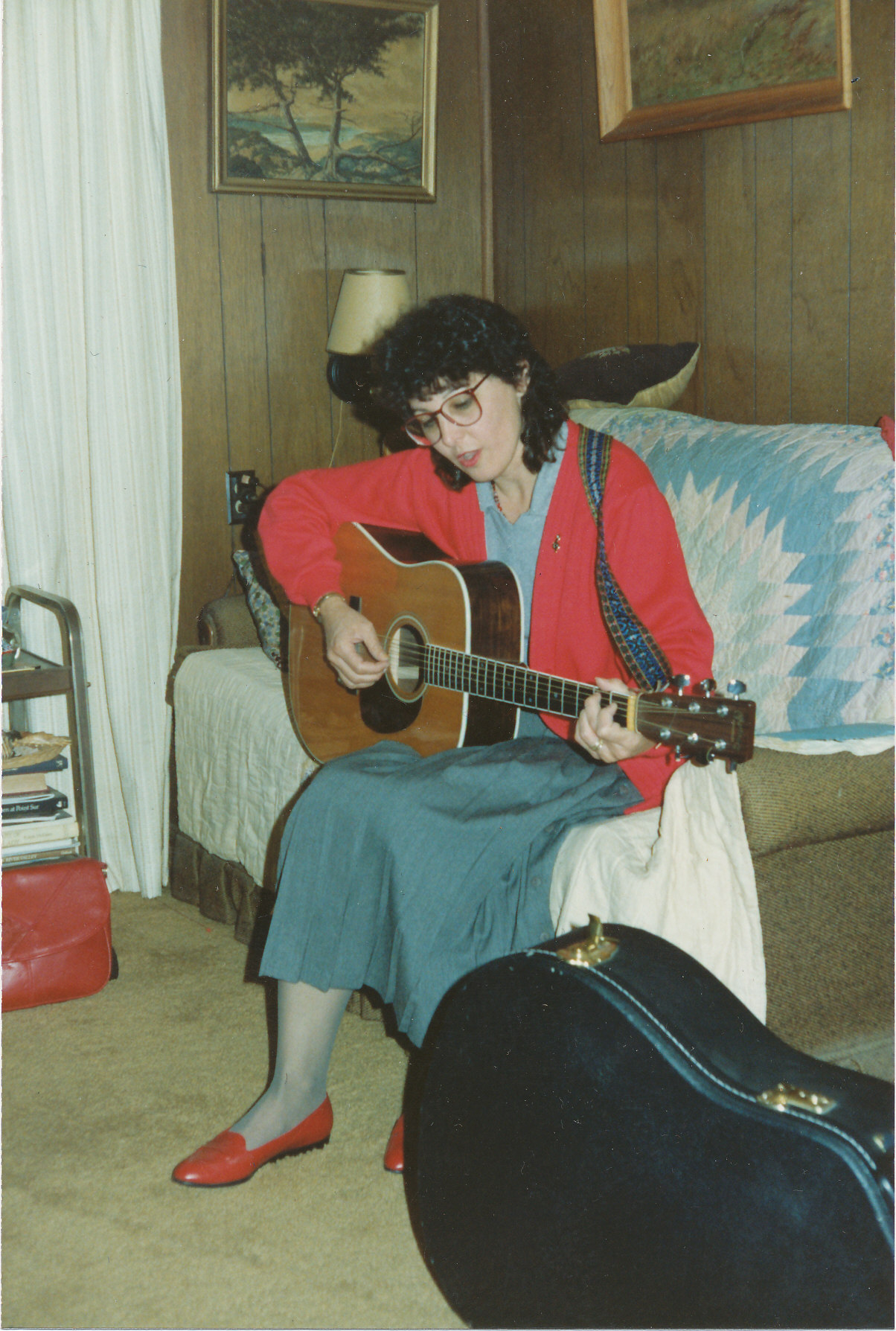
Playing for my grandparents in 1990

I’m going to share an embarrassing part of my past today. Maybe you’ll identify with my younger self.

I used to write a lot of songs. I performed and recorded many of them, some for public consumption, some just for me. I was listening to one of my old tapes (yes, cassette tape) from the mid-1980s and came across this song called “Mama Be Proud.” It’s a terrible song. I hope I didn’t play it for anybody else back then.

I wrote it in my early years with Fred, when I was still trying to accept that by marrying him, I would never have children.

My mother was the best. She never nagged me about having grandchildren. She never said, “Why don’t you find someone else?” or “Why don’t you adopt?” or “How could you not give me any grandchildren?” She may have thought those things, but she never said them. She and my dad loved Fred and were happy I had found someone good after the first marriage blew up.

As for Fred’s parents, they already had more grandchildren than they could keep track of, so it was fine with them.

But still, I felt guilty. Raised when I was, I knew the two things I could do to make my parents proud were 1. Find a good husband and 2. Have children. I suppose keeping a clean and orderly house might be number 3. I was trained to be a clone of my mom. I needed to keep the family line going. As for all the other things I was interested in doing, they didn’t really count as much in my family. But those other things were all I had to offer.

Thus I came to write this song in which I begged my mother to accept my music as a replacement for grandchildren.

Here’s the chorus:

I could write you a ballad to comfort your old age,

I could write you a jig to make your heart dance.

I could pass on your name in a hundred sweet songs.

Mama, please love me. Mama, be proud.

Gag, right? Actually the tune is pretty good, but the words make me cringe, both because they’re so smarmy and because I was so needy of my parents’ approval. They didn’t support my music and writing much, but I have to say that on my 50th birthday, my mother made the most beautiful speech about how proud she was of my accomplishments.  

A while later, my cousin dropped my birthday cake in the parking lot. Splat. Isn’t real life fun?

Mom died of cancer three months later. In the end, I think it wasn’t so much that I was letting her down as that she was worried I might end up alone. That’s why she and Dad were so glad when I married Fred. But you can’t know what’s going to happen in the future.

I tell you all this to suggest that maybe I’m not the only one who feels like we’re letting our parents down, like we’re failing to live up to their expectations. The ultimate decision about having children is between us and our partner–and our bodies, but do you sometimes think that if you don’t have kids, you’re blowing it and nothing else you do will be good enough?

Or is it a good thing that I’m about to start seeing a new shrink? 🙂

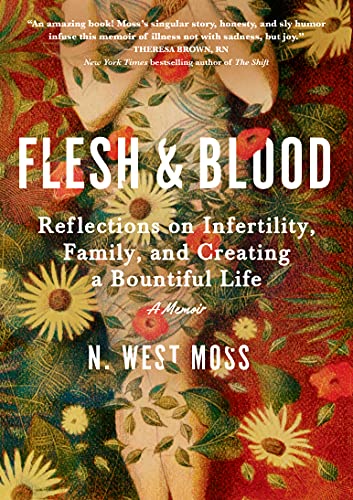
Let me close with some thoughts from a book that was so gripping I read the whole thing last Saturday. In Flesh & Blood, a memoir about childlessness and a troublesome uterus, author N. West Moss writes on p. 229, “I’ve always felt that I let Grandma Hastings down (in particular) by not having kids because it is the end of not just my own story but of her hard-fought story as well, and of her mother’s and her mother’s . . . . My hope is that writing them down here will cast her line into the future, will be my attempt at securing her story, and possibly mine as well.”

But she concludes toward the end, “I know I’m not technically fertile or anything, but shit, I feel fertile, feel overflowing with ideas and love for the world. I stick a sprig of mint in a glass by the sink and two days later, there are roots reaching an inch into the water. I do the same with a branch of basil from the grocery store. Same thing. Having kids is one kind of fertility, but it’s dawning on me that there’s more than one way to be fruitful.” p. 245

[Trigger warning about this book. If you are planning to have a hysterectomy in the near future, you might not want to read this yet.]

What do you think? Are we letting the family down by not having children? Do we struggle to make up for it in other ways? Please share your comments.

Processing…
Success! You're on the list.

Can we stay happy without kids or spouse?

“I’m in My 40s, Child-Free and Happy. Why Won’t Anyone Believe Me?” by Glynnis MacNicol, July 5, 2018 NY Times

Dear readers,

The article listed above that appeared in the New York Times last month shows how differently people can feel about living a life without children, and in MacNicol’s case, also without a husband. At 40, she claims she loves the freedom of being single and has plenty of connections with other people, including many children who think of her as “Auntie Glynnis.” Yet when she dined with a famous author, hoping to discuss literature, he couldn’t get past the fact that she was alone.

Other women a little older warn her that she’s going to change her mind and dive into fertility treatments in a few years. She will regret her choices.

Go ahead and read it now if you want. Then come back here.

Ah, regrets. People ask here all the time whether they’ll regret it if they never have children. I can’t answer that question. Maybe, like MacNicol, they will relish the freedom to travel, work, socialize, and never have to order a “Happy meal” at McDonald’s or pay for someone else’s college education. Maybe in the case of people who are childless by marriage, they will be forever glad that they chose their partner and look forward to growing old together. Or maybe one day they’ll wake up sobbing because they missed their chance to be parents. I don’t know. We’re all different. And I think we experience different feelings at different times. I know sometimes I’m relieved I don’t have children, while at other times, it breaks my heart.

How do you know when you’re young how you’re going to feel after decades more of life? This may seem off-topic, but I watch “The Bachelorette,” “Bachelor in Paradise” and all those trashy shows. God knows why. It seems like someone is crying in every episode. After two dates, they’re in love, and if they don’t get a rose, they’re heartbroken. They’re ready to devote their lives to people they barely know. Most are in their 20s and early 30s. I think about the people in my life who are that age, and I think, “They’re so young. They have no idea what they really want.” Actually, I believe what most of the people on these shows want is simply to be on TV and all the finding-someone-to-love business is a sham, but you know what I mean.

Now, if you’re that age, don’t be insulted. You do know a lot, and I wish I still had your energy. I’m just saying you’ll know more later. When I was in my 20s and 30s, I felt wise and grown up, even though I looked very young with my long hair and miniskirts. People I encountered in my work as a newspaper reporter often questioned whether I was old enough to do the job. I’d plant my hands on my skinny hips and assure them I was a college graduate, I was married, and I was a professional journalist.

I was all that, but looking back, I had a lot to learn about writing, and my first marriage was a mistake from the get-go. A wiser woman would have seen the warning signs. I would have been better off following MacNicol’s example, at least for a while. But we were at an age when society said we needed to get married, so we did. Did I worry about regretting it later? No. I was ecstatic. I expected our love to last forever.

I made my choice based on the information I had at the time. That’s all any of us can do. We’re not robots. We can’t program our feelings or predict how they might change. Maybe MacNicol will change her mind. But right now, she loves her life. For all anyone knows, she always will. Who are we—or that famous author–to say otherwise?

What do you think?

  • Do you worry about regretting your choices, especially about having children, when you get older?
  • Do people in your life warn you that you’ll change your mind?
  • Is there any way to guard against making a mistake?

I welcome your comments.

Stay in a relationship without kids or go?

Last week we talked about the big gamble. Should you leave a partner who is unable or unwilling to make babies with you in the hope that you can find someone else with whom you can have children? Most of the people who responded had decided to keep what they had. They treasured their relationship enough to work it out. That’s what I did, too.

But that leaves a lot of people still in the gray area.

Ideally, we work these things out before we’ve made the commitment to another person. We discuss it, and if we disagree, we either decide to accept it forever or we walk away. Right? Not always. There’s a third response, the one I made and the one lots of us make. We tell ourselves that he will change his mind, that she will get the urge to have babies, that the physical impediments to conception will miraculously disappear. For those of us raised on fairy tales and Disney movies, it makes sense. If you wish hard enough for something, your dreams always come true in the end. If only real life worked that way.

Back in my mother’s day, kids were part of the package. If you didn’t want to have children, you didn’t get married because marriage meant babies. But nothing is guaranteed anymore. We have to discuss it and be clear on what we want. If a person is unable or unwilling to have children, that’s probably not going to change. Can you live with that?

Of course many of you are already in the relationship. It’s too late to work it out beforehand. So now what? Ask yourself some questions and try to be honest.

1) Am I happy with my life as it is right now? If nothing changes, can I remain happy with this person?

2) Do I love this person enough to choose him or her over the children I might have had?

3) Will I be devastated if I never have children?

4) Am I willing to risk ending up childless and alone–or becoming a single parent?

Tough questions. The hard part is that your answers may change over time. So might your partner’s. But I think we have to assume that things are not going to change, that there will be no miracles, and act accordingly.

I wish none of us had to deal with this, but we do. What do you think about all this? Please share in the comments.