
Simone and Malcolm Collins have six kids and are hoping for ten, each produced by in vitro fertilization and delivered by C-section, because they believe the U.S. is heading for a crisis if people don’t start having more kids.
A Washington Post article on the couple reports that the average fertility rate in the United States has not been above the 2.1 children per couple replacement rate since 2007, according to World Bank data. “Currently, no country in the developed world, barring Israel, has a fertility rate above replacement level, and, based on U.N. projections, by the end of the century, almost every country will have a shrinking population.”
They are not the only ones concerned that in the not-too-distant future, we will have empty schools and overflowing nursing homes with not enough people to do the work needed to run the world. The Collinses join a growing group of people, mostly firmly on the red side of politics, who decry the tendency to have fewer children as selfish and wrong. Today’s young people just want sex with no responsibilities, they cry. They play around until they’re too old to have babies.
This, of course, ignores the many reasons people may not have children, including infertility, illness, lack of a willing or able partner, choice, and a wide range of situations that fall somewhere in-between.
Those favoring more baby-making include Vice President J.D. Vance, famous for his comments about childless cat ladies. “I want more babies in the United States of America,” Vance said at the March for Life on Jan. 24, in his first public speech as vice president. The Collinses are hoping to become part of a national “pronatalist task force.”
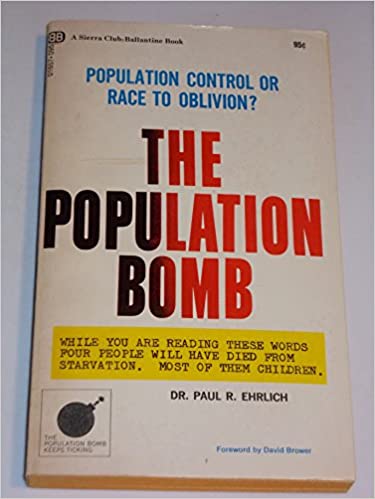
It’s a big change from the 20th century cry that our growing population would lead to disaster. Having too many people would destroy the land, and overcrowding would make life unlivable. Paul Erlich’s The Population Bomb was required reading when I was in school. Now, people are reading Empty Planet, about how our shrinking population is going to lead to big trouble.
Population growth has always been a cyclical thing.
One of my great grandmothers had 13 children. Another had seven. It was what people did back when most women saw few life choices beyond motherhood or the convent. Birth control and abortion were not easily accessible. If you had sex, you had children.
Before the advances of modern medicine with its vaccines and antibiotics, many babies didn’t survive to adulthood, so it made sense to have more. I don’t know if any of my ancestors’ children died young. Everyone who knew them is gone now. But it seems likely.
My grandmothers each had two, plus one miscarriage each. Don’t ask me how they limited it. Who thinks about grandparents having sex?
My own parents married right after World War II, the height of the baby boom. With the war over, the world looked bright and shiny, the men had VA loans and GI bill money, and jobs were plentiful. It only took one income to buy a house and raise a family. So, they did. Two kids, sometimes three. My parents used condoms; my brother found them when he was snooping around.
Values were different in those days. While married couples were expected to procreate and the only ones who didn’t were physically unable to, my parents made it clear pregnancy outside of marriage would RUIN YOUR LIFE. Girls who got themselves “in trouble” were shuffled off to a distant aunt or a home for unwed mothers to have their babies and give them up for adoption. Now, nearly half of babies are born to single mothers, and nobody cares.
You’d think that would lead to more babies, but there are other factors. About the time I lost my virginity, birth control and abortion were becoming legal and obtainable. Women were moving into the workforce, demanding equal opportunities with men. Divorce became more common, sometimes leading to people marrying people who had already had their children and didn’t want anymore.
It became quite possible for women to survive on their own without marriage and for couples to decide maybe they wouldn’t have kids.
Fast forward to the grandchildren of the baby boomers. The birth rate has plummeted for many reasons. Young people are so busy finishing their education and building their careers they don’t get around to considering children until it’s too late. It costs so much to purchase a home they don’t know how they can possibly afford to raise families. Marriages may not last, the economy may implode, wars are happening, people are shooting children in the schools, and the climate is going nuts. Plus, no one can afford daycare.
In view of recent events, when so many people working at what seemed to be long-lasting government jobs are suddenly fired without notice, severance pay, or options for future employment, a lot of people are worried. If you’re not even sure you can support yourself, how can you support children?
All of this leads me to wonder what will happen with today’s young people. How many will never have children because it just seems impossible? Will we see a new baby boom as the Maga wave washes away abortion rights and maybe goes after birth control next, as women and non-traditional couples see their equality fading away?
Or will the trend keep heading downward? Will people without children stop being the exception, the odd ones in the room who don’t have baby pictures to show?
Is this all a lot of stewing about nothing? People will always have sex. Sex leads to babies, except when the body says no or we use some form of birth control. Contraception might become more expensive or more complicated to get, but it will be there. If you’re in a partnership where one wants to have children and the other doesn’t, changes in laws and availability may lead to more arguments but probably not to more babies.
Nor will couples go back to the “Leave it to Beaver” lifestyle where the woman tends the home and children while the man earns the money. Nobody can afford it, and most women want their lives to include more than motherhood.
What do you think? Have you seen the attitude toward having children change? In what way? Do concerns about world population affect your decision in any way? What do you think it will be like twenty years from now?
Additional Reading
https://www.cdc.gov/nchs/pressroom/nchs_press_releases/2024/20240525.htm
Simone and Malcolm Collins want to make America procreate again – The Washington Post
Why birth rates are falling, and why that’s not a bad thing | Popular Science
**************************
The Childless Elderwomen are having another online Fireside Chat on Saturday, March 29 at 1 p.m. PDT. The topic this time: “Eldering in a Time of Collapse.” I have to miss this one, but the rowdy “Nomo Crones” (nomo for Not-Mother) are sure to have some interesting things to say on this topic. Find out more and register at https://gateway-women.com/gateway-elderwomen.
If you enjoy the Childless by Marriage blog, you might want to visit my Substack, “Can I Do It Alone?” at https://suelick.substack.com. Many of the readers there have never had children.
 Childless by Marriage