Childless Marriage: Would I Do It Again?

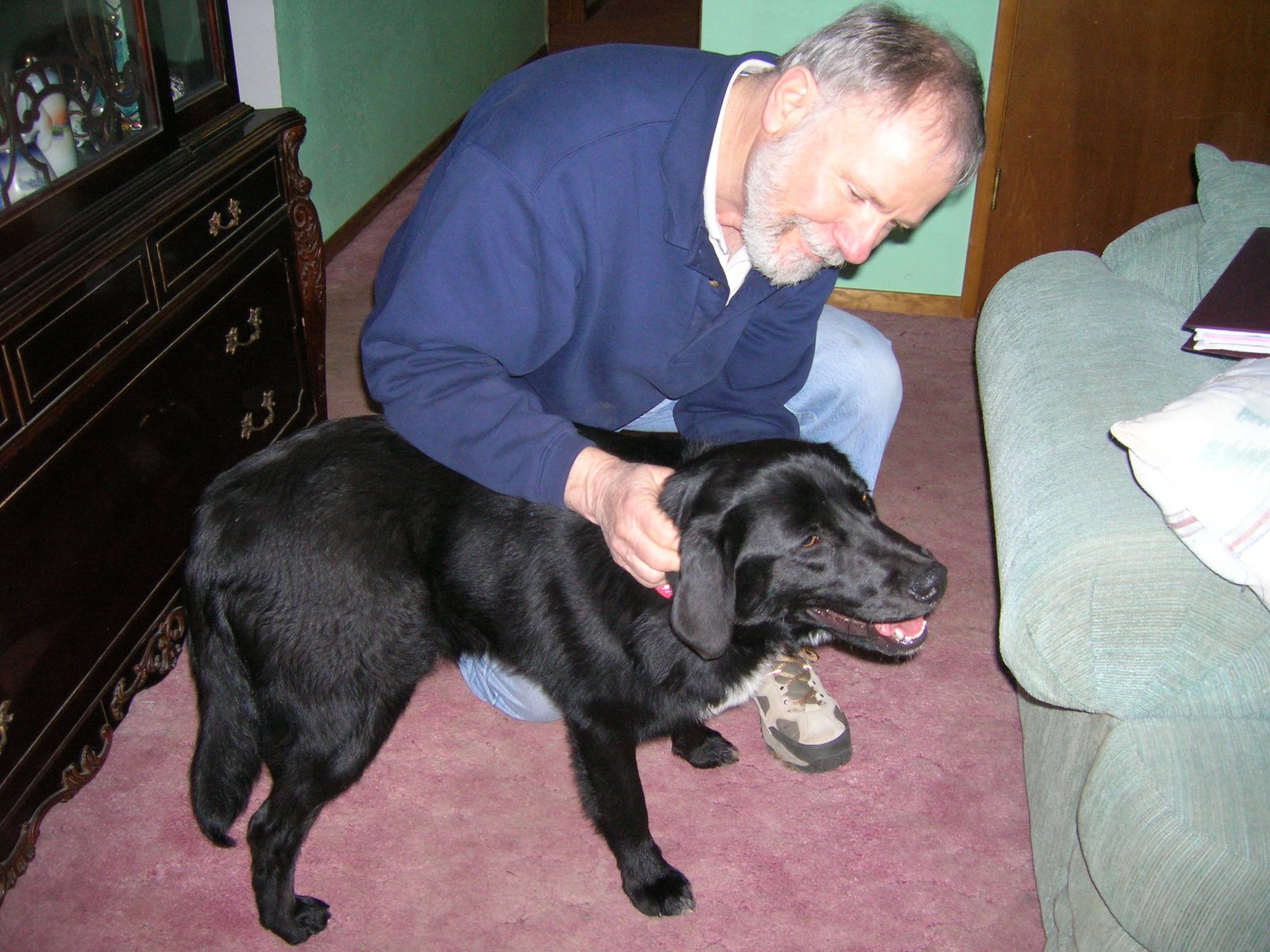
Bearded white man petting shiny black Lab dog between green sofa and antique china cabinet. The man is the author's late husband Fred.

A reader wrote to me last week with a tough question. If I had it to do over, would I stay with the husband who wouldn’t/couldn’t make me a mother? She is currently married to a man who has never wanted children and has had a vasectomy to make sure it wouldn’t happen. They are very happy together now. They have a good life without children. But she is worried that she will regret her decision in later years.

I suspect a lot of us worry about that.

My initial response to whether I would do it over again was I don’t know. But after thinking about it for a minute, I said, “Yes, yes I would.” When Fred and I were married beside a pond on a beautiful spring day with all our loved ones nearby, we had no doubts, no worries, just joy. Out of our loneliness, we had found each other. It felt like a gift from God.

As for children, I thought his three would help fill the gap. I was a workaholic anyway, obsessed with my writing and music. Being a part-time mom might be perfect.

We could not know that Fred would suffer and die from Alzheimer’s disease or that his adult kids would pull away once he was gone. We could not know that I would end up alone in the woods in Oregon while most of my family was back in California.

Life is full of unknowns. Couples discover they can’t get pregnant. Or they break up. Or one of them dies. A new job requires a move across the country. You get sick. You win the lottery. Or you lose everything in an investment that goes wrong.

We don’t know what’s going to happen. The friend who fell off the camper step and broke her pelvis last month surely did not expect to spend the rest of her vacation in the hospital. Fred’s first wife had a stroke this year, catapulting the family into a life of caregiving and nursing home visits. We just don’t know.

All we know is what we have right now. Are you happy together? Is life good? Do you want this to last forever, or are you itching to run out the door? Can you love him or her wholeheartedly? Are they enough? All you can do is put your faith in your love, and in God, if you’re a believer.

Will you regret a life without children? The honest answer is yes, sometimes you might. I do. Most days I’m fine, but I hate not having a big family to gather with on the holidays and to help each other year-round. But would I marry Fred again? Yes, I would. I never met anyone else I could love as much as I loved him. Can you say the same?

I so appreciate you being here. Thank you for your emails and comments. Keep them coming. I don’t have all the answers. Together, we can figure it out.

******
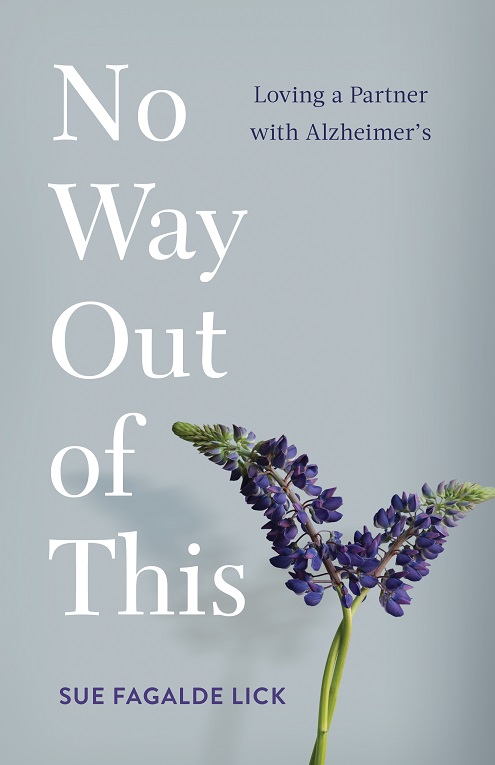
You will be able to read much more about me and Fred in my forthcoming memoir, No Way Out of This: Loving a Partner with Alzheimer’s disease, coming out next June from She Writes Press. It tells our love story from beginning to end, including the hard parts and the joyful ones. That’s Fred in the photo with our puppy Chico, who also plays a big part in the book. Stay tuned for more information.


Processing…
Success! You're on the list.

Younger Self Asks: What if I Never Use My Womb?

The picture shows an open notebook and a woman's hand holding a pen poised over the page. The blurred background appears to be in a wilderness area with lots of fall-color trees.

“I am a woman without children. I’m a fertile woman who can’t have children. It’s more painful than physical inability.”

I’ve been cleaning cupboards. Lots of stuff going into the recycle bin. But these words scrawled on the inside back cover of a yellow notebook from a college European Literature class in 1989 caught my attention. At that time, I was four years into my marriage with Fred. I was 37 years old and making my second attempt at grad school while working as a full-time newspaper reporter. I struggled to take care of home, husband, and my youngest stepson, who had recently moved in with us. It wouldn’t be long before I dropped out of school again because it was too much.

But that note written in tiny cursive where no one else would see it reminds me of how terrible I felt in those days about not having children. All around me, friends and relatives, including my stepdaughter, were having babies. My period every month reminded me that I was not and would never be a mother if I didn’t change my situation ASAP. I was angry and sad and certain that life was NOT FAIR.

Many years later, I have become part of a childless community where most of the people speaking out about it have had fertility problems. They suffered through surgeries, IVF treatments, and miscarriages. They went through hell trying to conceive and bear a child. How can I grieve or complain when I didn’t go through all that? As far as I know, I could have had a baby with no problem—if I had a different husband.

The first husband was never ready, and the second was done with children. He had had a vasectomy and was not going to reverse it. Nor was he willing to adopt. So, no babies for me.

It hurts that I never had a chance to try. Well, there were a couple times without birth control over the years with men who still had sperm, but nothing happened. It’s probably for the best. Those men were scum. But when I imagine lying in bed with a man who says, “Let’s make a baby,” I want to cry.

Yes, I watch too many movies.

People are all too eager to tell me it’s my own damned fault. I should have demanded babies, even if I had to find a different partner. Do I have any right to grieve? If you’re in the same situation, do you?

My former neighbor, a pretty young woman named Brittney, turned up with a newborn the other day. Her third boy. This girl clearly has no problem having babies. Me, I just have an ancient dog who can’t hear and can barely walk.

Not fair? Or just the way life is?

1989 was a long time ago. I’m not 37 anymore. But I feel for that curly-haired woman looking away from her notes about Aristotle’s poetics in literature class, thinking about the babies she was never going to have and writing that tiny heartfelt note.

What do you think? If we accept a life with a partner who can’t or won’t give us children, are we entitled to feel bad about it, as bad as someone who has struggled with infertility? If you left a note to your future self about your childless situation, what would it say?

Photo by ROMAN ODINTSOV on Pexels.com

Processing…
Success! You're on the list.

Without Kids, Do We Have a Stake in the Future?

Photo shows a white box with the word VOTE in big black letters and a small American flag image with a hand inserting a white card into the slot on top.

Elon Musk, the Tesla billionaire who bought Twitter, recently raised a ruckus when he agreed with a Tweeter who said people without children should not be allowed to vote. “Non-parents have little stake in the future,” he said.

Here’s the link to one of several articles about Musk’s statement. https://www.yahoo.com/entertainment/elon-musk-suggests-childless-people-195500862.html

My initial reaction: Of course we have a stake in the future.

My second reaction: What is it?

My third reaction: I made a list.

* We may not have given birth, but we love and care for stepchildren, nieces and nephews, godchildren, the children of our friends, our students, and our co-workers. Our lives are linked in one way or another with all the young people in the world. What we do and say and vote for affects their future.

* We share the same planet and suffer the effects of climate change, war, economic upheaval, discrimination, poverty, homelessness, and other problems. We can make a difference with our personal choices, our actions, and yes, our vote.

* We affect the economy with how we spend our money now and after we die. Because I have no children of my own, I can choose to fund a scholarship or grant or an outright gift to support organizations I believe in or enable a young person to do things he/she would not otherwise have been able to do.

* We affect the future of our world by our work and our service, by the things we make, the things we organize, and the things we do and say. The childless military veteran, pediatrician, mechanic, cook, artist, author, garbage collector, and firefighter all contribute to the future of everyone.

The voting bit only refers to the United States, but, wherever we live, we do have a stake in the future, as well as in the present, whether we have 10 children or none. That’s my opinion.

Your comments?

Photo by Sora Shimazaki on Pexels.com

I will be making a big announcement in my July newsletter, coming soon via Mailchimp. If you’re not on my mailing list, sign up below.

Processing…
Success! You're on the list.

Want to Be Seen as Radical? Don’t Have Children

Are you radical?

Sounds like something we used to say back in the 60s and 70s when something was really “cool” or crazy. Radical, man, groovy.

But radical is a real word, and one of its meanings is marked by a considerable departure from the usual or traditional. I think that applies to every one of us who does not have children. By not following the traditional pattern of marriage, motherhood, and grandmotherhood, we are both forced and freed to follow a nontraditional path, to be radical.

This was the subject of our spring solstice gathering of the Nomo Crones childless elderwomen on Zoom last week. These women are definitely radical. Straight, queer, single, married, childless by infertility, illness, partner problems, and sometimes by choice, they had a lot to say. Watch the video. We’re a lot of fun, and I don’t think we’re much like the traditional grandmotherly old ladies you may know.

MC Jody Day has dubbed us “Radical Old Women” or ROW. I like it.

I know I haven’t followed the standard patterns in my own life. A lifelong writer/musician, I never had to give up my vocations for motherhood or wait until my children grew up to begin. I have been writing steadily since elementary school. Now that my husband is gone and I don’t need a traditional job, I often do my writing and music to the exclusion of everything else. I work in my pajamas, and my house is a mess. I make elaborate meals when I’m in the mood or grab whatever’s hanging out in the fridge when I’m not because no one except my dog is depending on me to feed them. I wake up and go to sleep when I feel like it. Of course, the flip side is spending holidays alone and having no family to help when I’m sick or injured, but let’s not think about that today.

I don’t feel my age. I notice the physical changes, but without the milestones mothers experience, I don’t feel old, and I’m far from ready to accept the lives many of my friends in their 70s are living. A neighbor, also widowed and childless, told me recently that she was selling her house and moving to a senior residence. I looked it up. Mt. Angel Towers. It looks like a prison to me.

Another neighbor, age 75, rowdy and refusing to give up anything, agrees with me. No way in hell. If she gets feeble, she’ll hire people to help, but meanwhile, she wants to travel, work in her garden, shop at garage sales every weekend, and make her pot cookies.

A childless musician friend who just turned 80 has declared she’s going to be an “outrageous octogenarian.” She is losing her vision and has some major health challenges, but she refuses to leave her three-story dome home overlooking the beach; if she can’t climb the stairs, she’ll install an elevator. And she will keep playing the piano with a little help from her neighbors and friends.

I don’t live like anyone in my family, at least anyone who is still alive. What am I doing out here alone in the woods? Radical.

My step-grandmother, Grandma Rachel, never had children. Instead, she inherited our gang. She was a terrible housekeeper, dreadful cook. She was big, loud, and opinionated and a menace behind the wheel of a car. She loved to read, write, and paint pictures. The family disapproved, but I adored her. She was my role model, filling my life with books and encouraging me to follow my dreams. She died 32 years ago at age 86, but I treasure her letters and poems. I want to be her kind of radical.

I want to be the old lady with the crazy hats who sits around in jeans and tennis shoes playing guitar and writing poetry, who does yoga and travels cross-country by herself, who is not too old to crawl on the floor with the kids, who will never be old enough for an old folk’s home.

Another definition of radical: tending or disposed to make extreme changes in existing views, habits, conditions or institutions. In other words, we refuse to accept the status quo. One of five women will never have children. We need the parent-people to see us, to accept us, to understand that our radical lives have the same value as theirs. Who knows? Maybe someday parenting will be the radical choice.

What do you think? Want to be radical with me? I welcome your comments.

Processing…
Success! You're on the list.

Is the ‘Happiest Place on Earth’ only for people with children?

Should childless adults be allowed to visit the Disney theme parks? At least one angry mom says no. Her tirade against park visitors without children went viral after she called for a ban on so-called Disney Adults. The grownups are clogging the lines so she has to wait forever with a cranky toddler. They’re in the way and demonstrating bad behavior, and they shouldn’t even be there, she said. It’s a family park, she proclaimed.

Thank God Walt Disney established Disneyland and the parks that followed with the mandate they should be places for all ages to have fun. That includes adults without children. Me, I don’t yearn to go to Disneyland. Been there, done that, but I have loved ones who go to Disneyland every chance they get. They don’t have kids, but so what? The Mickey Mouse ears come in all sizes.

The parents who dislike having non-parents invade their space say we couldn’t possibly understand what it’s like taking a toddler there. I think we do understand. It’s not like we have never seen a child. Ages ago, my late husband and I took his daughter and two-year-old granddaughter to Disneyland. Yes, it was challenging. Also fun. We didn’t pay any attention to who had children and who did not. I also went there as a young adult with friends. Why not?

I’m sure you could find parents at any theme park, water slide, Chuck E Cheese pizza parlor, puppet show, or playground who want to scream, “Get out of here! You don’t belong. This is for families.” We might claim our own spaces and scream back, “No kids here! This is for grownups.”

The word “family” is so loaded. In most cases in the U.S., it’s code for grownups with children. “It’s a family movie”=for children. It’s a “family restaurant”=bring your kids and if anyone complains, tough.” “It’s a family party”=games, food, and music will all be for children. If you don’t have kids, don’t bother coming.

Where does that leave us? Are we not part of a family even if it doesn’t include children? Too many people seem to think that if you never had children, you don’t have a family. How many times have you been asked, “When are you going to start a family?”

What is a family? As this New York Times article explains, there is no easy answer these days. The standard family definition of mom, dad and two kids has given way to many different combinations of people united by blood or love. It does not have to include children.

Online definitions abound.

From the Encyclopedia Britannica:

“a group of persons united by the ties of marriage, blood, or adoption, constituting a single household and interacting with each other in their respective social positions, usually those of spouses, parents, children, and siblings.”

From the Urban Dictionary:

“A group of people, usually of the same blood (but do not have to be), who genuinely love, trust, care about, and look out for each other.”

My worn-out Merriam Webster’s has more definitions of family than I have space to list. They include: “a group of people living under one roof; people of common ancestry; a group of people united by certain convictions or a common affiliation.”

Bottom line: a family is whatever you want it to be. Like me and my dog.

What do you think? Should childless adults be welcome into the Magic Kingdom without kids? Why or why not? Do you find yourself being excluded from “family” activities? What is a family to you? I welcome your comments.

photo by Bo shou at pexels.com

Processing…
Success! You're on the list.

When People Having Babies on TV Make You Cry

The other day, looking at Facebook videos, I came across a bit from an old sitcom where the husband and wife walk in with their newly adopted son. The family weeps with joy. Finally their dreams have come true.

Then the new mother quotes the old line about how sometimes after people adopt, they get pregnant with a baby of their own. Well, guess what?

“You’re not?”

She nods, tears streaming down her face. “I am.”

More crying, more hugs, more joy. End of scene.

I’m sobbing. Again. My afternoon is trashed. After all these years. My husband will never look at me that way. My parents will never be overjoyed to become grandparents to my kids. I will never be able to appoint a friend or sibling as godmother. I will never hold my own baby in my arms. (And yes, I will not have to wake up five times a night when she’s crying.)

I’m not telling you this so you can feel sorry for me. I watched a movie, ate dinner, and got over it until the next time. This is not about me. I want you to consider how you react.

The tears I shed every time someone has a baby on TV or in real life are not planned. They are a visceral reaction that shows me how important it was and is to me that I never had children. It’s a loss, just like the people in my life who have died. I can say anything I want: Oh, I never had time for them anyway, my man was worth the sacrifice, my life is good, I’ve got my dog, kids can break your heart . . . . I can tell myself and everyone else that it’s cool, I’m okay with it. My sudden tears on an otherwise happy Sunday afternoon tell a different story. It’s worth paying attention.

Some of you are still trying to decide whether to stay with a partner who is unable or unwilling to have children with you. Now, when you can still do something about it, is the time to pay attention not just to the words, but to your gut. All the pros and cons in the world will not give you the true answer. No one else can figure this out for you.

When someone announces a pregnancy or shows off their baby, how do you feel? Are you sad for the rest of the day? Or angry, banging doors and pots and growling at the people around you? Can you calmly say, “Congratulations” and go on with your day unscathed?

There’s your answer.

If you need to change your situation, change it. Or at least reconsider while you have time: Can I give up children to spend the rest of my life with this person? If the answer is no, fight for what you need, whether it’s adoption, fertility treatments, or a different partner. Or get used to weeping over TV babies.

That’s my tough-love advice.

I welcome your comments, even if you want to yell at me.

Photo by Karolina Grabowska on Pexels.com

Processing…
Success! You're on the list.

When Couples Put Off Having Children Until It’s Too Late

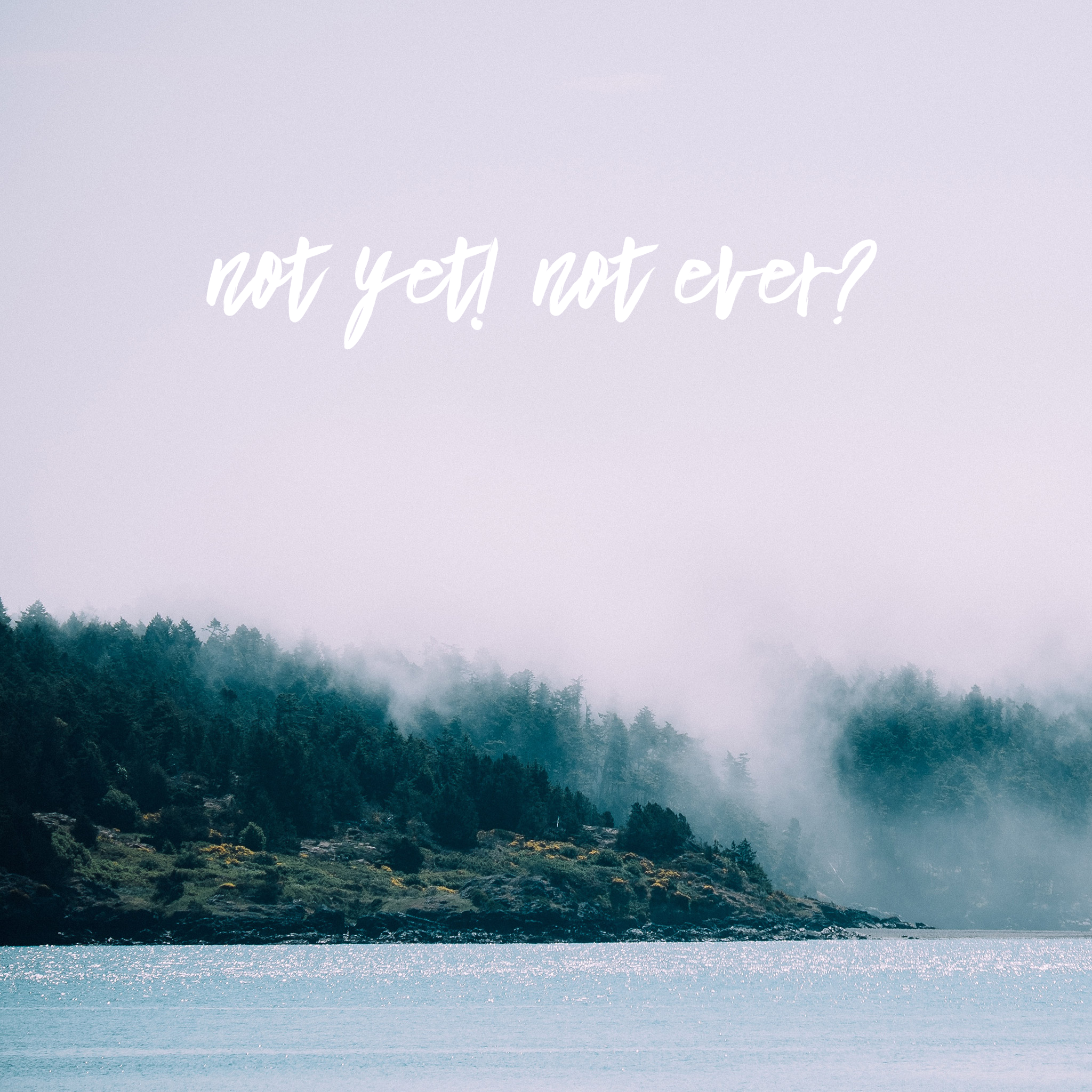
The photo offers the words "Not yet! Not ever? in a foggy sky over a green cliff with yellow flowers, wave spray and calm pale blue water.

You know how you think about going out, but you mess around and time passes and after a while it’s too late or you decide you’re fine with staying home? Deciding whether to have children can be like that.

We often hear these days that couples are delaying parenthood. While you’re busy going to school and building your careers, it doesn’t make sense to start a family. You want to travel and have adventures, too. You’re not ready for 2 a.m. feedings and constant responsibility. Time passes. Suddenly you’re in your late 30s or even early 40s and NOW, when your fertility is dwindling, you’re ready to have a family. Or maybe at least one of you has decided life is good just the way it is so let’s forget about babies.

Ring any bells?  

I was born in the post-WWII baby boom. Our fathers had just survived a war and were happy to be alive. Jobs were plentiful, college was not required, houses were affordable, and birth control was not a thing. Couples married in their early 20s and had children right away. They didn’t consider any other way of living. They would have their adventures after the children were grown.

Now, people are waiting longer to get married, averaging 27 for women and 29 for men. Maybe they’re being smart and skipping that “practice marriage” some of us older folk tried right out of college. The pressure to marry so they could have sex without worrying about out-of-wedlock pregnancy has faded away. Marriage is no longer required for sex or having babies.

It takes longer to “settle down” these days. You need a college degree to get any kind of job, need to work way more than 40 hours a week to establish your career, and homes are ridiculously expensive. Husbands and wives both have to work to pay the bills. And what about those student loan debts? So you put off parenthood. Years pass. You lose the urge. Or whoops, when you do start trying, you can’t get pregnant, and you dive into the miseries of infertility.

Does any of this sound familiar? Does it make sense? Are you caught between the clock and getting your life together? Are you putting off parenthood? Does your partner feel it’s too late while you still want to try? Is life just fine without children?

Has not yet turned into not at all?

Please share in the comments.

******

Mother’s Day is over. Hallelujah. I don’t know about you, but I have heard enough about the glories of motherhood. I want to tell you about something nice that happened to me. I was taking it easy on Sunday watching a TV show when my phone rang. John, a 90-year-old friend who used to sing in my church choir, told me I had been on his mind. He knew that Mother’s Day was painful for me because I’d never had a chance to be a mother. He wanted me to know that I would have been a wonderful mother. He was sure of it.

I don’t know how you all would have reacted, but I was touched and pleased. It was so sweet for this great-great grandfather who says his family is what keeps him going to think of me sitting alone in my house on Mother’s Day and understand that it could be a difficult day.

How did your Mother’s Day go?

Processing…
Success! You're on the list.

Troubled Childhood Can Lead to Childless Adulthood

“I’m afraid to have kids because of how messed up my own childhood was.”

That sentence is taken from a blog post by psychotherapist Annie Wright, who finds many of her clients worry that if they grew up with less than perfect parents they can’t possibly be good parents themselves. That’s not necessarily so, she assures them. In fact, they may be fabulous parents as they strive to do what their own parents could not.

How we grew up has a big effect on how we feel about having children. Those effects can start setting in before we’re old enough to have conscious memories. Did your parents love being parents or hate it? Were they involved in your life or more hands off? Were they abusive? Did they argue all the time? Did your parents divorce and leave you feeling like a lasting relationship is impossible? Was money a problem? Were you a latchkey kid raising yourself? Were you forced to babysit your siblings so much you feel as if you already “did” parenthood? For women, was motherhood considered the only option, one of many choices, or the end of a happy life? For men, was fatherhood portrayed as a noose around your neck or the best thing in the world?

My mother loved babies. Once she gave birth to my brother and me, she quit her secretarial job and never worked outside the home again. Caring for us and Dad and the house was her job. Of course, that was the 1950s and 1960s. Think “Leave It to Beaver” if the dad wore a hard hat and khakis to work. I think my father resented the obligations of parenthood, but he never questioned the rightness of having children. It was an era when, as he told me later, “That’s what you did.” Mom and Dad modeled a happy marriage and treated us well, so I grew up thinking having children was a good thing.

Add in the dozens of dolls I mothered and all those old-fashioned movies and TV shows that ended with “love, marriage and the baby carriage,” and I never questioned that I’d be a mother someday. I figured I would write books, raise children and live happily ever after with my Prince Charming.

Oh well.

My first husband and his sister also seemed to grow up in a happy traditional home, but neither ever wanted to have children. Their parents were overly involved in our adult lives. Other than that, they seemed fine, but I wasn’t there in the early years. Were there things I didn’t know about? A lot of important impressions are formed before a child reaches kindergarten. What happened to them?

Most readers of this blog have grown up in a very different world, a post 9-11 world facing climate change, a divided country, and an economy that makes it nearly impossible for young people to buy a home. How can they possibly afford to raise children? Adding to the confusion, divorce is common, husbands and wives are both working, and couples are waiting longer to consider getting pregnant, which can lead to fertility problems.

Where does that leave you? My upbringing caused me to want and expect to have children and to grieve when I didn’t. How about you? Did the way you grew up make you want to have babies or shudder at the thought? Is there something in your partner’s past that makes him/her shy away from having children? Have you talked about it? Without pushing for babies, this might be a good conversation to have just to understand each other better. “What was it like growing up in your family . . . ?”

Please comment. I’d really like to get a discussion going on this.

Processing…
Success! You're on the list.

Can You Live with Your Decision Not to Have Children?

When you want Chinese food and he wants pizza, how do you decide which to get? Settle on KFC instead? If he gets his pizza, will you still be wishing for Chinese or decide pizza’s not so bad after all? Will you not really care because it didn’t matter that much to you? Or will you hold it over his head. “I gave up moo shu pork and egg rolls for you, and I’ve got heartburn from eating your stupid pizza.” Will he give in and have Chinese but insist it was the worst Chinese food he ever tasted?

Deciding whether or not to have children is not the same as deciding on takeout food, of course. Years later, will you remember whether you ate moo shu or pizza? No, but whether or not you have children will affect your entire life.

Relationships are full of decisions. Where will you live? Where will you work? Will you paint the living room blue or white, go to his parents’ or yours for the holidays? But next to getting married, whether or not to have children is the biggest decision you will ever make.

If you’re lucky, you and your sweetheart agree on most things most of the time. It sure makes life a lot easier. It’s like, “Let’s have . . .” and you both say “Chinese!” at the same time. But we wouldn’t be here at the Childless by Marriage blog if life were that easy.

It would be nice if we were all saints, too. “I will sacrifice what I want because I love you. And I’ll never bring it up again.”

That’s how it goes in fairy tales.

In real life, when someone gives up what they want, they may not be able to let it go. When you disagree about having children, someone is going to be unhappy and that unhappiness might never go away.

If you’re the one who wants children and you do somehow convince your partner to make a baby—or adopt or pursue fertility treatments, he or she might decide that like the pizza, yes, this is good and they’re glad they changed their mind. But it is quite possible they will carry some resentment and bring it up whenever things get difficult. I never wanted kids. See, now we can’t take a vacation because your son needs braces.

If you didn’t get the children you wanted, you might cry about it in secret or yell about it out loud. Because of you, I’ll never be a mother or a father. Because of your selfishness. It doesn’t help that the world makes you feel less-than because you’re not a mom or dad like everyone else seems to be.

Maybe it’s not just a matter of want but can’t. Your partner can’t have children so you decide you will give them up too because you love them. You want to be together. Wonderful. Again, saintly. But there are going to be those moments when you think I screwed up. I shouldn’t have just given up like that. It wasn’t fair of him to ask me to.

In Jordan Davidson’s book So When are You Having Kids?, which I wrote about in my April 5 post, she cited a UK study that showed many couples decide whether or not to have children after only one discussion. Each person usually comes to that one discussion already knowing what they want. Ideally, we bond with people who think like we do, but when we disagree on something so important, it gets tricky.

Davidson says the one who feels strongest about what they want will usually prevail. The other gives in out of love or simply to save the relationship. “Those who felt comfortable with their ultimate decision said they never felt manipulated or forced into deciding, whereas those who expressed some level of regret or dissatisfaction with parenthood felt rushed or coerced.”

“If you convince your partner to align with your decision, you may feel guilty, like you decided their future for them. Your partner may also harbor some resentment if they feel like their desires weren’t fairly considered.”

What am I trying to say? Only that there’s no easy answer here. If you nag and cry and make your partner crazy until they give in just to get some peace, you might get what you want, but at what price to your relationship? If you quietly give in but can’t really accept the decision, it will fester inside. All you can do is make your desires known. Talk it through thoroughly—and not just once. Then decide whether you can live with the results.

As my mother always told me about boyfriends, there are more fish in the sea, but if this is the only fish for you, one of you is going to have adapt to the other fish’s speed.

What do you think about this? Can you compromise on the baby question and still be happy together? I welcome your comments.

Photo by Quang Nguyen Vinh on Pexels.com

Processing…
Success! You're on the list.

The Question: So When are You Going to Have Kids?

That’s a question many of us have heard a lot. Even if we answer “We’re not having children,” no one believes us and we keep meeting other people who can’t resist asking the question, especially if you’re married and under 40 years old.

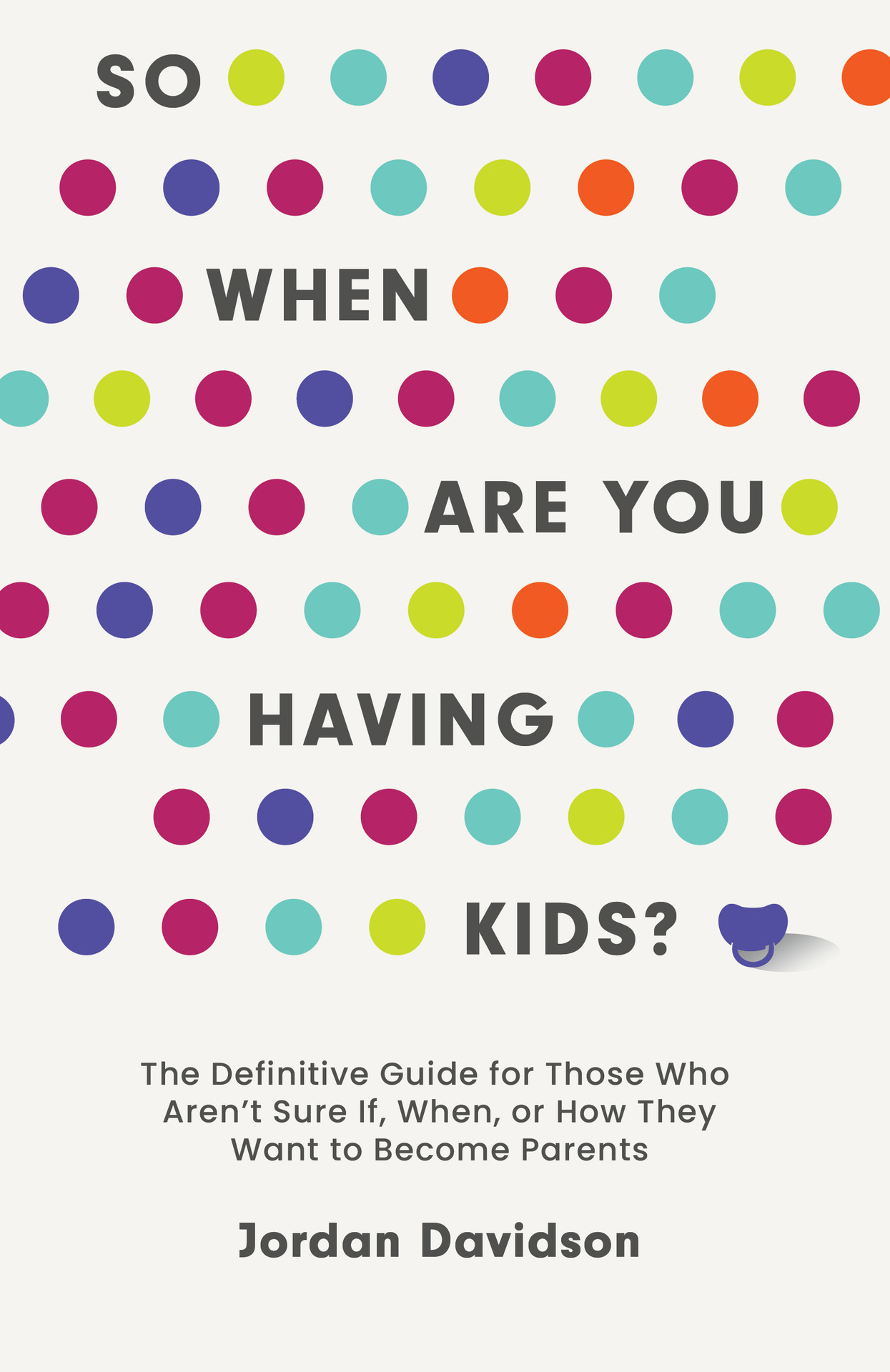
When I found this book, titled So When are You Having Kids? by Jordan Davidson on the new-books shelf at my local library, I had to bring it home. I thought people might giggle if they saw an old lady like me reading this book. That ship has sailed, hasn’t it? Yes. I’m not contemplating getting pregnant, but the book is still full of information that everybody should have, whether or not they ever plan to procreate.

With the subtitle “The Definitive Guide for Those Who Aren’t Sure If, When, or How They Want to Become Parents,” it provides answers to every question a person could have about the making of babies. It’s the only book I have read on the subject that includes LGBTQ readers every step of the way. Davidson offers the reasons why people decide to have children or not, details on how sperm meets egg and what happens then, the straight facts on fertility treatments and odds of success, the inside story on surrogacy and adoption, details on contraception and sterilization, and so much more. All this, and it is not boring. Davidson intersperses personal stories of people with and without children throughout. Even though I’m well past menopause way past menopause, I found it fascinating. Here is everything you did not get in The Talk with your parents or in sex education classes.

“When are you going to have kids?” God, I hated that question. When I was with my first husband, everyone assumed as I attended my cousins’ baby showers, that “Susie” would be next. I would mumble something like, “maybe,” even though I knew my husband wasn’t up for it, not then, maybe never. When I married Fred, I was a little older, but they still assumed babies were coming, and if they didn’t, well, at least I had Fred’s kids and could be a stepmom. I tried to avoid the question as much as possible because another question always followed: Why not?

Well, we’ve got the other three, there are health problems (his vasectomy), I’m prone to diabetes, etc. I never just said, “Fred doesn’t want to have any more kids.” I didn’t quite believe myself that it would never happen, plus I didn’t want to make my husband look bad. So, I just mumbled something and changed the subject.

The author shares an interesting quote from Ethicist Christine Overall, author of Why Have Children: The Ethical Debate: “In contemporary Western culture, it ironically appears that one needs to have reasons not to have children, but no reasons are required to have them.”

She is so right.

I will be returning to this book in future posts because it’s so packed with relevant topics, but this week, I’d like to hear your comments. What do you say when someone asks, “Hey, when are you going to have kids?”

Happy Easter, dear readers. Don’t let all the child-oriented Easter Bunny stuff get you down.

Processing…
Success! You're on the list.